
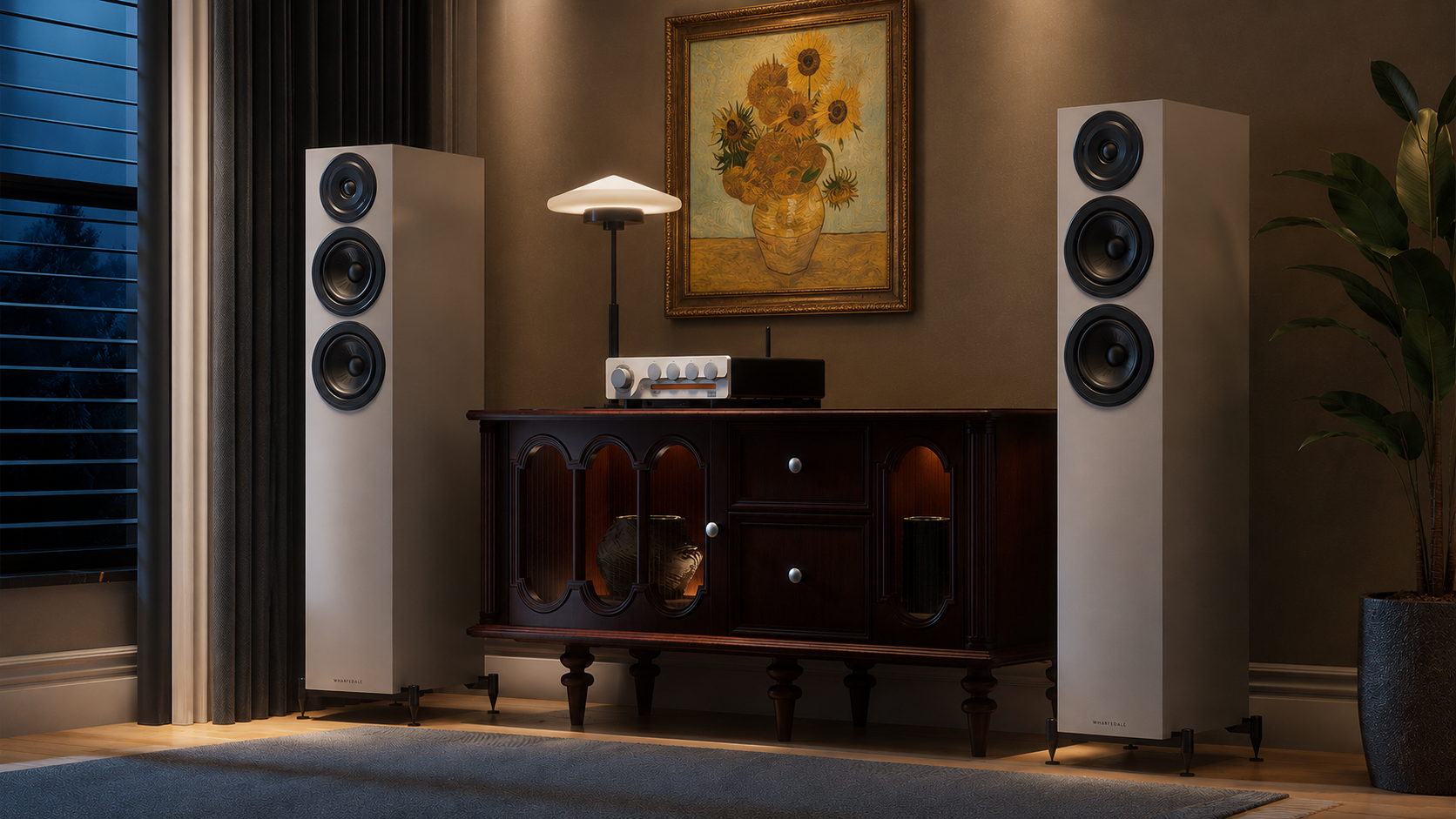
Wharfedale Diamond 12.3i Review: A Bigger Sound, But Is It a Better Speaker?

For the better part of five years, whenever someone cornered me with the "what's the best budget floorstander?" question, the answer was lazy and reliable: the Wharfedale Diamond 12.3. It became the speaker every other budget tower got measured against. So when Wharfedale rolled out the Diamond 12.3i to replace it, the brief was clearly "don't break the thing that works." On paper, the changes are barely a press release — three new finishes, a redesigned reflex port, and a tweak to the internal damping. That's it. The drivers carry over untouched.
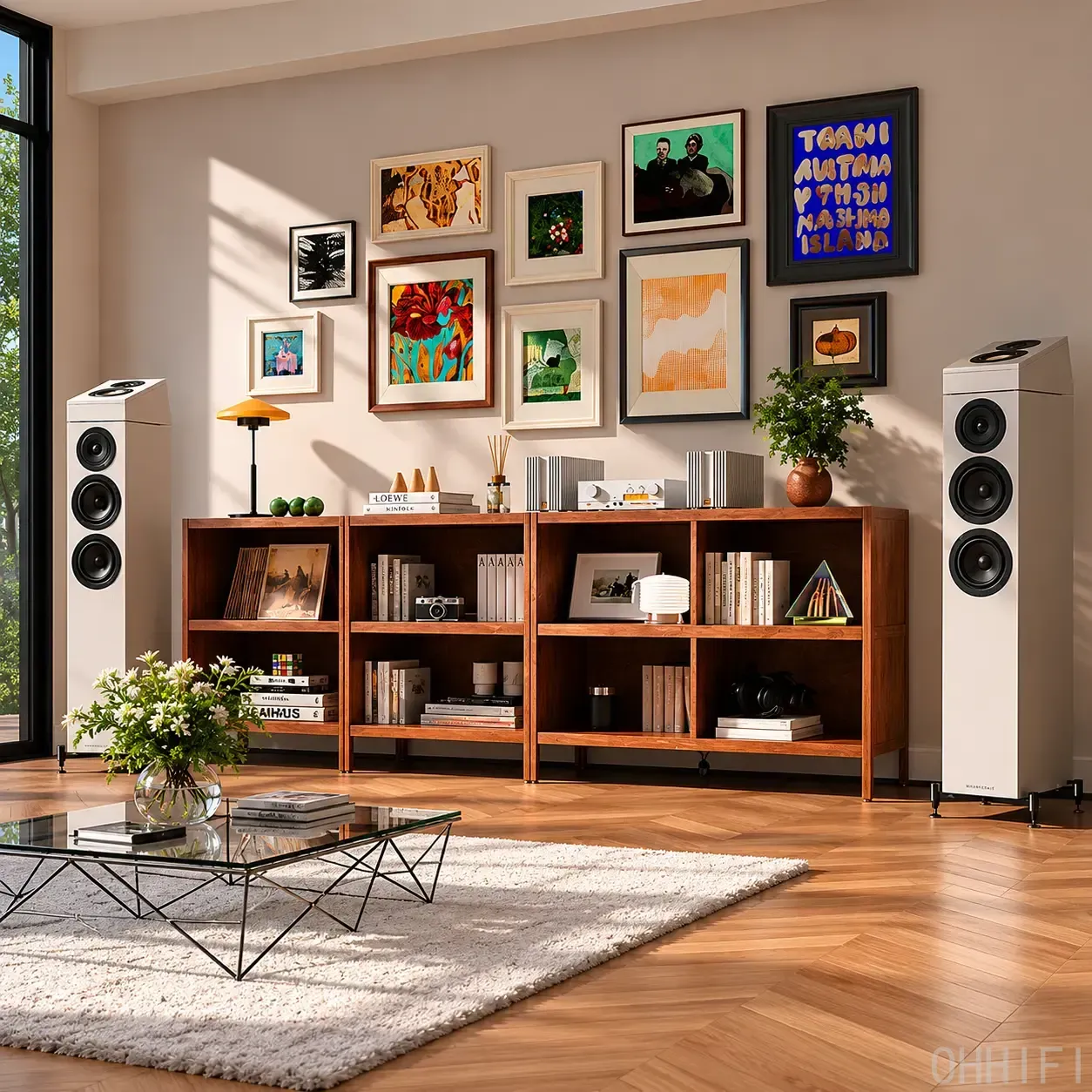
There's a wrinkle for US buyers, though, and it's a big one. In the UK the price held flat at £499. Stateside, the sticker climbed from $798 on the original to $1,198 on the 12.3i — a 50% jump on a speaker that's mechanically almost identical to its predecessor. So the question this review has to answer isn't just "did the tweaks make it better." It's whether the Diamond is still the value champion at a price that's no longer the value it used to be.
Quick Specs
| Spec | Wharfedale Diamond 12.3i |
|---|---|
| Type | 2.5-way, rear-ported floorstander |
| Tweeter | 25mm woven-polyester (textile) dome |
| Mid/bass | 13cm (5") Klarity mica-loaded polypropylene |
| Lower bass driver | 13cm (5") Klarity mica-loaded polypropylene |
| Crossover | 2.2kHz (LKR 24dB topology, air-core inductors) |
| Frequency response | 45Hz–20kHz (±3dB), –6dB at 40Hz |
| Sensitivity | 89dB (2.83V / 1m, claimed) |
| Impedance | 8 ohm nominal / 5 ohm minimum |
| Recommended power | 30–150W |
| Cabinet volume | 26.6 litres |
| Dimensions (HWD) | 97.5 × 18 × 34.8 cm (38.4 × 7.1 × 13.7 in) |
| Weight | 19.5kg (43 lb) each |
| Finishes | Black, walnut, grey |
| Bi-wire | No (single-wired) |
| Price (pair) | £499 / $1,198 / AU$1,699 |
Design & Build: Spot the Difference
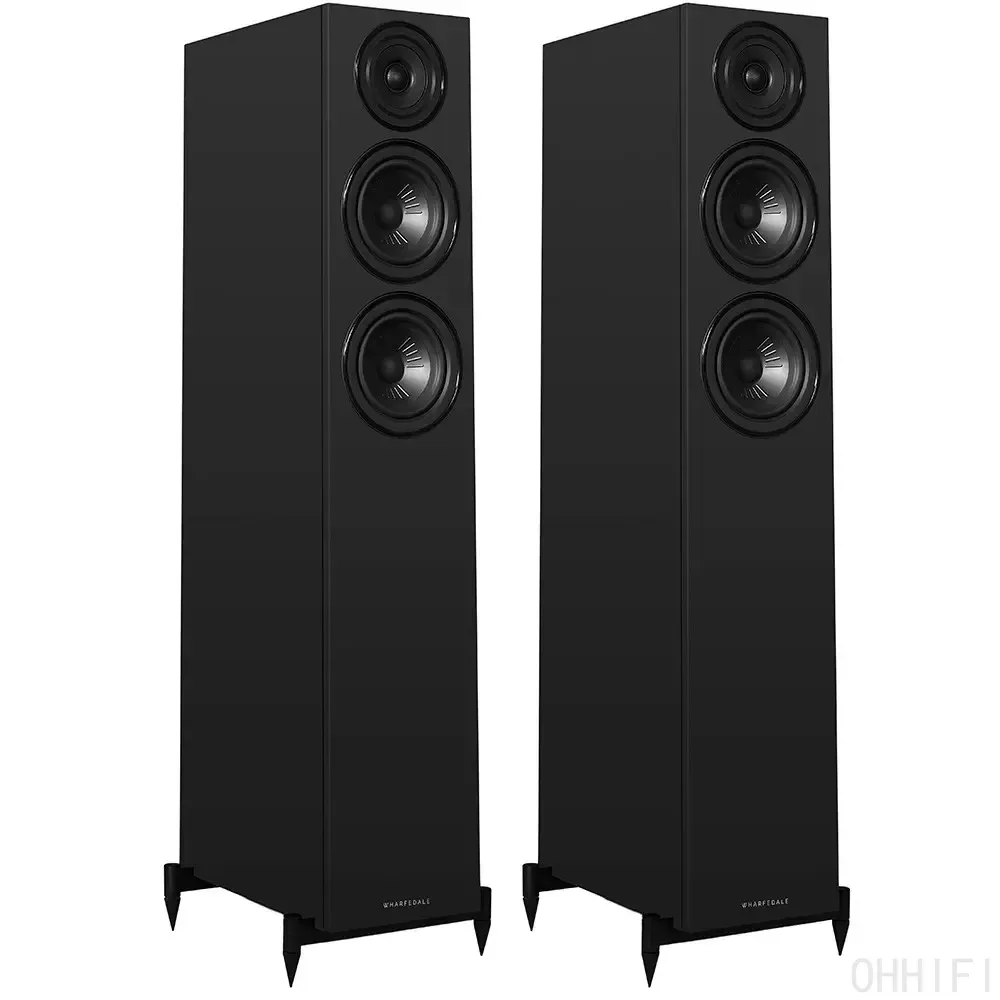
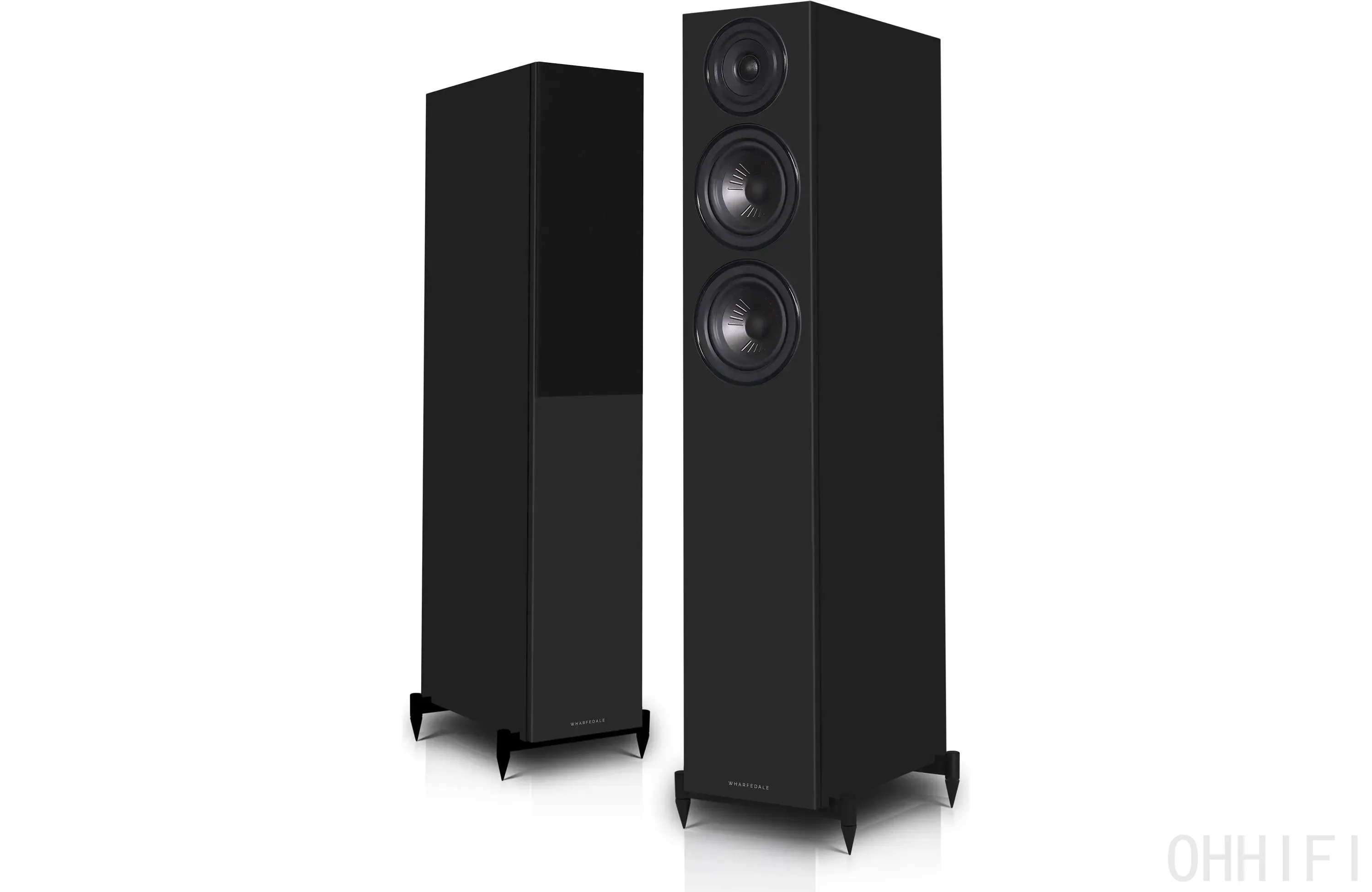
Stand the 12.3i next to the old 12.3 and you'll need a minute to tell them apart. Same slim 97.5cm cabinet, same 18cm-wide front baffle, same trio of drivers. The most obvious change is the finish palette — black, walnut, and a new stone grey — all tasteful, none shouting for attention. The black review configuration is the kind of understated that disappears into a room, which at this height and footprint it does easily. For anyone fighting for floor space, an 18cm-wide tower is a genuine selling point.
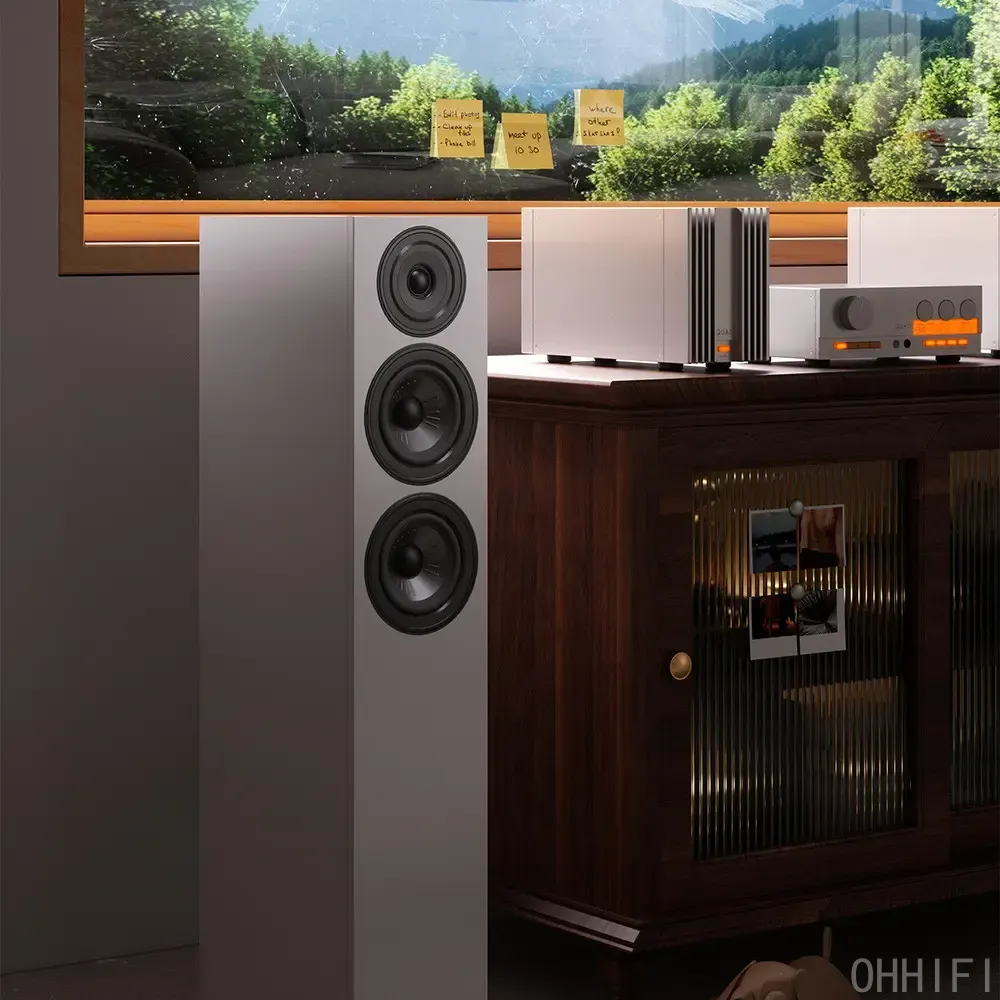
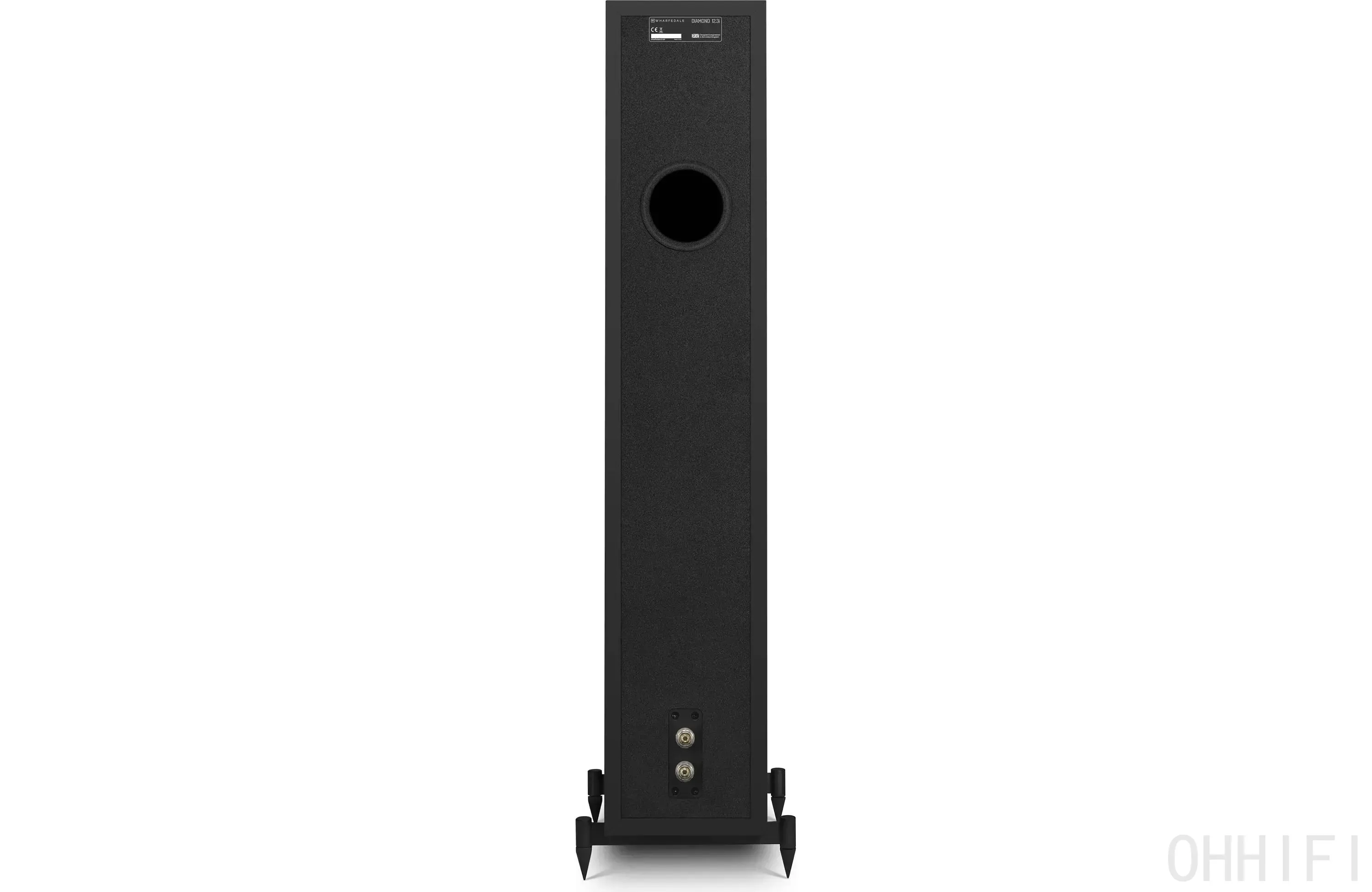
The substance of the update lives at the rear. The reflex port looks unchanged from the outside, but there's now a soft rubber ring bonded to the inside lip — a small thing that points to where Wharfedale spent its engineering hours. The company says the port redesign involved laser interferometry and computational fluid dynamics to clean up airflow and pressure behaviour, led by acoustic design chief Peter Comeau. Whether you buy the marketing or not, the result is audible, and I'll get to that.
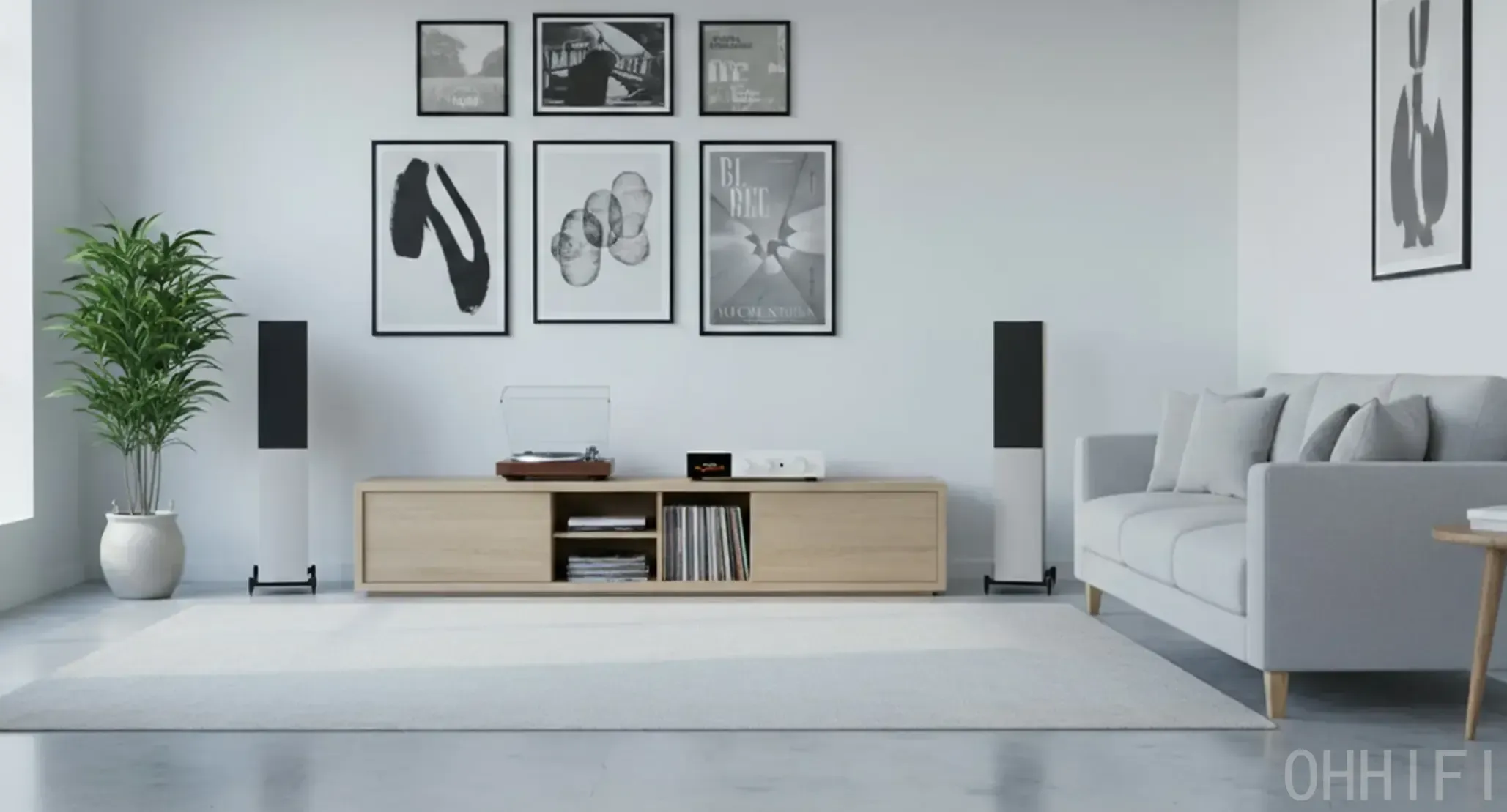
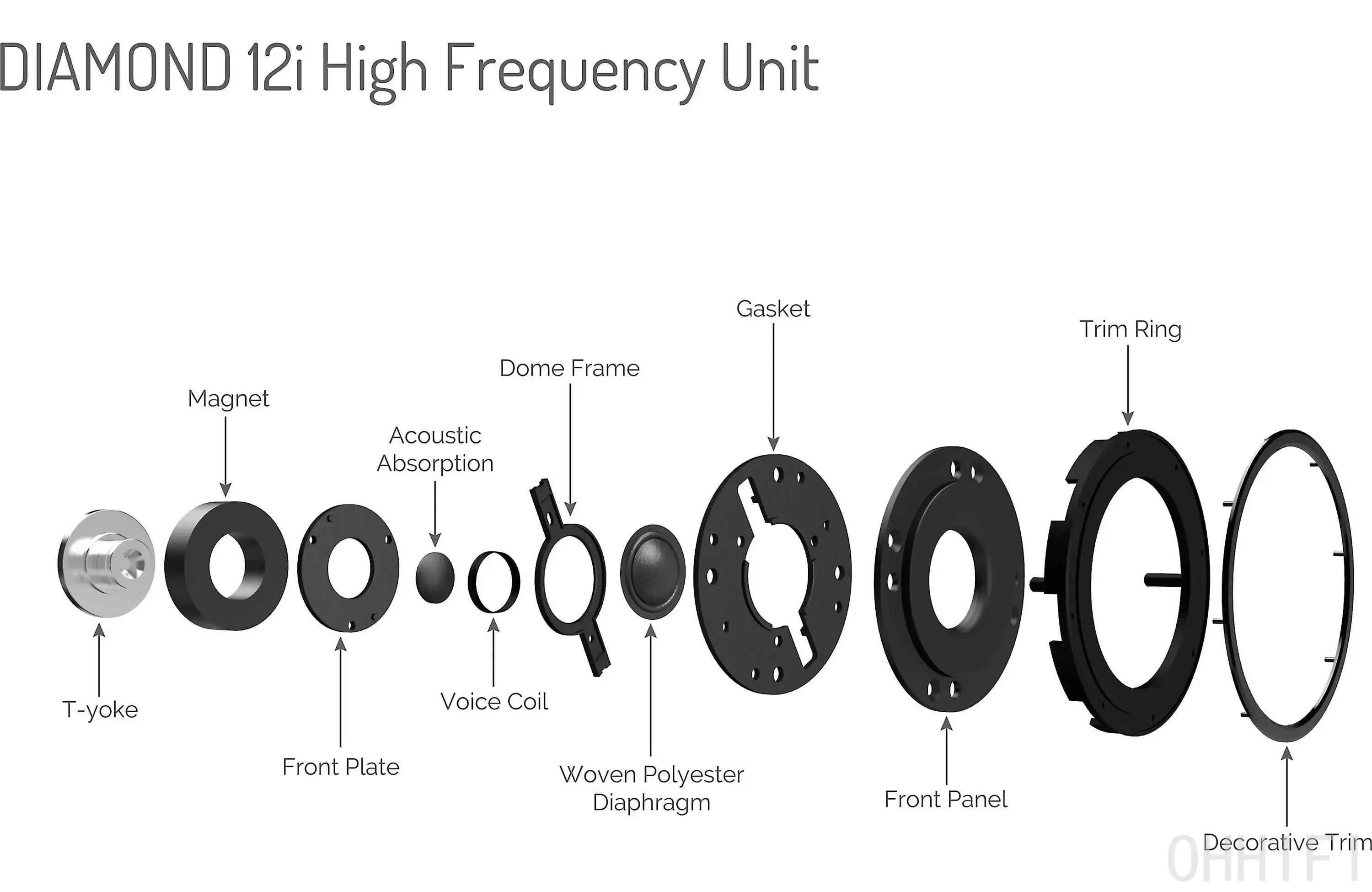
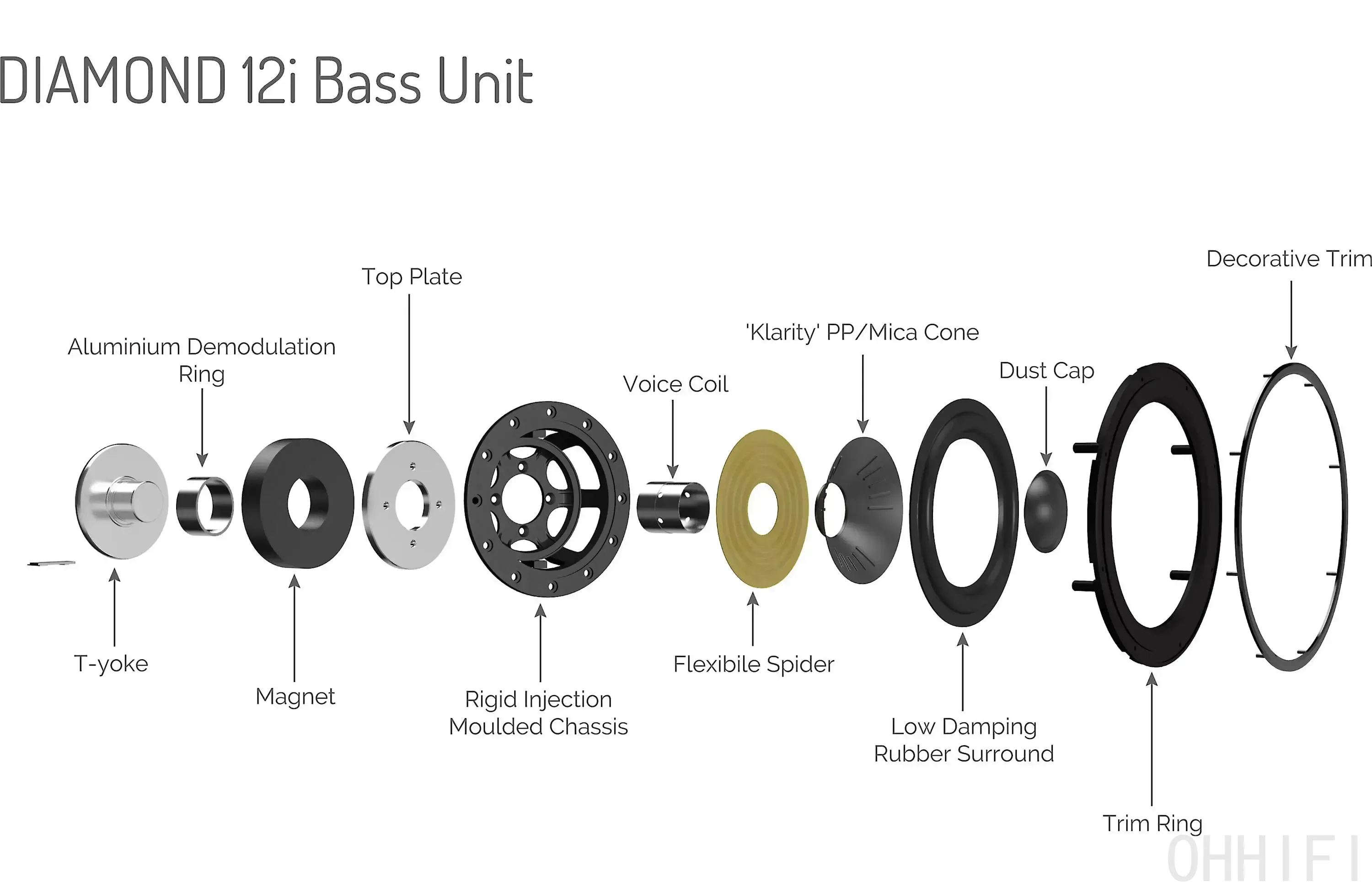
The drivers are the part nobody touched, and rightly so — they were never the weakness. Both 13cm cones use Wharfedale's Klarity material, which is mica-loaded polypropylene dressed up with a brand name: stiff, light, and well-damped, with a low-loss surround. The 25mm textile dome handling everything above 2.2kHz is the same unit that's done duty across the Diamond 12 range, and it remains one of the better budget tweeters out there. The crossover uses air-core inductors — the type you usually see further up the food chain — which is a nice touch for the money.

One downgrade worth noting: the 12.3i is single-wired only. The original's twin terminal pairs are gone. I won't pretend to be heartbroken; bi-wiring at this price was always more theatre than substance, and most owners ran a single run of cable anyway. But it's a deletion, not an addition, and it deserves to be on the record.
Build is solid for the cash. Cabinets feel inert when you knock them, the finish is clean, and the plinth-and-foot arrangement is sturdy. In a direct side-by-side with the outgoing model, the metalwork on the new feet is a hair less crisp — but it's hidden once the speaker's planted, so file it under trivia.
The Sound: Where the Diamond Earns Its Keep
The Diamond line has been a fixture in this bracket for years, and I've spent enough time with it to have a clear mental picture of the house sound — neutral leaning gently warm, big on midrange texture, refined up top, never fatiguing. The interesting question is what the new port and damping do to that recipe. The short version: they make the 12.3i a more extroverted speaker than the one it replaces. Bigger, bolder, punchier. Whether that's an upgrade depends on what you wanted from a Diamond in the first place.
Bass: More Muscle, More Demands
This is where the changes hit hardest. Cue up Bonobo's Kerala and the low end has noticeably more authority than the old 12.3 ever managed — the synth bass lands with weight and a satisfying sense of pressure rather than just politely showing up. Switch to Daft Punk's Contact and the way the track builds toward its wall-of-noise climax has real heft; the 12.3i keeps the slam intact rather than smearing it. Despite identical published specs to the original, the new port tuning makes the bass seem to dig a touch deeper and certainly punch harder.
The catch is placement. The original 12.3 was famously forgiving — shove it near a wall and it stayed balanced. The 12.3i is fussier. Get it too close to a boundary and that newfound bass authority tips into thickness. This is consistent across what I've heard and what other listeners report: the more muscular tuning trades some of the old model's room-friendliness. You'll want it pulled out into the room and given some breathing space, which I'll quantify in the test notes.
Midrange: The Part That Still Sounds Like Money
The Klarity drivers are unchanged, and the midrange is still the best argument for buying one of these. Put on Jill Scott's Golden and her voice has that lived-in body and texture the Diamonds have always done well — there's grain and emotion in the delivery, not just a clean outline. The same goes for vocal-led hip-hop; run De La Soul's YUHDONTSTOP and the interplay of voices comes through with clarity and a sense of fun, each delivery distinct in the mix. Acoustic guitar, piano, brushed snare — the 12.3i resolves the small stuff without sounding clinical about it. For a tower built down to a price, the tonal honesty through the mids is the headline act, full stop.
Treble: A Little More Forward Than I Expected
Here's the surprise. The tweeter is identical to the old model's, yet the 12.3i sounds a shade brighter and more present up top. I suspect that's partly the new tonal balance shifting the spotlight and partly the cleaner port not muddying the upper registers. Either way, on Stravinsky's The Rite of Spring the bite of brass and the shimmer of cymbals come through with more air and low-level detail than before. It never crosses into hard or splashy — the textile dome keeps things civilised by class standards — but if you're running a bright source or a forward amp, take note. This is a more energetic-sounding speaker than the one it replaces.
Soundstage & Dynamics: Punches Above the Footprint
For a slim tower, the 12.3i throws a convincingly large stage. Mahler's Symphony No. 2 spreads wide and layers reasonably deep, and the speaker doesn't collapse when the orchestra piles in. Dynamically it's more vivid than the original — the swing from quiet to loud and back has more conviction, which is exactly what makes something like John Williams' Indiana Jones theme land with proper drama. It's surefooted rather than hyperactive rhythmically; it conveys momentum without ever feeling like it's rushing you. That composure is part of the Diamond charm, and it survives the update intact.
Test Setup
I ran the 12.3i from a solid-state source into my reference integrated amp, in a treated listening room. After moving them around, they settled best around 70cm out from the rear wall, with a slight toe-in toward the listening seat to firm up the centre image and stereo focus. That's further into the room than I'd have needed the old 12.3, and it matters: leave these jammed against a wall and you're not hearing what they're capable of. The 89dB sensitivity and benign-ish 8-ohm load mean they're not power-hungry — anything competent in the £400–£800 / $500–$1,000 amplifier bracket will drive them happily.
Measured Performance
There's no independent anechoic data on the "i" yet, but since the drivers and crossover carry over from the outgoing 12.3, the published lab work on that model is the best objective reference we have. Per Hi-Fi World's lab measurements of the original 12.3, the frequency response showed a mild presence/treble lift — enough to aid detail retrieval and explain that slightly forward top end — plus a small lower-midrange warmth bump kept in check, with the reflex port tuned around 50Hz and deep bass shelved to suit near-wall use. Measured sensitivity came in nearer 88dB than the claimed 89dB, and the hifi-guide database lists the old model at 87.5dB with a minimum impedance around 4.6 ohms.
Two things follow. First, the published numbers line up cleanly with what I'm hearing: a touch of treble lift, a touch of midrange warmth, and a port doing real work in the bass. Second, Wharfedale now rates the 12.3i's minimum impedance at 5.0 ohms rather than the original's 4.6, which suggests the crossover or port tweak nudged the load slightly easier — modest, but in the right direction for budget amps. Treat the bass-extension figure (–6dB at 40Hz) as honest-to-optimistic; real in-room output below 45Hz depends heavily on how you place them.
The Competition
At £499 in the UK this is still a tough field to beat. At $1,198 in the US, the maths changes, because some excellent rivals undercut it badly. Here's how the realistic cross-shops stack up.
| Rival | Comparison | Verdict |
|---|---|---|
| Fyne Audio F302i ($745 / £500) | Two-way tower with a titanium tweeter borrowed from Fyne's pricier F500 line. Sweeter, more cohesive top end and superb timing; gives up some bass weight and scale to the Wharfedale. | The one to beat on value — in the US it's $450 cheaper for a five-star speaker. If the Diamond's whole pitch is bang-for-buck, this undercuts the argument. |
| Dali Oberon 5 (~$1,299 / £599) | Warmer, fuller, more "flesh on the bones," and famously easy to position — no toe-in fiddling required. Less neutral and softer on leading edges than the Wharfedale. | The relaxed, room-friendly alternative for anyone who doesn't want to fight placement. Sounds bigger than it has any right to. |
| Q Acoustics 5040 (~$1,099 / £999) | Gorgeous cabinet, open and detailed, but the treble can turn lean or aggressive on a bright system and it wants a warm-sounding amp to balance out. | Style and resolution, but it's the most system-fussy of the bunch. Match it carefully or it gets sterile. |
| Wharfedale Diamond 12.3 (outgoing, closeout/used) | The 12.3i's own predecessor. Side-by-side it's a touch more cohesive and its bass is better integrated, if clearly less powerful. | If you can still grab a closeout or clean used pair, it's arguably the connoisseur's pick — and a relative bargain. |
The Verdict: 8.0 / 10
Strip away the price tag and the Diamond 12.3i is a genuinely fine budget floorstander — bolder, punchier, and more dynamic than the speaker it replaces, with that signature Klarity midrange fully intact and a top end that's grown a little more confident. As a piece of audio engineering it deserves the praise it'll inevitably collect.
The caveats are real, though. It's fussier about placement than the old model, the bi-wiring is gone, and — for anyone reading this in the US — the price story has shifted from "no-brainer" to "do the homework." At £499 in the UK, this is still the class leader and an easy recommendation. At $1,198 stateside, it's a very good speaker that no longer automatically wins its bracket, with the Fyne F302i sitting $450 below it and the Dali Oberon 5 offering an easier life for similar money. Excellent product; the value math just isn't the slam-dunk it once was on this side of the Atlantic.
Pros
- Bolder, punchier, more dynamic than the outgoing 12.3
- Genuinely deep, articulate bass from a slim 5-inch-driver tower
- That refined, textured Klarity midrange — still the best in class
- Civilised, unfatiguing textile-dome treble with extra air
- Solid build, three tasteful finishes, room-friendly 18cm footprint
Cons
- Fussier about wall proximity and toe-in than its predecessor
- Single-wired only now — the original's bi-wire terminals are gone
- US price has jumped to $1,198 from $798, weakening the value pitch
- The outgoing 12.3 is arguably more cohesive in a direct A/B
- No independent anechoic data on the "i" yet
Who Should Buy / Who Should Skip
This is for you if you've got the floor space to pull a pair 60–70cm into the room, you want a slim tower that does big, dramatic, textured sound, and you're shopping in the UK or anywhere the price stayed sensible. It's also a strong pick if you're building a music-and-movies system that needs front towers with genuine bass weight.
Look elsewhere if your speakers have to live tight against a wall (the old 12.3, the Dali Oberon 5, or a good standmount will serve you better), or if you're a US buyer for whom every dollar counts — in which case the Fyne F302i at $745 demands an audition before you spend $1,198 here.



Comments