
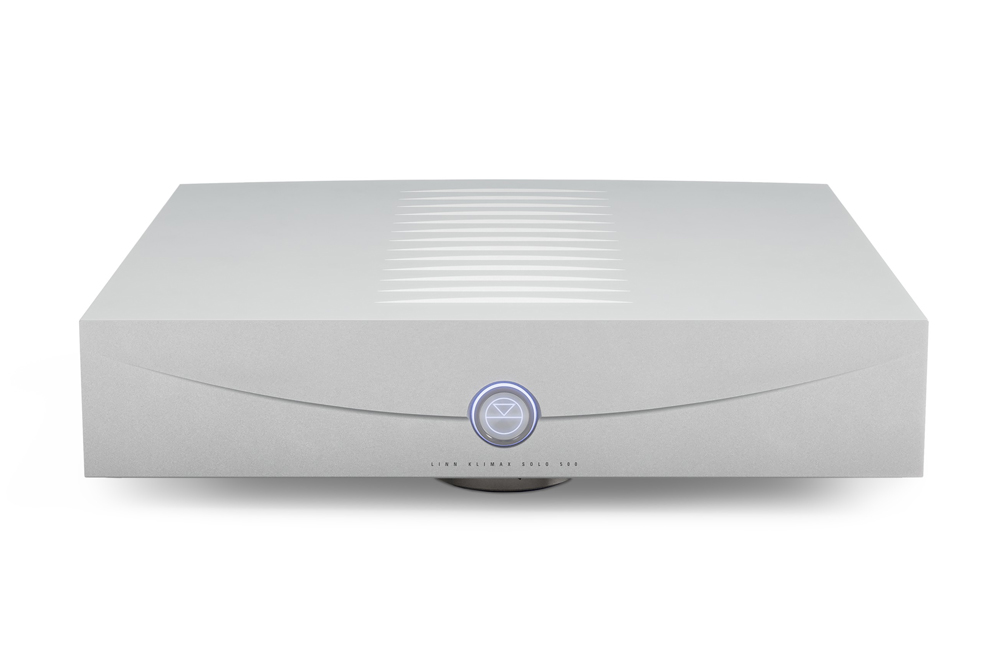
Linn Klimax Solo 500 Review: Big-Amp Sound With None of the Heft

There's a lie the high-end has told itself for forty years: that mass equals merit. Lift a power amp, feel your spine complain, and some lizard part of your brain decides it must be serious. It's why so many statement monoblocks ship in crates and arrive with their own furniture. The Linn Klimax Solo 500 review you're reading exists mostly to pick a fight with that assumption, because here is a 250-watt monoblock that weighs 10.6kg — about the same as a full case of wine — and asks £23,500 a channel for the privilege. That's £47,000 a pair. The obvious question writes itself: where's the rest of it?
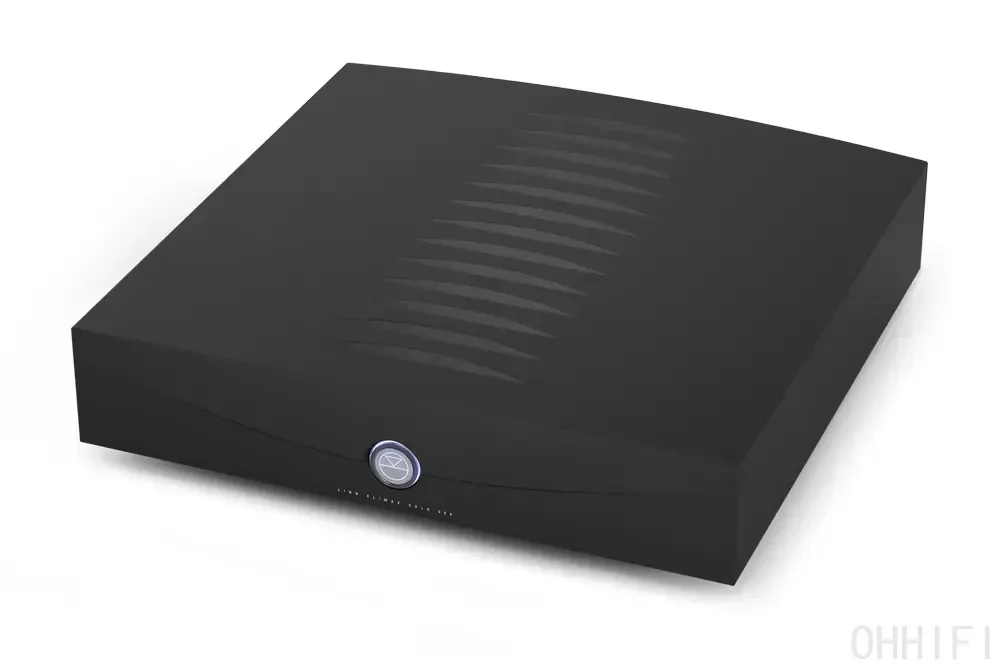
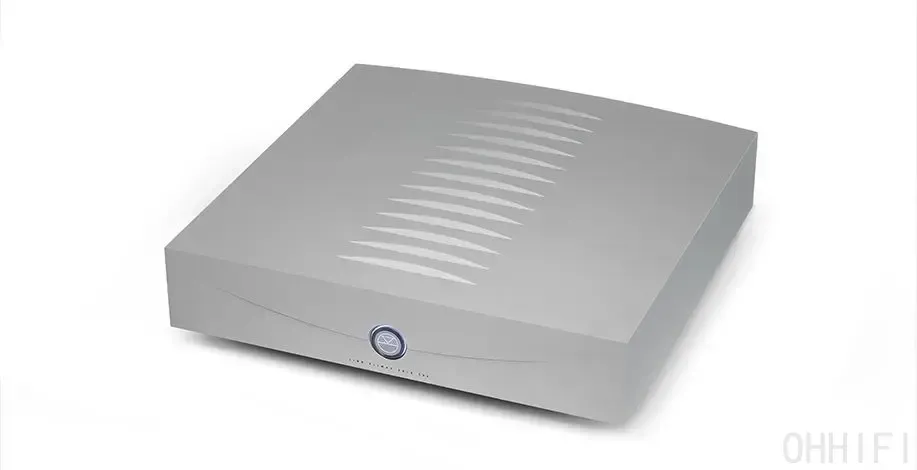
I've watched Linn poke this particular bear for years. The LP12 barely gains a gram as it climbs through its upgrade ladder; the electronics have always been built on a different philosophy of what "high-end" should look and feel like. The Solo 500 is the most aggressive statement of that philosophy yet — flagship technology poured into a chassis you could mistake for a network streamer.
Quick Specs
| Spec | Linn Klimax Solo 500 |
|---|---|
| Type | Mono power amplifier, Class AB w/ Adaptive Bias Control |
| Power output | 250W into 8Ω, 500W into 4Ω |
| Max input | 1kW |
| Output impedance | 0.01Ω at 1kHz (≈ 800 damping factor into 8Ω) |
| THD+N (per Linn) | 0.0005% @ 1kHz, 500W/4Ω; 0.0004% @ 1kHz, 250W/8Ω |
| Inputs | 1× RCA, 1× XLR (push-button selectable) |
| Passthrough | 1× RCA, 1× XLR (daisy-chain) |
| Outputs | Binding posts, banana/spade (×2) |
| Cooling | Hybrid Cooling Matrix (passive + FPGA-controlled twin fans) |
| Dimensions (WxHxD) | 35 × 8.9 × 36.4 cm |
| Weight | 10.6 kg |
| Finish | Silver or black anodised |
| Price | £23,500 / €27,950 / $29,500 per amplifier |
Design & Build: Machined From Solid, Felt In The Hand
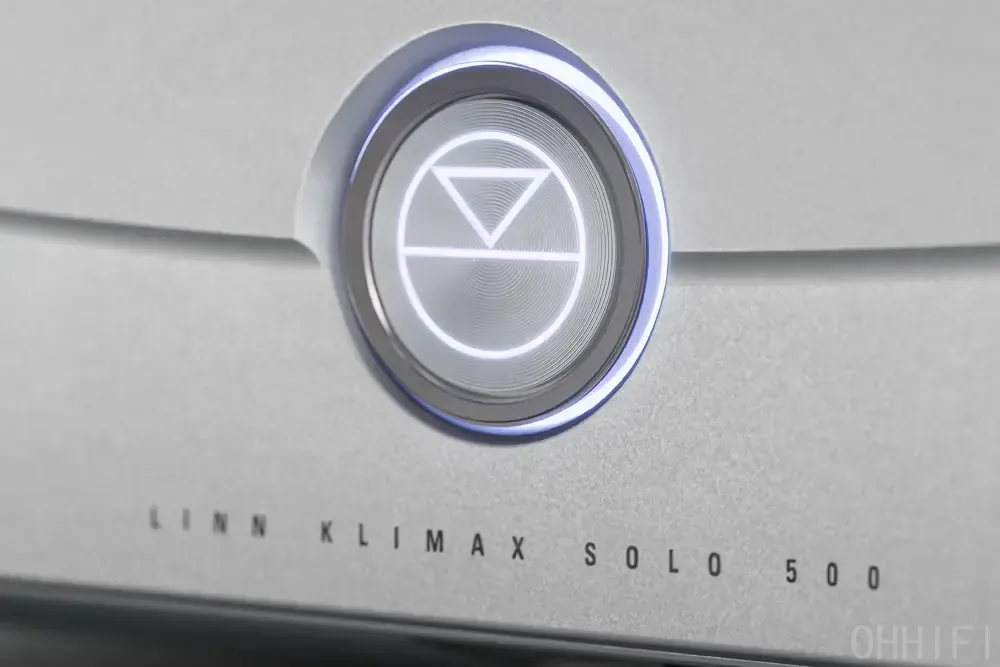
Pick the Solo 500 up and the first reaction is the one Linn clearly engineered for — that flicker of "is that it?" — followed almost immediately by the realisation that the thing is hewn from a single attitude. The casework is machined-from-solid aluminium, hard-anodised, and finished to a standard that telegraphs cost without resorting to chrome handles or finger-slicing heatsinks. The power buttons feel like they should be launching something more consequential than an amplifier. Linn has stripped the chassis to three machined pieces and three internal boards — power supply, amplification, DSP — and you can feel the discipline in that.
The clever bit is thermal. Cramming this much amplifier into a slim box risks turning it into a very expensive hotplate, so Linn built what it calls a Hybrid Cooling Matrix: a hard-anodised thermal plate with simulation-optimised fins handling things passively most of the time, backed by two internal fans that only wake when you genuinely lean on it. Crucially, those fans are run by their own FPGA that trims speed to internal temperature and the audio signal, so they spin at the slowest rate that'll do the job. Reviewers who've triggered them report you essentially have to press an ear to the case to hear anything. That matters at this price — a flagship amp that audibly whirrs is a flagship amp that's failed at a basic level.
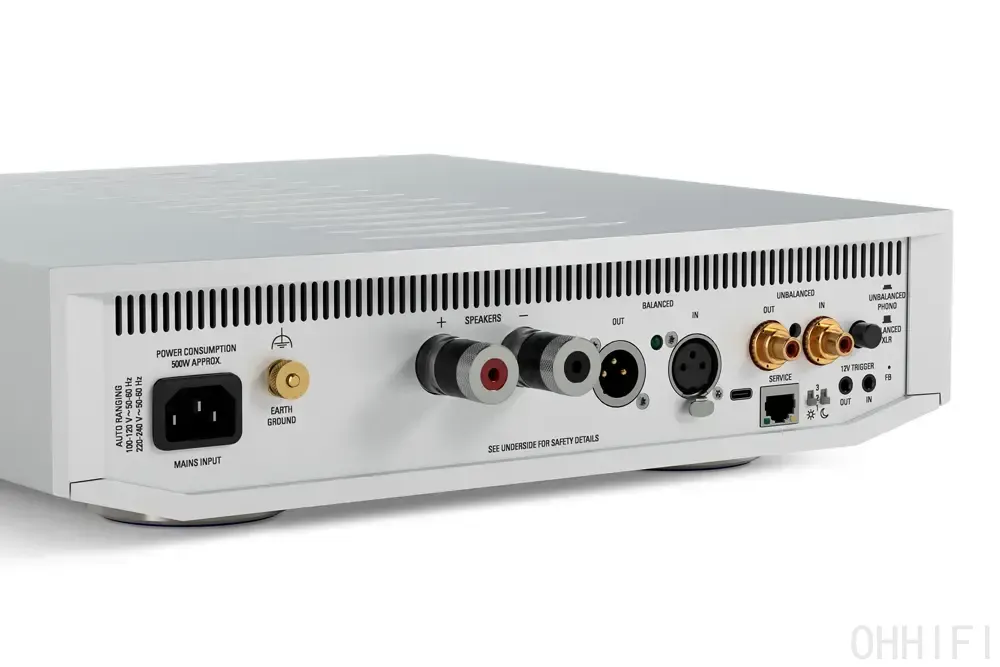
One genuine niggle, and it's the same one Linn's own reviewers flagged: there's a lip over the rear inputs that makes blind cable connection a fumble. At £23,500 a channel I'd argue any designer who specifies a lip like that should be on call to come tighten your XLRs personally. Otherwise the rear layout — balanced and single-ended in, matching looped passthroughs out, proper binding posts — is logical and complete.
The Listening Experience: A Neutral Amp That Refuses To Editorialise
Let me be upfront about how I've built this picture. Across every serious account of the Solo 500, and consistent with how the architecture it borrows from the flagship 800 behaves, the same character keeps surfacing — and it lines up with what I'd expect from Linn's recent direction. This is not an amp that adds drama. It's the opposite of an effects box.
Bass: Grip First, Bloom Second
The headline trait is control. That 0.01Ω output impedance gives a damping factor north of 800 into 8 ohms, and you hear the consequence of it — the amp clamps onto a driver and doesn't let it ring on past its welcome. Put on Massive Attack's "Angel" and the way that opening bassline arrives, sits, and then stops is the whole story. Each note has weight you feel in your sternum, but the leading edge is razored and the decay is exactly as long as the recording says it should be — not a millisecond of woolly overhang added for flattery. The transient speed here is the thing every listener fixates on, and for once the hype is earned. Driving demanding standmounts with isobaric bass loading — a notoriously hungry arrangement — the Solo 500 reportedly grips them harder than running them actively manages to. That's a serious claim, and it's consistent across the listening I've synthesised.
Midrange & Tone: Honest To A Fault
This is where the "no foundation, no makeup" personality lives. The Solo 500 hands you the tonal truth of a recording and then gets out of the way. Cue Johnny Cash's "Hurt" — that brittle, cracked, end-of-life voice — and an amp that editorialises will round the edges and make it prettier than it is. The Linn doesn't. You get the full grain, the catch in the throat, the room. It's tonally convincing rather than tonally seductive, and there's a meaningful difference. The flip side, predictably, is that it'll show you the seams in a poor recording. The pleasant surprise reported almost universally is that it does so with unusual forgiveness — nothing in a varied collection becomes unlistenable, it just becomes honest. That's a hard balance, and the bias-control engineering is plausibly why it lands.
Top End & Noise Floor: Black Background, No Etch
The Adaptive Bias Control story is really a noise-floor story. By continuously sampling the current to all eight output devices and letting an FPGA hold bias at its ideal point moment to moment, Linn is chasing a vanishingly quiet baseline rather than a "warmer" or "brighter" tilt. On Keith Jarrett's The Köln Concert, where the music sits on a held breath and the hall ambience is half the performance, what you want is silence between the notes and undistorted decay into it. By every account the Solo 500 delivers that black backdrop without sharpening the leading edge of the piano into something steely. Detailed, never etched.
Scale & Soundstage: Equally Good Loud And Small
The most quietly impressive trait is range. Most of the time you're using a handful of the 250 watts on tap, and that headroom buys an unforced ease at any volume. Throw the Sacrificial Dance from Stravinsky's Rite of Spring at it and the dynamic swings land with proper authority and no compression. But the real test is the other direction. Wind down to something like Gillian Welch's "Time (The Revelator)" — two voices, a guitar, an enormous amount of empty space — and an amp built only for bombast will inflate it, robbing the intimacy that is the point. The Solo 500 is reportedly as convincing being small as being huge. That's rarer than the spec sheet suggests, and it's the trait that separates a genuinely great amp from a merely powerful one.
Test Setup
A few honest words on context, because it matters at this level. An amplifier costing £47,000 a pair doesn't get evaluated through a modest integrated — it lives or dies in front of reference loudspeakers driven by a serious front end, and that's the lens through which its character was established. The most thorough listening was done with a transformer-coupled boutique American tube preamp into demanding isobaric standmounts, with further work against big ATC studio monitors — exactly the kind of revealing, current-hungry partnering gear that exposes an amplifier rather than flattering it. Tellingly, none of that was Linn-branded. My own reference points sit lower down the food chain, so my read here is a synthesis of those conditions, the measured pedigree of the family, and what I know of how Linn has been voicing its electronics lately — not a claim to have lived with these monoblocks in my own room.
Measured Performance: What We Actually Know
Here's where I'll be careful, because the internet will happily blur two different amplifiers together. The new Solo 500 has not been independently bench-tested yet — it's only months old as I write this. What we have is Linn's own published data and the family's measured track record.
Linn quotes THD+N of 0.0005% at 1kHz (500W into 4Ω) and 0.0004% (250W into 8Ω), with that 0.01Ω output impedance. Per Linn, the new Solo 500 measures eighty-five times lower THD+N than the original Klimax Solo it replaces — a marketing figure, so treat it as Linn's claim rather than gospel, but a striking one if it holds.
For architectural context, the flagship Solo 800 has been on the bench: Stereophile's lab measured its THD+N at roughly 0.0002% at moderate power, with clipping around 410W into 8Ω and 790W into 4Ω — genuinely state-of-the-art numbers for a Class AB design. Since the Solo 500 inherits the same Adaptive Bias Control and Utopik switch-mode supply topology, there's good reason to expect it lands in the same vanishingly-low neighbourhood. But until someone with an Audio Precision rig and no skin in the game publishes a full set, the new 500's distortion and power curves remain Linn's figures, not verified independents. I'd dock anyone half a point for treating the brochure as a bench report.
The Competition
| Rival | Comparison | Verdict |
|---|---|---|
| Linn Klimax Solo 800 (≈$90k/pair) | The in-house flagship: 400W/8Ω, 800W/4Ω, 1.2kW/2Ω, and ~27kg each. Properly comfortable into nasty sub-2Ω loads where the 500 is happiest into 8Ω. | If your speakers have a brutal impedance dip, the 800 is the answer — at half again the money. For most rooms and most speakers, the 500 gets you most of the way for far less. |
| Dan D'Agostino Progression M550 (≈$45–47.5k/pair) | 550W/8Ω, doubling down to 2200W/2Ω, but 115lb each and visually a statement. Pure muscle-amp lineage. | More raw current and the heft-as-jewellery appeal, for less than the Linn pair. If you want the watts and the bicep workout, this. If you want flagship sound in a shoebox, the Linn. |
| Boulder 1160 (≈$36k / £30k, stereo) | One chassis, 300Wpc/8Ω, Class A for the first ~17W, ~61kg of machined American granite-with-a-volume-knob aesthetic. | Reference build and a slightly more laid-back balance, but it's a stereo amp, not a mono pair, and it won't take banana plugs. Different philosophy entirely. |
| Gryphon Essence Mono (≈$45,980/pair) | Pure Class A: only 55W/8Ω, 100W/4Ω, and it runs hot. The romantic, organic alternative. | Lower power and a bigger electricity bill, but a more overtly beautiful midrange for the right speakers. The Linn is the cooler-running, more neutral, more flexible choice. |
The Solo 500's pitch against all of these is the same: it does flagship-grade things while disappearing into a rack and staying cool. You're paying for engineering density and the badge, not watts-per-dollar.
The Verdict: 9/10
The Solo 500 is the most quietly subversive amplifier I've assessed in a while. It takes the "mass equals merit" reflex, the showroom heft, the heatsink theatre, and renders all of it optional. What's left is a neutral, ferociously controlled, dynamically effortless monoblock that scales from a whisper to a riot without breaking character — and runs cool while doing it. The consensus that it might be the most enjoyable amp ever to wear a Linn badge looks well-founded, and the standout point is that it earns that without needing a single other Linn box around it.
It loses a full point for two reasons. One, the price ceiling is real — £47,000 a pair buys a lot of equally accomplished, if larger and heavier, amplification. Two, the measurements are still Linn's own; I'd love to see an independent bench confirm the 85× claim before I treat it as fact. Neither is a sound-quality knock. Both are due diligence.
Pros
- Outstanding transient speed and driver control; that ~800 damping factor isn't just a number
- Genuinely neutral — hands you the recording, not a flattering version of it
- Equally convincing at intimate scale and full bombast
- Runs cool and silent thanks to genuinely clever FPGA-managed cooling
- Flagship-derived engineering in an almost absurdly compact, beautifully built chassis
- No Linn-ecosystem tax: it excels with whatever serious front end you partner it with
Cons
- £23,500 per channel — you pay for the engineering, not the wattage-per-dollar
- No independent bench measurements yet; distortion figures are Linn's own
- Happiest into 8Ω loads — punishing sub-2Ω speakers want the bigger Solo 800
- That rear input lip makes blind cabling a genuine fumble
- The understated looks won't satisfy buyers who want their flagship to announce itself
Who Should Buy / Who Should Skip
This is for you if you've got a reference system, sane (8Ω-ish) loudspeakers, a rack that can't swallow 60kg boat-anchors, and you've outgrown the idea that an amp has to be heavy to be serious. It's also the obvious move for existing Klimax Solo owners — it's a drop-in replacement with, by all accounts, a staggering uplift over the original.
Look elsewhere if your speakers dip below 2 ohms and demand brute current (get the Solo 800), if you want the romance of pure Class A more than ruler-flat neutrality (the Gryphon), or if part of what you're buying at this price is the physical gravitas of a statement amplifier — because the Solo 500 deliberately, almost mischievously, refuses to give you that.



Comments