
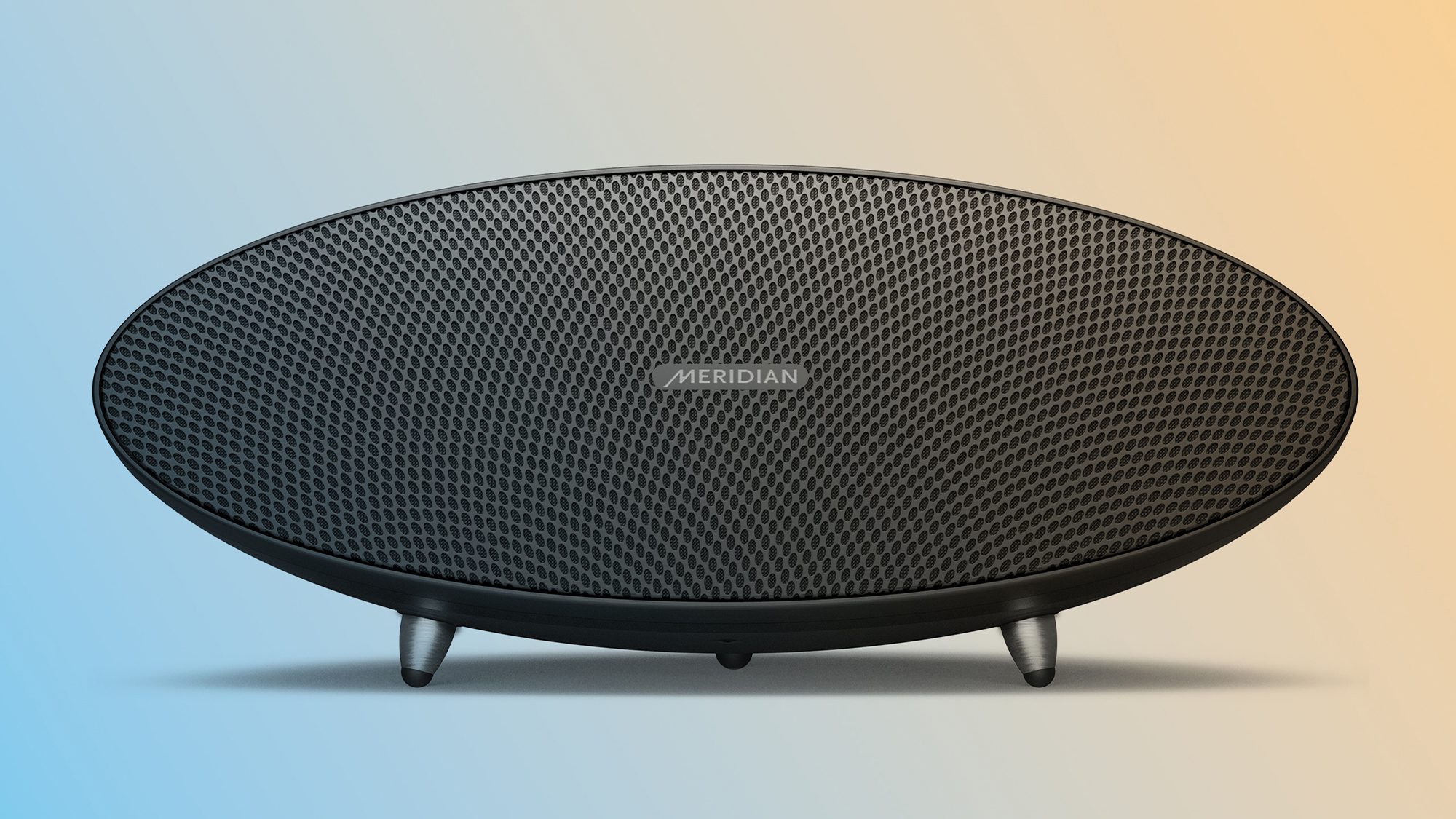
Meridian Ellipse: The Wireless Speaker That Took Them Forty Years to Make — And It Shows

Let me be upfront: £1,900 / $3,000 for a single-box wireless speaker is a hard number to type without wincing. But here's the thing — Meridian has been engineering DSP-driven audio since the late 1980s, long before "room correction" became a bullet point on every spec sheet. So when the company finally steps into the wireless speaker arena, you'd expect them to arrive with receipts. The Ellipse does exactly that. Whether those receipts are worth cashing depends on who you are and what you want.

What's Inside This Thing
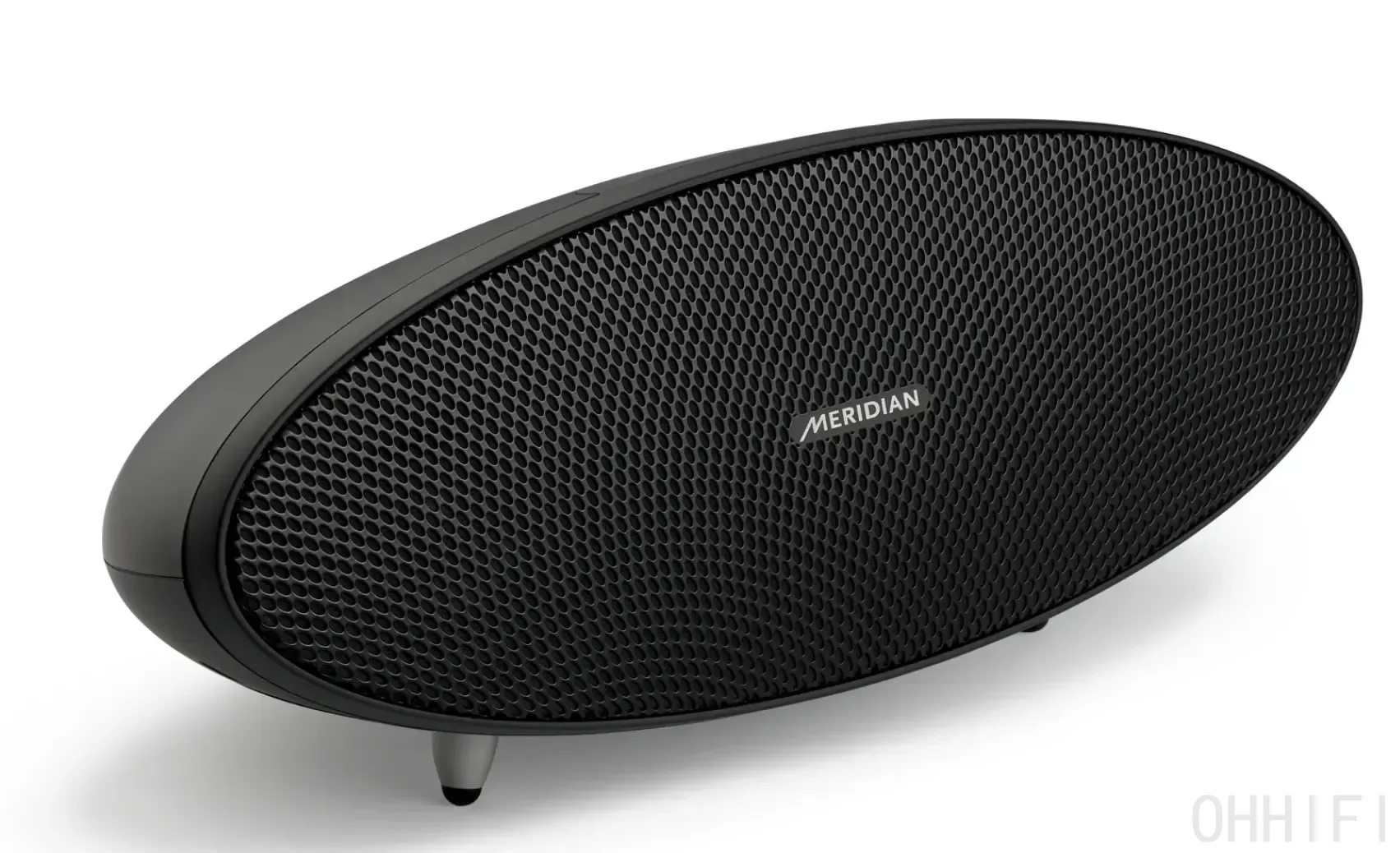
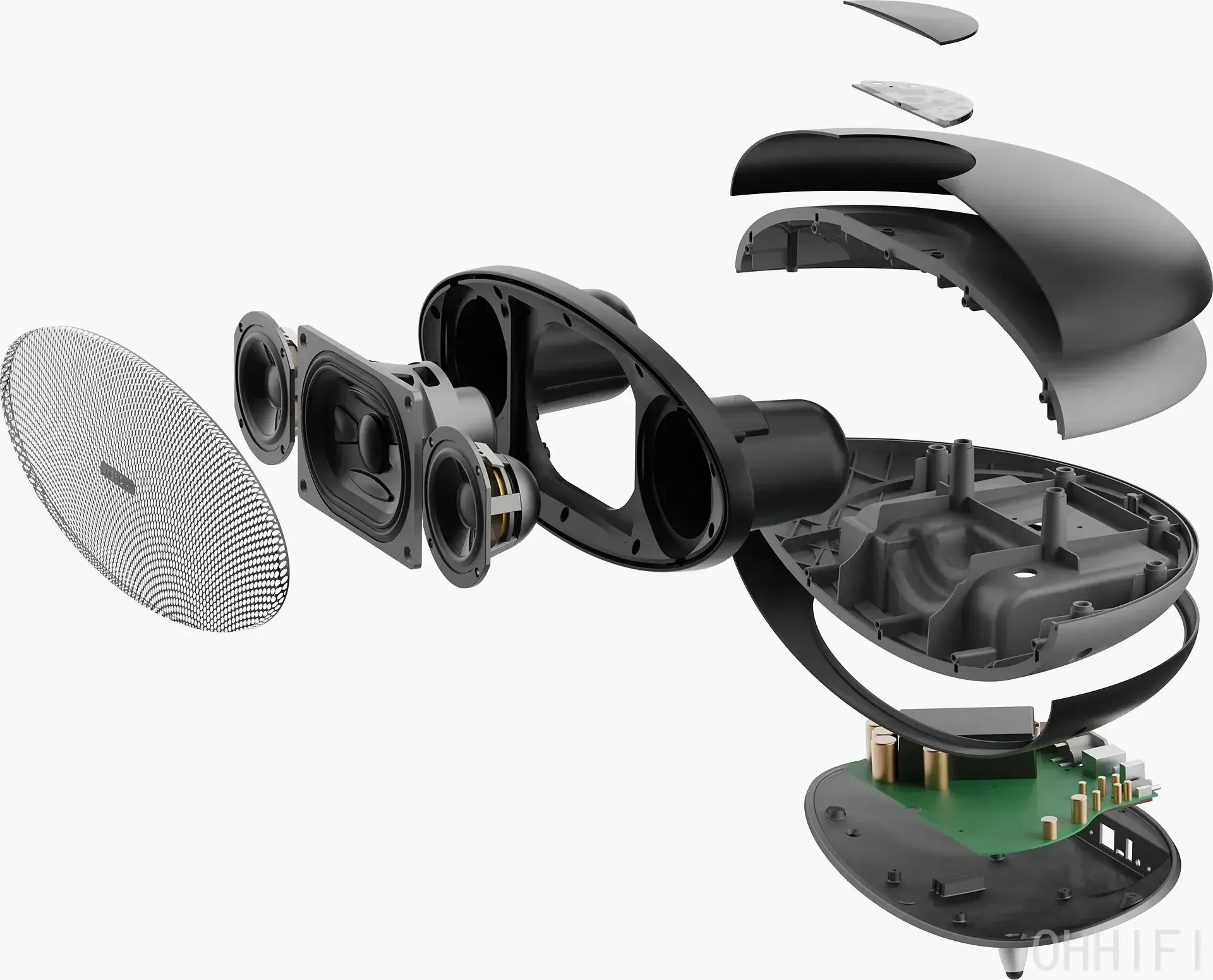
The Ellipse is compact — almost suspiciously so at 41cm wide. The elliptical shape softens the silhouette further, and honestly, when you first pull it out of its soft carry bag, your first thought might be "that's it?" But crack open the spec sheet and it gets interesting. Three drivers: two 90mm full-range polypropylene units handling everything from 180Hz upward (real stereo imaging territory), and a 150mm × 100mm "racetrack" long-throw woofer in the center handling the bottom end in mono — which is the correct way to do it, since low frequencies are effectively non-directional anyway. Meridian rates the frequency response at 40Hz to 20kHz, and having heard it, that figure doesn't feel like marketing puffery.
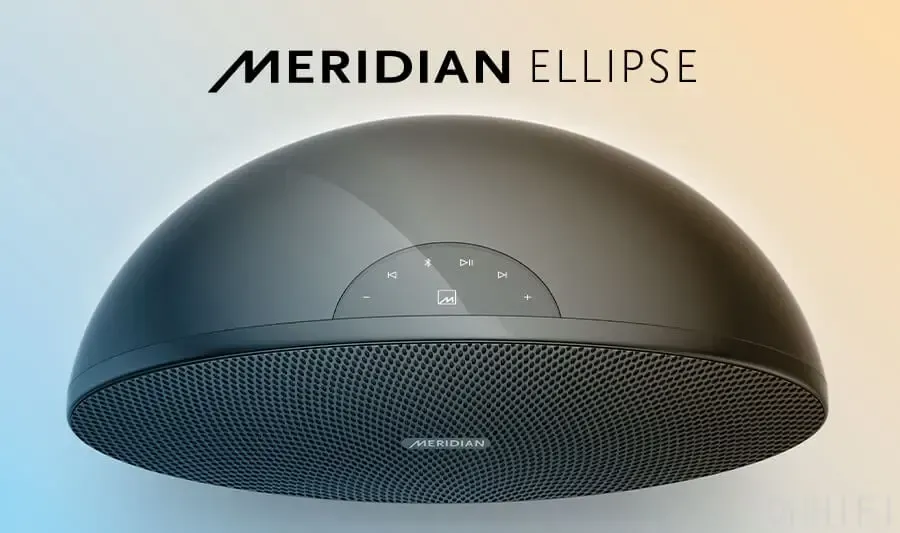
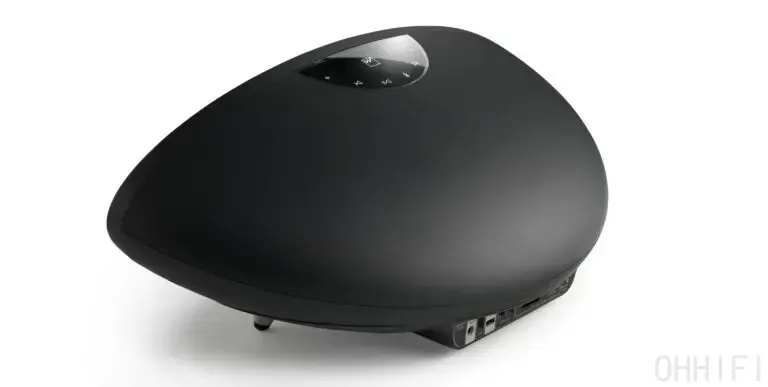
The engineering choice to use full-range drivers without tweeters is deliberate — fewer phase issues in the room means the DSP algorithms for spatial imaging can do their work more cleanly, without the typical crossover-related side effects. That's the kind of thinking that separates a company with decades of DSP experience from one that's just bolting together off-the-shelf components.
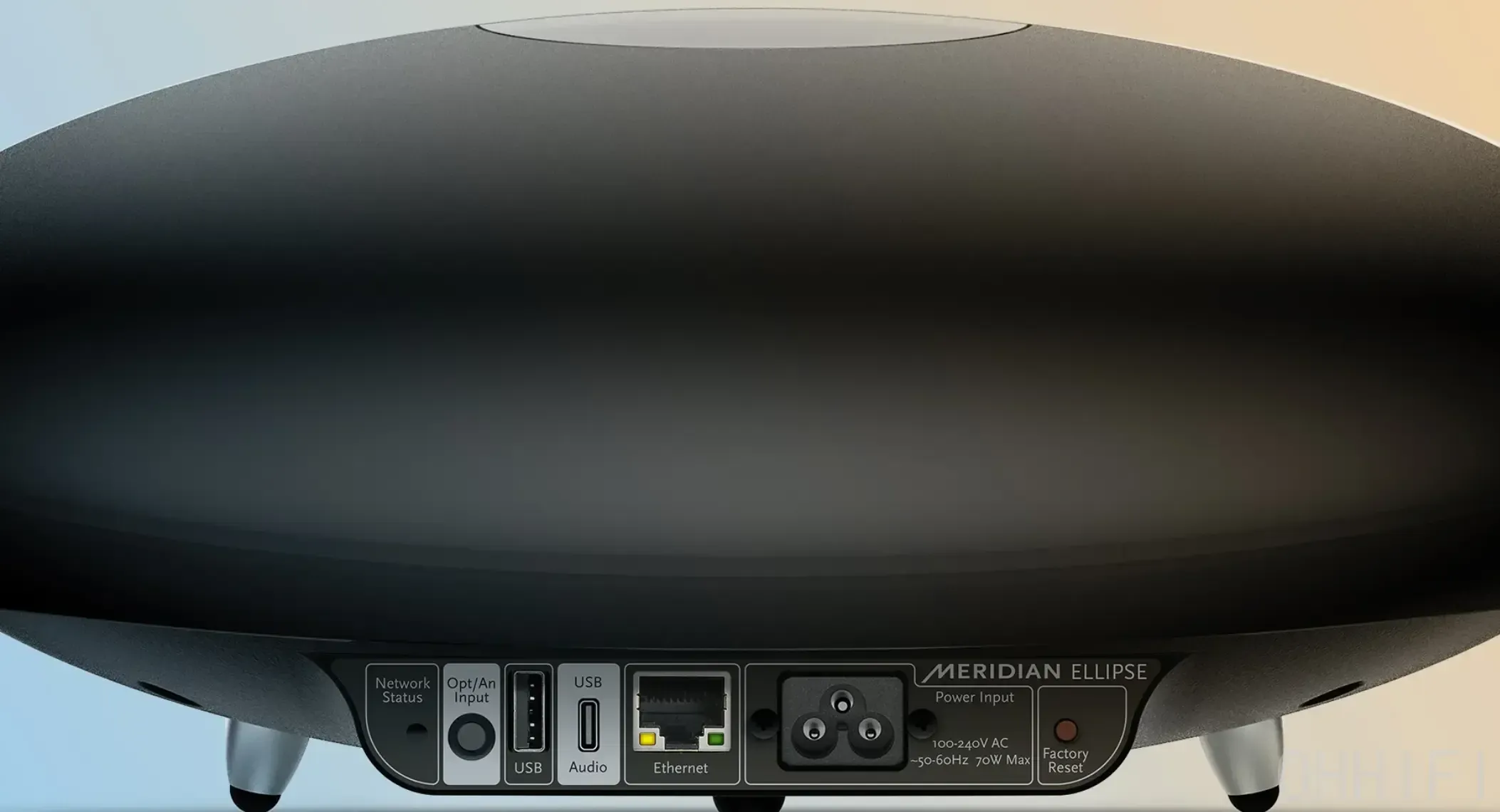
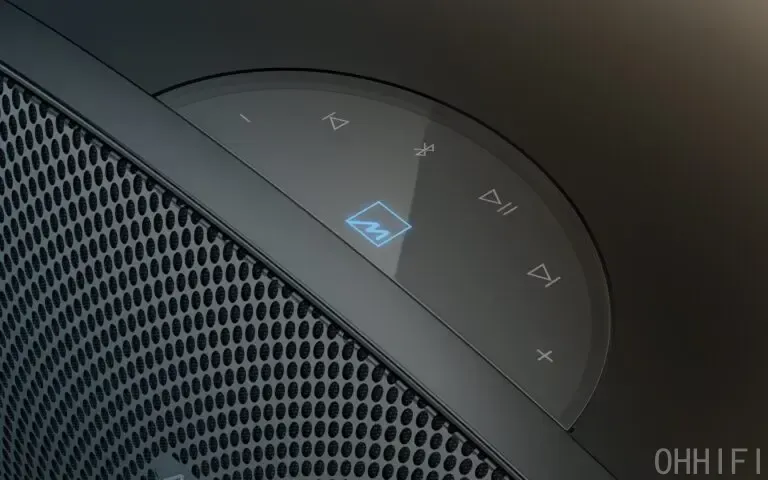
Connectivity is thorough: USB-C up to 192kHz/24-bit, mini-TOSLINK optical at 96kHz/24-bit, a 3.5mm analog input with onboard ADC at 88kHz/24-bit, Wi-Fi (dual-band 2.4/5GHz), Bluetooth 5.3, AirPlay 2, Google Cast, TIDAL Connect, Spotify Connect, and Roon Ready certification. That's a robust set of wired and wireless options, though it doesn't stretch to eARC or a phono input, so this isn't quite the last cable you'll ever need.
Listening Impressions
Here's where the Meridian's heritage actually cashes out. The result is the most sonically capable single-chassis wireless speaker many seasoned reviewers have tested — and that's not a claim made lightly in this category. The clarity is real. On well-produced recordings, vocals project naturally into the room while percussion retains its transient snap and definition. The DSP processing suite — Bass & Space, Image Elevation, Image Focus, Free-Q for placement compensation — gives you genuine tools to optimize the sound for your room, not just EQ curves dressed up with fancy names.
One of the more remarkable things is that this isn't a device that needs a constant diet of hi-res files to shine. It handles Spotify, internet radio, and general streaming content with the same composure it brings to FLAC or TIDAL Masters. That matters more than most audiophiles will admit — because that's how most of us actually listen, most of the time.
With careful positioning and time spent in the app's settings, the Ellipse pulls off some remarkable tricks — sounding far bigger and more detailed than its dimensions have any right to suggest. The bass extension is genuinely surprising. The soundstage width is the thing that keeps making you look up from what you're doing.
Where It Falls Short
The amplifier headroom is modest. At just 25W per full-range driver and 30W for the sub, the Ellipse is considerably less powerful on paper than competitors at lower price points. At concert-level volumes in a large room, it starts to show its limits. This is a precision instrument, not a party speaker.
The remote control situation is genuinely frustrating. The Meridian app needs to be open to switch inputs or adjust volume when using optical, and the optional IR remote — the MSR2 — costs an additional £300. For a £1,900 product, shipping without any remote at all is a user experience decision that's hard to defend. Even a basic two-button volume remote would feel like the minimum courtesy at this price point.
HDMI ARC is also absent. The optical input does work with a TV and the sound quality with a good OLED panel is genuinely outstanding — but having to open an app just to switch inputs makes daily use needlessly cumbersome.
Versus the Competition
The Ellipse doesn't have a lot of direct competition at $3,000, but there are some meaningful alternatives worth stacking it against:
Naim Mu-so 2nd Gen (~$899 / £899): The most obvious reference point. The Mu-so has it outpointed for sheer power and slam, and it's less than a third of the Ellipse's price. The Mu-so is punchy, musical, and a proven performer. But it lacks the DSP sophistication, the hi-res input flexibility, and frankly the imaging precision that Meridian brings. At the current discounted price, the Mu-so is still a benchmark — just a different kind.
B&W Zeppelin Pro (~$799 / £699): The Zeppelin Pro runs 240 watts through a five-driver array including a titanium-dome tweeter from the 600 S3 series. Raw power and B&W's characteristic treble sparkle are its strengths. It's also much cheaper. What it doesn't have is Meridian-level DSP. The Zeppelin sounds impressive, but it's less analytically coherent at the top end of critical listening.
Cambridge Audio Evo One (~$1,499 / £1,299): The most interesting comparison. The Evo One brings eARC, a phono stage, a 14-driver array, a front display, and an included remote — all things the Ellipse conspicuously lacks. Its amplification is significantly more generous at 50W per driver. The Evo One is a more complete product in terms of daily usability. The Ellipse, however, has a more disciplined and nuanced sonic character — particularly in imaging and midrange refinement. Which matters more depends on your priorities.
Should You Buy It?
If you're short on space, genuinely don't want a conventional hi-fi rack, and have the budget to match your standards — this is probably the wireless speaker to get. The DSP intelligence is real, not cosmetic, and the sonic performance is legitimately competitive with systems twice its size and significantly more complex.
But if you need HDMI ARC for TV integration, or you're watching the power bill at high volumes, or you simply want a remote control included in the box, the Cambridge Audio Evo One at £1,299 is a smarter everyday purchase. And if you just want something that rocks the room without overthinking it, the Naim Mu-so at its current street price remains hard to beat for the money.
The Ellipse is what happens when a company with forty years of DSP experience finally decides to make the product everyone assumed they'd already made. It's not perfect. But it is the real deal.



Comments