
Nagra PREAMP II-S: Mid-Tier Price, Reference-Level Trap?

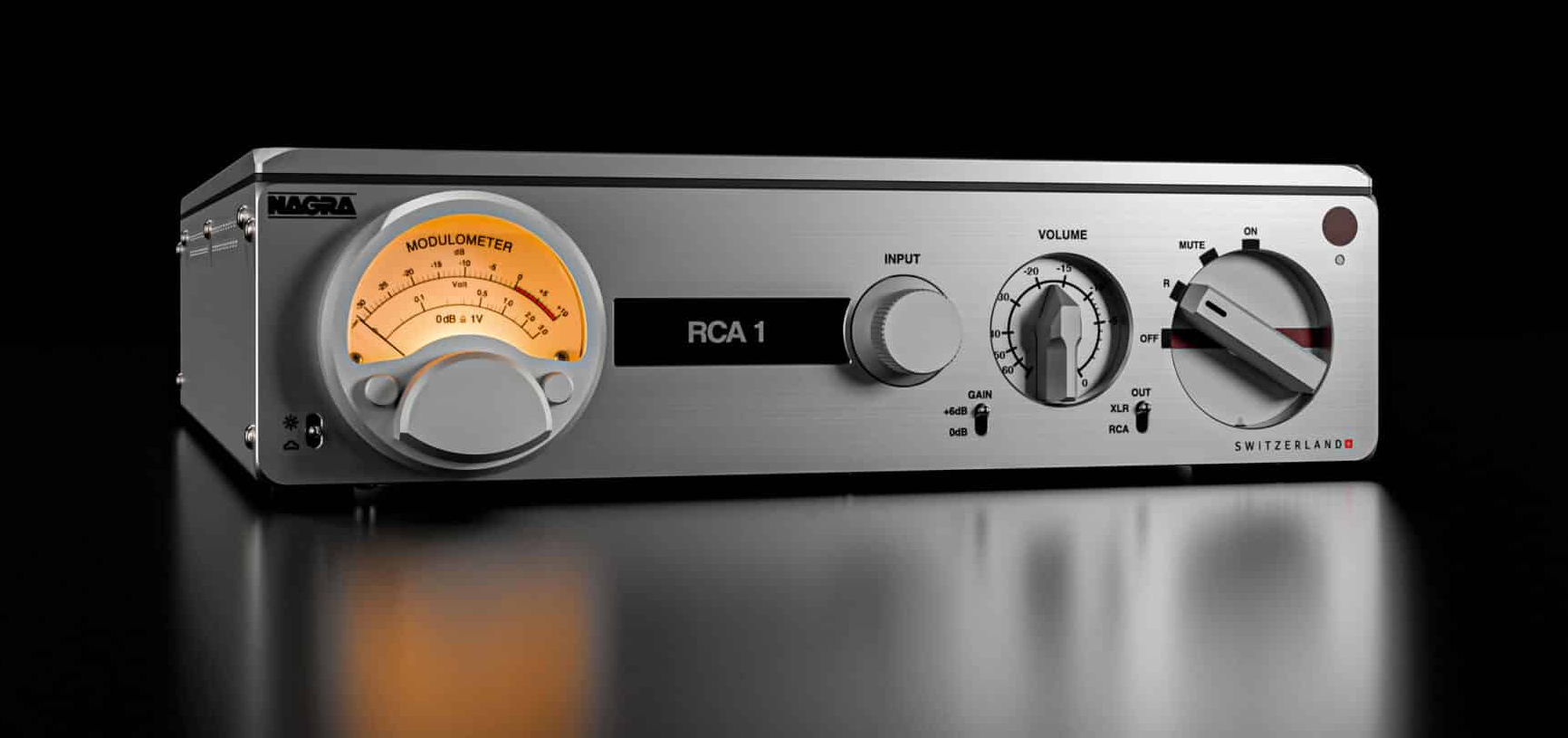
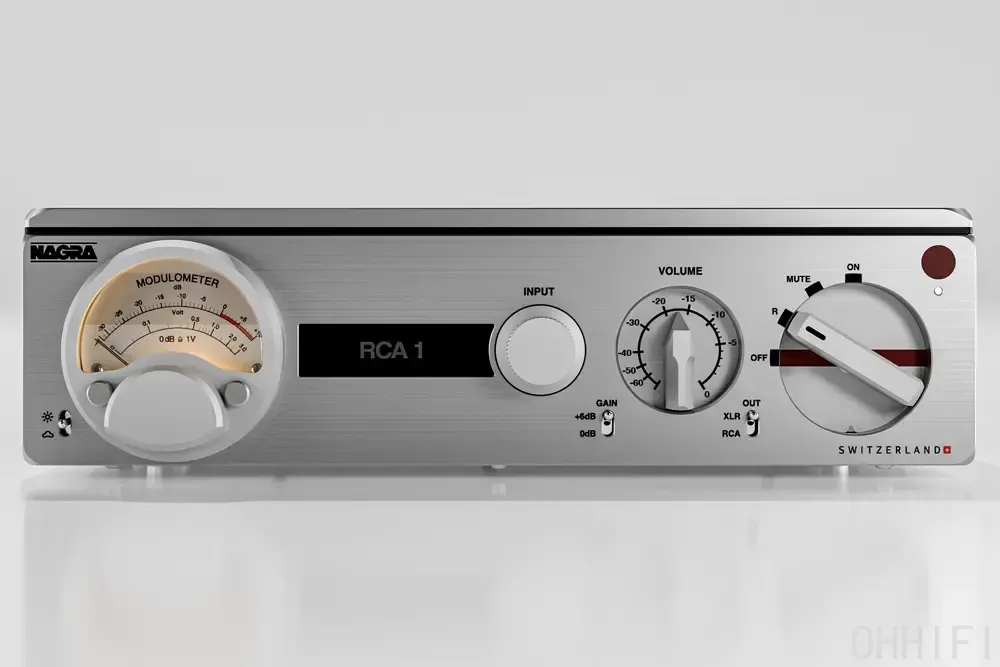
Nagra has a habit of making "smaller and cheaper" sound like neither of those things. The PREAMP II-S is the first product in the brand's new Series II family, slotted between the Classic and HD lines, and it arrives wearing the most recognizable face in Swiss hi-fi: the Modulometer needle meter lifted straight from the IV-S reel-to-reel recorder, a machined-aluminum chassis barely 11 inches wide, and a tube line stage fed by an outboard power supply.
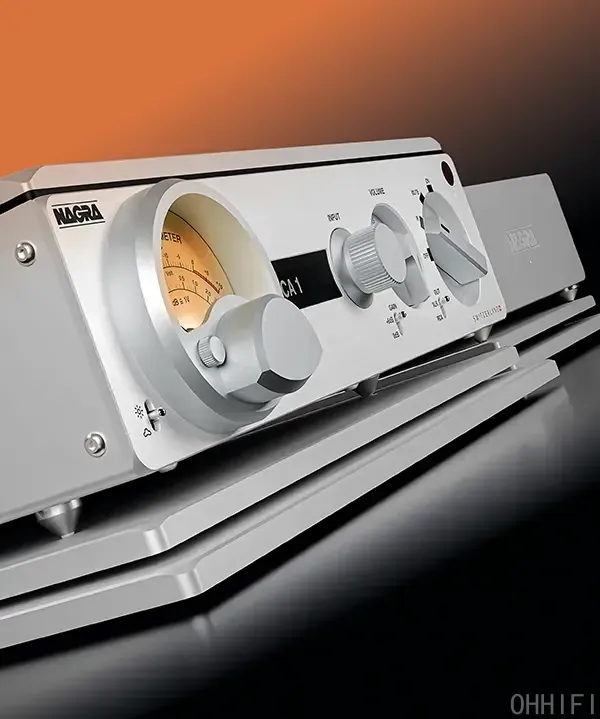
The pitch is reference-grade Nagra in a footprint and at a price that won't require selling the second car. The reality is £21,998 / $27,900 with the included Compact PSU — and an options list that can push the real-world total well past £31,000 before you've connected a single cable. Two serious publications have now put the II-S through full reviews, including proper bench measurements. Their findings line up almost perfectly, which is rare and worth unpacking. So is the fine print.
Quick specs
| Type | All-tube line preamplifier, external PSU |
| Tubes | 2× ECC83/12AX7 (input/gain), 1× ECC81/12AT7 (output), solid-state current-source biasing |
| Gain | Switchable 0dB / +6dB |
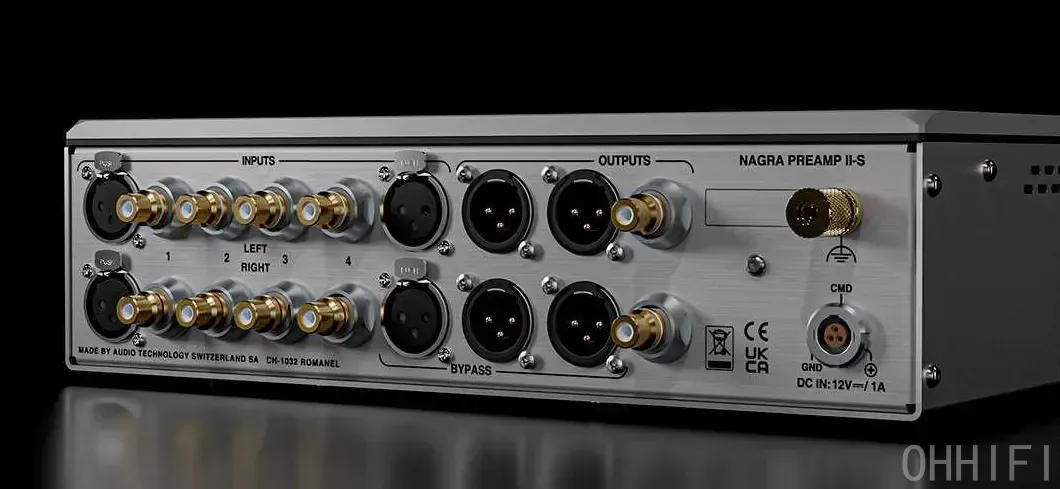
| Inputs | 1× XLR balanced, 4× RCA, 1× XLR bypass (AV/multiroom) |
| Outputs | 2× XLR balanced, 1× RCA |
| Output impedance (claimed) | 9Ω at 0dB gain, 18Ω at +6dB |
| Frequency response (claimed) | 10Hz–50kHz (+0/–0.5dB) |
| Dimensions / weight | 280 × 76 × 380mm (whd) / 4.8kg |
| Price | £21,998 / $27,900 with Compact PSU; £18,348 / $24,500 preamp alone |
Design and build: the real cost of entry
Let's deal with the money first, because nobody else seems to want to. Per Hi-Fi News' breakdown, the £21,998 package splits into £18,348 for the preamp and £3,650 for the Compact PSU — and if you already own Nagra's £15,798 Classic PSU (which feeds up to three components), you can skip the Compact and save accordingly. Fair enough. But then the options sheet opens up: transformer-coupled XLR kits at £3,998 for the input and £3,150 for the output, plus Nagra's VFS isolation bases at £2,298 for the preamp and £1,350 for the PSU. Kessler's review called the options list a 1968 Cadillac window sticker, and he wasn't exaggerating — spec everything and you're past £31,000 for what Nagra positions as its mid-tier line stage. My take: the base unit is the product. Both published reviews tested it without the transformer kits and came away impressed, and the lab numbers below were achieved bare. Treat the options as exactly that.
The engineering itself is classic Nagra. Chassis machined from solid aluminum, damped with phenolic sheets — a vibration-control approach borrowed from the Reference turntable program. A motorized ALPS volume pot. An OLED status display shared with the HD Phono and Reference DAC. The whole thing draws 24W and weighs 4.8kg, which tells you this is precision-instrument construction, not boat-anchor construction.
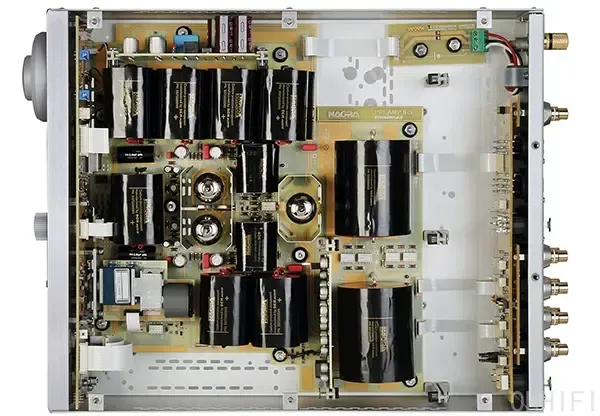
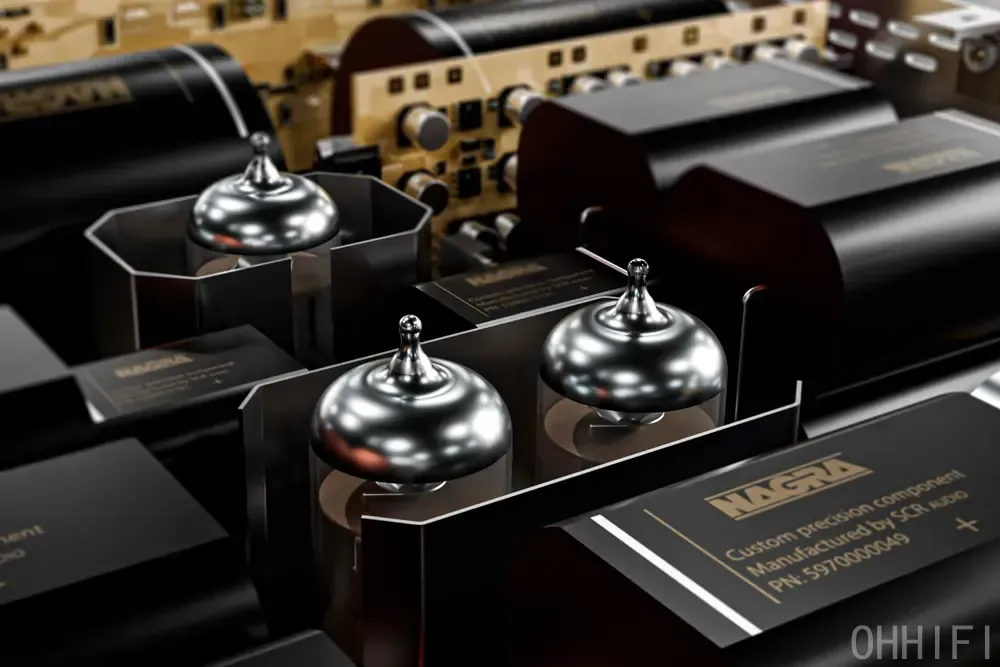
One marketing claim deserves a raised eyebrow: Nagra's talk of a "new generation" of tubes. The ECC83 and ECC81 are designs from the early 1950s; there is nothing new about them. What Nagra actually means — and what's genuinely interesting — is laboratory-selected current-production stock combined with solid-state current-source biasing of the tubes. That biasing scheme is the real engineering story here: Hi-Fi News timed the warm-up at exactly 60 seconds from frigid-cold to operate mode, found no meaningful sonic benefit to extended warm-up beyond that, and Nagra credits the gentle pre-heat sequence for a claimed 5,000–10,000-hour tube life. For a tube preamp, that's appliance-grade convenience, and the transistor biasing is almost certainly why.
What the reviews actually say about the sound
Full disclosure of the evidence base: as of June 2026, there are exactly two in-depth listening reviews of the PREAMP II-S in the English-language press — Ken Kessler's in Hi-Fi News (with lab work by Paul Miller) and Tom Lyle's at Enjoy the Music. Everything else out there is launch coverage. Two data points is not a consensus; it's a strong early signal. Here's the signal.
Both reviewers reached for the same three words: neutral, quiet, transparent. Kessler's first impressions were of neutrality and quietness, and he reported the II-S sounding strikingly close to Nagra's far costlier HD Preamp — the dearer unit retaining only a touch more low-end slam and scale, which he attributed to its bigger power supply. Lyle, running the II-S between a Pass Labs XP-27 phono stage and Pass X600.8 monoblocks into Raidho TD4.2 speakers, went further: against his in-house references — the Nagra Classic Preamp, the Pass Labs XP-22, and the TAD Evolution C1000 — he found the II-S stood apart for its near-total absence of background noise and its retention of low-level detail at quiet listening volumes.
Both also agree on what the II-S is not: a tube-sounding tube preamp. Lyle wrote that he couldn't detect a hint of classic valve character even when listening for it. Kessler placed it deliberately between the plump warmth of low-feedback tube designs and the sterile end of solid-state — taking, in his estimation, the best of both. The one tube-adjacent trait Lyle did flag as a strength was dynamic layering: the ability to keep two sounds occupying the same soundstage position separated by their loudness differences, what he described as hearing "behind" each sound.
Where does that leave the buyer? Here's my read. If you're shopping for the romantic, golden-glow tube experience — the thing that makes a 1960s Julie London record sound like candlelight — both reviews suggest this is the wrong machine, and Nagra's own measured performance backs that up. The II-S appears to be a tube preamp for people who want the ownership experience of tubes (the Modulometer, the warm-up ritual, the rollable ECC83s) bolted to the behavioral predictability of solid-state. That's not a criticism. It's a positioning, and a deliberate one — but you should know which church you're walking into before you tithe £22k.
Measured performance (per Hi-Fi News' lab)
Paul Miller's bench data is the only independent measurement set published so far, and it's excellent reading. Headlines: A-weighted signal-to-noise of 96.7dB (re. 0dBV) — within a hair of the 98dB Miller measured from the vastly more expensive HD Preamp, and genuinely outstanding for a tube line stage. Frequency response within +0.01 to +0.05dB across 20Hz–20kHz, rising gently to +0.35dB at 100kHz. Distortion between 0.0055% and 0.011% across the audio band, with a floor of 0.0018% at 1kHz. Maximum balanced output of 10.5Vrms from a measured output impedance of 7.9–8.2Ω.
Two of those numbers deserve translation, because they're the whole argument for this preamp.
First, the 8Ω output impedance. For context, when Stereophile's John Atkinson measured the Audio Research Reference 6SE — the obvious American tube rival — he found a balanced output impedance of 669Ω at midband, rising to 1,394Ω at 20Hz. That's typical for classic tube topologies, and it means the ARC wants a power amp with a high input impedance and short-ish cables, or the bass softens. The Nagra's 8Ω, achieved via the ECC81 output stage plus feedback, will drive any amplifier through any sane cable run without flinching. In the 0dB gain position it behaves like a passive preamp with none of a passive's drive problems. That's the engineering case for this unit in one sentence.
Second, the input-level distortion behavior. Miller found distortion is governed by input level rather than output: pristine at the 800mV–1V level, but climbing steeply to 0.25% with 2V at the tubes. In normal use the volume pot keeps the signal comfortably inside the linear zone, so this is a non-issue at sane listening levels. But it's one more reason owners of hot 4V-balanced DAC sources should live in the 0dB gain position. The +6dB switch exists for low-output sources; with any modern digital front end you simply don't need it, and the lower 9Ω output impedance at 0dB is a free bonus.
The competition
| Rival | Price | The comparison |
|---|---|---|
| Nagra Classic Preamp | ~$17,900 (per TONEAudio's review; check current pricing) | The in-house question. Older platform, adds a genuinely good headphone amp, internal PSU standard. Lyle had both side by side and ranked the II-S ahead on silence and low-level resolution. The Classic's future in the lineup looks uncertain as Series II expands. |
| Audio Research Reference 6SE | $17,000 / £16,998 | The classic American tube reference — bigger, bolder, and more recognizably "tube" in character per most coverage. But Stereophile's measured 669Ω–1,394Ω output impedance demands careful amp matching, where the Nagra's 8Ω partners with anything. Different philosophies: ARC romances the signal, Nagra disappears. |
| Pass Labs XP-22 | ~$10,000 | The solid-state value play, and Lyle's direct reference. He scored the Nagra ahead on background silence and dynamic shading — but the Pass costs roughly a third as much and gives up nothing in build. If "sounds like nothing" is the goal, the XP-22 gets you 90% of the way for 35% of the money. That gap is the II-S's biggest vulnerability. |
The honest framing: the II-S isn't competing on measurable transparency alone — well-engineered solid-state delivers that for far less. It's competing on transparency plus tubes plus Swiss-watch construction plus that Modulometer, as a single object. Whether that bundle is worth the multiple is a values question, not an engineering one.
Verdict: 9/10
Two reviews in, the picture is unusually coherent: Hi-Fi News rated it 88% with an Outstanding badge and called it a possible new sweet spot for the brand; Enjoy the Music closed with a flat "highly recommended." Miller's bench numbers independently corroborate what both listeners reported — vanishing noise, ruler-flat response, load-proof output. Nothing published so far cuts against the product. What keeps it from a higher score here is context, not flaws: the evidence base is still only two reviews deep, the options list can quietly inflate the price by 40%, and a $10k Pass Labs covers most of the same sonic ground. As a piece of engineering, the PREAMP II-S looks like exactly what Nagra claims — HD-grade silence in a smaller, cheaper box. As a purchase, it's for a specific buyer.
Pros
- Measured noise and distortion performance that embarrasses most tube preamps at any price (per Hi-Fi News' lab)
- 8Ω output impedance drives any amplifier, any cable — rare for tubes
- Both published reviews independently report near-HD-Preamp performance for a fraction of the cost
- 60-second warm-up and 5,000–10,000-hour claimed tube life; tube ownership without tube babysitting
- Genuinely compact; the Modulometer remains the best face in hi-fi
Cons
- £21,998/$27,900 is the starting point; transformer kits and VFS bases balloon it fast
- Doesn't deliver classic tube warmth — wrong machine for the golden-glow crowd
- Line stage only: no phono, no headphone amp (its Classic sibling has one)
- Comparable transparency available from solid-state at a third of the price
- Only two full reviews published to date; the consensus is early
Buy it if you want one statement preamp that behaves like laboratory equipment, partners with any power amp ever made, and gives you tubes without tube anxiety — and the price genuinely doesn't sting.
Skip it if you're chasing vintage valve romance (look at low-feedback designs), you need phono or headphone facilities built in, or you'd rather bank $18k and let a Pass Labs XP-22 do the disappearing act.



Comments