
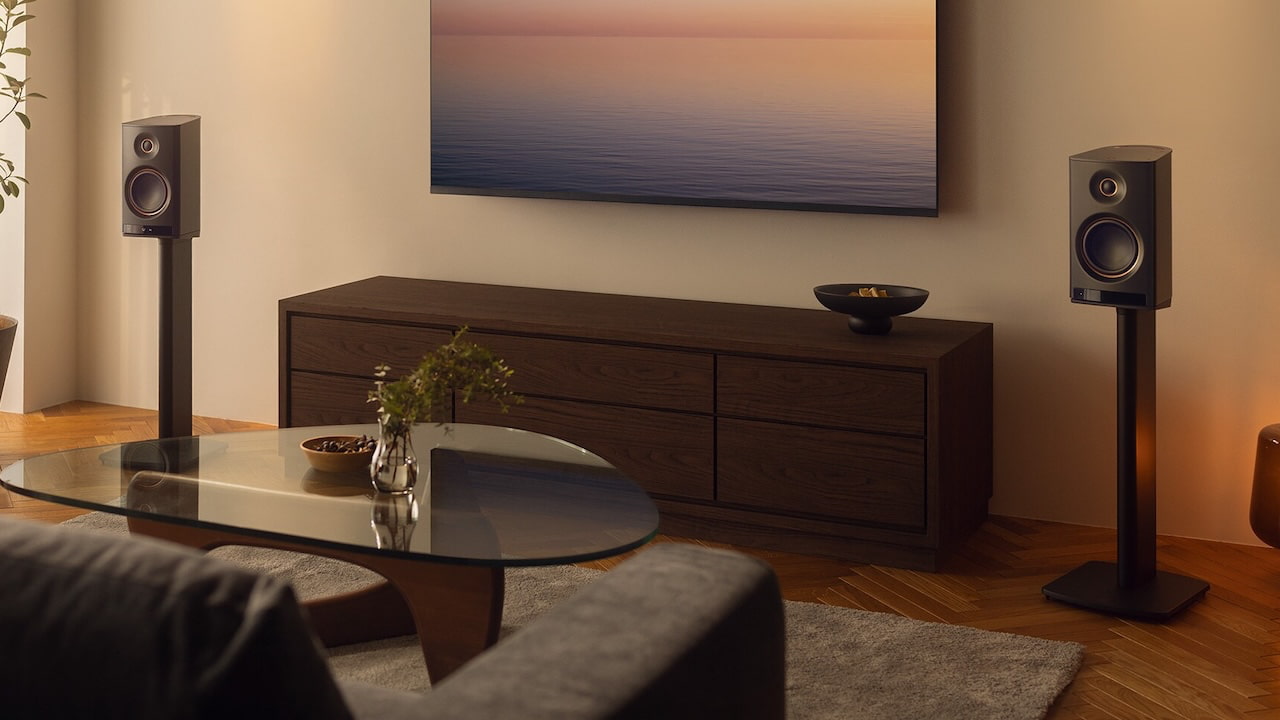
Yamaha NX-70A: Yamaha's First Wireless Speakers in 10 Years

Lead
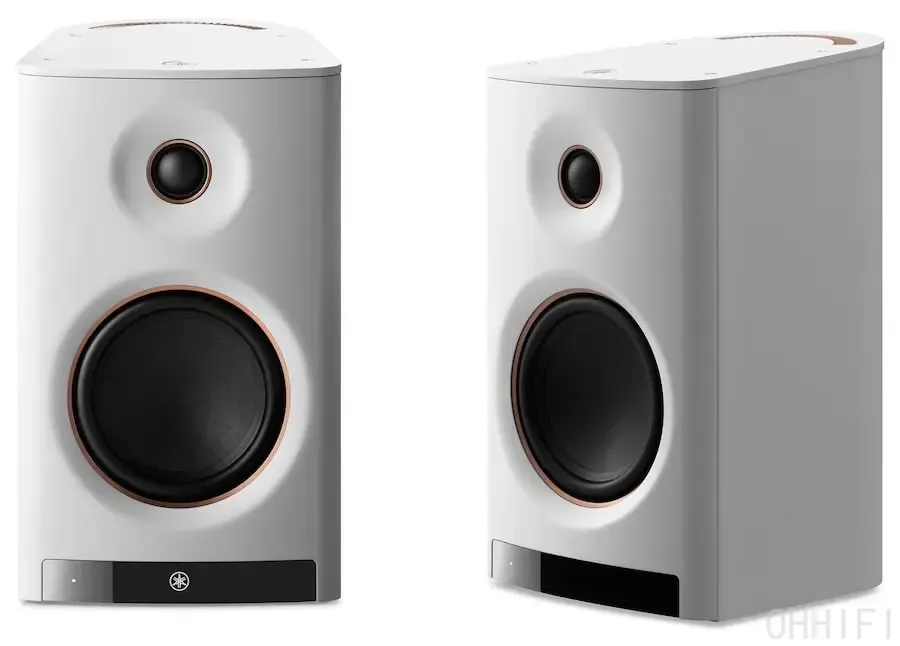
Yamaha used High End Vienna 2026 to drop the NX-70A, its first wireless stereo speaker system in roughly a decade — and it's not pricing it like a toe-dip. The pair lands in July at £2,587, which works out to around $3,500 / AU$4,799, in black or white, with optional SPS-70A stands at extra cost. The pitch in one line: piano-soundboard driver material, mic-based YPAO room correction, and HDMI eARC, all wrapped in a fully active two-way that wants to replace both your soundbar and your separates rack.
What's New
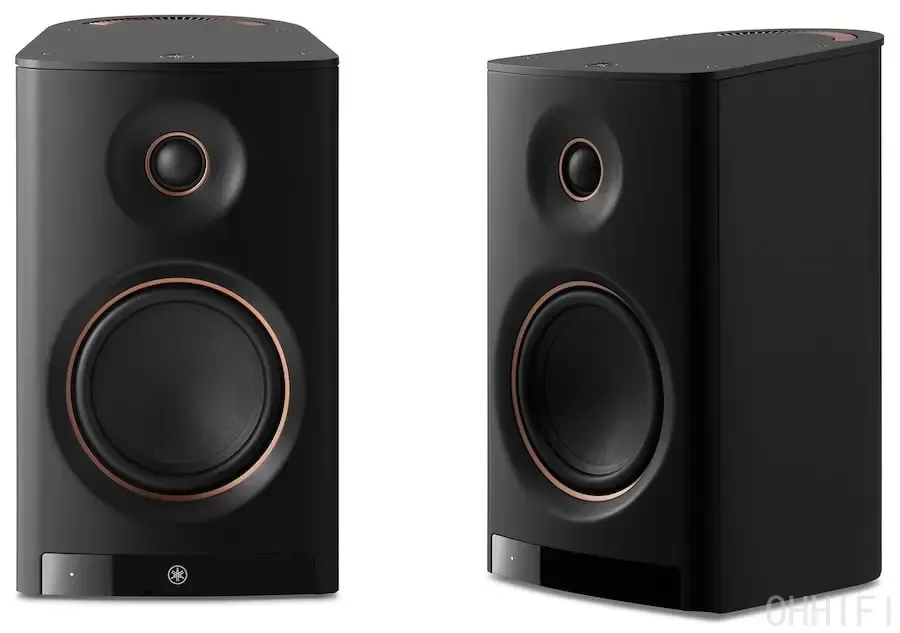
The headline tech is what Yamaha calls the Harmonious Diaphragm — a blend of PBO-fiber ZYLON, borrowed from its flagship loudspeakers, and spruce, the same wood used in Yamaha grand piano soundboards, applied across a 5.25-inch cone woofer and a 1.25-inch dome tweeter. The driver thinking traces back to the NS-2000A series, so this isn't a lifestyle division side project.
Amplification is genuinely active: Yamaha rates 100 watts for each woofer and 60 watts for each tweeter, with dedicated amplification per driver rather than a passive box with wireless bolted on. That's 160W per speaker. Frequency response is quoted at 50Hz–35kHz with the speakers wired to each other, dropping to 50Hz–21kHz wirelessly — both at -10dB. Hold that thought; I'll come back to it.
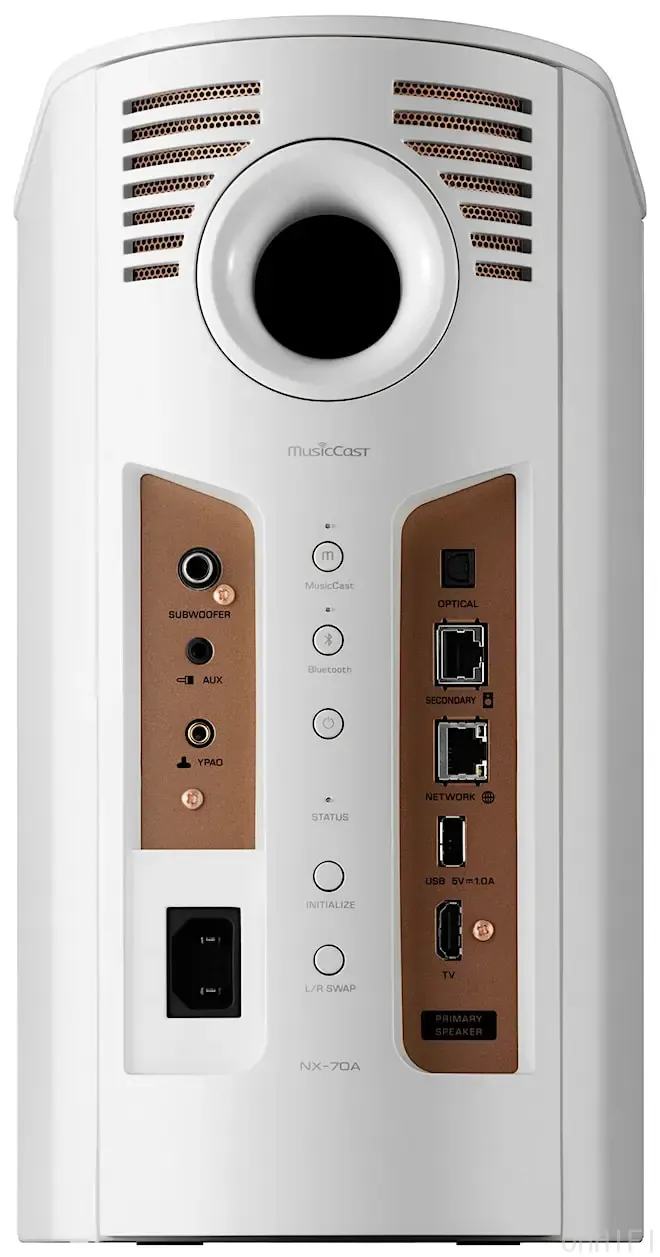
Connectivity is the strongest card in the deck. The primary speaker carries HDMI eARC/ARC, optical, a 3.5mm analog input, Ethernet, USB-A, a YPAO microphone input, and an RCA subwoofer output, while the secondary speaker links wirelessly or over LAN — Yamaha even includes a 3-meter cable in the box. Streaming covers Spotify Connect, Tidal Connect, Google Cast, AirPlay 2, Roon Ready, Yamaha's MusicCast multi-room, and Bluetooth with SBC/AAC. And YPAO room calibration runs off a bundled measurement microphone rather than your phone's mic — a meaningful distinction at this price.
The cabinet does real work too: the rounded shape is there to minimize internal standing waves, and a 5mm-thick aluminum top plate suppresses resonance.
Context: Why Yamaha, Why Now
Yamaha sat out the entire era in which KEF built and then owned the premium wireless-stereo category. KEF, Klipsch, Cambridge Audio, DALI, Fyne Audio, and Sonus faber have all been doing well with active and wireless hi-fi speakers, while Yamaha's streaming ambitions lived mostly in MusicCast soundbars and receivers. What Yamaha brings back to the table is unusual breadth — it builds the amps, the speakers, the DSP, the home theater gear, and the actual pianos. The NX-70A is the first product in years that tries to put all of that in one pair of boxes.
How It Stacks Up
The obvious target is the KEF LS50 Wireless II — a five-star, award-winning system with Metamaterial Absorption Technology, a 12th-gen Uni-Q driver, and 100W to the tweeter plus 280W to the mid/bass per speaker, currently selling around $2,999. On raw rated power, KEF wins comfortably: 380W per side against Yamaha's 160W. The KEF also already does HDMI eARC and a sub output, so don't let anyone tell you those features alone are the differentiators.
Where Yamaha actually has an edge on paper: mic-based YPAO calibration (KEF's app EQ is manual-first), the breadth of MusicCast multi-room, and a wired inter-speaker option included in the box. Below it, Klipsch's The Nines ($1,499) covers the TV-stereo brief for far less, and KEF's own LSX II LT undercuts everything as the budget entry. Above it, JBL's 4329P studio monitors play the pro-aesthetic card at around $4,500.
My Take — On Paper
Two things in the spec sheet deserve a flag, and neither requires golden ears to spot.
First, that frequency response is quoted at -10dB. Most of the industry specs at -3 or -6dB; -10dB flatters extension. A 50Hz floor at -10dB means the usable, weighty bass almost certainly starts higher than that — which is exactly why the subwoofer output exists. Anyone planning to run movies through the eARC input should budget for a sub from day one rather than treating it as a later upgrade.
Second, the wired/wireless split — 35kHz wired versus 21kHz wireless — reads to me like a sample-rate ceiling on the wireless link between the speakers, likely 48kHz-class. Yamaha ships a LAN cable in the box for a reason. My advice before anyone has heard a production unit: run the cable. It's free performance and it sidesteps latency questions too.
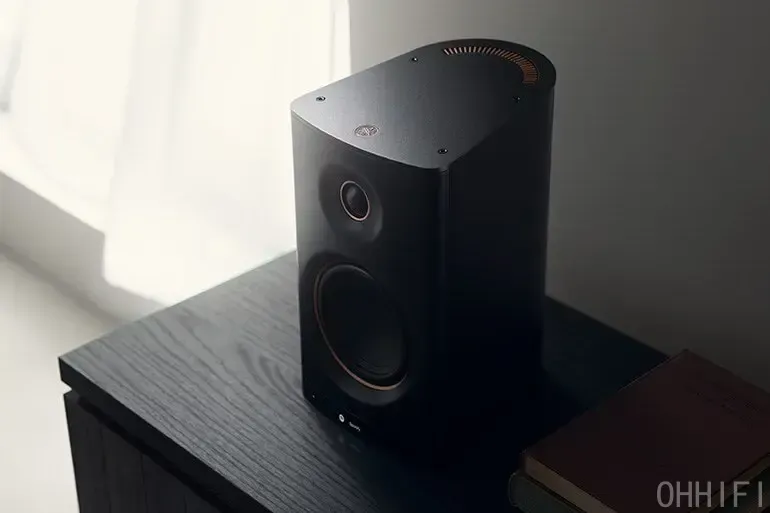
As for the spruce-and-ZYLON story — it's a lovely piece of brand poetry, and Yamaha's claim of "a consistent tone over the entire frequency spectrum" is marketing until measurements show clean breakup behavior. That said, active two-ways with DSP crossovers and per-driver amplification tend to deliver more controlled, consistent results than passive designs at the same money, and Yamaha's YPAO has decades of AVR mileage behind it. The architecture is sound. The price is the gamble: £2,587 puts it above the street price of the category benchmark, from a brand that's been absent for ten years. The spec sheet earns it a hearing. The hearing will decide everything.
Who Should Watch This
Keep an eye on the NX-70A if you want one stereo system that handles TV duty via eARC, you're already in a MusicCast or Roon household, or you want real room correction without owning a measurement rig. Pay less attention if you're bass-first with no sub budget, or if you just want the cheapest credible entry into wireless stereo — KEF's LSX II LT already has that covered.


Comments