
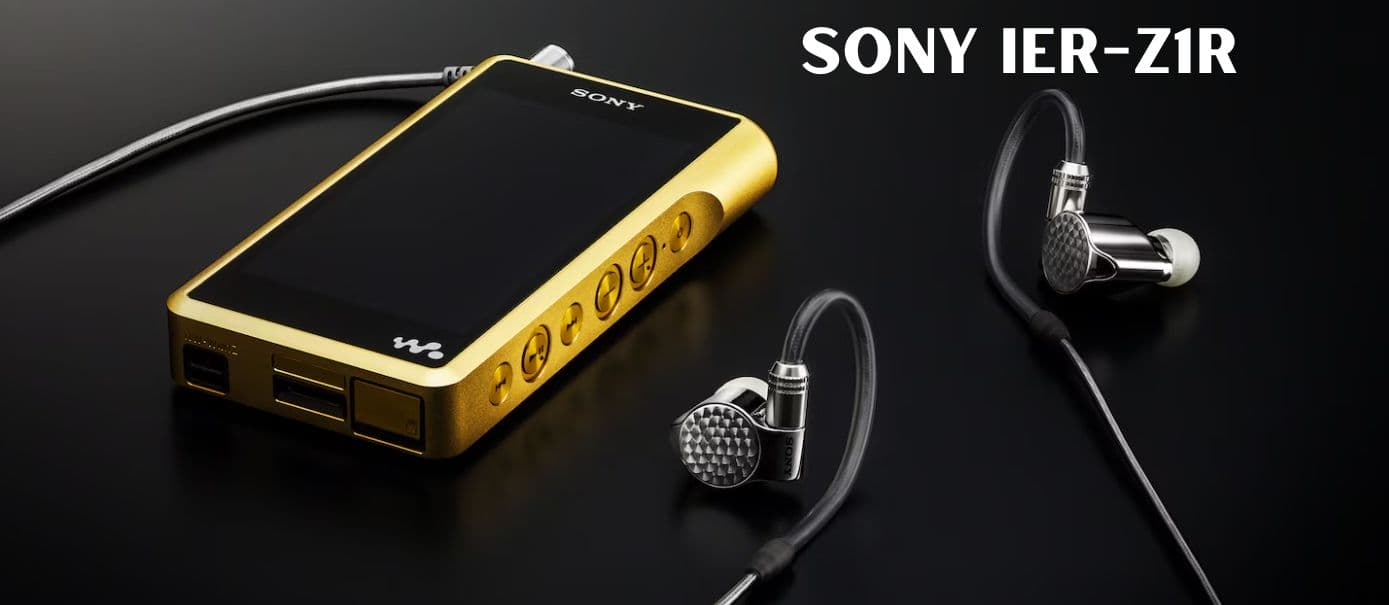
Sony IER-Z1R Review: The Immutable Monolith of High-Fidelity Audio

1. Introduction: The Signature Series Legacy
In the fast-paced, ephemeral world of portable high-fidelity audio, longevity is a rare attribute. The typical lifecycle of a flagship in-ear monitor (IEM) is measured in months, not years. Manufacturers, particularly those driving the rapid innovation cycle in the "Chi-Fi" sector, often release updated tunings, driver configurations, and facelifts annually, rendering previous flagship models obsolete in the eyes of the consumer market. Yet, sitting immovably amidst this torrent of new releases is the Sony IER-Z1R.
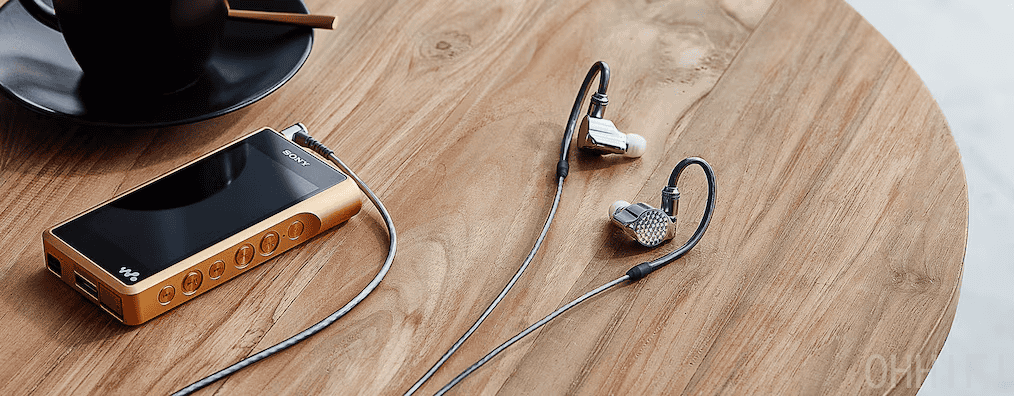
Released originally in 2018 as part of Sony’s prestigious "Signature Series"—a lineup that includes the colossal DMP-Z1 digital music player and the MDR-Z1R over-ear headphones—the IER-Z1R was designed with a singular, uncompromising vision: to reproduce the atmosphere of a live concert hall in a portable form factor. Now, in 2026, nearly eight years after its debut, it remains not just relevant, but a benchmark against which all other "musical" and "soundstage-focused" monitors are judged. It is the "endgame" that refuses to retire, a testament to Sony’s engineering prowess and their refusal to adhere to fleeting tuning trends.
The IER-Z1R is an anomaly. It ignores the industry's obsession with driver count wars, opting instead for a refined tri-hybrid system. It rejects the ergonomic trend of 3D-printed, anatomically semi-custom shells in favor of a heavy, metallic chassis that prioritizes acoustic properties over universal comfort. It eschews the "Harman Target" neutrality for a sound signature that is unabashedly colored, emotional, and physical.
This review serves as a definitive 2026 retrospective and analysis. We will dissect the IER-Z1R’s enduring appeal, its infamous fit, its jewelry-grade construction, and its legendary sound performance. We will compare it against modern titans like the 64 Audio U12t, Empire Ears Legend X, and ThieAudio Monarch MK3 to determine if the Z1R is still the King of Bass and Soundstage, or if it has finally been dethroned by the march of technology.
2. Design and Aesthetics: Jewelry for the Audiophile
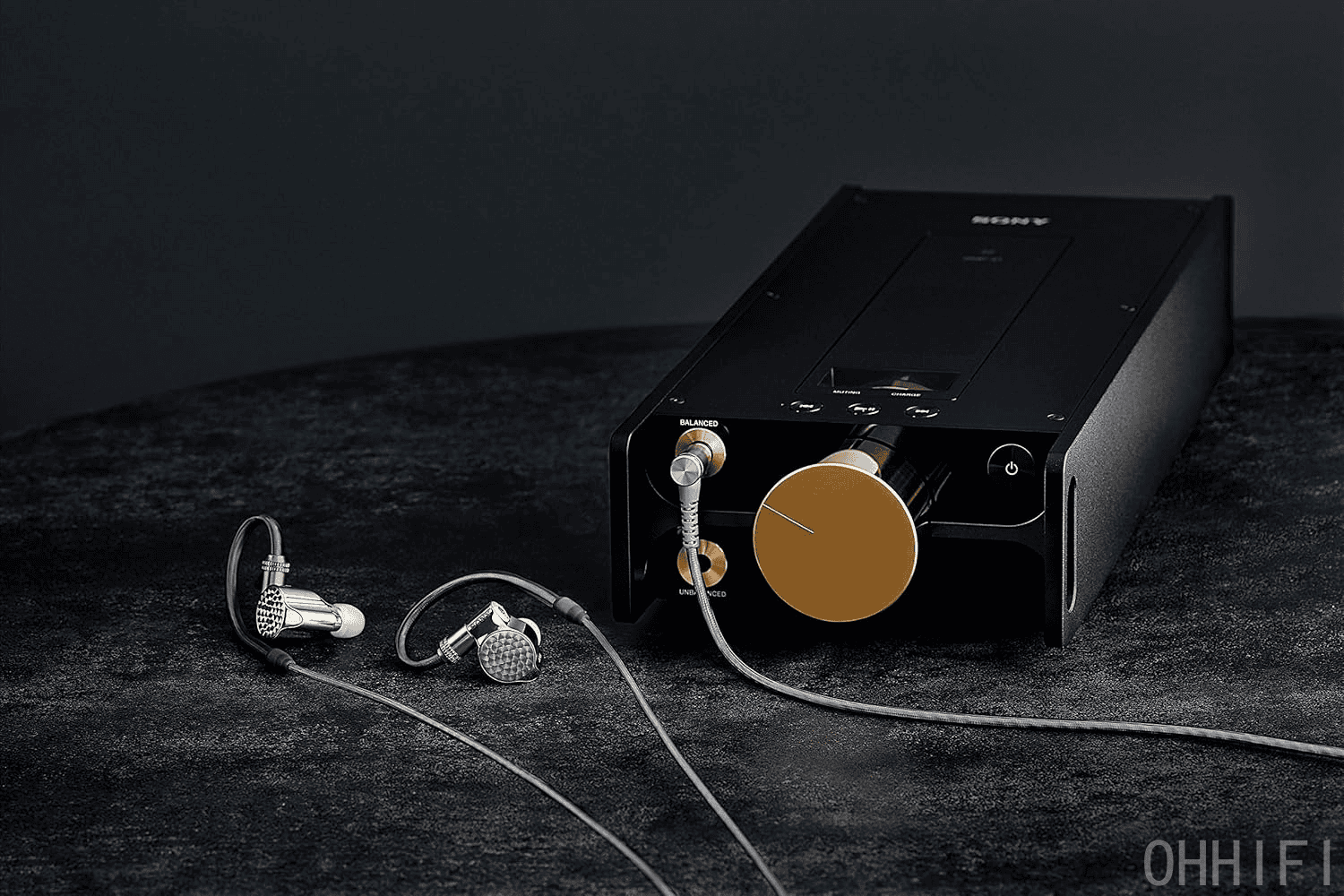
2.1 The Zirconium Alloy Housing
To understand the IER-Z1R, one must first appreciate it as a physical object. Upon opening the box—a multi-layered, drawer-style presentation that many reviewers have described as "leagues ahead" of the competition—one is presented with two earpieces that resemble fine jewelry more than consumer electronics.
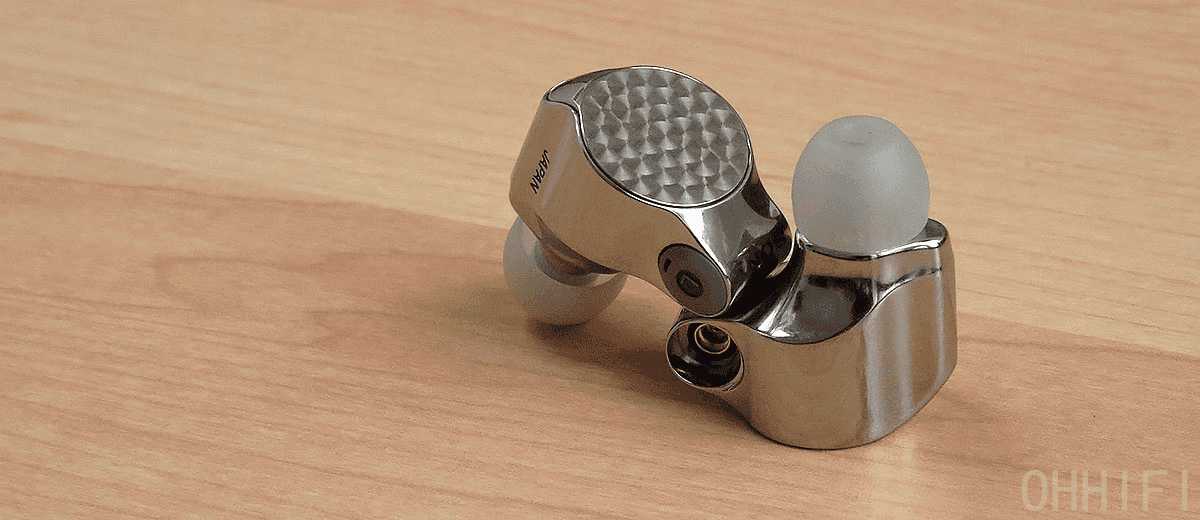
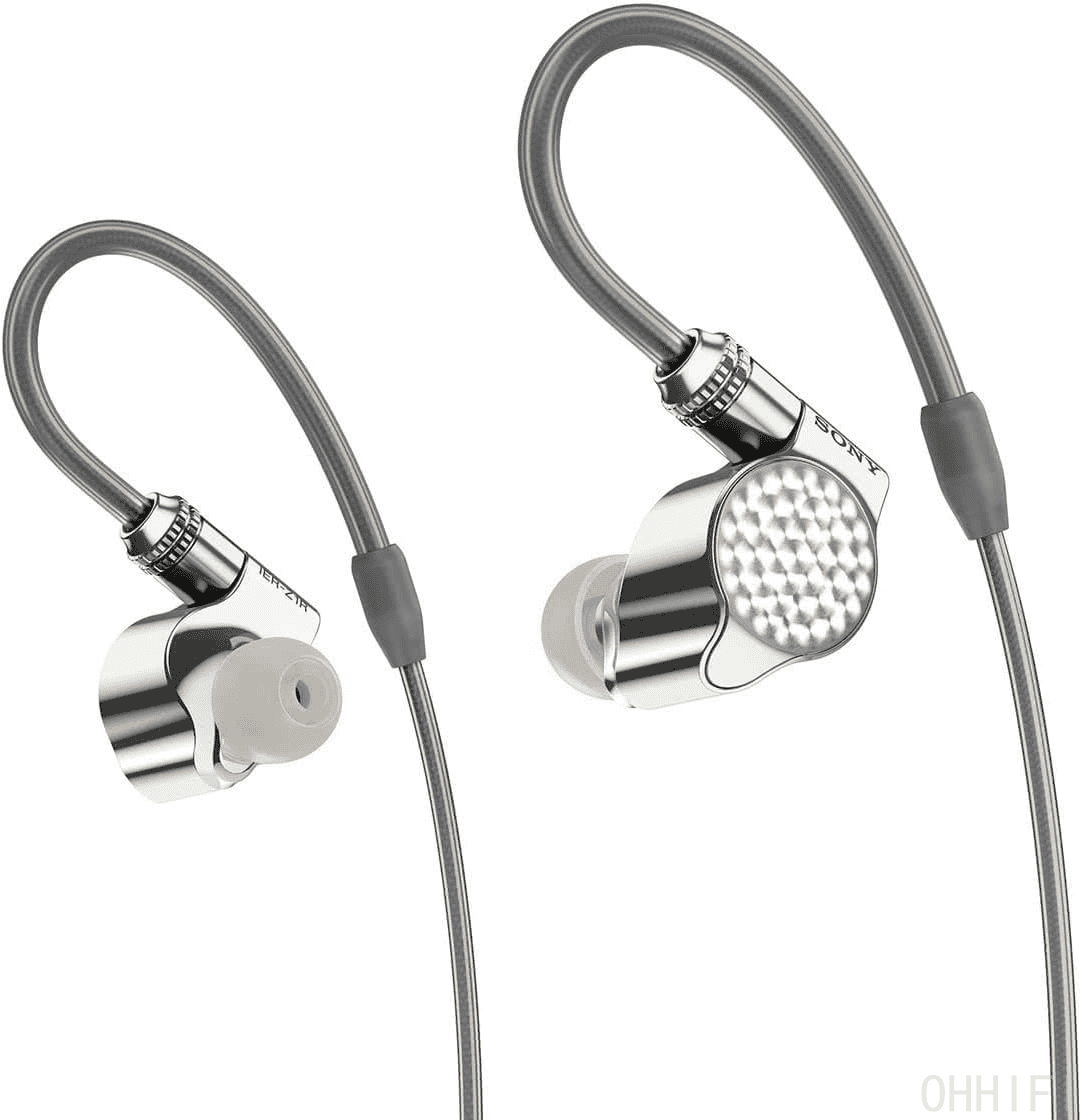
The housings are crafted from a Zirconium alloy, a material choice that speaks to Sony’s obsession with longevity and acoustic purity. Zirconium is renowned for its extreme hardness and resistance to corrosion, traits that are essential for a device exposed to the sweat and oils of the human ear. Unlike stainless steel, which can scratch easily, or aluminum, which can dent, Zirconium offers a resilience that ensures the IEMs retain their luster for years.
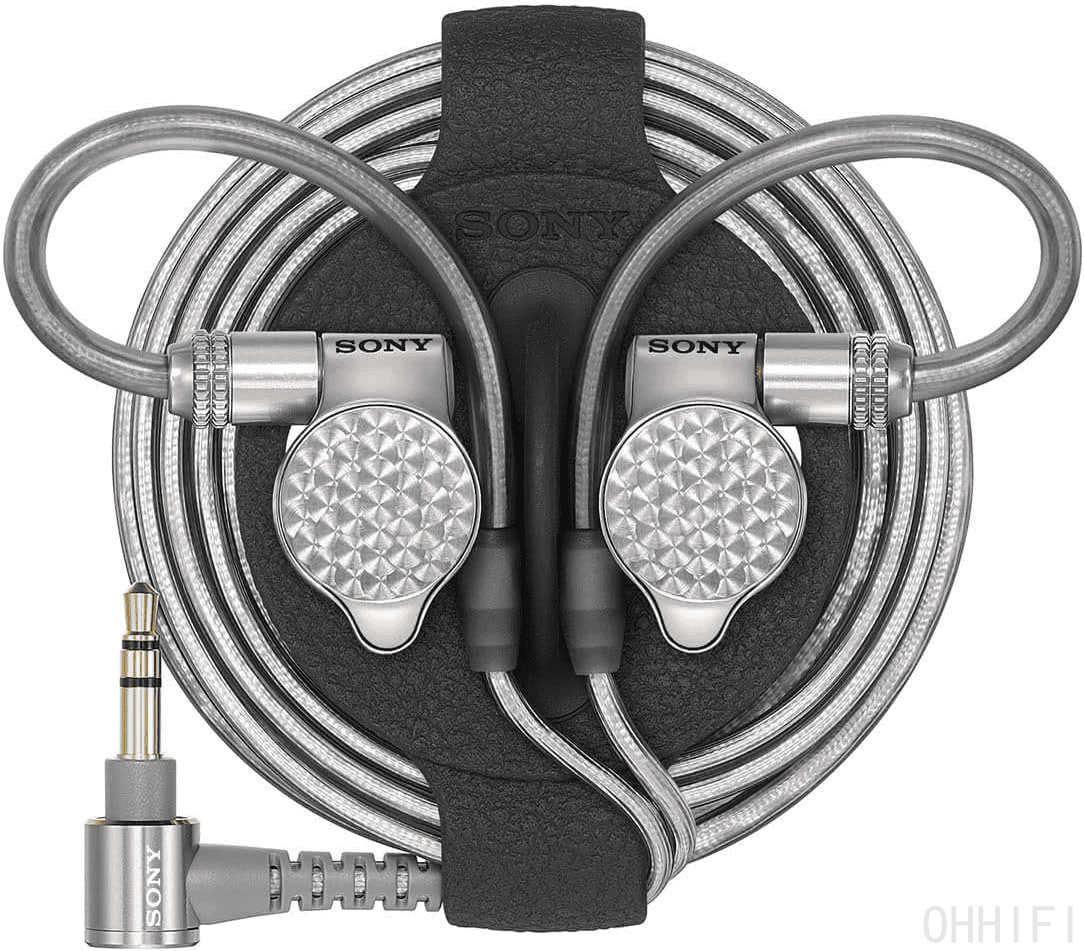
The faceplates feature a "Perlage" pattern (often referred to as perlée in horology), a finishing technique consisting of overlapping circular graining typically found on the movements of high-end Swiss watches. This finish catches the light in a mesmerizing, shifting display, giving the faceplates a depth and shimmer that looks undeniably premium. It is a design statement that separates the Z1R from the resin-filled acrylic shells of its competitors. It feels substantial, expensive, and meticulously crafted in Japan.
However, this beauty comes with a caveat. The mirror-finished Zirconium, while hard, is not invincible. Users have noted that clacking the two heavy earpieces together can result in cosmetic marring over time, and the inner shells are magnets for fingerprints. It is a product that demands to be handled with the care of a luxury timepiece.
2.2 Internal Architecture and Durability
Beneath the Zirconium exterior lies a Magnesium alloy inner housing. Sony chose magnesium for its high internal loss, meaning it is exceptionally good at absorbing unwanted vibrations. This inner chassis holds the drivers in a precise alignment, a system Sony calls the "Refined-phase structure". By locking the drivers into a rigid magnesium frame, Sony eliminates the resonance that plastic or 3D-printed internals might introduce, ensuring that the sound wave produced is exactly what the engineers intended.
Durability is a core tenet of the Z1R’s design. The outer shell is virtually bombproof; there are no seams that look susceptible to splitting, and the sheer density of the unit inspires confidence. However, reports from the community have highlighted a specific vulnerability: the MMCX connectors.
2.3 The Connector Controversy
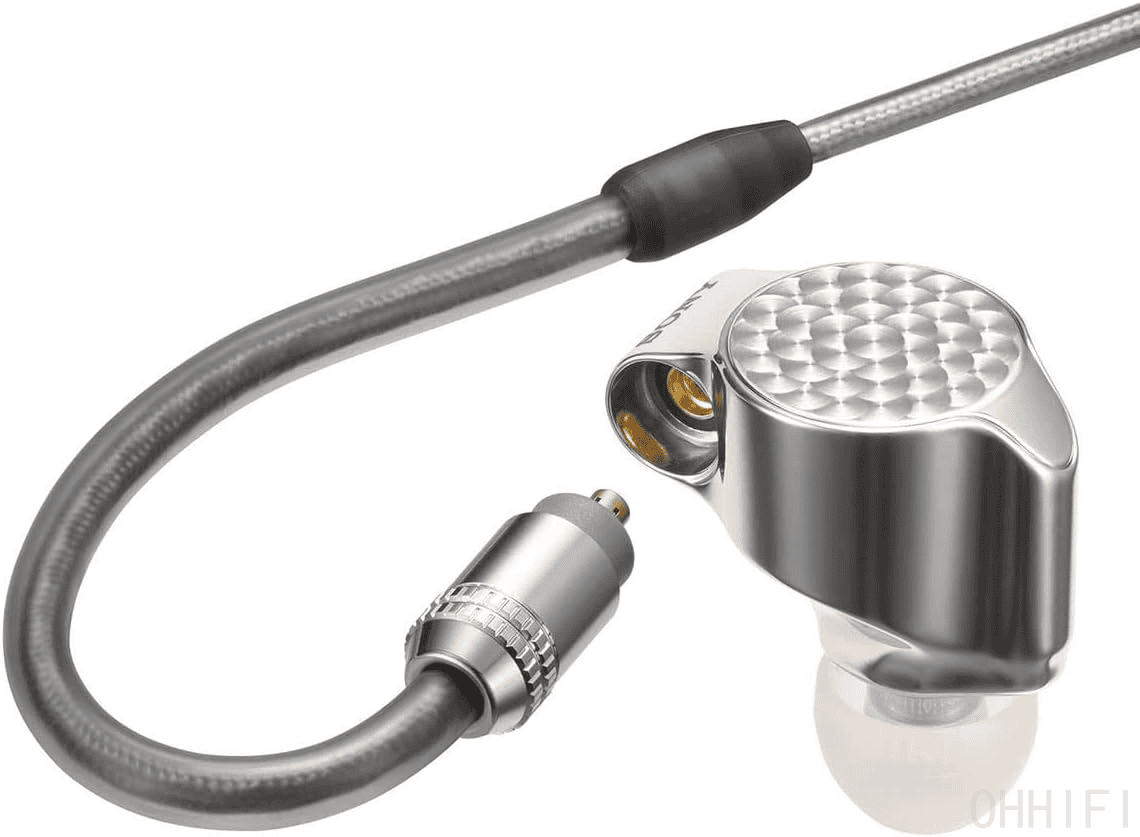
The IER-Z1R utilizes a standard MMCX (micro-miniature coaxial) connector, but the implementation is specific to Sony. The socket is slightly recessed and is designed to mate perfectly with the large, color-coded barrels of the stock Sony cables. While this provides a secure and aesthetically cohesive connection, it has caused issues for users attempting to use third-party aftermarket cables.
Because the Z1R shells are heavy (approximately 26 grams per side), the torque applied to the MMCX connector during adjustment or removal is significant. Users who have frequently swapped cables or used aftermarket plugs with slightly different tolerances have reported loosening of the socket or, in catastrophic cases, the center pin snapping off inside the IEM. This "MMCX failure" is the single most reported mechanical issue with the Z1R. The consensus among long-term owners is clear: find a cable you like and leave it attached. Constant cable rolling is a risk factor with this specific design.
2.4 Cable Quality
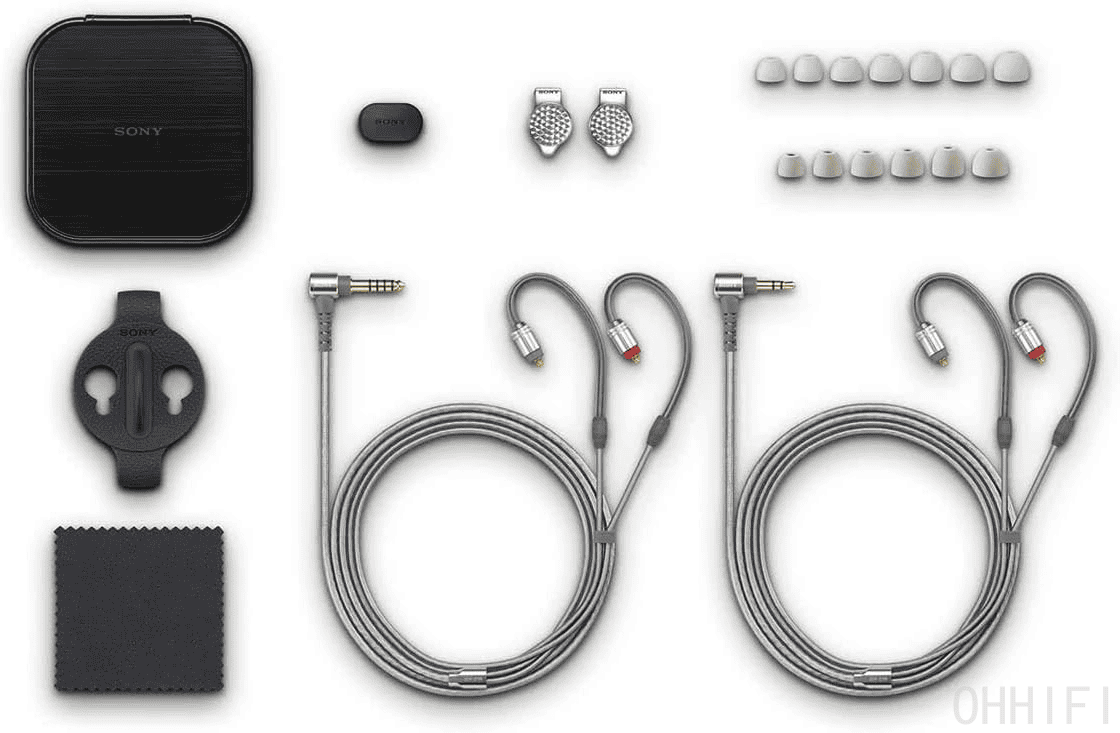
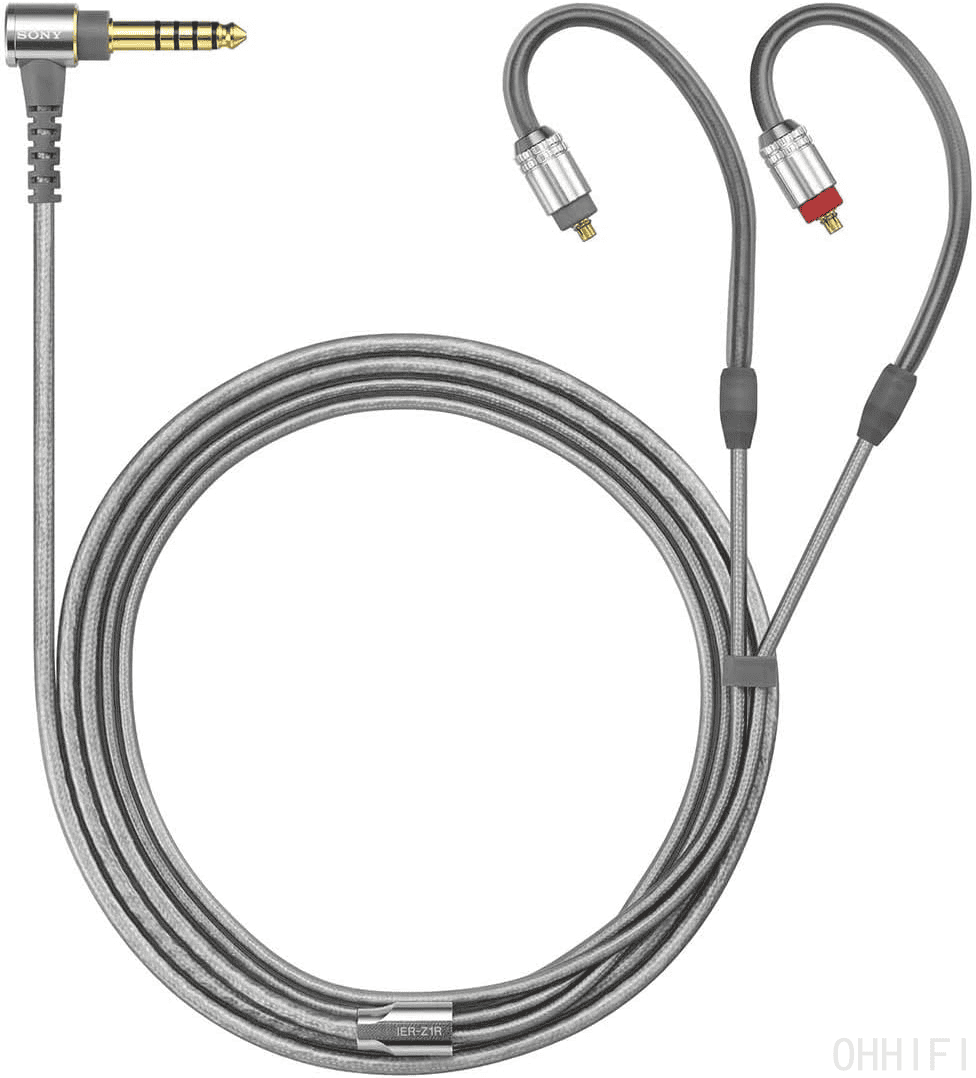
Fortunately, the stock cables provided by Sony are of exceptional quality, reducing the need for aftermarket replacements. The package includes two cables: a 3.5mm single-ended and a 4.4mm balanced termination. These cables utilize silver-coated Oxygen-Free Copper (OFC) strands, insulated with a natural silk braid.
The use of silk is not merely a luxury flourish; it serves a functional purpose. Silk is an excellent dampener of vibration, and it effectively minimizes "touch noise" or microphonics—the thumping sound heard when a cable rubs against clothing. In practice, the Z1R cables are among the quietest and most pliable stock cables in the high-end market. They resist tangling, drape naturally, and the pre-formed ear hangers (which lack annoying memory wire) provide a comfortable, secure loop over the ear.
3. Ergonomics: The "Elephant in the Ear"
If the sound of the IER-Z1R is its greatest asset, the fit is its greatest liability. The ergonomics of this IEM are arguably the most polarizing topic in the audiophile community.
3.1 The Weight and Shape
The Z1R shells are large, bulbous, and heavy. Unlike the teardrop shape of a 64 Audio shell or the "pseudo-custom" contouring of a Vision Ears model, the Z1R is essentially a large metal disc with a nozzle protruding from it. The design forces the bulk of the housing to sit outside the ear canal, often resting against the tragus or the antihelix.
For users with smaller ears, this can create pressure points that become painful after 30 to 60 minutes of listening. The "wing" section of the shell, where the MMCX connector resides, is a common culprit for discomfort.
3.2 The Importance of Insertion Depth
The fit is not just a comfort issue; it is a sonic one. The acoustic design of the IER-Z1R relies on a deep insertion to sound correct.
Shallow Fit: If the nozzle does not seal deeply enough, the primary resonance peak (typically around 6-9kHz) shifts, often resulting in a harsh, sibilant treble and a loss of bass impact.
Deep Fit: A deep seal pushes the resonance peak higher, smoothing out the treble response and ensuring the full, visceral impact of the sub-bass connects with the listener's skull.
Achieving this deep fit with such a large housing is a challenge. Many users find themselves needing to size down their ear tips to allow the nozzle to penetrate further, or they have to angle the shell in a specific way that may not be intuitive.
3.3 Ear Tip Selection
Given the fit challenges, "tip rolling" (experimenting with different ear tips) is almost a mandatory rite of passage for Z1R owners.
Sony Triple Comfort Tips (Included): These unique tips, made from a high-density silicone/foam hybrid, are often the best starting point. They are durable, washable, and provide excellent isolation. They tend to smooth the treble slightly and enhance the mid-bass warmth.
Final Audio Type E: These are a community favorite. Their flexible axis allows the heavy IEM to tilt slightly without breaking the seal, and they are known for enhancing bass impact.
SpinFit CP360 / CP145: The articulating nozzle of the SpinFit can help accommodate the awkward angle of insertion required by the Z1R’s coaxial design.
Azla SednaEarfit XELASTEC: These thermoplastic tips soften with body heat and mold to the ear canal, providing tremendous grip which helps keep the heavy shells secure.
Verdict on Fit: The IER-Z1R is a "try before you buy" product. If it fits your ear anatomy, it is manageable. If it does not, no amount of sound quality will justify the physical pain. It is a monitor that demands compromise from its user.
4. Engineering: The Hybrid Trinity
Sony’s approach to the IER-Z1R’s internal architecture is a masterclass in purposeful engineering. Rather than chasing high driver counts, they developed a sophisticated HD Hybrid Driver System comprising three drivers, each utilizing different diaphragm materials and technologies to cover specific frequency ranges.
4.1 The 12mm Dynamic Driver (Woofer/Midrange)
The foundation of the Z1R’s sound is a massive 12mm dynamic driver derived from the technology in the MDR-Z1R full-size headphone.
Construction: It features a magnesium alloy dome for lightweight rigidity and an aluminum-coated Liquid Crystal Polymer (LCP) edge for flexibility.
Role: This driver handles the sub-bass, mid-bass, and lower midrange. The use of a large dynamic driver for the low end is what gives the Z1R its characteristic "air moving" bass texture, something that Balanced Armature (BA) woofers struggle to replicate.
4.2 The Balanced Armature (High Mid/Low Treble)
Bridging the gap between the woofer and the tweeter is a proprietary Sony Balanced Armature driver.
Construction: Unlike off-the-shelf Knowles or Sonion drivers, this unit uses a magnesium alloy diaphragm and a silver-coated copper voice coil with gold-plated terminals.
Role: It covers the upper midrange and lower treble, ensuring vocals have the necessary presence and transient speed.
4.3 The 5mm Dynamic Super Tweeter
The pièce de résistance of the Z1R is the 5mm micro-dynamic driver acting as a super tweeter.
Construction: It utilizes an aluminum-coated LCP diaphragm and an external magnetic circuit.
Placement: Uniquely, this driver is placed coaxially within the nozzle, firing directly into the ear canal. This "straight sound path" avoids the high-frequency attenuation that occurs when sound bounces through long acoustic tubes.
Performance: It is rated up to 100kHz. While human hearing stops at 20kHz, this ultra-high extension ensures that the audible treble is linear, phase-coherent, and free of the distortion or "break-up" modes that occur near a driver's limit. This dynamic tweeter is responsible for the Z1R’s unique treble timbre—possessing weight and body rather than the thin, "wispy" sound of electrostatic (EST) drivers.
4.4 Acoustic Control
To manage the airflow of the large dynamic drivers, Sony employs a "Sound Space Control" technology. An acoustic tube connects the cavity behind the drivers to an extended acoustic chamber, allowing for precise control of air movement. This venting system is crucial for creating the Z1R’s expansive soundstage, as it creates a semi-open sensation that reduces the "in-head" localization typical of IEMs.
Additionally, the crossover network utilizes audio-grade film capacitors developed specifically for this project to minimize distortion and ensure signal transparency.
5. Sound Analysis: The Sonic Monolith
The sound signature of the IER-Z1R is best described as a mild V-shape or W-shape, depending on fit and perception. It is a "colored" sound, tuned not for flat reference monitoring, but for maximum engagement, dynamic contrast, and atmospheric immersion.
5.1 Bass: The Zenith of Portable Fidelity
There is arguably no other IEM in the world that reproduces bass quite like the IER-Z1R. It is widely considered the "Bass King" of the audiophile world.
Sub-Bass Focus: The tuning prioritizes the sub-bass frequencies (20-60Hz) over the mid-bass. This results in a rumble that is visceral and physical. It is bass you feel as much as you hear. On tracks like Isaac Hayes' "Hyperbolicsyllabicsesquedalymistic" or James Blake's "Limit to Your Love", the Z1R pressurizes the ear canal in a way that mimics a high-end subwoofer system in a treated room.
Texture and Decay: The 12mm magnesium driver allows for a decay that is natural. It is not as unnaturally fast as a BA driver, which can sound "dry" or "plasticky." Instead, the Z1R allows bass notes to bloom and fade with realistic weight. You can hear the texture of the synth, the vibration of the cello string, and the resonance of the kick drum skin.
Control: Despite the massive quantity, the bass is remarkably controlled. It stays strictly in the lower registers and does not bleed into the midrange to cause muddiness. It is clean, separated, and powerful.
5.2 Midrange: The Valley of Shadows
If the bass is the peak, the midrange is the valley. The Z1R exhibits a deliberate recession in the lower midrange.
Male Vocals: Due to this recession, male vocals can sometimes sound slightly distant or lean compared to the thunderous bass and sparkling treble. They lack the thick, chesty resonance found in mid-forward IEMs like the Vision Ears VE8.
Female Vocals: The response rises in the upper midrange (pinna gain), giving female vocals energy and clarity. However, some users note a dip around 2-3kHz before this rise, which can occasionally make vocals sound "hollow" or lack a certain bite.
Clarity: Despite the recession, the midrange is exceptionally clear. The lack of mid-bass bleed ensures that instruments remain distinct and separated. It is a "clean" midrange presentation rather than a "lush" or "warm" one.
5.3 Treble: The Dynamic Difference
The treble of the IER-Z1R is a revelation. By using a dynamic driver for the high frequencies instead of the industry-standard Balanced Armature or Electrostatic drivers, Sony achieved a timbre that is rare in the market.
Timbre: Treble notes have body. A cymbal crash on the Z1R sounds like struck metal with mass, not just a splash of white noise. A violin's high E-string has a resonant thickness that feels authentic.
Extension: The extension is virtually endless, contributing to the sense of "air" and open space.
Smoothness: When fitted deeply, the treble is smooth and non-fatiguing. However, a shallow fit can expose peaks (particularly around 6kHz) that some listeners find sharp or "spicy".
5.4 Soundstage and Imaging: The Cathedral Effect
Alongside its bass, the soundstage is the Z1R’s other claim to fame. It is frequently described as "cathedral-like" or "holographic".
Scale: The soundstage is massive, extending well beyond the physical boundaries of the head.
Verticality: Uniquely, the Z1R excels at vertical imaging. You can hear sounds originating from "above" or "below" with startling distinctness, creating a wall of sound that feels cinematic.
Depth: The recessed mids combined with the incredible dynamic range create a stage with immense depth. Layers of music are separated by "black space," allowing you to peer deep into the mix.
6. Competitor Comparisons: The Battle of the Titans
To understand the Z1R’s standing in 2026, we must compare it to its peers in the "kilobuck" flagship category.
| Feature | Sony IER-Z1R | 64 Audio U12t | Empire Ears Legend X | ThieAudio Monarch MK3 |
| Driver Tech | 2DD + 1BA (Hybrid) | 12 BA (All-BA) | 2DD + 5BA (Hybrid) | 2DD + 6BA + 2EST (Tribrid) |
| Bass Style | Sub-bass Rumble, Natural Decay | Fast, Punchy, Clean | Mid-bass Slam, Wall of Sound | Sub-bass focused, Clean |
| Soundstage | Massive, Holographic, Tall | Precise, Deep, Center-focused | Wide but less precise | Wide, engaging |
| Fit/Comfort | Poor (Large/Heavy) | Excellent (Light/Ergonomic) | Good (Universal Acrylic) | Good (Large Resin) |
| Signature | Mild V/W-shape (Fun/Grand) | U-shape (Reference/Musical) | L-shape (Basshead) | Harman-modified (Meta) |
6.1 vs. 64 Audio U12t
This is the classic "Clash of the Titans." The U12t is often seen as the "safe" flagship recommendation, while the Z1R is the "passion" choice.
Bass: The U12t offers some of the best BA bass on the market—tight, fast, and punchy. But it lacks the visceral, air-moving rumble of the Z1R’s 12mm dynamic driver. The Z1R feels physical; the U12t feels technical.
Mids: The U12t is more neutral and balanced, offering better male vocal body. The Z1R sounds thinner and more recessed.
Treble: The U12t uses the "tia" driver, which is airy and detailed but can sound slightly diffuse or "tizzy." The Z1R’s dynamic tweeter has better note weight and timbre.
Verdict: If you want a monitor for analyzing music or all-day wear, get the U12t. If you want to be emotionally swept away by the scale and power of the music, get the Z1R.
6.2 vs. Empire Ears Legend X
For years, this was the battle for the title of "Bass King."
Bass: The Legend X (and its successor, the Legend EVO) has more bass quantity, particularly in the mid-bass. It hits with a slam that can be overwhelming, sometimes bleeding into the mids. The Z1R is more sub-bass focused and controlled. The Legend X is a club system; the Z1R is a mastering studio subwoofer.
Resolution: The Z1R resolves fine detail better across the spectrum. The Legend X prioritizes the "fun factor" and macro-dynamics over micro-detail.
Verdict: The Legend X is for the basshead who wants sheer quantity and slam. The Z1R is for the audiophile who wants massive bass without sacrificing technical resolution.
6.3 vs. ThieAudio Monarch MK3
The Monarch MK3 represents the modern "Chi-Fi" flagship—high performance at a lower price point ($999 vs $1,700).
Tuning: The Monarch MK3 follows a "Meta" tuning that is tonally safer and more "correct" according to modern targets. It has a dedicated sub-bass boost similar to the Z1R.
Performance: The Monarch MK3 gets frighteningly close to the Z1R’s performance. Its isobaric dual-DD setup produces excellent bass. However, many users argue that the Z1R still retains a "tactile" superiority and a more natural decay that the Monarch cannot fully replicate. The Z1R’s soundstage is also taller and more unique.
Verdict: The Monarch MK3 is the rational, value-driven choice. The Z1R is the luxury choice for those chasing the last 5% of intangible "magic".
7. Synergy and Pairing: Feeding the Beast
The IER-Z1R is not an easy load. With an impedance of 40 ohms and a sensitivity of 103dB/mW, it requires more current than the average IEM to wake up. While it will produce sound from a smartphone, it will sound flat, compressed, and uninspiring.
7.1 Digital Audio Players (DAPs)
Sony WM1Z / WM1ZM2: This is widely considered the "God Tier" pairing. Sony engineers tune their products within an ecosystem. The inherent warmth and organic nature of the Walkman's S-Master HX amplification compensate perfectly for the Z1R’s recessed mids and treble energy. The DSP (Dynamic Normalizer, Vinyl Processor) on these units can add further body to the sound.
Lotoo PAW Gold Touch: For those who prefer transparency, the LPGT offers incredible speed and resolution, tightening the Z1R’s bass and expanding the stage even further.
Astell&Kern SP3000: This player maximizes the Z1R’s technical capabilities, offering the widest possible soundstage and deepest black background, though it is a very clinical pairing.
7.2 Portable Amplifiers
Chord Mojo 2: This is a highly recommended portable DAC/Amp. Its robust FPGA-based processing provides the current drive needed to control the Z1R’s large drivers. The built-in DSP/EQ allows users to bump the lower mids (around 200-300Hz) to add body to vocals without distorting the phase.
Note: The Apple Dongle is generally insufficient for the Z1R. While it can reach listenable volumes, it lacks the dynamic swing and headroom to do justice to the Z1R’s capabilities.
8. Track-Specific Analysis: The Musical Stress Test
To truly understand the Z1R, we must analyze its performance on specific tracks referenced in our research.
Bass Test: Hyperbolicsyllabicsesquedalymistic by Isaac Hayes.
The Experience: The Z1R renders the bassline with a gritty, textured growl that feels like you are standing next to the bass amp. The sub-bass extension provides a foundation that makes the track feel heavy and menacing, yet the piano and vocals remain completely separated.
Sub-Bass Rumble: Limit to Your Love by James Blake.
The Experience: When the sub-bass wobble kicks in, the Z1R pressurizes the ear canal with a fluttering sensation that is purely physical. Unlike BA IEMs which just play the tone, the Z1R moves the air, creating the "wobble" effect perfectly.
Female Vocals: It Happened Quiet by AURORA.
The Experience: The upper-midrange rise highlights the breathiness and ethereal quality of Aurora's voice. The wide soundstage allows the backing vocals to float around the listener, creating a ghostly, immersive atmosphere.
Soundstage & Imaging: Bubbles by Yosi Horikawa.
The Experience: The Z1R showcases its pinpoint imaging here. You can hear the bouncing balls hitting the floor at different heights and distances. The vertical imaging is particularly apparent, with sounds feeling like they are falling from above.
9. The Verdict: Is the Legend Still Alive in 2026?
After years on the market, the Sony IER-Z1R remains a polarizing masterpiece. It is a product of contradictions: built like a tank but with a fragile connector; beautiful to look at but painful to wear for some; technically brilliant but tuned with a specific coloration.
In 2026, where the market is flooded with technically competent, Harman-tuned IEMs that all sound largely the same, the Z1R stands apart as a character piece. It is not trying to be neutral. It is trying to be magnificent.
Pros:
Unrivaled Bass: The combination of sub-bass rumble, texture, and natural decay remains the gold standard for dynamic driver bass.
Holographic Soundstage: A massive, cathedral-like presentation that defies the limitations of in-ear monitors.
Treble Timbre: The dynamic super tweeter offers a natural, weighted high-frequency response that BAs cannot match.
Build Quality: The Zirconium alloy shells are durable, premium, and unique.
Accessory Package: The included cables and variety of tips are top-tier.
Cons:
Fit and Ergonomics: The weight and shape make it uncomfortable for users with small ears.
Midrange Recession: Male vocals can sound thin or distant compared to the rest of the mix.
MMCX Durability: The connector design requires care; frequent cable swapping is discouraged.
Source Picky: Requires a high-quality source with good current drive to perform at its best.
Final Conclusion:
The Sony IER-Z1R is not for everyone. It is a specialist's tool, designed for the audiophile who prioritizes the feeling of music—the impact of the drum, the air of the venue, the rumble of the synth—over clinical flatness. If you can accommodate its size and price, it offers a listening experience that is visceral, emotional, and utterly unforgettable. It is, and remains, the immutable monolith of high-fidelity audio.
Data Summary
| Metric | Specification |
| Model | Sony IER-Z1R |
| Price (MSRP) | ~$1,699 USD (varies by region) |
| Driver Count | 3 (1x 12mm DD, 1x BA, 1x 5mm DD) |
| Impedance | 40Ω @ 1kHz |
| Sensitivity | 103dB / mW |
| Freq. Response | 3Hz - 100,000Hz |
| Weight | ~26g (per earpiece) |
| Cable | Silver-coated OFC, Silk Braid, MMCX |
| Housing | Zirconium Alloy + Magnesium Alloy |





Comments