
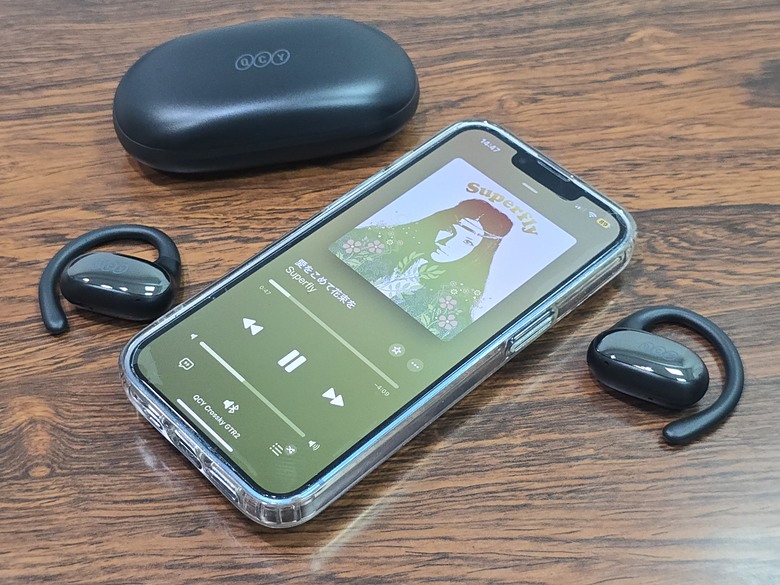
The Future of Wireless Audio: A Deep Dive into Bluetooth 5.0/5.1/5.2/5.3

For years, "wireless audio" was something you tolerated rather than chose. In 2026, it's simply the default — and the questions worth asking have changed along with it. The old worry was "is this Bluetooth version good enough?" The more useful question now is "which features does this device actually support?" That shift matters, because chasing version numbers has quietly become the wrong way to shop for headphones and speakers.
In putting this guide together, I went back through the Bluetooth Special Interest Group's own specification history and the way manufacturers are currently marketing their devices. What follows is how we got from Bluetooth 5.0 to today's 6.x specifications, what each step actually meant for audio, and — more importantly — what you should look for on a spec sheet right now.
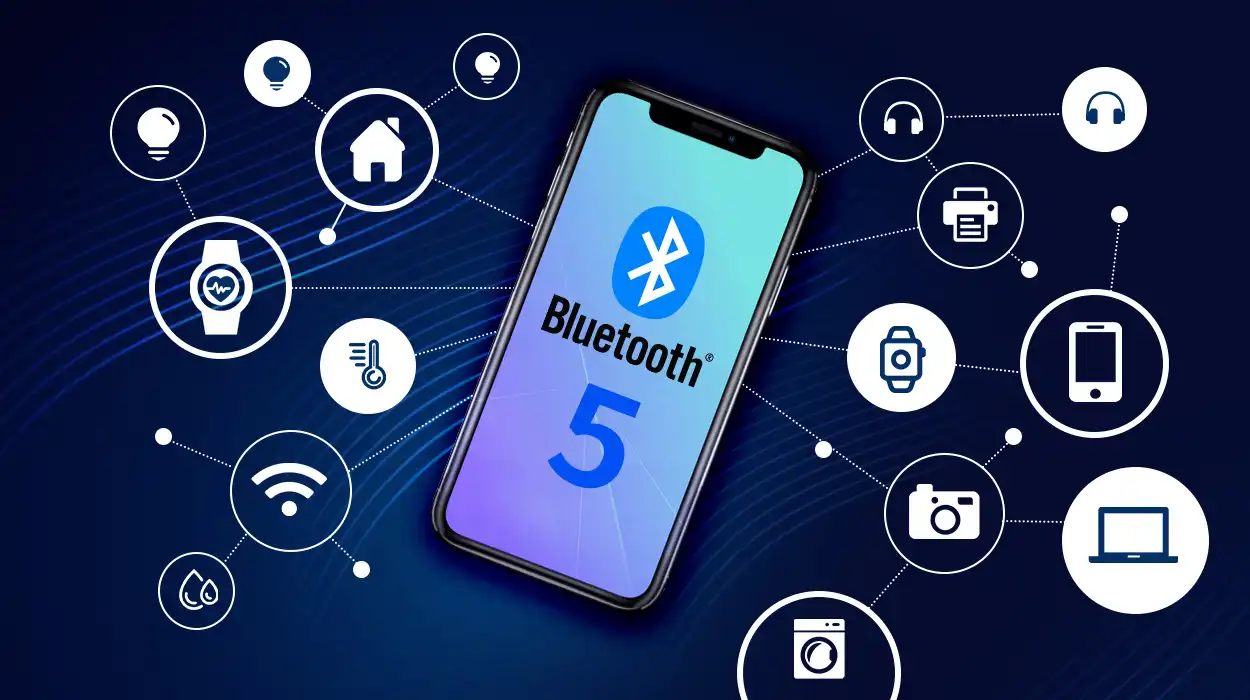
A short, honest map of how we got here
Bluetooth's reputation for confusing version numbers is well earned, so here's the audio-relevant version of the timeline, stripped of the marketing:
- Bluetooth 5.0 (2016) was the big one: roughly double the speed, four times the range, and eight times the broadcasting capacity of 4.2. It also introduced dual-audio streaming to two sets of headphones at once.
- 5.1 (2019) added direction-finding — the groundwork for "find my earbuds" features rather than anything you'd hear.
- 5.2 (2019) is the version that quietly changed everything for audio, because it introduced LE Audio and the LC3 codec. More on why that matters below.
- 5.3 (2021) and 5.4 (2023) were refinement releases — better power efficiency, connection reliability, and broadcast features aimed largely at the Internet of Things rather than your headphones.
- Bluetooth Core 6.0 (September 2024) brought Channel Sounding, which lets two devices measure the distance between them with near centimeter-level accuracy. Useful for finding lost devices and for security; not something that changes how music sounds.
- 6.1 (May 2025), 6.2 (late 2025), and 6.3 (May 2026) have continued at the SIG's roughly twice-a-year cadence, focusing on privacy, power, ranging accuracy, and developer tooling.
Notice the pattern: since 5.2, almost none of the headline changes have been about sound quality. The audio story moved out of the core version number and into a set of named features — which is exactly why the SIG now encourages brands to advertise "supports Auracast" or "LE Audio" instead of "Bluetooth 6.1."
The detail almost every guide gets wrong
You'll often read that Bluetooth Low Energy (LE) arrived with a recent 5.x release. It didn't. LE has been part of Bluetooth since version 4.0, back in 2010. What 5.2 introduced was LE Audio — a new audio architecture that runs on top of LE — along with the LC3 codec. It's a small distinction, but it's the difference between understanding the technology and repeating a spec sheet.
The real turning point: LE Audio and LC3
For most of Bluetooth's life, audio rode on a system called Classic Audio using the SBC codec. It worked, but it was inefficient and showed its age. LE Audio rebuilt that foundation, and its LC3 codec is the part worth caring about: it's designed to deliver comparable or better perceived quality than old SBC at a meaningfully lower bitrate. In plain terms, that means a device can choose to spend the saved bandwidth on longer battery life, more reliable connections, or better sound — sometimes a bit of each.
LE Audio also enabled true independent connections to each earbud and far better support for hearing devices. It's the most important under-the-hood change in years, even though it rarely gets top billing on a box.
Auracast: the one genuinely new idea
If anything here deserves the "future of wireless audio" label, it's Auracast. Built on LE Audio, it lets a single source broadcast audio to an unlimited number of nearby receivers at once. Instead of pairing one device to one source, you "tune in" to a stream much like joining a Wi-Fi network — often by selecting it on your phone or scanning a QR code at the venue.
The use cases are easy to picture: silent gym TVs you can listen to through your own earbuds, gate announcements at an airport piped straight to your headphones, a museum tour without the shared handset, or a theater broadcasting clear dialogue to every hearing aid in the room.
What's worth being honest about is where adoption actually stands. This is real and shipping, but still early. Venues including the Sydney Opera House have installed Auracast transmitters, and Frankfurt became the first airport to roll it out in 2025, with theaters, lecture halls, and places of worship following. Hearing aids have led the consumer side — ReSound shipped one of the first Auracast-capable models back in late 2023, and most major hearing-aid brands now offer or are enabling support. On the headphone and earbud side it's arriving more gradually. Industry forecasts point to well over a million Auracast-enabled venues by the end of the decade, and an international standard is expected around 2027, so think of 2026 as the early-adopter window rather than the finish line.
So which version do I actually need?
Here's the practical takeaway, and it runs against how these devices are usually marketed: stop shopping by version number. A "Bluetooth 5.3" pair of earbuds can easily be a better audio product than a "Bluetooth 6.0" one, because the core version tells you very little about sound. Instead, scan the spec sheet for the things that do matter:
- Codec support. For better-than-default quality, look for LC3 (LE Audio), and on the higher end, aptX Adaptive or LDAC for higher-bitrate streaming. Match it to what your phone supports — a great codec only helps if both ends speak it.
- LE Audio and Auracast readiness. If you want to be ready for broadcast audio, look for "Auracast-enabled" (works now) versus "Auracast-ready" (needs a future firmware update). The labels mean different things.
- Multipoint connection if you switch between a laptop and phone often. This is a feature decision, not a version one.
The honest caveat audiophiles need to hear
I'll be direct about something the "future of wireless audio" framing tends to gloss over: Bluetooth still isn't the endgame for critical listening. Even the best current codecs are lossy and bandwidth-limited compared to a wired connection or a proper Wi-Fi-based streaming system. For most listening — commuting, the gym, casual sessions at your desk — that gap is genuinely hard to notice, and the convenience is worth it. But if you're chasing the last few percent of fidelity from a good DAC and a quality pair of headphones, wired playback or network streaming still wins, and probably will for a while yet. Wireless has gotten remarkable. It hasn't made cables obsolete for everyone.
The bottom line
The most useful change in wireless audio isn't a number that went up — it's that the meaningful upgrades now live in features like LE Audio, LC3, and Auracast rather than the core specification. Buy for the codecs and capabilities your devices will actually use, treat Auracast as a promising bonus rather than a must-have in 2026, and keep your expectations honest about where Bluetooth sits relative to wired listening. Do that, and you'll choose better gear than anyone shopping by version number alone.
Comments