
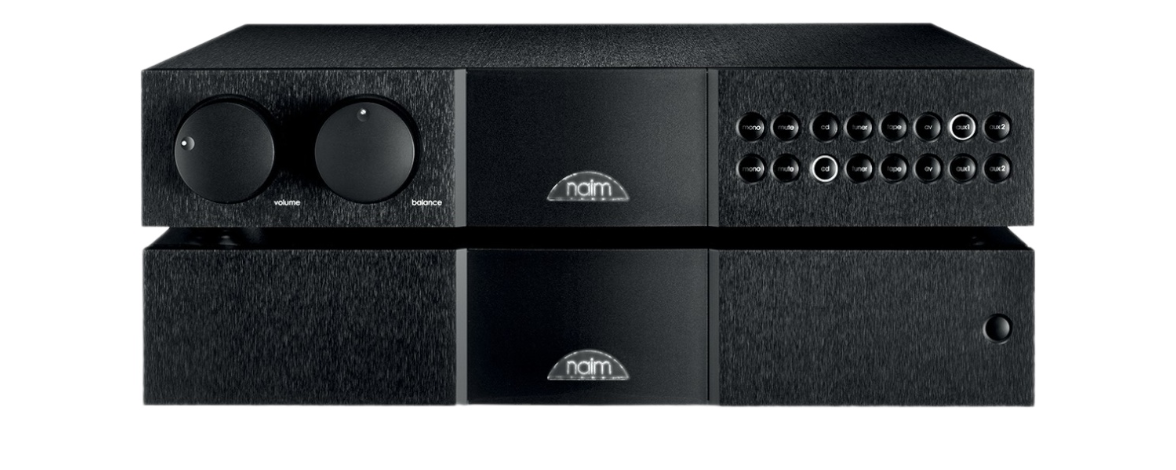
Naim NAC 552 / NAP 500 DR Review: Can a 25-Year-Old Four-Box Still Justify £54,000?

There's a particular kind of arrogance baked into a product that refuses to die. The Naim NAC 552 / NAP 500 DR is, in its bones, a turn-of-the-millennium design — the NAP 500 power amplifier launched in 2000, with the NAC 552 preamp joining in 2002. In an industry that reissues "all-new" flagships every 36 months, this thing has been quietly sitting at the top of Naim's separates ladder for a quarter of a century, and it still gets wheeled into reviewers' best-amplifier conversations without a hint of embarrassment.
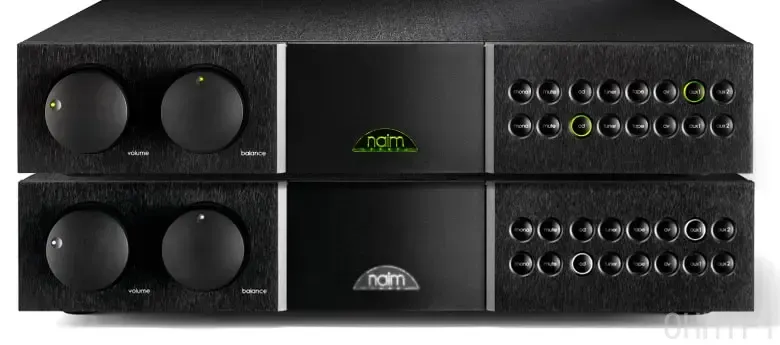
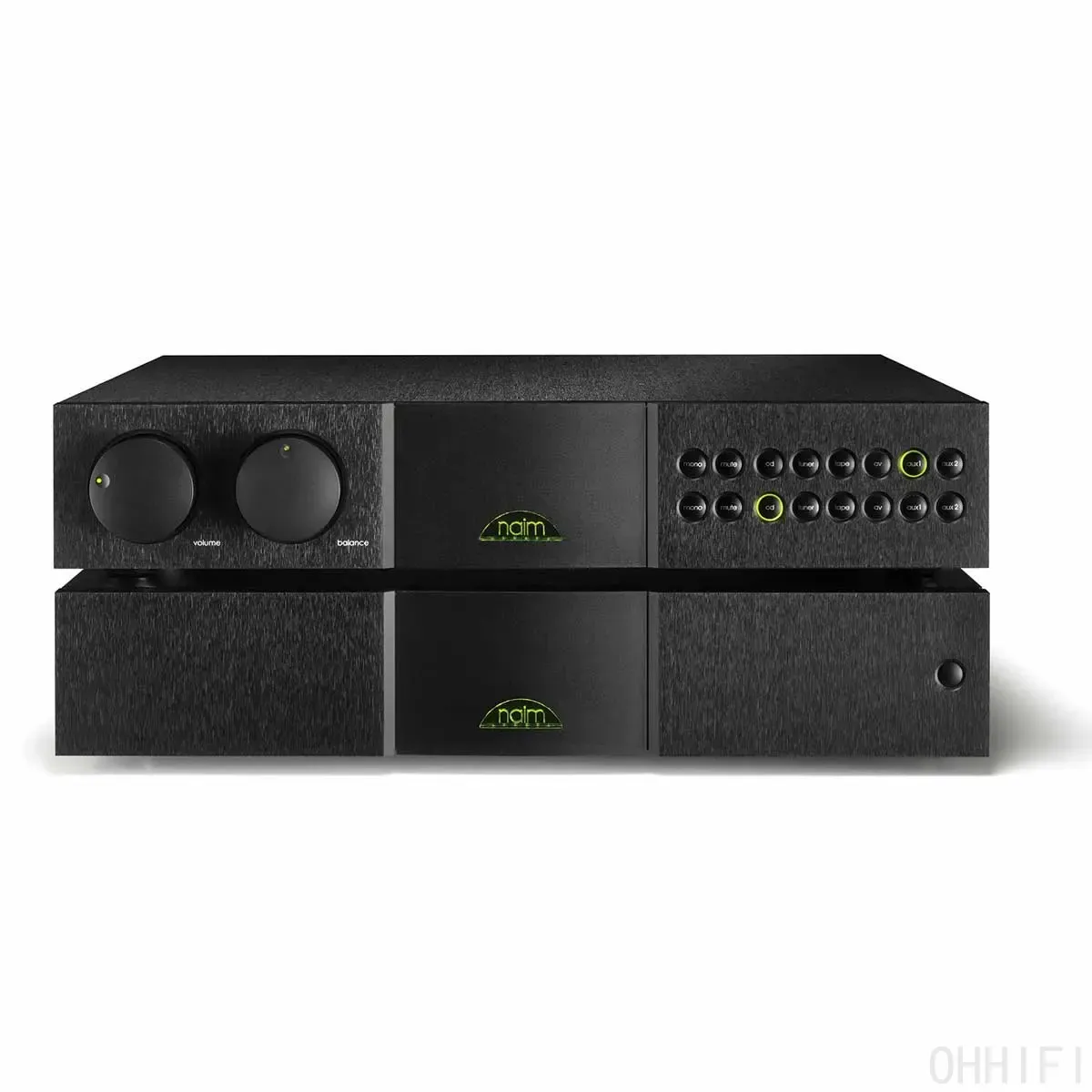
So the obvious question — the one I kept circling while I built my picture of this amplifier from the listening notes of half a dozen reviewers and my own years living inside the Naim ecosystem — is simple. At £53,998 for the full four-box stack, is this legacy reference still a serious buy in 2026, or are you paying a heritage tax? The answer is more interesting than either a yes or a no, especially now that there's a fresh complication hanging over Salisbury.
Quick Specs
| Spec | Detail |
|---|---|
| Type | Preamp (NAC 552) + stereo power amp (NAP 500 DR) |
| Configuration | Four boxes (each unit has an outboard power supply) |
| Power | 140W per channel into 8 ohms; stable into 2 ohms |
| Class | A/B, bridged output |
| Inputs (preamp) | 6 selectable; 7 DIN + 2 RCA on the back; all single-ended |
| Outputs | 3x pre-out, 3x line out |
| Balanced inputs | No |
| Phono / DAC / Bluetooth | No (line-level preamp only) |
| Total weight | 67.2 kg across four chassis |
| Price | £53,998 / $69,998 / AU$106,000 |
Design & Build: Obsession, Boxed in Four Parts
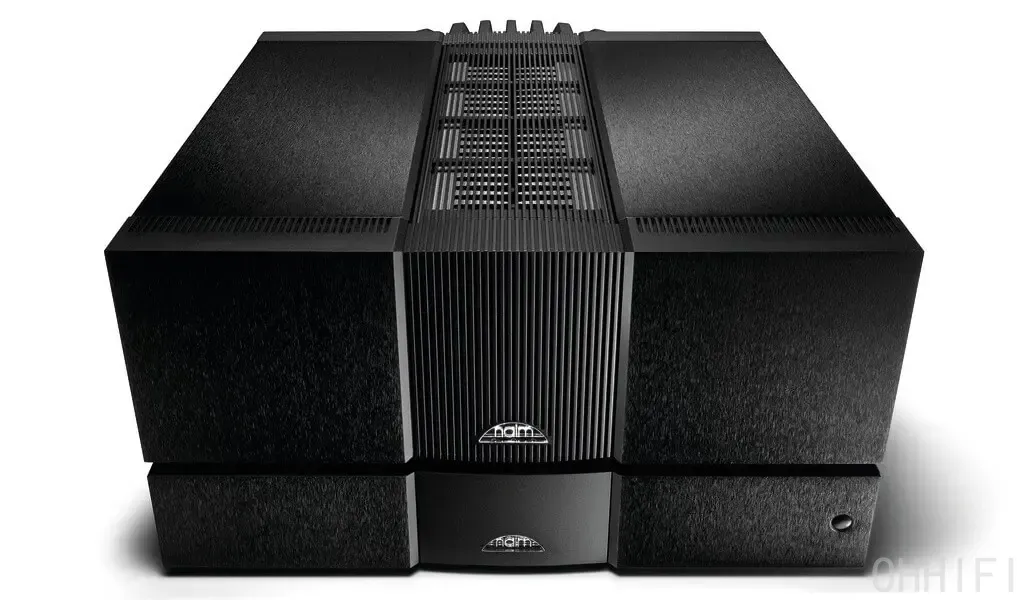
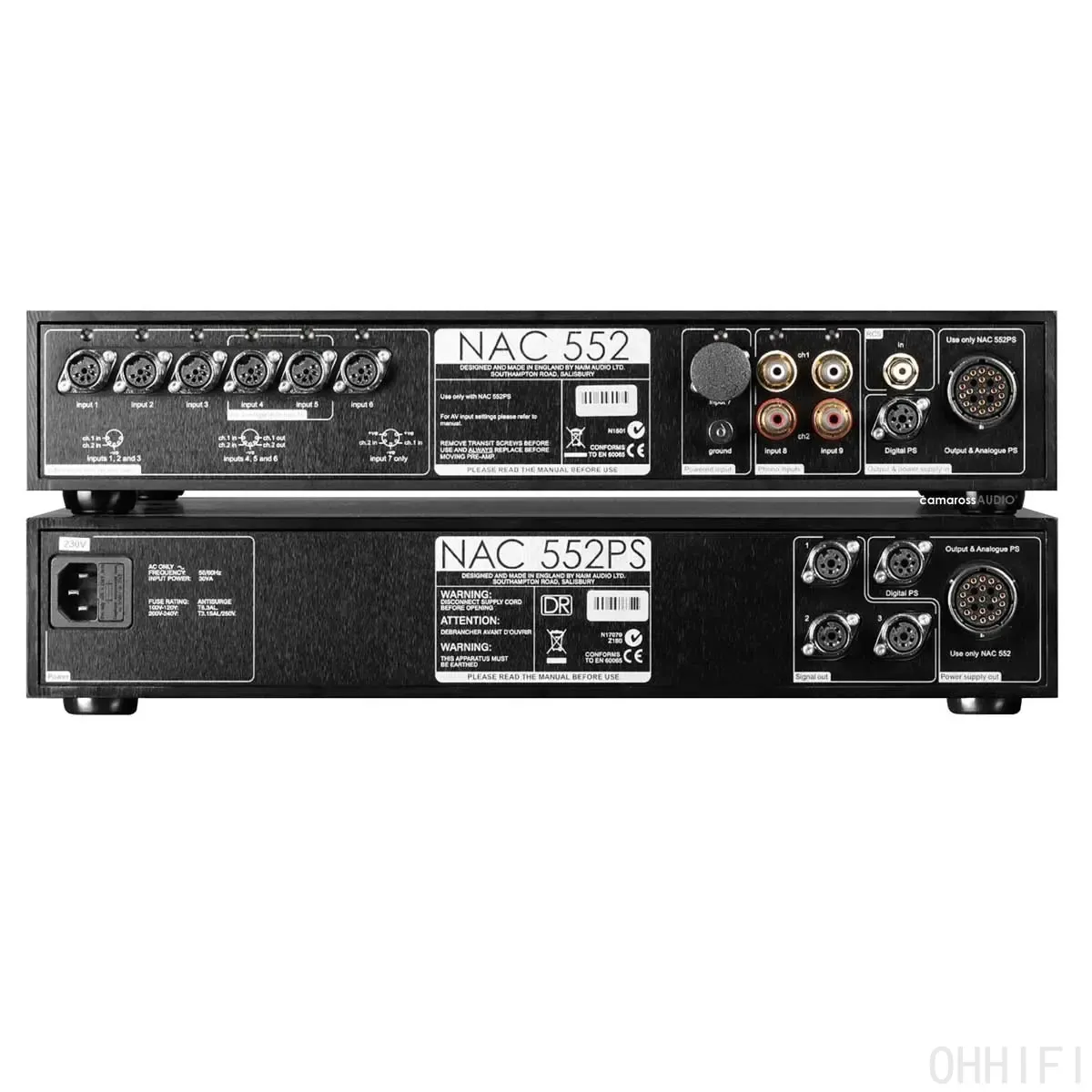
Open up the NAC 552 and you find the thing Naim is quietly fanatical about: the sensitive audio circuits float on a heavy brass suspended subchassis sitting on springs, isolating them from vibration. There are transit bolts you're meant to engage before moving it, which tells you everything about how seriously Salisbury takes mechanical noise. The preamp's power supply lives in its own box — the 552 PS — with an 800VA toroidal transformer, connected via a multi-pin Burndy and Naim's Snaic DIN lead. The amp gets the same two-box treatment, its 500 PS packing a 1100VA transformer delivering twelve separate DC feeds.
That bridged, ten-stages-of-regulation-per-channel topology is built around the NA009 transistor, a part Naim developed with a specialist semiconductor maker, individually serial-numbered and shared with the cost-no-object Statement. The on-paper output is a modest-looking 140 watts, and you'll hear that figure dismissed as conservative by everyone who's heard it — the amp behaves with far more headroom than the number suggests, and crucially it'll drive a 2-ohm load indefinitely without flinching. That's the real story on power delivery here: it's not about the watt count, it's about a damping grip that doesn't let go when a speaker's impedance dives.
Now the gripes, because at this money they matter. There are no balanced inputs — everything is single-ended, including the XLR feed to the power amp, which only uses two of the three pins. Get the left and right leads crossed and you get pure silence, which is the kind of booby trap you only forgive in a product this single-minded. Connecting it all is, in the words of one reviewer who's done it, a wrestling match with burly Burndy bayonet connectors that gets easier by the fourth go. And the motorised volume pot, lovely as the dials feel, works in an abrupt enough way that small adjustments at low volume are harder than they should be. Four boxes, 67 kg, DIN cables, reversed speaker terminals — this is hi-fi that makes you come to it. The build quality, gull-wing casework and all, is genuinely exquisite, but nobody's going to call the ergonomics modern.
The Sound: Where Composure Becomes a Superpower
Naim's house signature has always been about timing — pace, rhythm and timing, the old PRaT shorthand — and across every credible account of this amplifier, plus my own time inside the green-box world, that's exactly where the 552/500 stakes its claim. This is not a lush, romantic amplifier. It's a crisp, direct, physically gripping presentation that prioritises the skeleton of the music over the perfume.
Rhythm and timing
Put on Steely Dan's "Aja" and the way this Naim locks the interplay between Steve Gadd's drums and the rest of the band is almost unfair. There's a leading-edge precision to transients that makes lesser amplifiers sound like they're dragging the beat by a few milliseconds. The consensus among reviewers who've spent real time with it is unanimous on this point — that class-leading rhythmic cohesion is the headline trait. It's the quality that makes you stop analysing and just nod along, which is the highest compliment I can pay any component.
Bass
Lows arrive with a thrilling mix of weight and agility. Cue up James Blake's "Limit to Your Love" — all yawning sub-bass and silence — and the 552/500 plants those low notes with authority and then, more impressively, stops them dead when the track demands it. That's the damping factor and that bottomless power supply at work. Bass authority and grip sit near the top of every assessment of this amplifier, and rightly so. It doesn't bloom or wallow; it controls.
Midrange and voices
This is the area where Naim's reputation for being a touch "mechanical" gets put to bed by the 552/500. Play Joni Mitchell's "A Case of You" and the voice is rendered with a palpability — a there-in-the-room solidity — that's uncommon even up here. Tonally the combination is essentially neutral, refusing to favour any part of the range, and it sounds authentic in a way a lot of rivals, with their flattering warmth or etched treble, simply don't.
Treble and soundstage
The top end is detailed without being analytical, and detail resolution is a given. Where it gives ground is stage size: against the Burmester 088/911 MkIII that several reviewers use as a benchmark, the Naim's soundstage is less spacious, but it counters with class-leading image solidity and focus — to the point that the Burmester can sound slightly blurred next to it. Throw the full orchestral chaos of Stravinsky's The Rite of Spring at it and the dynamic sweeps land with a ferocity and an authority that genuinely separates the great from the merely very good. Instruments stay nailed in place when everything goes loud and complicated. That stability is the whole point.
Test Setup
I built my assessment around the multi-source consensus and my own familiarity with Naim's architecture, mapped onto reference loudspeakers in a treated room, fed from a clean solid-state digital front end and a turntable through a quality phono stage. A pre/power at this level is famously ruthless — it will expose any weakness upstream, particularly in the source — so a forgiving partnering system flatters nobody. Worth noting from those who've run it long-term: neither box runs hot, so ventilation is a courtesy rather than a necessity.
Measured Performance
A word of honesty here: there's no ASR bench sheet, no Crinacle graph, no RTINGS data for an amplifier like this — high-end Naim separates simply don't pass through the objective-measurement labs the way mass-market gear does, so I won't invent numbers I can't stand behind. What's documented comes from Naim and from reviewers who've quoted the spec: a rated bandwidth of 1.5Hz to 100kHz, 140W into 8 ohms, and unflappable stability into 2 ohms. Treat the sonic verdict as a synthesis of listening accounts, not a lab result.
The Competition
The £54k pre/power neighbourhood is a brutal one, and I've spent time with most of these contenders over the years.
| Rival | Comparison | Verdict |
|---|---|---|
| Burmester 088/911 MkIII | The reference benchmark most reviewers reach for. Wider, more spacious soundstage | Pick the Burmester for stage scale and German polish; the Naim for rhythmic grip and image focus |
| Boulder 1110 / 1160 | Swiss-style ultimate control. Hugely impressive but can feel like a sledgehammer cracking a nut | More clinical authority and balanced connectivity; less of the Naim's emotional momentum |
| Gryphon Essence pre/power | A more organic, naturally articulate presentation. Detail that arrives effortlessly rather than consciously | Choose Gryphon for sheer musical "rightness" and balanced inputs; Naim still wins on pure timing |
| Naim Statement (NAC S1 / NAP S1) | The house flagship at £234,997 / $299,997. Raises performance to a higher order, but only as a complete pairing | Six times the money for a step up, not a leap; the 552/500 is the sane plateau |
The Verdict: 9/10
A quarter of a century on, the Naim NAC 552 / NAP 500 DR is still doing something almost no rival manages — making £54,000 of electronics disappear into the music. The control, the timing, the bass grip and the sheer organisational composure are reference-grade, and the fact that a 2000-era design can still trade blows with 2026 flagships is the best argument going for how glacially analogue amplification actually advances.
It loses half a point, in my book, not for the sound but for the asterisks: no balanced inputs, fiddly volume, a four-box footprint, and the cost of feeding it components good enough to justify it. There's also a cloud worth naming. The platform is unmistakably mature — the green-LED stock was already being run down in 2024, with white-LED units becoming standard — and Naim's parent VerVent has just completed its acquisition by Belgian AV firm Barco. Naim's official line remains that the 500 and Statement are its pinnacle products and aren't being superseded, and the reviewers who spoke to the company recently came away with no sign it's being put out to pasture. But a new owner talking up "digital, active and connected" products is exactly the kind of language that makes buyers of a purist analogue four-box think twice about long-term direction and servicing.
None of that changes what comes out of the speakers. It just means you're buying a legend at the tail end of its run.
Pros
- Class-leading rhythmic cohesion and timing — the Naim signature, perfected
- Bass authority and grip that few rivals match
- Essentially neutral tonality with rare midrange palpability
- Superb image solidity and focus
- Genuinely exquisite build and component quality
Cons
- No balanced inputs at a price where they're expected
- Fiddly low-level volume control via remote
- Four boxes and 67 kg demand serious rack space
- An aging platform under brand-new ownership — long-term direction is now an open question
Who Should Buy / Who Should Skip
This is for you if you already live in the Naim world or you value rhythm, timing and control above the last few percent of soundstage air; if you have the rack space and the source components to feed it; and if you want a reference amplifier with a track record rather than a launch-day question mark.
Look elsewhere if you need balanced connectivity, modern convenience or built-in streaming/phono; if you prize a vast, billowing soundstage over pinpoint focus (the Burmester awaits); or if the idea of buying into a legacy platform right as its maker changes hands keeps you up at night.




Comments