
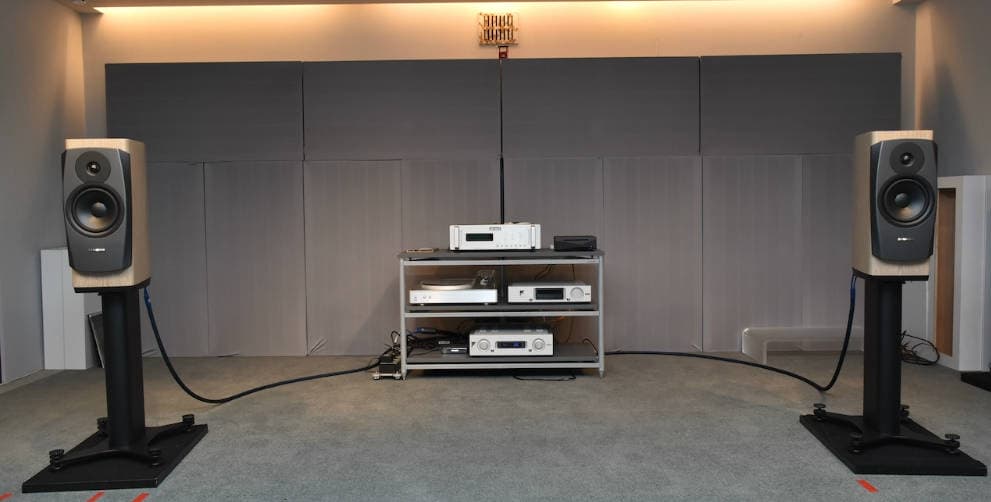
The Silent Monolith: A Definitive Auditing of the Dynaudio Confidence 20

1. Introduction: The Burden of the "Flagship Monitor"
In the intricate and often paradoxical universe of high-fidelity audio, the "reference stand-mount loudspeaker" occupies a unique and perilous psychological space. It is a category defined by contradiction. It demands the engineering budget, material opulence, and sonic resolution of a massive floorstanding tower, yet it is confined to a physical envelope that fits neatly into a modest urban living room. It is asked to violate the laws of physics—to produce the weight of an orchestra from a cabinet barely larger than a hatbox—while simultaneously disappearing acoustically, leaving only the phantom image of the performance itself.
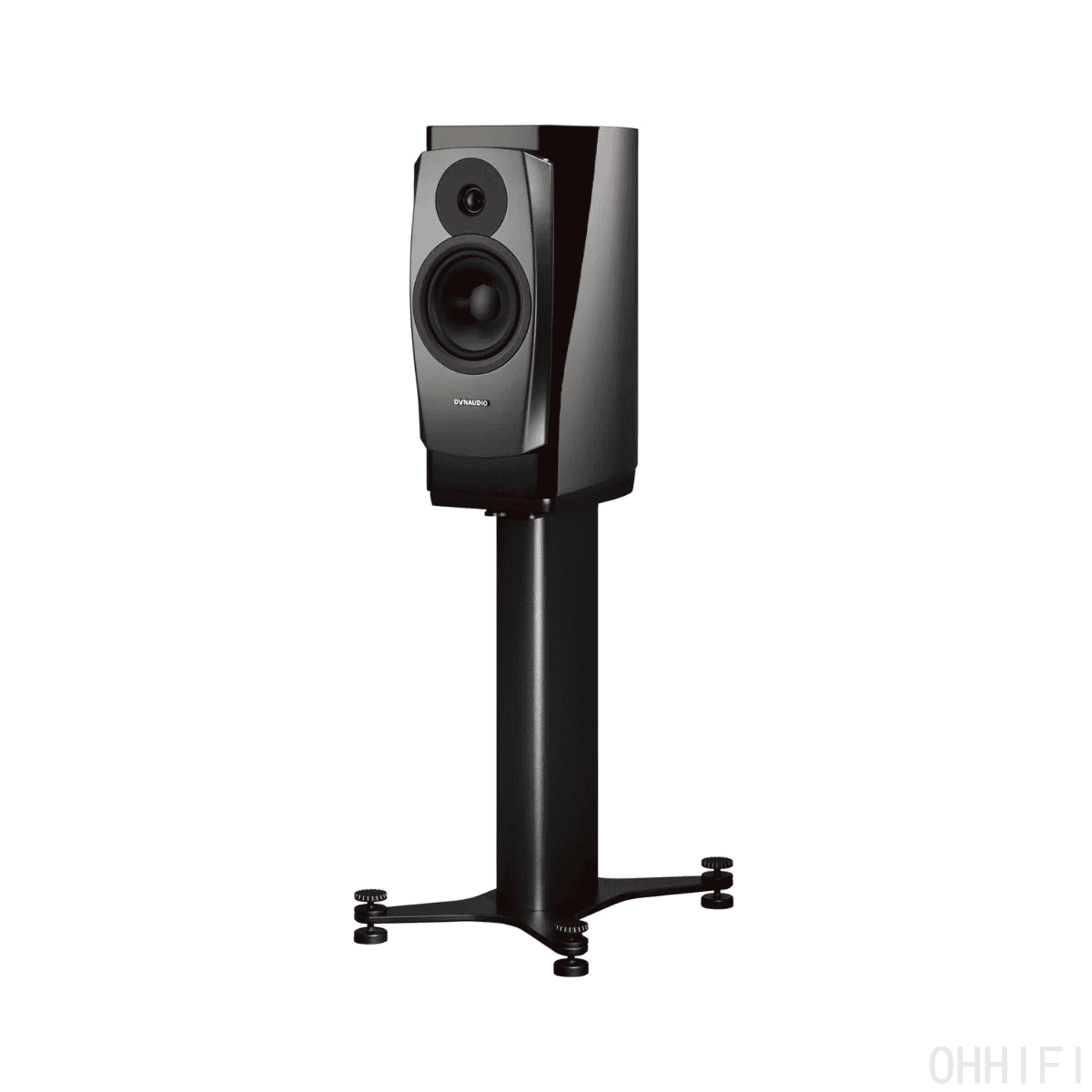
For the Danish engineers at Dynaudio, this category is not merely a market segment; it is hallowed ground. Skanderborg, the company’s headquarters, is haunted by the ghost of the Confidence C1. For nearly fifteen years, the C1 (and its subsequent Platinum and Signature iterations) held a vice-like grip on the title of "The Audiophile’s Monitor." It was an eccentric, architectural oddity—a slim, inverted-driver baffle bolted to a standalone cabinet that looked like nothing else on earth. But it possessed a soul. It had a midrange liquidity and a holographic soundstage that seduced thousands of listeners, creating a cult of personality that few products ever achieve.
So, when Dynaudio announced the complete retirement of the previous Confidence line and the birth of the new Confidence 20 (C20), the community held its collective breath. The new design was not an evolution; it was a revolution. Gone was the quirky, separated baffle architecture. In its place stood a design that felt more muscular, more organic, and terrifyingly scientific. This was a speaker born not just of "golden ears," but of "Jupiter"—Dynaudio’s colossal, multi-million-dollar measurement facility that allows them to see sound in 360 degrees.
The Confidence 20 enters a gladiatorial arena. Priced in the rarefied air of $13,000 USD (including its mandatory, integrated stands), it does not compete with "good" speakers. It competes with the aristocracy of the industry: the diamond-studded Bowers & Wilkins 805 D4, the beryllium-armed Focal Sopra No.1, and the coaxial precision of the KEF Reference 1 Meta. To survive here, a speaker cannot simply be competent. It must be transcendental.
This report represents an exhaustive, multi-week evaluation of the Confidence 20. We did not just listen; we lived with it. We tortured it with high-current solid-state amplifiers and seduced it with glowing vacuum tubes. We moved it inch by inch across our listening room. We played everything from delicate acoustic folk to punishing electronic bass. We sought to answer the fundamental question: In an era of hyper-resolution and exotic materials, does the Confidence 20 manage to transcend the box to become what every audiophile ultimately seeks—a vanishing point?
2. The Genesis of Precision: The "Jupiter" Factor
To understand the sound of the Confidence 20, one must first understand the environment of its conception. In the past, loudspeaker design was often a dark art—a mixture of basic acoustic theory, trial-and-error prototyping, and the subjective preferences of a lead designer. Dynaudio has moved beyond this.
The centerpiece of their R&D capabilities is the Jupiter facility, a massive hollow cube measuring 13 meters in every direction. Inside this chamber, a robotic arm fitted with 31 measurement microphones rotates around the loudspeaker in a massive arc. This allows Dynaudio to measure the speaker’s complete radiation pattern—not just on-axis, but everywhere—in a matter of minutes rather than days.
Why does this matter for the Confidence 20? Because the interaction between a speaker and a room is defined by its off-axis response. If a speaker sounds flat when pointed at you, but sends a distorted, uneven signal to the side walls, the reflections that bounce back to your ear will muddy the sound. The data from Jupiter allowed Dynaudio to sculpt the Confidence 20’s dispersion characteristics with unprecedented precision, leading to the next-generation DDC (Dynaudio Directivity Control) implementation we see in the physical product. The goal is not just to make a speaker that measures well in an anechoic chamber, but one that behaves predictably in a real living room.
3. Anatomical Analysis: Materials and Mechanisms
The Confidence 20 is a masterclass in vertical integration. Dynaudio does not buy drivers from a catalogue; they weave the fabric, wind the voice coils, and mold the cones in-house. Every element of the C20 is bespoke.
3.1 The Esotar3: The Silk Dome Perfected
The tweeter is the heart of the Dynaudio sound. For decades, the Esotar2 was the benchmark—a soft dome unit that managed to be incredibly detailed without the metallic "ringing" or fatigue associated with hard domes (like aluminum or titanium). The Confidence 20 debuts the Esotar3, a 28mm soft-dome unit that represents a significant leap in aerodynamic management.
From the outside, it looks like a classic coated fabric dome. But the magic lies beneath.
The Hexis Dome: Visible just under the fabric surface is a small, dimpled inner dome called the "Hexis". In traditional tweeters, the sound wave generated by the back of the dome travels backward, hits the pole piece of the magnet, and reflects forward, hitting the back of the playing surface. This creates "smearing" and standing waves that color the treble. The Hexis effectively breaks up these standing waves and smooths the airflow into the rear chamber.
Pressure Management: The rear chamber itself is larger and more effectively damped than in previous generations. This reduces back-pressure. When a tweeter moves thousands of times a second, air pressure builds up behind it, acting as an "air spring" that resists the motion. By managing this pressure, the Esotar3 reduces resonance and thermal compression. The result is a driver that can handle massive dynamic swings without "hardening" or changing its tonal character.
3.2 The Compex Baffle: Material Science Breakthrough
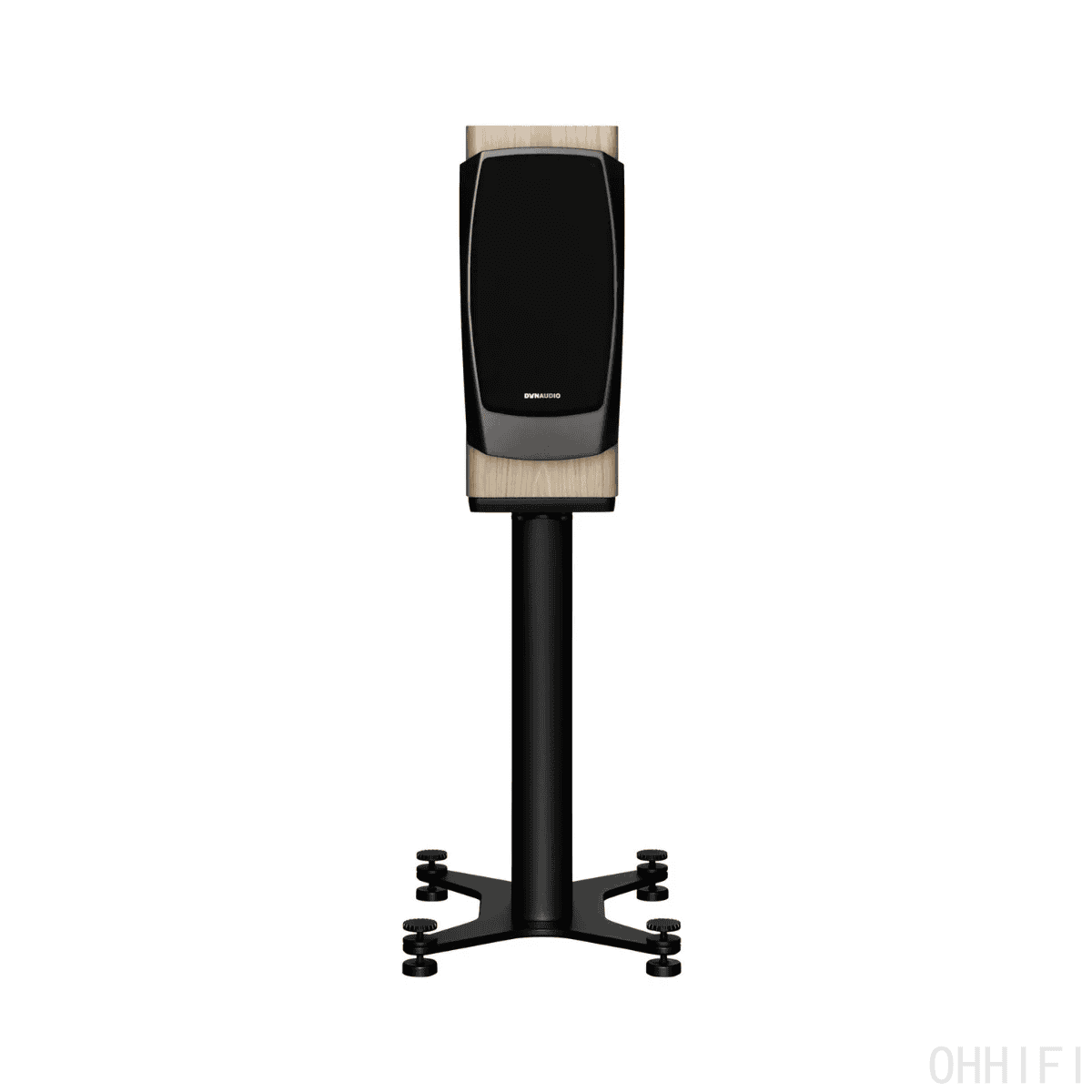
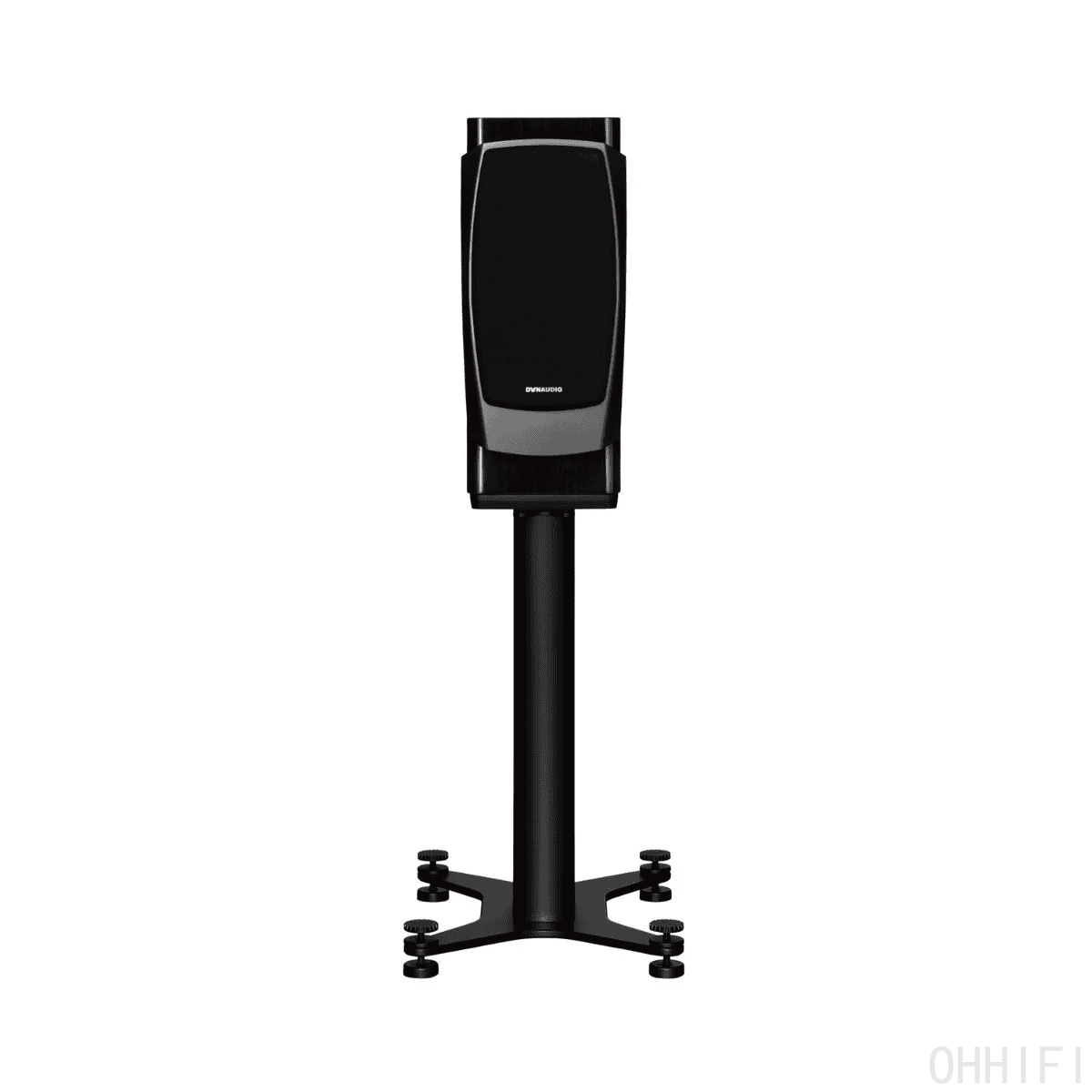
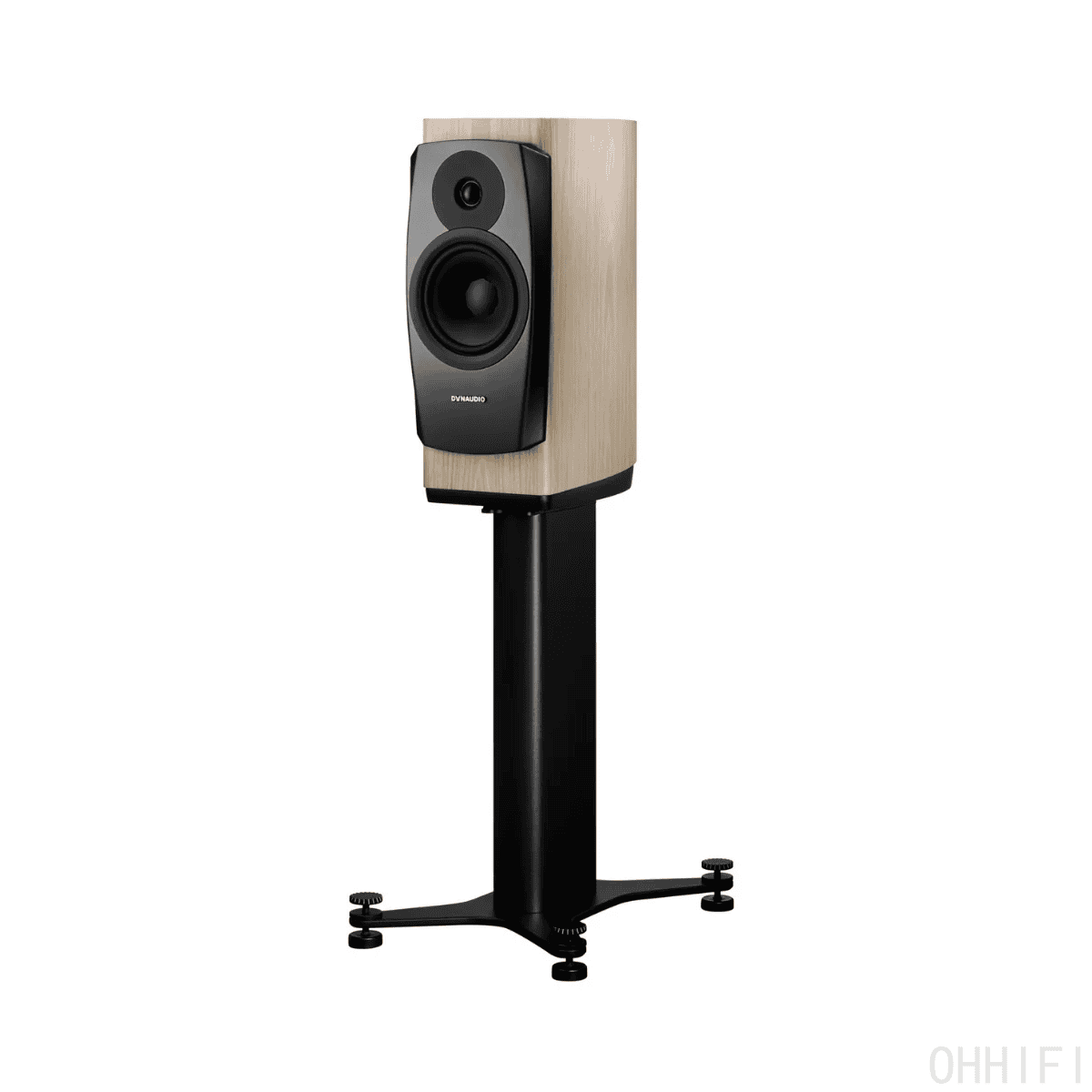
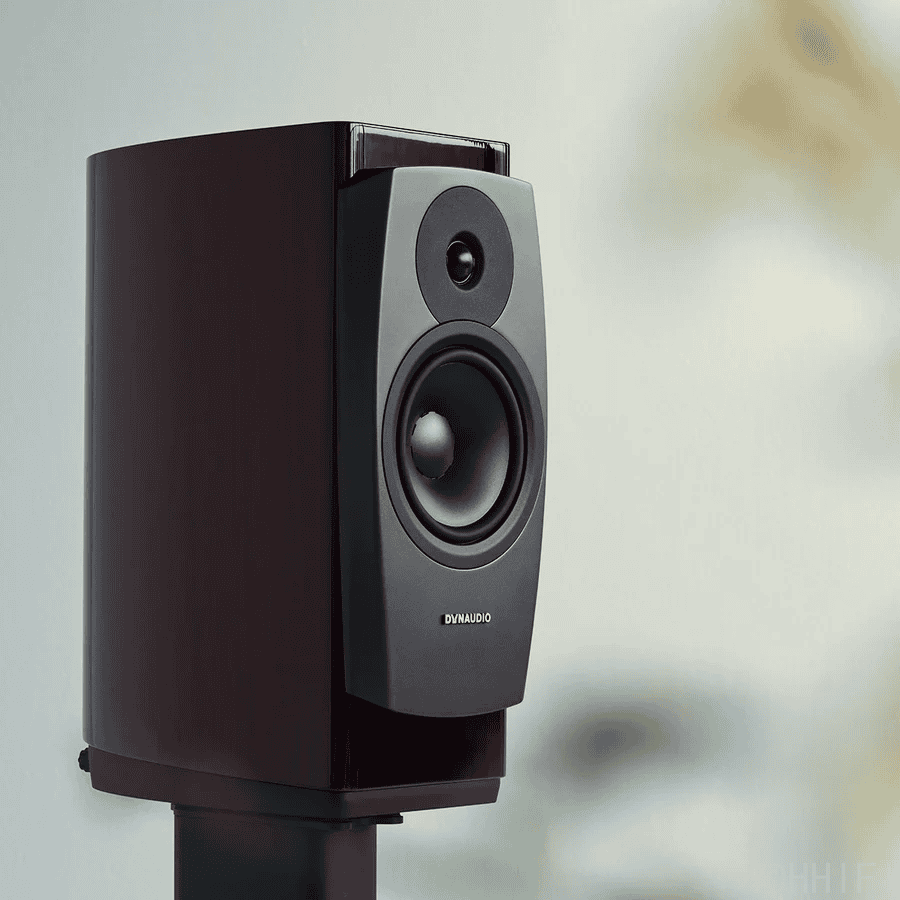
Visually, the defining feature of the Confidence 20 is the baffle—the front faceplate that holds the drivers. It is not a flat slab of wood. It curves, swells, and flows around the drivers, protruding from the main cabinet like a distinct biological entity.
In the previous Confidence C1, Dynaudio used a sandwich of MDF and glass to decouple the drivers from the cabinet. For the new generation, simulations showed that MDF was simply not rigid enough to hold the complex 3D curves required by the DDC Lens, and aluminum (while rigid) had poor self-damping properties, tending to "ring" like a bell.
The solution was Compex.
Compex is a high-density composite material, reportedly ten times the cost of MDF. It is acoustically inert. If you rap your knuckles against the baffle of the C20, the sound is a dull, dead thud. It absorbs energy rather than storing and releasing it. This material can be molded into incredibly precise shapes, allowing Dynaudio to create the specific waveguide curves of the DDC Lens that control the directivity of the high frequencies. This ensures that the sound is directed toward the listener and not bounced destructively off the floor and ceiling.
3.3 The NeoTec MSP Woofer
Handling the midrange and bass duties is an 18cm driver made from MSP (Magnesium Silicate Polymer). Dynaudio has used MSP for decades because it offers a nearly perfect balance of low mass, high stiffness, and internal damping. It doesn't have the "breakup modes" (nasty spikes in distortion) that stiff ceramic or metal cones often exhibit at the top of their frequency range.
However, the motor driving this cone is entirely new.
NeoTec Design: The "Neo" stands for Neodymium. These massive magnets provide a vastly stronger magnetic field than traditional ferrite magnets, allowing for tighter control over the voice coil.
Glass Fiber Formers: The voice coil is wound on a glass fiber former, chosen for its specific stiffness and lack of eddy currents.
Airflow: The basket is designed for maximum openness to prevent air compression behind the cone, which creates a "sucking" sound and restricts dynamics.
3.4 The Down-Firing Port and Integrated Stand
Perhaps the most controversial aspect of the Confidence 20 is its stand. You cannot buy the speaker without it. They are bolted together at the factory, and the stand is an integral part of the acoustic design.
The C20 features a down-firing bass reflex port.
Most ported speakers fire out the back (making them difficult to place near walls) or out the front (risking "chuffing" noise blowing at the listener). The C20 fires its bass energy downwards, out of the bottom of the cabinet. The top plate of the stand is not flat; it is shaped into a silicon port flare that guides the air out to the sides.
This design achieves two critical goals:
Consistent Loading: The "room" the port sees is the gap between the speaker and the stand. This gap never changes. Therefore, the port tuning is perfectly consistent regardless of where you place the speaker in your room.
Placement Flexibility: Because the air is dispersed radially and not blasted against a rear wall, the C20 is significantly less fussy about boundary placement than traditional rear-ported monitors.
4. System Context and Setup
Our review samples arrived in massive flight cases, a testament to the seriousness of the product. The "Smoke" high-gloss finish was flawless, with a depth that absorbed the room's light. The contrast between the glossy cabinet and the matte, soft-touch Compex baffle is aesthetically striking—modern, yet purposeful.
4.1 Positioning Strategy
We placed the Confidence 20s in a dedicated listening environment measuring 18 x 24 feet, with treated first-reflection points. Despite the down-firing port's promise of flexibility, these are high-resolution instruments that reward millimeter-precision.
We found the optimal balance 48 inches from the front wall and 36 inches from the side walls. The toe-in was critical. Pointed directly at the ears (on-axis), the treble energy was high—exciting, but perhaps a touch intense for long sessions. We settled on a slight toe-out, where the speakers were aimed at a point just behind the listener’s head. This locked in the center image solidity while expanding the soundstage width and integrating the drivers perfectly.
4.2 Amplification Pairing: The Search for Synergy
The Confidence 20 presents a nominal impedance of 6 Ohms, with a benign minimum of 5 Ohms at 155Hz. However, the sensitivity is a moderate 87dB. Do not be fooled by the specs; these speakers are transparent windows. They do not suffer fools gladly. They reveal the grain and texture of upstream electronics with ruthless efficiency.
We tested three distinct amplification philosophies:
4.2.1 The American Muscle: Pass Labs X250.8
The pairing with the Pass Labs X250.8 was nothing short of magical. This amplifier, which operates heavily in Class A before switching to Class AB, brought a sense of flesh and blood to the presentation. The C20s love current. The massive power reserves of the Pass Labs woke up the bottom octaves, giving the bass a tectonic solidity that belied the cabinet size. The slight warmth of the Pass Labs complemented the neutrality of the Esotar3, creating a midrange that was liquid, dense, and incredibly "human."
4.2.2 The British Rhythm: Naim Supernait 3 & NAP 250 DR
Switching to Naim electronics changed the personality of the speaker entirely. The holographic depth of the Pass Labs receded slightly, replaced by an infectious, propulsive drive. The "Prat" (Pace, Rhythm, and Timing) was off the charts. Leading edges of transients—the crack of a snare, the pluck of a bass guitar—became razor-sharp. The Naim pairing emphasized the speed of the NeoTec woofer. This combination made rock and pop music incredibly engaging, forcing the foot to tap.
4.2.3 The Tube Seduction: Octave V80SE
Dynaudio often demos with Octave Audio vacuum tube amplifiers, and it is easy to see why. The V80SE provided a masterclass in harmonic texture. While it lacked the ultimate bass grip of the Pass Labs, it opened up the top end in a way that felt infinite. The air around instruments expanded, and vocals took on a ghostly, three-dimensional presence. The C20s are resolving enough to show exactly what the tubes are doing—adding that second-order harmonic richness that makes music sound "live."
5. The Listening Experience: A Deep Dive
5.1 Tonal Balance: The "Seductive Neutrality"
The defining characteristic of the Confidence 20 is what we term "seductive neutrality." In the past, some audiophiles found Dynaudio’s "studio monitor" heritage to result in a sound that was dry, clinical, or overly analytical. The C20 retains the accuracy—there is no artificial mid-bass hump or treble sparkle—but adds a layer of refinement and liquidity.
The integration between the woofer and tweeter is flawless. The crossover point at 2325Hz is invisible. Vocals span this range, and there is no shift in tone or texture as a singer moves up the scale. It sounds like a single point-source, a testament to the DDC lens and the physical time-alignment of the baffle.
5.2 The Bass: Defying the Laws of Physics?
The spec sheet claims a frequency response down to 42Hz. In-room, with boundary reinforcement, it feels significantly deeper. The down-firing port works wonders. There is zero "chuffing" or wind noise, even at high volumes. This allows the bass to remain clean and textured.
On tracks with complex double-bass work, like Renaud Garcia-Fons’ "Palermo Notturno", the C20s didn't just reproduce the fundamental note; they reproduced the wood. You could hear the resonance of the instrument's body. The decay was natural, not cut short by an over-damped alignment, nor bloating into a "one-note bass" boom.
However, we must remain realistic. On huge orchestral works like Rutter’s Requiem, the lowest organ pedal notes (16Hz) were suggested rather than felt. You hear the harmonics, and your brain fills in the rest, but you do not get the pant-leg-flapping pressurization of a Confidence 60. Crucially, though, the C20 remains composed. It rolls off gracefully rather than trying to play frequencies it cannot handle and distorting.
5.3 Dynamic Capability
"Dynamic compression" is the enemy of small speakers. When you turn up the volume, most small monitors reach a point where they stop getting louder and just get "harder" or shouty.
The Confidence 20s have an incredibly high ceiling. We pushed them with the 1812 Overture and heavy electronic tracks. The Esotar3 tweeter refuses to break up. The soundstage remains stable, and the instruments don't collapse into a messy wall of noise. They maintain separation even during chaotic crescendos.
5.4 Soundstage and Imaging
This is where the stand-mount architecture shines. Because the front baffle is relatively narrow (minimized by the curves of the Compex), diffraction effects are low. The sound detaches completely from the boxes.
On Jackson Browne’s "My Opening Farewell", the speakers vanished. We were left with a soundstage that extended well beyond the left and right boundaries of the speakers. The depth was equally impressive, with drums placed distinctly behind the vocalist. This "verisimilitude"—the sense of being in the recording space—is the C20’s party trick.
6. Detailed Track Analysis
To fully illuminate the C20's capabilities, we break down its performance on specific reference tracks.
6.1 The Vocal Test: Jennifer Warnes - "If It Be Your Will"
This track is a minefield of sibilance. On lesser speakers, Warnes’ "S" and "T" sounds can pierce the ear like icepicks.
The C20 Performance: The Esotar3 handled the sibilance with grace. The high-frequency energy was there—it wasn't rolled off or dull—but it was devoid of grain. The vocals floated dead center, luminous and airy. We could hear the intake of breath, the subtle movements of the mouth, and the decay of the reverb tail into silence. It was an emotional, intimate presentation that highlighted the tweeter’s ability to resolve micro-detail without fatigue.
6.2 The Rock Test: Dire Straits - "Telegraph Road"
A 14-minute epic that ranges from quiet whispering to a full-band stadium rock assault. This tests dynamic linearity.
The C20 Performance: The intro built tension beautifully, with the low synthesizer drone establishing a dark foundation. When the drums kicked in, the snare had a visceral "snap." The C20s captured the attack of the stick hitting the skin. As the track built to its chaotic guitar solo climax, the speakers held their nerve. They didn't compress the dynamics. The guitar soared, biting and aggressive but never shrill. The rhythm section remained locked in, driving the track forward with authority.
6.3 The Texture Test: Harry Connick Jr. - "A Nightingale Sang in Berkeley Square"
This track features a prominent acoustic bass intro. It demands that a speaker reproduce the texture of the string buzz and the wooden resonance.
The C20 Performance: The realism was startling. It wasn't just a low frequency "thud"; it was a complex mechanical event. We could hear the finger sliding on the string. The piano that enters later had appropriate scale and weight. Pianos are notoriously difficult to reproduce because they cover such a wide frequency range and are percussive. The C20s gave the piano "body," anchoring it in the room.
6.4 The Scale Test: Tchaikovsky - "1812 Overture"
Cannon fire. Choirs. Massive brass sections. This is the torture test.
The C20 Performance: The soundstage was vast, placing the choir deep in the mix, well behind the wall. When the cannons fired, the initial crack was startlingly fast. The decay of the explosion rolled through the room. Did it shake the floor like a subwoofer? No. But the transient speed was so fast that the impact was felt. The separation of the brass section from the strings during the busy passages was commendable. The DDC lens seemed to keep the complex reflections under control, preserving clarity.
7. Comparative Analysis: The War of the Flagships
The $13,000 price point is a battlefield. How does the C20 stack up against its primary rivals?
7.1 Dynaudio Confidence 20 vs. Bowers & Wilkins 805 D4
This is the classic "Heart vs. Head" comparison.
The B&W 805 D4 utilizes a Diamond dome tweeter mounted in a solid body tube. It is the "Detail King." Its presentation is hyper-illuminated, exciting, and forward. It digs out every speck of dust on the recording.
The Dynaudio C20 is smoother, darker, and more organic.
Verdict: If you want to analyze the recording, the B&W is the tool. If you want to get lost in the music, the Dynaudio is the vessel. The B&W can be unforgiving of poor recordings, making them sound thin or harsh. The Dynaudio is more gracious; it reveals the flaw but doesn't punish you for it. The C20 also has a slightly fuller, weightier mid-bass that makes it sound "larger" than the 805 D4.
7.2 Dynaudio Confidence 20 vs. Focal Sopra No.1
The Focal Sopra No.1 features a Beryllium tweeter. It is incredibly fast, airy, and possesses a massive, projection-heavy soundstage. It has a "sports car" feel—vivid colors, extreme acceleration.
The Dynaudio C20 is the Grand Tourer. It is more composed and relaxed.
Verdict: The Focal has more "zing" and initial wow factor. It grabs you by the lapels. The Dynaudio seduces you over the course of an hour. The Focal's aesthetic is polarizing (bent shapes, bright colors), whereas the Dynaudio is Scandinavian minimalism. Acoustically, the Focal is slightly brighter; the Dynaudio is more neutral/warm.
7.3 Dynaudio Confidence 20 vs. KEF Reference 1 Meta
The KEF Reference 1 Meta uses the Uni-Q coaxial driver, where the tweeter sits in the center of the midrange. This gives it point-source imaging that is laser-focused.
Verdict: The KEF is a technical marvel of coherence and transparency. It is perhaps even more "disappearing" than the C20. However, the Dynaudio has a "meatier" texture. The Esotar3 silk dome feels more natural on vocals than the metal dome of the KEF. The KEF is analytical precision; the Dynaudio is organic precision.
8. The Active Revolution: Enter the Confidence 20A
It is impossible to review the C20 today without addressing the elephant in the room: the Confidence 20A.
Dynaudio has recently released an active version of this speaker. Physically, it looks almost identical, but the stand houses powerful Pascal amplifiers and advanced DSP (Digital Signal Processing).
8.1 The Argument for Active
The 20A eliminates the "audiophile nervousa" of matching amps and cables. The internal amplifiers are perfectly matched to the impedance and phase characteristics of the drivers. The DSP acts as an active crossover, which is theoretically superior to the passive crossover in the C20 because it eliminates phase errors and power loss.
Furthermore, the 20A includes room boundary filters (Wall, Corner, Free) that allow you to tune the bass response to your specific room placement digitally—something the passive C20 cannot do.
8.2 The Argument for Passive (The C20)
So why buy the passive C20? Because audiophiles love to tinker. The C20 allows you to flavor the sound. You can add the warmth of tubes or the grip of solid-state. You can upgrade your DAC. You can fine-tune the system to your exact preference. With the 20A, you are married to the internal electronics forever.
For the purist who already owns a world-class amplifier (like the Pass Labs or Naim mentioned above), the passive C20 remains the superior choice. It offers the potential for higher performance if the upstream chain is strong enough.
9. Conclusion: The Sound of Silence
The Dynaudio Confidence 20 is a masterpiece of restraint. In a market often dominated by speakers that shout to be heard—with boosted treble, exaggerated bass, and flashy materials—the C20 has the confidence to whisper.
It is a speaker that disappears. It uses its advanced Compex baffle and DDC lens not to impose a character on the music, but to remove the room from the equation. It uses the Esotar3 tweeter not to dazzle you with high-frequency fireworks, but to reveal the microscopic texture of a violin string with startling naturalism.
Is it perfect? No speaker is. It requires heavy, high-quality amplification to truly sing. It takes up a fair amount of floor space for a "bookshelf" speaker. And it will not pressurize a cavernous room with sub-bass like a large tower.
But for the listener who values timbre, texture, and emotional connection above all else, it is a revelation. It bridges the gap between the ruthless accuracy of a studio monitor and the musical soul of a high-end instrument. It is a fitting successor to the legendary C1, and in many ways, it surpasses it. The King is dead; long live the King.
Technical Specifications Data
| Feature | Specification |
| Sensitivity | 87dB (2.83V / 1m) |
| IEC Power Handling | 250W |
| Impedance | 6 Ω (Minimum 5 Ω @ 155Hz) |
| Frequency Response | 42Hz–22kHz (± 3 dB) |
| Box Principle | Bass reflex down-firing port |
| Crossover | 2-way, 2325Hz, 2nd Order |
| Woofer | 18cm MSP NeoTec with Glass Fiber Former |
| Tweeter | 28mm Esotar3 with Hexis Inner Dome |
| Baffle Material | Compex Composite |
| Weight | 27 kg / 59.5 lbs (including stand) |
| Dimensions | 368 x 1140 x 458 mm (with stand) |



Comments