













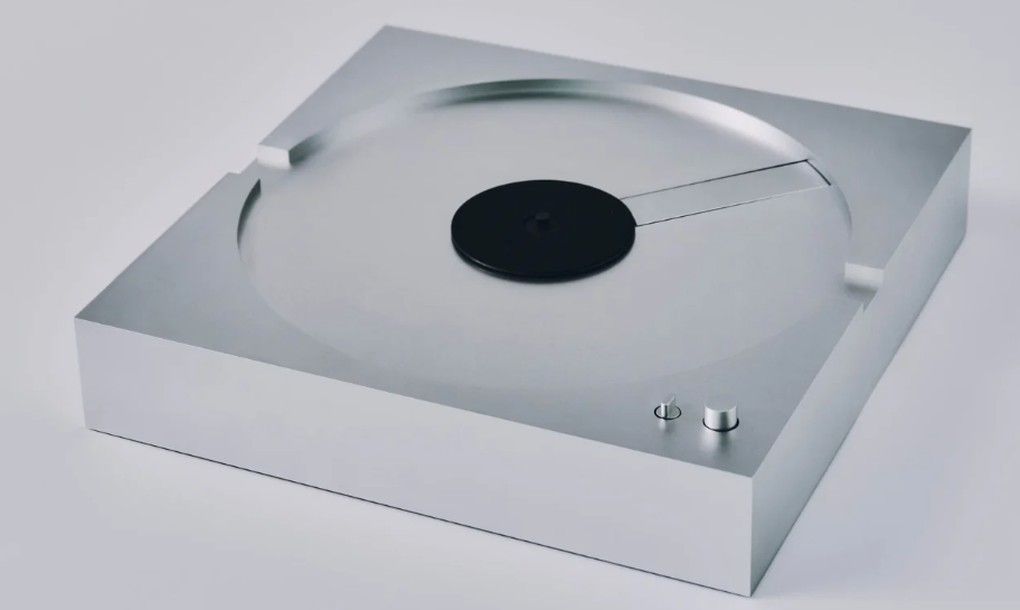
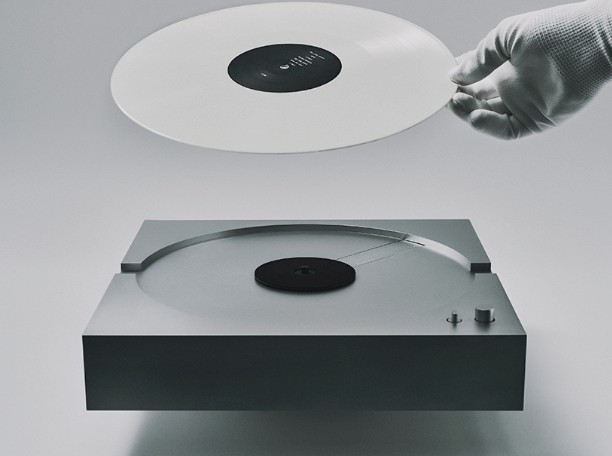
Some turntables ask you to learn their ritual. The Waiting For Ideas PP-2 asks you to forget it. There is no tonearm to balance, no cartridge to align, no cueing lever to babysit. You set the record down upside down, press play, and the music comes from underneath — read not by magnets and coils, but by light.
The PP-2 is the second generation of the Paris studio’s upside-down turntable, following the PP-1 that arrived in 2025. The idea is unchanged: hide the workings inside a minimalist slab of aluminium and let the record itself be the only thing you see. What changed is what reads the groove.
What’s New
The headline change is the optical stylus system. A physical diamond stylus still follows the groove — this is not a contactless laser player — but instead of magnets and coils generating the signal, a beam of light tracks the stylus’s movement, and a photodetector turns that movement into sound. It is the same principle DS Audio has been working with for years, and the playback technology comes from Miniot, the company behind the Wheel turntables.
Waiting For Ideas says the lighter moving mass lets the stylus trace the groove more accurately and retrieve finer detail, with improvements in low-frequency depth and clarity. Those are the studio’s claims for now; no independent listening test or measurement has confirmed them yet.
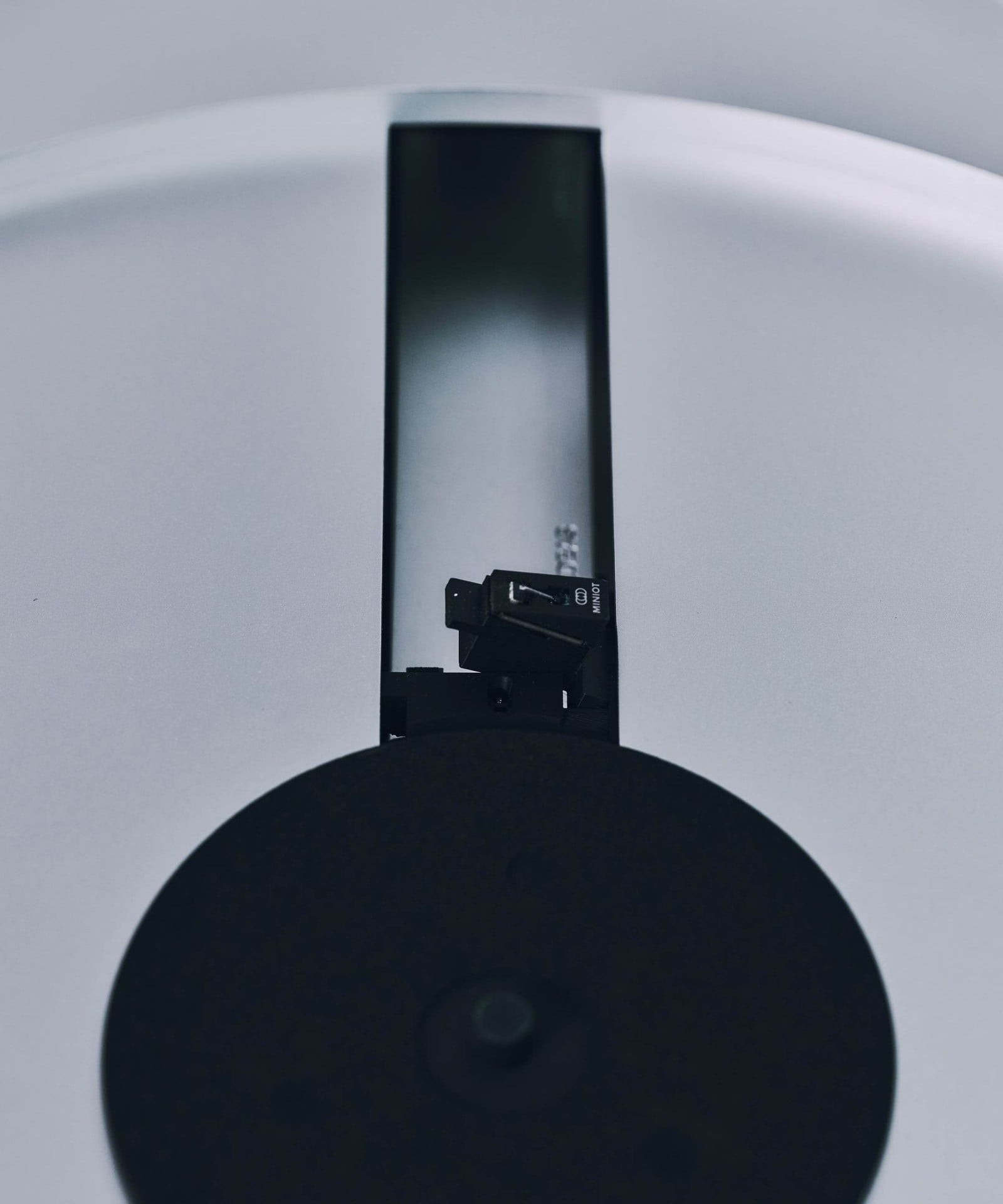
Underneath, the drive system is new too. An axial-flux direct-drive motor with optical speed control adjusts rotation 1,000 times per second, and the deck detects 33⅓ and 45 rpm records automatically, so there is no speed switch to think about. A built-in Harmony analogue preamplifier is tailored to the optical pickup, which means the PP-2 can feed a line input or a pair of active speakers directly, with no separate phono stage in the chain.
The body is CNC-machined from a single block of anodised aluminium in a mineral-grey finish, measuring 35 × 35 × 7.5 cm — the same footprint as the PP-1, half a centimetre taller. A redesigned door keeps dust away from the stylus between sessions. Buyers choose between two styli when ordering: the standard Optical Analog Classic, or a Shibata stylus for €700 more.
Context
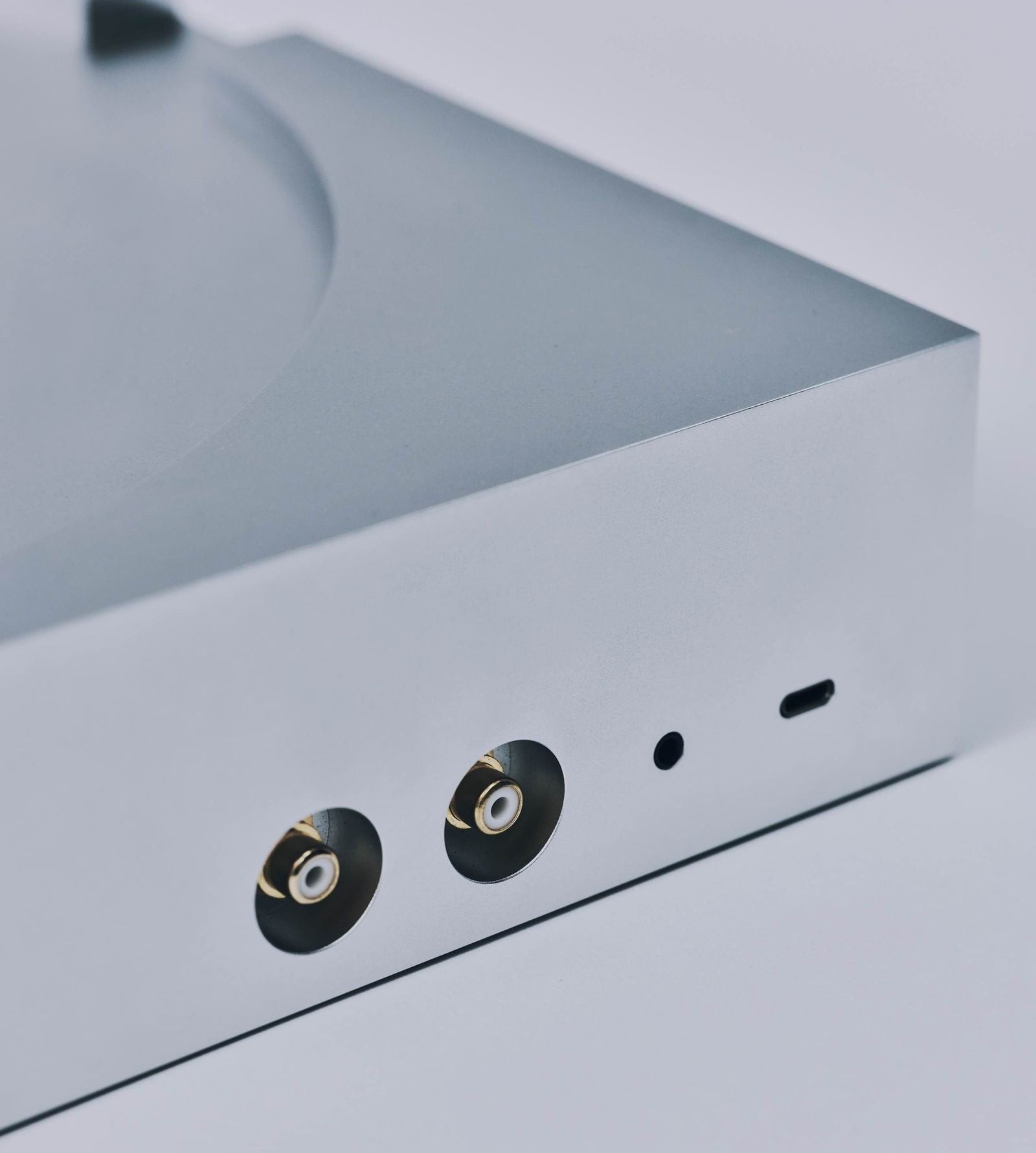
The PP-1, launched in 2025 under the “Plug and Play” name, proved the concept: upside-down playback, automatic speed detection and a 0.4 × 0.7 mil elliptical diamond stylus, all in a 35 × 35 × 7 cm block powered by 5V USB-C. Its one concession to simplicity was a single 3.5mm output. The PP-2 keeps the USB-C power and adds proper RCA sockets, which makes connecting it to a conventional hi-fi setup straightforward — the 3.5mm jack stays for active speakers and headphones.
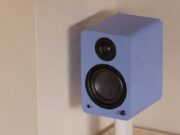
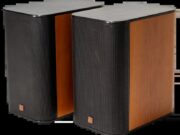
The studio, founded by Jean-Baptiste Anotin, also offers matching passive speakers built around La Boite Concept technology, so the deck has a coordinated supporting cast for anyone building a system around it rather than slotting it into an existing one.
Compared
Against a conventional turntable, the PP-2 removes the entire setup ritual — no tonearm, no alignment protractor, no anti-skate dial — and replaces the magnetic cartridge, the part most owners never touch after installation, with an optical system that has no coils to load and no magnets to wear. The trade is obvious: you give up the upgrade path. A conventional deck lets you swap cartridges for the rest of its life; here the pickup is the product, and your only choice is Classic or Shibata at the point of order.
Against the PP-1, the upgrade is the pickup itself plus the drive system and the RCA outputs. The price reflects it: the PP-1 remains available in black or pink at €5,900, while the PP-2 in silver is €8,900, or roughly $9,900 at current rates. That is a €3,000 step for the optical system, the new motor and the proper line outputs.
My Take
This is paper analysis — I have not heard the PP-2, and nobody outside the studio has published a listening test yet. On paper, the argument is coherent: a lighter stylus assembly should track better, and removing the magnetic cartridge from the signal path removes a known source of colouration. But the history of optical pickups is a history of big claims that took years to live up to, and DS Audio’s cartridges, the closest comparison, sit in a similar price bracket and still divide listeners.
What I find more convincing is the design discipline. Every change in the PP-2 serves the same idea as the PP-1: fewer things to adjust, fewer things to get wrong. Automatic speed detection, a built-in preamp, a dust door, RCA outputs that let it join a normal system — this is a turntable for someone who wants vinyl without the hobby. Whether the optical pickup sounds better than a good magnetic cartridge at the same money is the question the first reviews will have to answer, and it is the only question that matters at €8,900.
Who Should Watch
The silver PP-2 is available to order now at €8,900, with Waiting For Ideas quoting three to four weeks for assembly — its store page allows up to eight weeks once shipping is included, and buyers outside the European Union pay import duties and taxes on top. If you already own a PP-1 and love the concept, the optical pickup and RCA outputs are the reasons to look. If you are choosing between this and a conventional deck at the same price, wait for the first listening tests: the PP-2’s convenience is proven, its sound is not yet.