



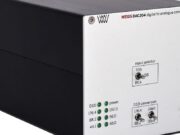





iFi has a new pocket adapter for anyone still fighting the headphone jack. The UP Travel Max, announced on October 29 and priced at $129, turns a wired 3.5mm output — a seatback screen, an old car stereo, an amp without Bluetooth — into a two-way wireless link, and iFi says it is the first travel adapter that can send and receive aptX Lossless. It is listed at Amazon and iFi’s own store, with UK pricing at £129 and Europe at €139.
What’s New
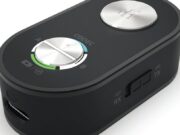
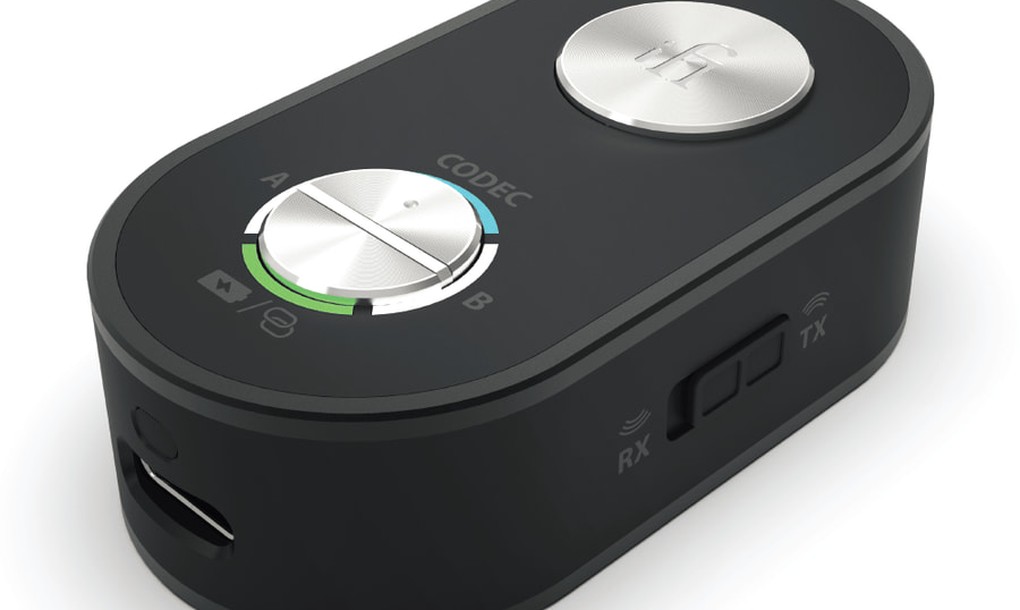
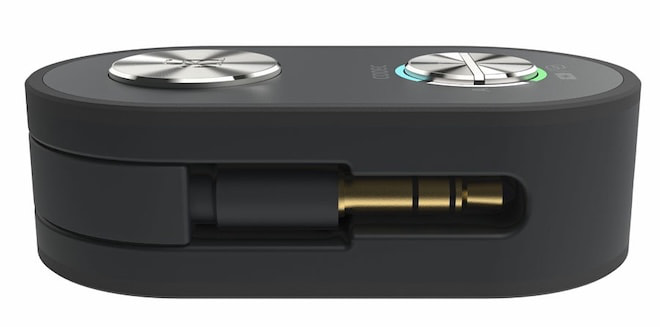
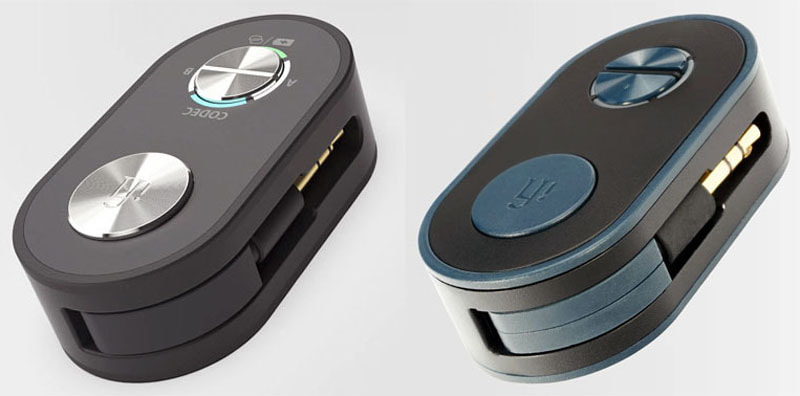
The Max is a direct upgrade of the 2025 UP Travel, and the shape is unchanged: a 55 x 30 x 16.8 mm pill weighing 25.7 grams, with a 3.5mm plug that flips out of the body like a car key when you press the power button. The changes are all inside, and in the feature list.
Bluetooth moves from 5.2 to 5.4, and the codec list grows to aptX Lossless, LDAC, LHDC/HWA, aptX Adaptive, aptX HD, aptX, AAC and SBC. A button on the front cycles codecs — press and hold and it announces the active one — and aptX Adaptive’s low-latency mode keeps lip-sync right when you are watching a film.
The architecture is what iFi hangs its hat on. Instead of one chip doing everything, the Max pairs a dedicated Qualcomm Bluetooth chipset with a separate Cirrus Logic MasterHIFI DAC, the same split the original used. Output is rated at 70mW into 32 ohms, with THD+N at or below 0.004% and signal-to-noise at or above 120dBA. Those are manufacturer figures, and on a device this small they are about the circuit staying clean rather than about driving power.
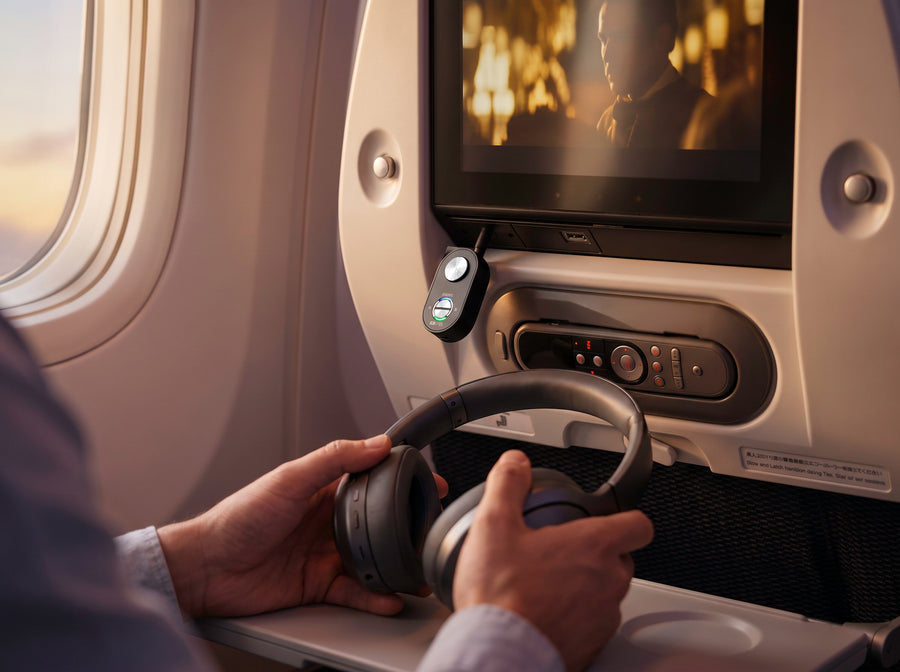
In transmit mode, you plug the Max into an airplane’s entertainment system and listen through your own wireless headphones instead of the airline’s complimentary earbuds. The adapter runs for at least 10 hours on its 400mAh battery.
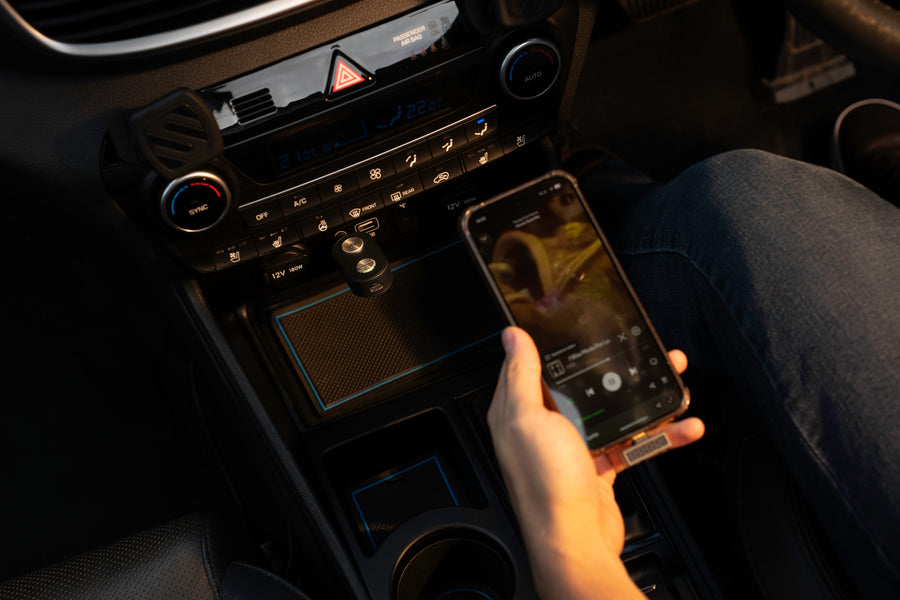
In receive mode, the same device plugs into a car stereo’s auxiliary input and streams music from your phone. A built-in microphone with Qualcomm’s cVc noise and echo suppression keeps hands-free calls clear, and over USB-C it accepts audio up to 24-bit/96kHz — it works just as well on an older receiver or AVR that never had Bluetooth.
The Max also carries JVCKENWOOD’s K2 Technology, which uses signal processing to rebuild high-frequency detail and harmonics that compression discards. To be clear: processing can reshape what is left, it cannot recover the exact information the encoder threw away.
Sharing is where the Max pulls furthest ahead. Both can pair two headphones at once, but the Max does it at up to aptX Adaptive where the original topped out at SBC, and adds Auracast on top, broadcasting to as many compatible listeners as are in range. Auracast is switched on through iFi’s Nexis app, which also handles codec management, K2 controls and firmware updates over the air. Charging is over USB-C and takes about three and a half hours; the box includes a USB-C cable and a USB-C to USB-A adapter.
Context
The Max sits above the original UP Travel, which stays in the line at $99. Same body, same DAC, same battery — the extra $30 buys Bluetooth 5.4, aptX Lossless, Auracast and K2. The adapter market it enters is crowded at the bottom: Twelve South’s AirFly line has owned the in-flight niche for years, and generic transmitters cost a third of this. iFi’s bet is that a slice of buyers will pay for the lossless path and the separate DAC, the same logic that sells its dongle DACs.
Compared to Predecessors and Current Rivals
| Adapter | Price | Two-way | Headline codec | Auracast | Battery |
|---|---|---|---|---|---|
| iFi UP Travel Max | $129 | Yes | aptX Lossless | Yes | 10h+ |
| iFi UP Travel (2025) | $99 | Yes | LDAC / aptX Adaptive | No | 10h+ |
| Twelve South AirFly Pro 2 | $59.99 | Yes | aptX HD | No | 25h+ |
Avantree’s Voyager ($59.99) does Auracast but only transmits — it cannot add Bluetooth to a car stereo or an old amp. Neither rival matches the Max’s combination, and neither is trying to: they are travel accessories, while iFi is selling a miniature hi-fi component that happens to travel.
My Take (Paper Analysis)
On paper, this looks promising because the two-way lossless path is genuinely new at this size — no other pocket adapter I know of sends and receives aptX Lossless, and the split Qualcomm-plus-Cirrus architecture is a real design choice. What concerns me is how much of that lossless promise survives contact with real headphones: aptX Lossless needs compatible hardware at both ends, and most of the wireless headphones people actually own on a plane do not have it yet. K2 is DSP — it can make compressed audio sound more open, but it cannot put back what the encoder threw away, and iFi does not pretend otherwise. The 10-hour battery is the other honest trade-off: the AirFly Pro 2 runs more than twice as long for half the money, so the Max only makes sense if the DAC and the codecs matter to you more than runtime. Until independent measurements and listening tests emerge, this is theoretical — but the theory is sound, and at $129 the risk is small.
Who Should Watch This
Frequent flyers who already own aptX Lossless-capable headphones should pay attention — this is the first adapter that lets the seatback screen use them properly. Anyone with a good old car stereo, an amp without Bluetooth or a beloved iPod should look too: it drags wired gear into the wireless age for $129 instead of replacing it. Wait if your headphones top out at AAC or SBC — you would be paying for codecs you cannot use, and the AirFly Pro 2 does the same job for $60. One practical note: some US third-party retailers were still showing the Max as a pre-order in early November, so iFi’s own store is the safer bet if yours does.