








Lead
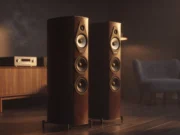
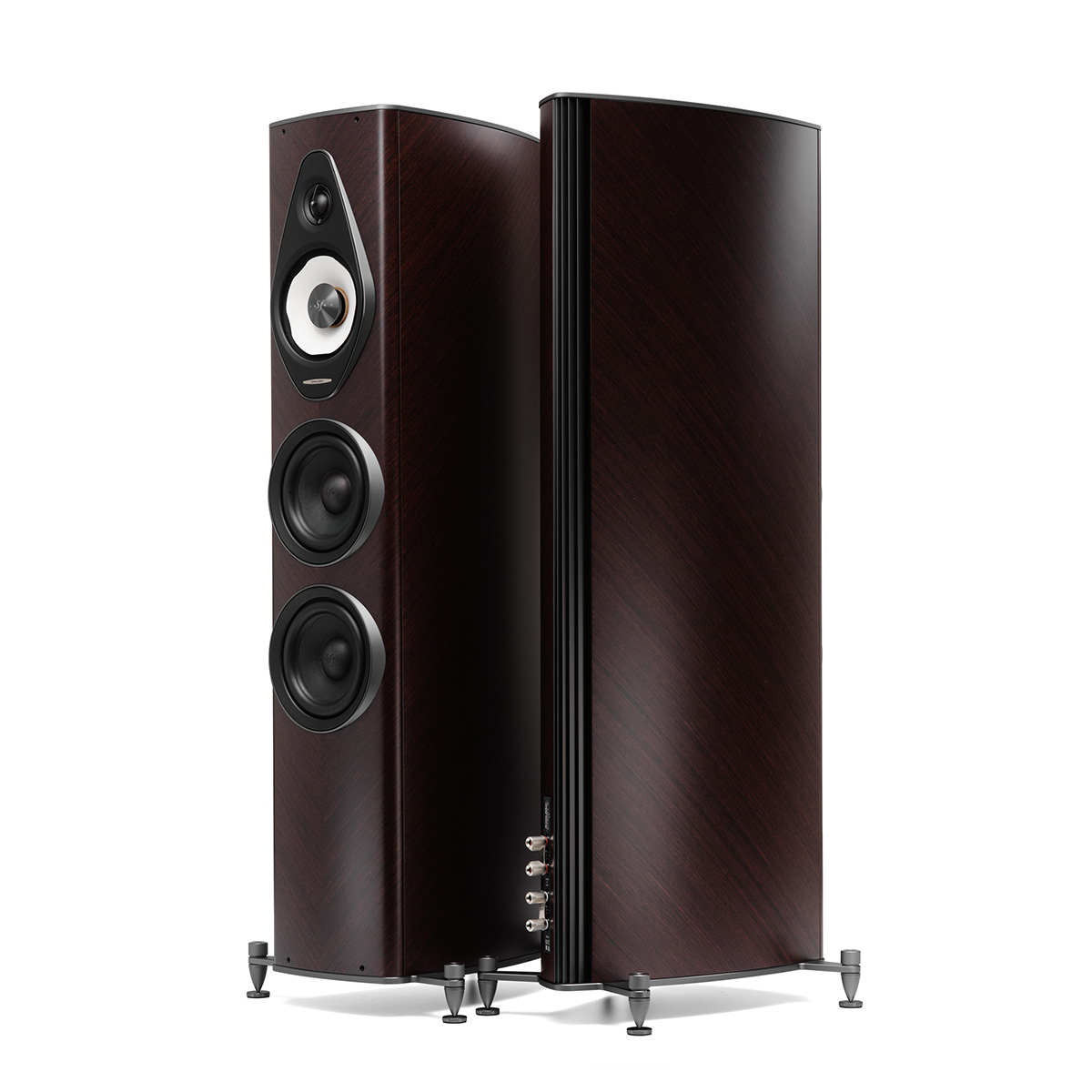
Sonus Faber has launched the third generation of its Olympica loudspeaker range, and the Olympica III G3 is likely the sweet spot of the range for many buyers. Priced at $24,000 per pair and on sale now, it takes the midrange driver and chamber technology from the company’s $850,000 Suprema flagship and puts them into a room-friendly, lute-shaped cabinet. It takes over from the Olympica Nova III as the current model in the range.
What’s New
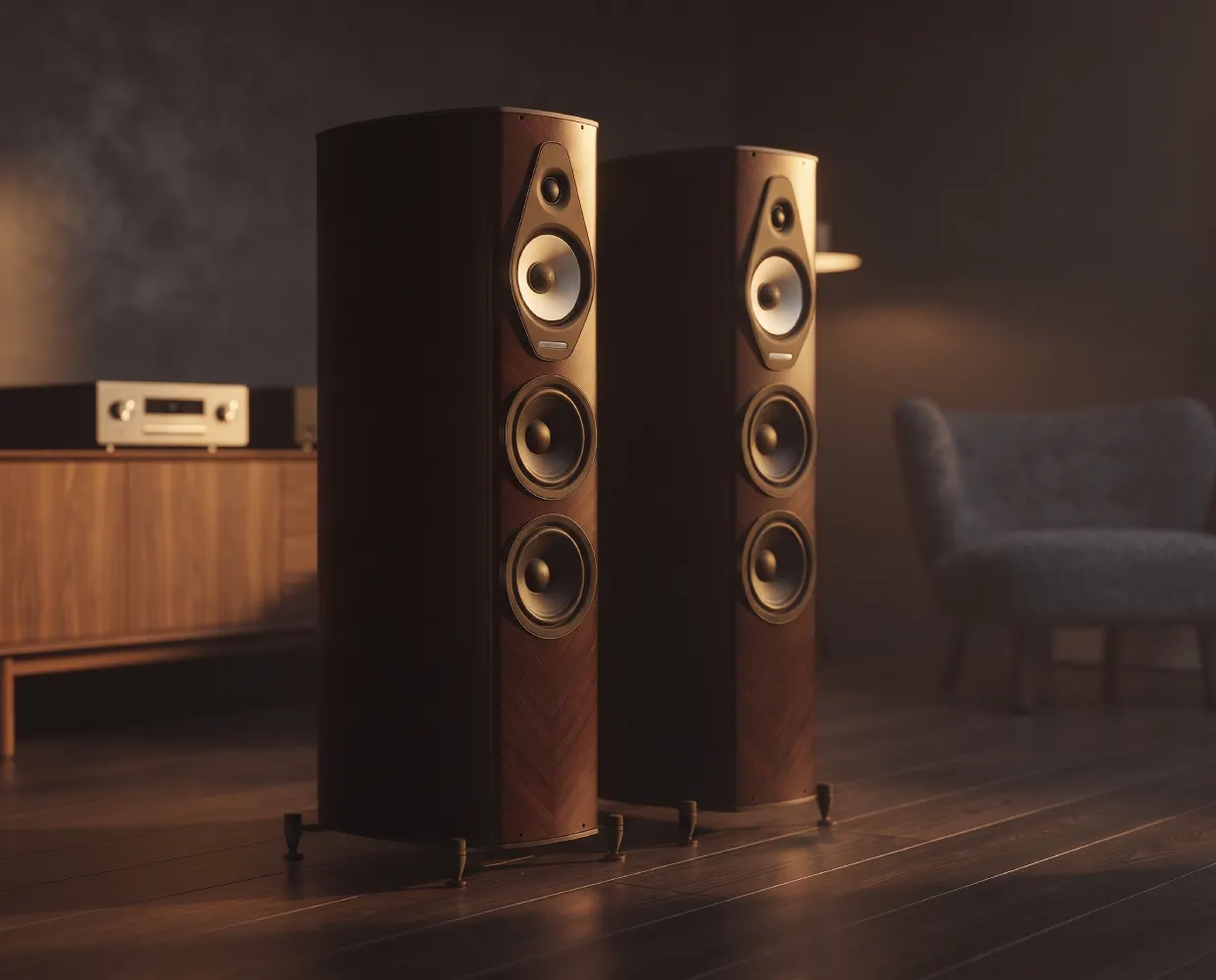
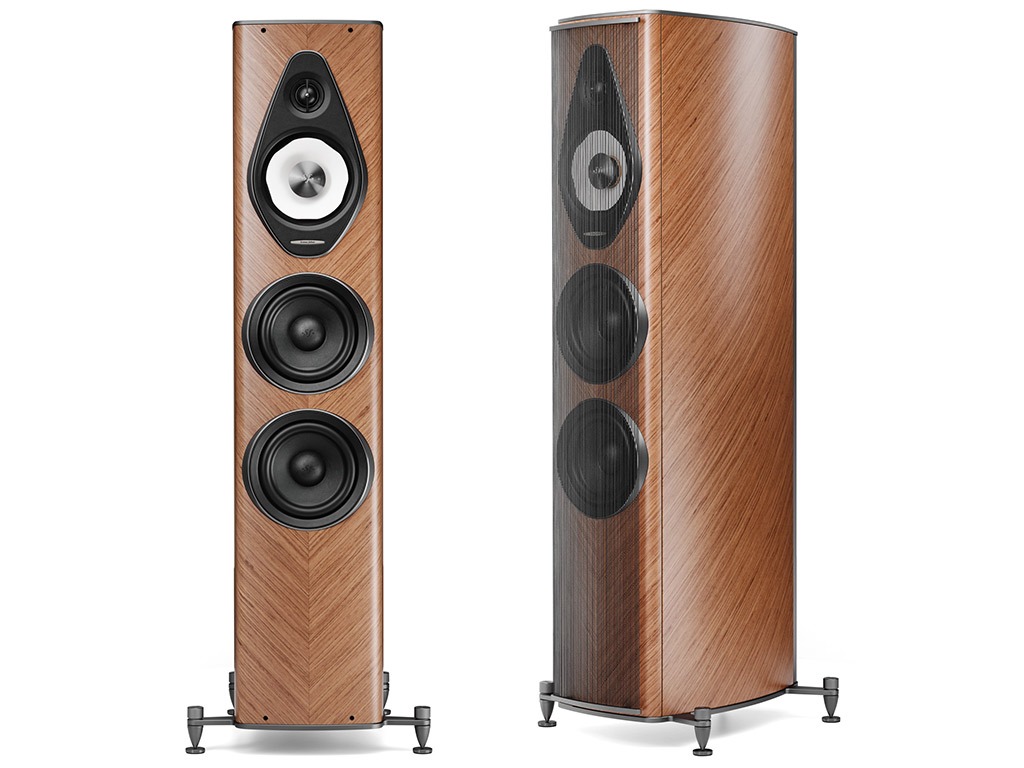
The III G3 is a three-way, vented-box floorstander with a sealed midrange chamber damped with cork. The headline is the 165 mm Camelia midrange driver, developed in-house for Suprema and now brought down the range. Its non-circular paper cone takes its shape from the camellia flower, a geometry Sonus Faber says reduces unwanted resonance and improves clarity, transparency, and vocal realism. It sits under a 28 mm DAD Arrow Point silk dome tweeter, with two 165 mm paper-cone woofers below on a honeycomb-like Organic Basket chassis designed to improve airflow and mechanical stability. An aluminium phase plug and damping ring are claimed to reduce compression and turbulence for better dynamics and clarity.
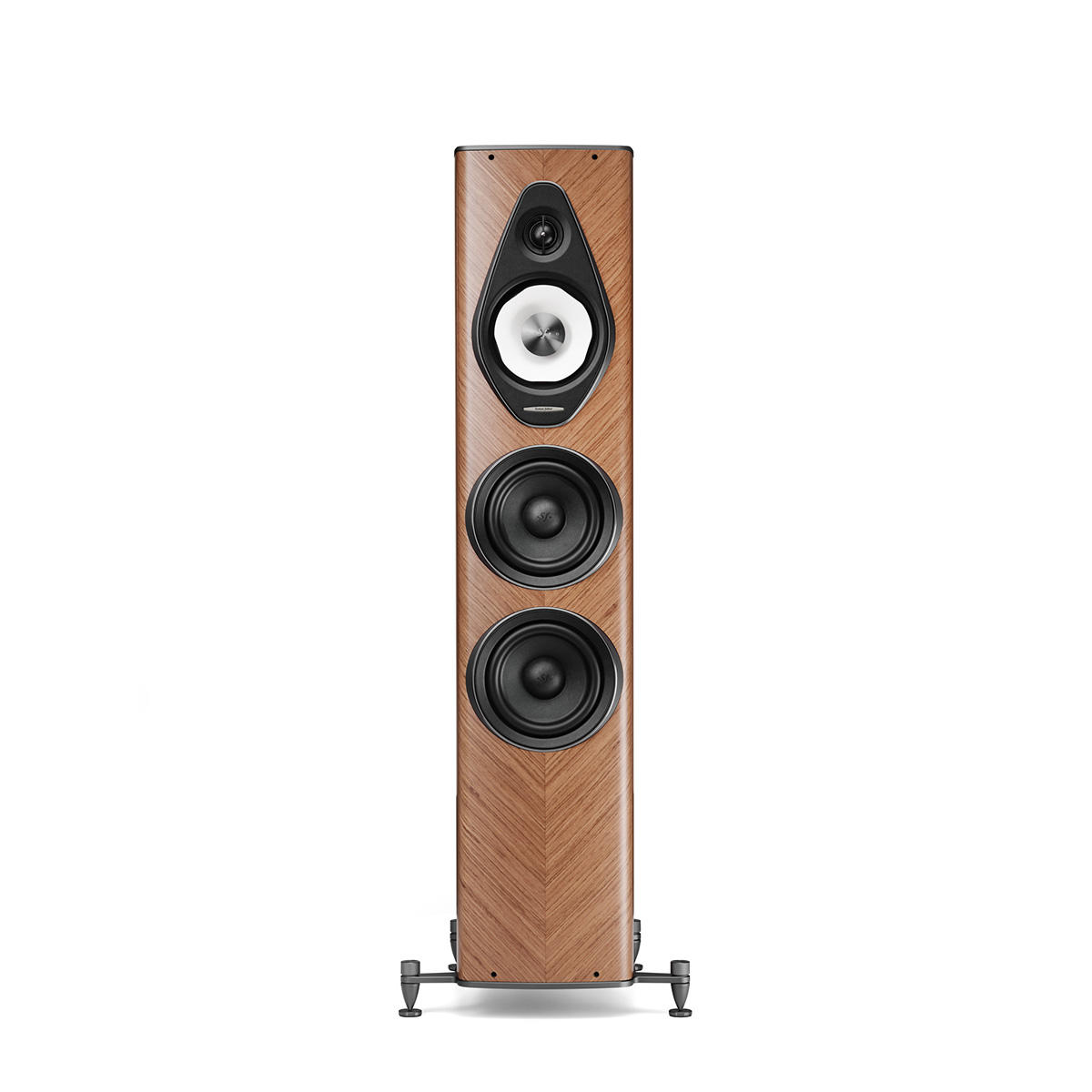
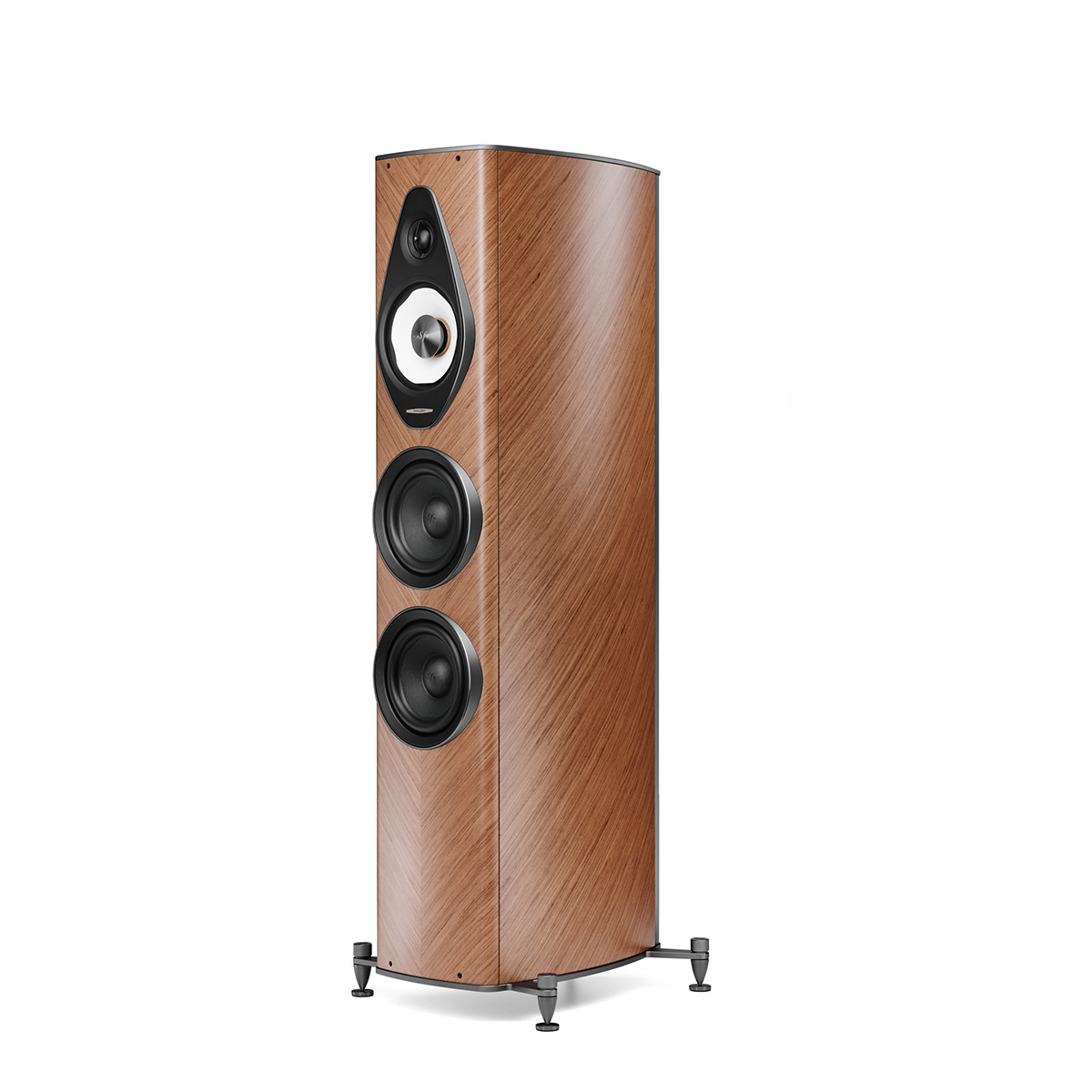
The crossover is a new Phase Coherent design, crossing at 365 Hz and 2,460 Hz. Quoted specifications are 42 Hz to 40 kHz frequency response, 90 dB sensitivity, 4 ohm nominal impedance, and a recommended amplifier range of 50 to 300 watts. The cabinet measures 110.4 by 37.6 by 45.9 cm and keeps the collection’s asymmetrical lute shape, now dressed in a 45-degree herringbone real-wood veneer inspired by the Stradivari loudspeakers, with aluminium accents and leather detailing. Finishes are walnut or wenge.
Context
Olympica sits below the Homage and Reference collections, and well below Suprema, offering Sonus Faber’s Italian cabinetmaking and acoustic engineering at a more attainable price. The original Olympica arrived in 2013, and the G3 is a ground-up redesign rather than a cosmetic refresh.
The range is a full five-model family: the Olympica I standmount at $13,000 per pair, the III at $24,000 per pair, the flagship V at $30,000 per pair, plus a Center at $10,500 each and a slim on-wall model at $8,000 each. That makes Olympica G3 a complete stereo and home theater proposition, not just a pair of floorstanders. Within it, the III is positioned as the sweet spot: the V’s architecture in proportions that fit more rooms.
How It Compares
Against the outgoing Nova III, the G3 III keeps the same height class at 110.4 cm, the same 90 dB sensitivity, and the same 50 to 300 watt amplifier window. Almost everything inside changes: a Camelia midrange replaces the conventional 150 mm mid, new 165 mm woofers replace the old 180 mm units, the crossover points move to 365 Hz and 2,460 Hz from 250 Hz and 2,500 Hz, and the top end extends to 40 kHz from 35 kHz. The cork-damped mid-high chamber and herringbone veneer are new. One spec worth noting: Sonus faber quotes 42 Hz for the III G3, against 35 Hz for the Nova III. The two figures may not be measured to the same standard, so the gap should not be read as a like-for-like loss, but it is a reason to wait for independent bass measurements.
Against its bigger sibling, the V G3, the III shares the tweeter, the Camelia midrange, and the cork chamber, but uses two woofers instead of three, giving up some bass extension (42 Hz against 37 Hz) and scale for a narrower, shorter, lighter cabinet and a $6,000 lower price.
My Take (Forward Analysis)
This is paper analysis, not a hands-on review: no independent measurements or listening tests of the G3 III exist yet, and nothing here pretends otherwise.
On paper, this looks promising because the technology is substantive rather than decorative. The Camelia driver, the Organic Basket chassis, and the cork chamber all attack the same enemy — unwanted resonance — and they arrive together, not as a single headline feature. The III keeping the V’s core architecture in a smaller cabinet is exactly what makes it the interesting model in the range. The lute-shaped cabinet language is proven Sonus Faber territory, so the design risk is low.
The III G3’s $24,000 compares with roughly $15,000–$18,000 for the Nova III at US dealers, a rise of about a third to 60% depending on the price you start from — though these are dealer prices from different periods. Much of that gap will have to be justified by the new drivers and cabinet work.
What gives me pause is the price jump, and, to a lesser degree, the amplifier question. With a 4 ohm nominal impedance, amplifier current delivery is worth watching. Without an impedance curve, it is too early to say how demanding the load really is. The 42 Hz bass claim and the neutrality claims are unverified until independent measurements appear, and positive show-floor impressions — of which there have been several — are encouraging but always flatter a speaker. Until independent measurements and listening tests emerge, this is theoretical, but the III is the most technically interesting Olympica update to date, on paper.
Who Should Watch This
Worth a demo now: anyone shopping for floorstanders at $20,000 and above, Nova III owners considering an upgrade, and buyers who want Sonus Faber’s Italian design language with current driver technology. Worth waiting for measurements: anyone deciding between the III and an established rival at the same price, where a frequency response and impedance curve would settle real questions. Home theater builders should note the Center and Wall models, which complete a matched Olympica G3 system. Small-room buyers on a tighter budget should look at the I standmount instead.