
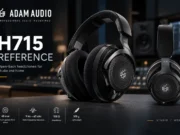








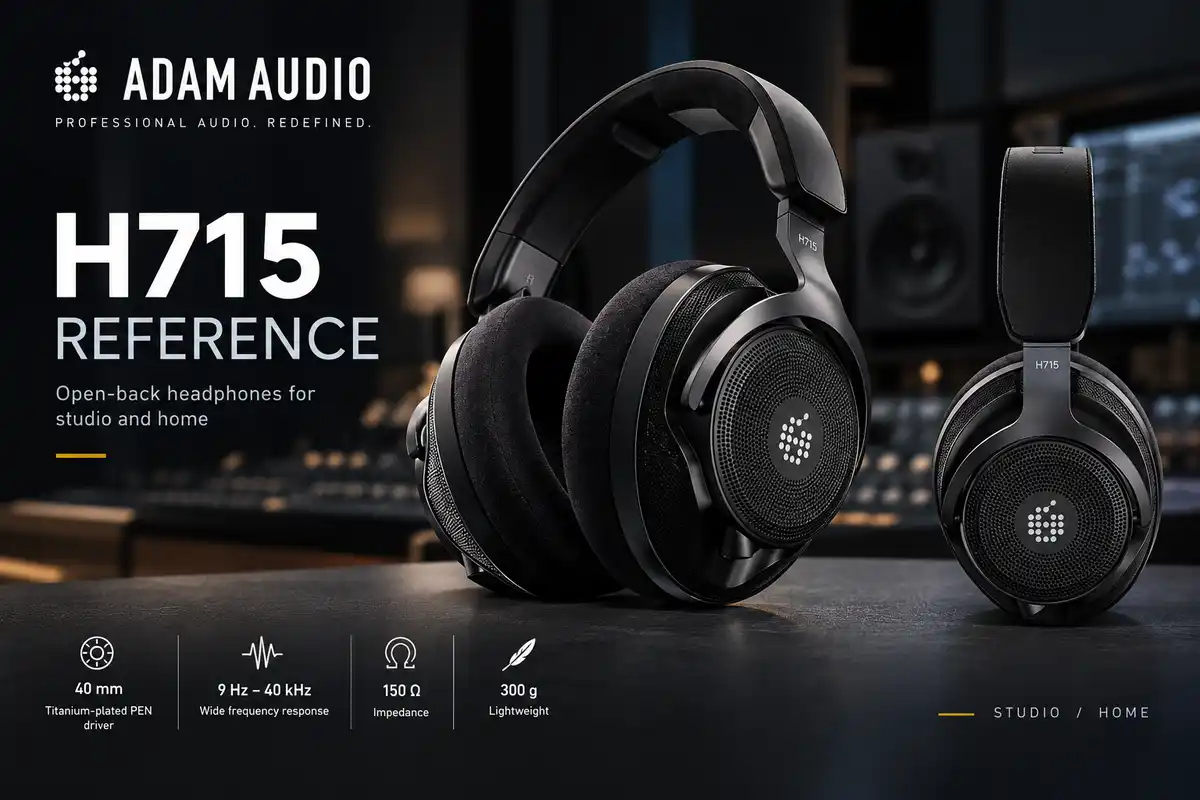
ADAM Audio has spent 25 years building studio monitors. The H715 Reference is its first open-back headphone, and it ships in December 2026 at $699.99 in the US, £569.99 and €669.99. The pitch is a headphone that behaves like a reference monitoring chain, plus a Hi-Fi mode for people who want to take it home.
What’s New
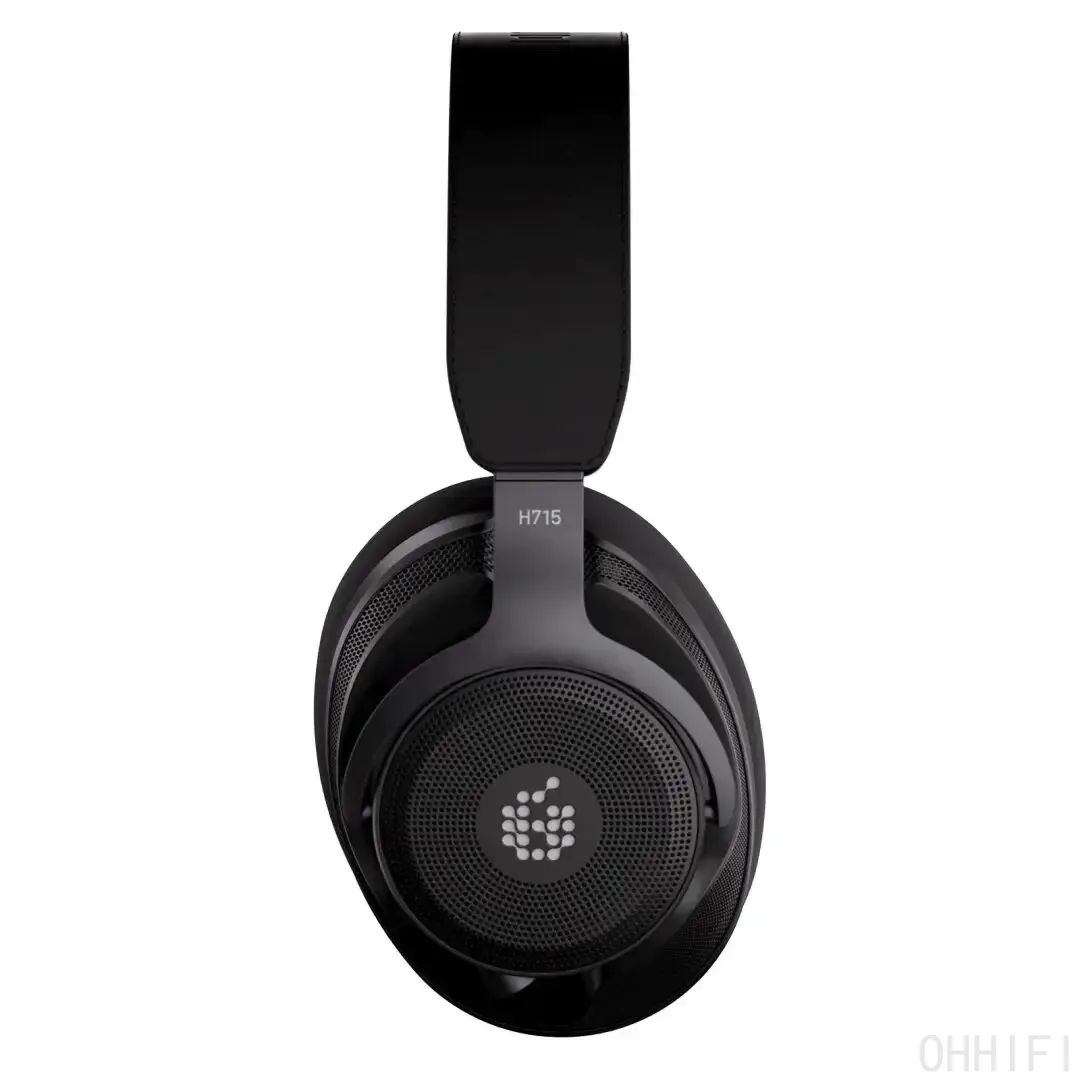
The driver is a 40 mm titanium-plated PEN diaphragm with a neodymium magnet, running at 150 ohms. Claimed response is 9 Hz to 40 kHz (-3 dB, referenced to 1 kHz), and max SPL is 113 dB at 0.05% THD. Weight is about 300 g.
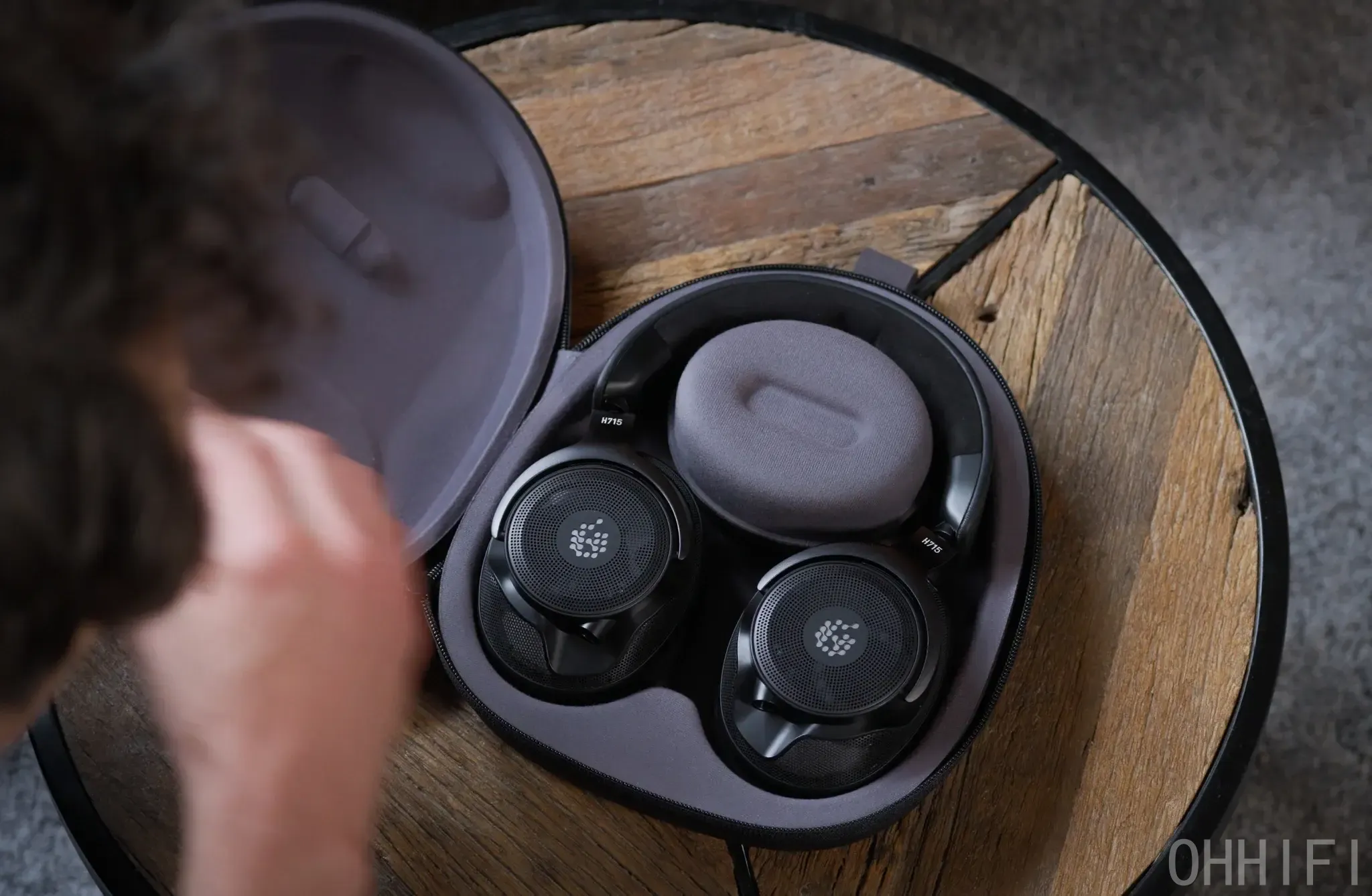
The hardware is built for long sessions and for repair:
- Woven steel mesh grilles and a spring-steel headband
- A cutout in the headband padding to relieve crown pressure
- Rotating earcups
- Magnetic pads in cloth or faux leather
- A lay-flat fold with a hardshell case
Every wear part can be replaced, and ADAM says an authorized technician can even swap the drivers. The warranty is two years.
Two cables are included:
- A 1.3 m coiled studio cable with a 3.5 mm plug and a 6.3 mm adapter
- A 3 m balanced cable with a 4.4 mm Pentaconn plug, wired to both cups
The Hi-Fi mode is the interesting part. A recessed switch inside the left cup, pressed with the supplied metal pin, separates the shared ground between channels. That allows true balanced operation from a differential headphone amp. ADAM says to switch it off again for conventional studio gear.
The software is the other half. The Sonnox Headphone Utility plug-in, first released with the closed-back H200, now has H715-specific calibration profiles and adjustable crossfeed. A standalone macOS host called ListenHub applies the calibration system-wide, outside a DAW.
Context
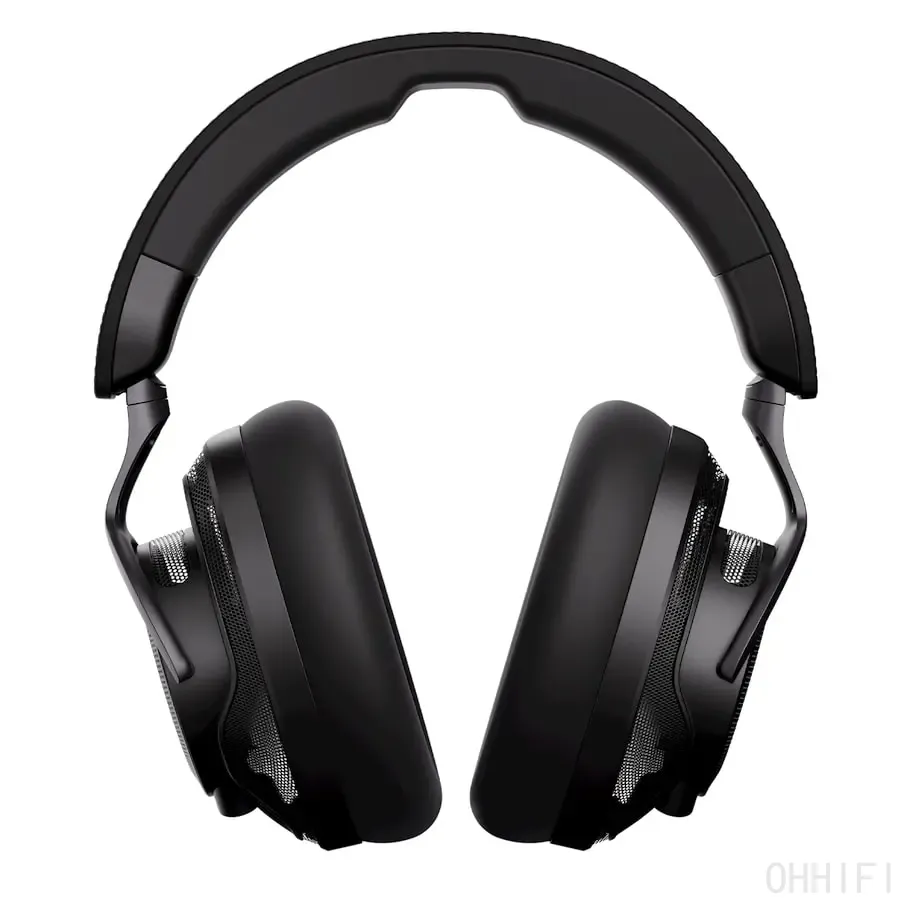
ADAM was founded in Berlin in 1999 and built its name on X-ART ribbon tweeters. It joined the Focusrite Group in 2019. The H200 closed-back ($179.99) was its first headphone. The H715 is a much bigger step up the ladder.
There is a family story too. ADAM co-founder Klaus Heinz left in 2014 and started HEDD Audio a year later with his son. HEDD now makes headphones of its own. Two Berlin companies with shared roots are about to compete for the same buyers.
Compared to the H200 and the Competition
Against the H200, the H715 swaps closed for open, 32 ohms for 150 ohms, and a 2 Hz to 23.5 kHz claim for 9 Hz to 40 kHz. Power handling rises from 30 mW to 100 mW maximum.
| Rival | Comparison | Verdict |
|---|---|---|
| Sennheiser HD 490 Pro Plus ($499) | About $200 cheaper, same open-back studio brief | The H715 has to earn its premium through software and balanced mode |
| Audeze MM-100 ($399) | Planar rival at a much lower price | The value baseline; ADAM needs a clear sonic edge to justify the gap |
| HEDD D1 ($799) | Closest in philosophy, with Berlin studio roots | Already well reviewed; the H715 can only win on software and balanced mode |
| Neumann NDH 30 (about £525 in the UK) | The other studio-brand open-back at similar money | No head-to-head data yet; a direct rival for mix engineers |
Here is how the specs line up on paper:
| Model | US / UK Price | Driver | Impedance & Sensitivity | THD (1 kHz, 100 dB) | Weight |
|---|---|---|---|---|---|
| ADAM Audio H715 Reference | $699.99 / £569.99 | 40 mm Titanium-Plated PEN Dynamic | 150 Ω / 94 dB/mW (102 dB/Vrms) | < 0.05% | 300 g |
| Sennheiser HD 490 Pro Plus | $499.00 / ~£419 | 38 mm Neodymium Dynamic | 130 Ω / 96 dB/mW (105 dB/Vrms) | < 0.2% | 260 g |
| Audeze MM-100 | $399.00 / £399.00 | 90 mm Planar Magnetic | 18 Ω / 98 dB/mW | < 0.1% | 475 g |
| HEDD Audio HEDDphone D1 | $799.00 / £599.00 | 50 mm TPCD (Thin-Ply Carbon) Dynamic | 32 Ω / 100 dB/mW | N/A | 350 g |
| Neumann NDH 30 | N/A / ~£525 | 38 mm Dynamic (open-back) | 120 Ω / ~95 dB/mW (104 dB/Vrms) | < 0.03% | 352 g |
My Take
This is a paper assessment. I haven’t heard the H715, and nobody has published measurements yet.
What looks promising
- The software. Per-pad calibration and crossfeed address the real problem of making headphone mixes translate to speakers. I expect most of the value to come from here.
- Repairability. Replaceable pads, headband parts and technician-swappable drivers make a $700 purchase easier to live with, though the HEDD D1 offers similar serviceability with a five-year warranty against ADAM’s two.
- Hi-Fi mode. A proper balanced path from a 4.4 mm output is something audiophiles will actually use. It is not just a studio feature stretched to fit.
What gives me pause
- The THD spec. The H715 lists under 0.05% at 100 dB. That beats the Sennheiser (under 0.2%) and Audeze (under 0.1%) figures, but it is looser than the $179.99 H200’s under 0.02% and the Neumann’s under 0.03%. Manufacturer figures are not measurements, but a flagship should not look worse on paper than its budget sibling.
- Sensitivity. The figure is 94 dB/mW at 150 ohms. That is in line with other 120 to 130 ohm studio models, but well short of the HEDD D1’s 32-ohm ease, so I’d be cautious about dongles until I see how it behaves.
- ListenHub is macOS-only. Windows users get the plug-in route and nothing more.
- Open-back limits. It is no use for tracking, or anywhere sound leaking into a microphone matters.
- The “loudspeaker-like imaging” claim. Until frequency response and distortion graphs appear, it is marketing. I’d wait for independent measurements before ordering.
Who Should Watch This
- Mix and mastering engineers on macOS who want one open-back with built-in translation tools
- Audiophiles with a balanced 4.4 mm amp who want a studio-grade open-back that also works at home
- Anyone considering the HEDD D1 or Neumann NDH 30 and willing to wait for measurements first
Skip it if you mostly track vocals, are on Windows and want the full software suite, or just want the best sound per dollar. In that last case the cheaper open-backs above look hard to beat.