



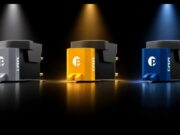





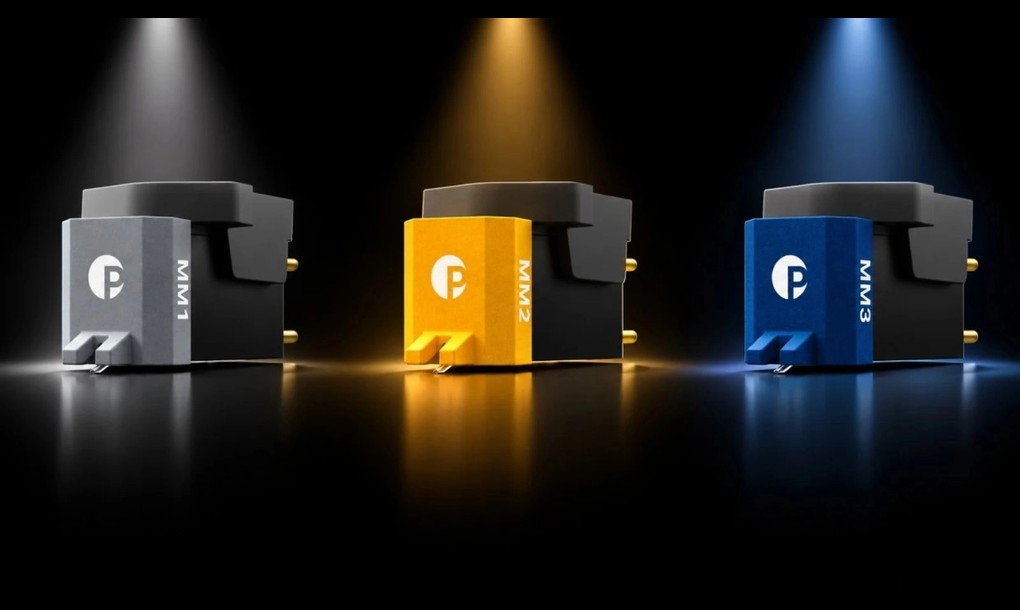
Pro-Ject has launched three new moving-magnet cartridges: the Pick it MM 1 at €79, the MM 2 at €99 and the MM 3 at €179. They share one platform — a damped ABS body, an aluminium stylus holder and a protective nose at the front — and split on stylus profile and output: hyper-conical for worn records, elliptical all-rounder, super-elliptical with nearly double the output. No independent review or measurement exists yet, so this is a paper analysis, not a listening verdict.
What’s New
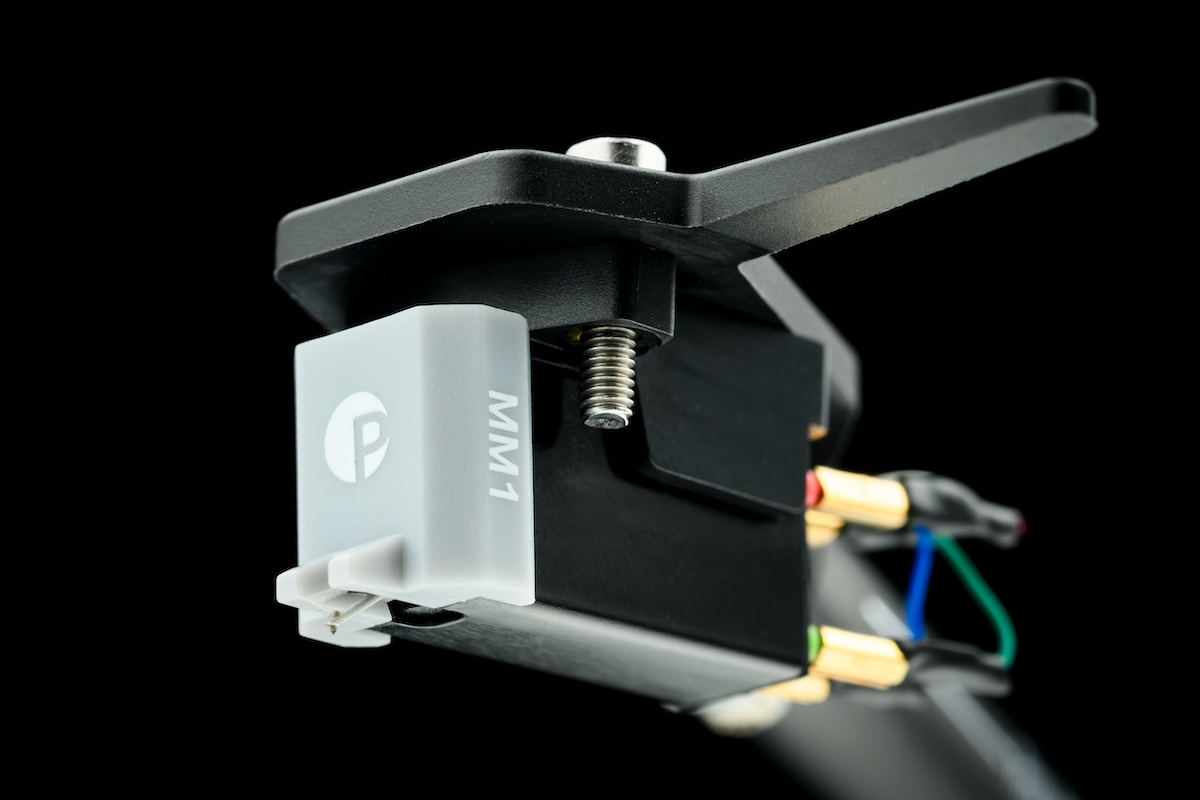
The shared platform is the sensible part of the launch. Every model weighs 5.5 grams, mounts on the standard half-inch fitting and takes the same setup figures: 1.8 grams tracking force (1.6 to 2.0 acceptable), 14 µm/mN compliance, a 47 kOhm load, a 23-degree tracking angle and 70 µm tracking ability at 315 Hz. The protective nose is the detail I like most: part of the housing extends past the stylus carrier, so the diamond has a guard that cannot be lost.
The MM 1 is the one for the secondhand bin. Its hyper-conical diamond is meant to be forgiving of grooves in poor condition, with a warm, musical tuning and a subtle lift up top that keeps detail without sharpening clicks and crackle. Output is 2.2 mV, separation better than 24 dB at 1 kHz, response 10 Hz to 30 kHz.
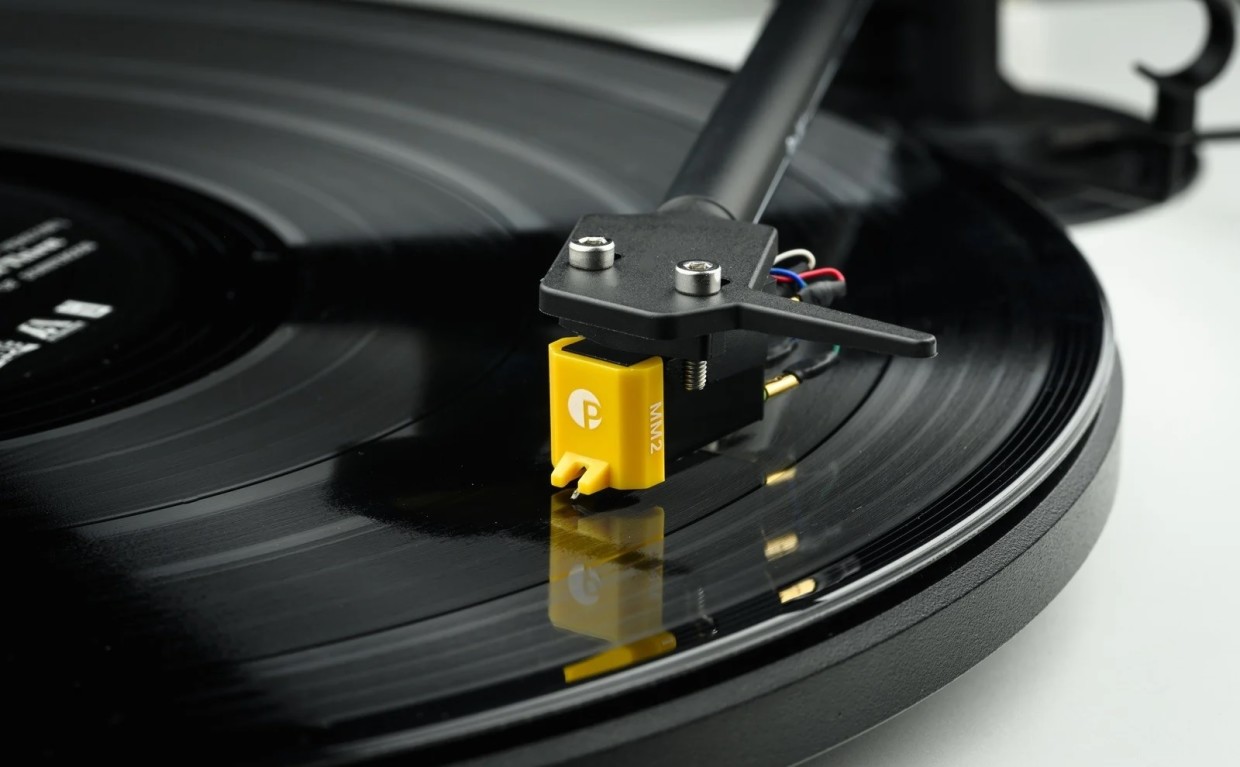
The MM 2 is the middle of the range and the one most buyers will land on. Its elliptical diamond comes with a refined magnetic system — an improved self-stabilizing magnetic shunt and reduced winding inductance — for finer detail, more precise imaging and cleaner highs. Output stays at 2.2 mV, separation better than 26 dB at 1 kHz, response 10 Hz to 35 kHz.
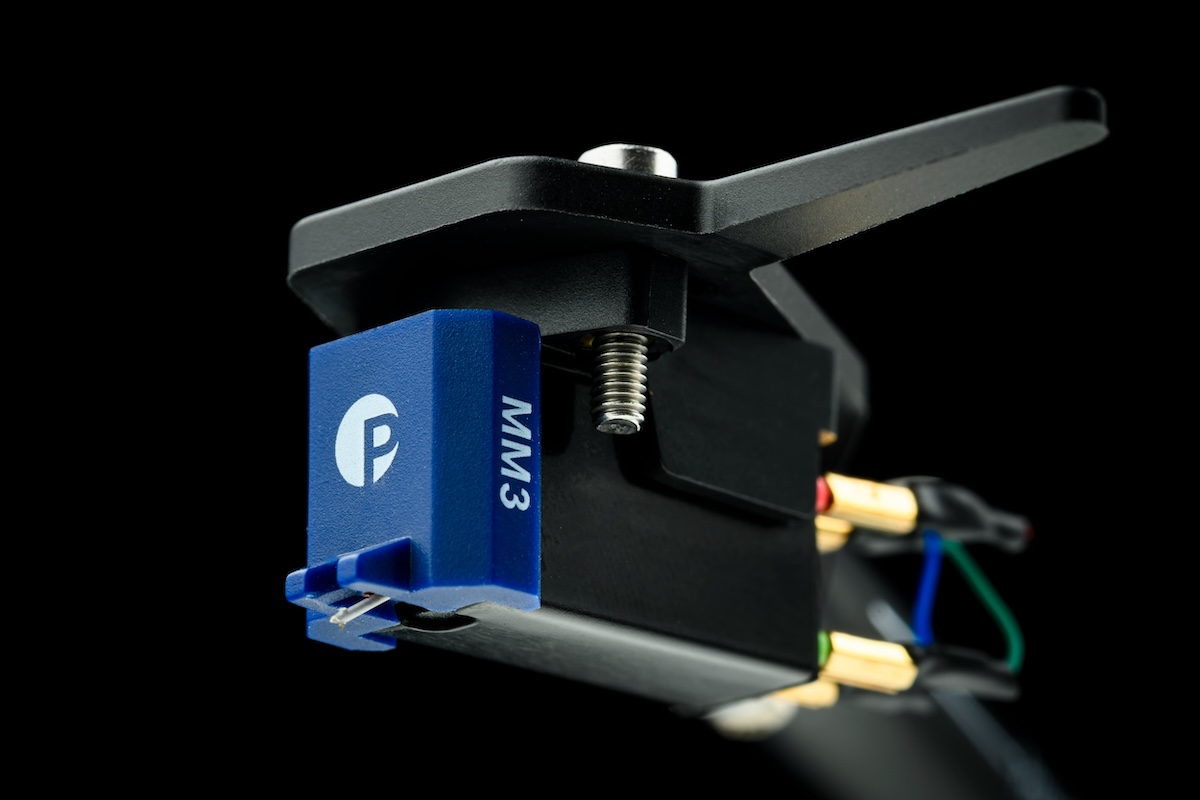
The MM 3 is where the money goes. Its super-elliptical diamond has the finest contact profile of the three, for greater transparency, finer high-frequency resolution and lower distortion in the inner grooves. Pro-Ject claims a neutral tuning with closely matched channels. The headline figure is output: 4.0 mV against 2.2 mV for the other two, which Pro-Ject says improves signal-to-noise ratio across a broad range of phono preamplifiers. Separation is better than 27 dB at 1 kHz, response 10 Hz to 40 kHz.
| Specification | MM 1 | MM 2 | MM 3 |
|---|---|---|---|
| Stylus profile | Hyper-conical | Elliptical | Super-elliptical |
| Output voltage | 2.2 mV | 2.2 mV | 4.0 mV |
| Frequency response | 10 Hz–30 kHz | 10 Hz–35 kHz | 10 Hz–40 kHz |
| Channel separation at 1 kHz | >24 dB | >26 dB | >27 dB |
| Price (incl. VAT) | €79 | €99 | €179 |
| Replacement stylus | €59 | €74 | €112 |
Outputs are specified at 1 kHz and 3.54 cm/s; frequency ranges carry a ±2 dB tolerance. Replacement styli are listed for all three. Whether a stylus from one model fits another is not established — do not buy an MM 1 planning to fit an MM 3 stylus later.
Context
The cartridges arrive the same month Pro-Ject revived the Debut Carbon as the Debut Carbon The Original — $649, £499 or €599, on sale from November 2026 with a carbon-fibre tonearm and factory-fitted Pick it S2 MM. That cartridge is different: made by Ortofon and tuned by Pro-Ject, with an elliptical stylus and Split Pole Pins. The new MM 1, MM 2 and MM 3 are not re-badges of it, nor the Pick it MM EVO fitted to the Debut EVO 2. They are a standalone family, sold on their own for owners upgrading the cartridge on a deck they already have.
The trio slots into the affordable middle, where the choice has usually been Ortofon’s 2M range or Audio-Technica’s VM95 family.
Compared to Predecessors and Current Rivals
| Model | Price | vs Pick it MM family | Verdict |
|---|---|---|---|
| Pick it MM EVO | Bundled with Debut EVO 2 | The bundled predecessor | The MM 2 is the closest standalone match; the MM 3 is the step up |
| Ortofon 2M Red | $99 list | Elliptical, 5.5 mV, the long-time default — louder into a phono stage than the MM 1 or MM 2 | Still the safe default; the MM 2 must win on detail |
| Audio-Technica AT-VM95E | $74 | Elliptical, 4.0 mV, with a stylus range from conical to Shibata on one body | Cheaper, wider upgrade path; the MM 1 is warmer and more forgiving |
| Nagaoka MP-110 | $149 | Warm, rich and forgiving — the forum favourite, bought for tone over specs | The MM 3’s rival; Nagaoka wins on character, Pro-Ject on specs |
My Take
On paper, this looks promising — Pro-Ject fixed the right things. One platform with three honest stylus choices beats three unrelated cartridges, and identical setup figures mean the choice is about the collection, not the tonearm. The protective nose solves a real annoyance, and €59–€112 replacement styli keep running costs sane.
What concerns me is the output. The MM 1 and MM 2 at 2.2 mV are quiet for moving-magnet cartridges — the 2M Red manages 5.5 mV and the AT-VM95E 4.0 mV — so budget phono stages need more gain, and more gain means more noise. The MM 3’s 4.0 mV fixes that, for €179. The tuning claims are Pro-Ject’s own: “warm and musical” for the MM 1, “neutral” for the MM 3 — intentions, not results, until someone measures them.
The Debut line has been the affordable default for a decade, so I expect the MM 2 to be the safe default at €99. But this is paper analysis until someone measures one.
Who Should Watch This
Heavy on secondhand records? The MM 1 at €79 is the interesting one — a hyper-conical that forgives worn grooves is a genuinely useful tool. One cartridge for everything? The MM 2 at €99 is the default. Quiet phono stage? The MM 3 at €179 is the one to wait for measurements on. Everyone else should wait: US pricing and the first tests will settle whether the MM 2 can take the 2M Red’s place.