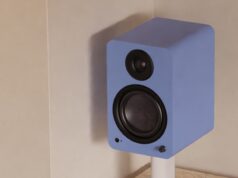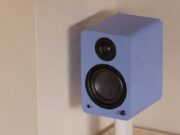
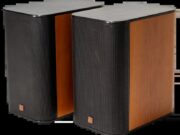
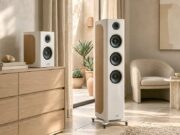











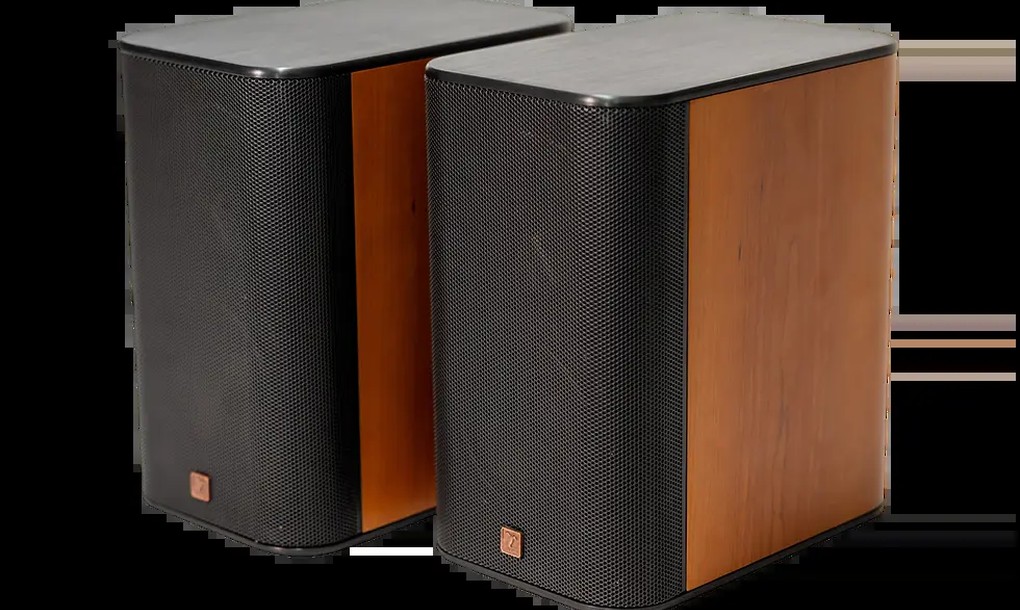
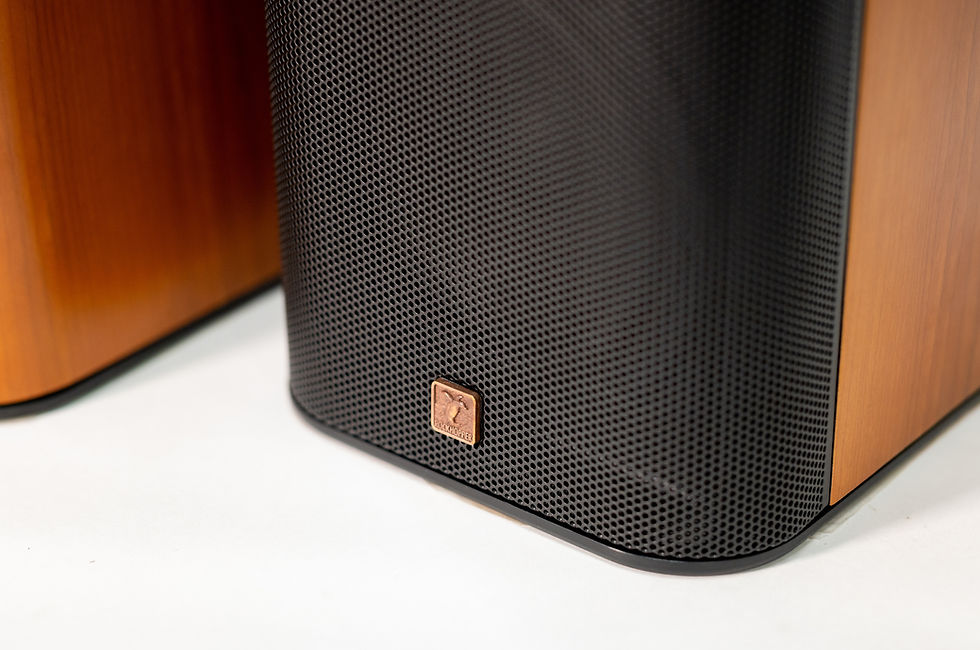
A speaker called Speaker. That is the actual model name, and it tells you something about the company behind it. Rockhopper Acoustics is a small Boston outfit founded by audio engineer Dr. Kevin Brown, and its first product is a compact active bookshelf that tries to remove the amplifier, the crossover and the guesswork from the equation. It costs $3,799 a pair in bookmatched veneer, or $3,999 in black on walnut, and it makes its Capital Audiofest debut this week, November 13 to 15, in Room 740 at the Hilton Rockville.
What’s New
The architecture is the story. Each Rockhopper Speaker carries four Class D amplifier modules, one dedicated to each driver, with full DSP shaping the signal before amplification. There is no passive crossover in the chain at all. Every unit is tuned and calibrated by hand before it leaves the workshop, to within plus or minus 0.5 dB of the company’s True-to-Life Response reference target.
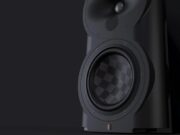
The tweeter sits in Rockhopper’s proprietary ADIMS waveguide, a design the company says it has refined for 15 years. The stated aim is plain enough: the speakers should sound as though the musicians were performing right there in your living room.
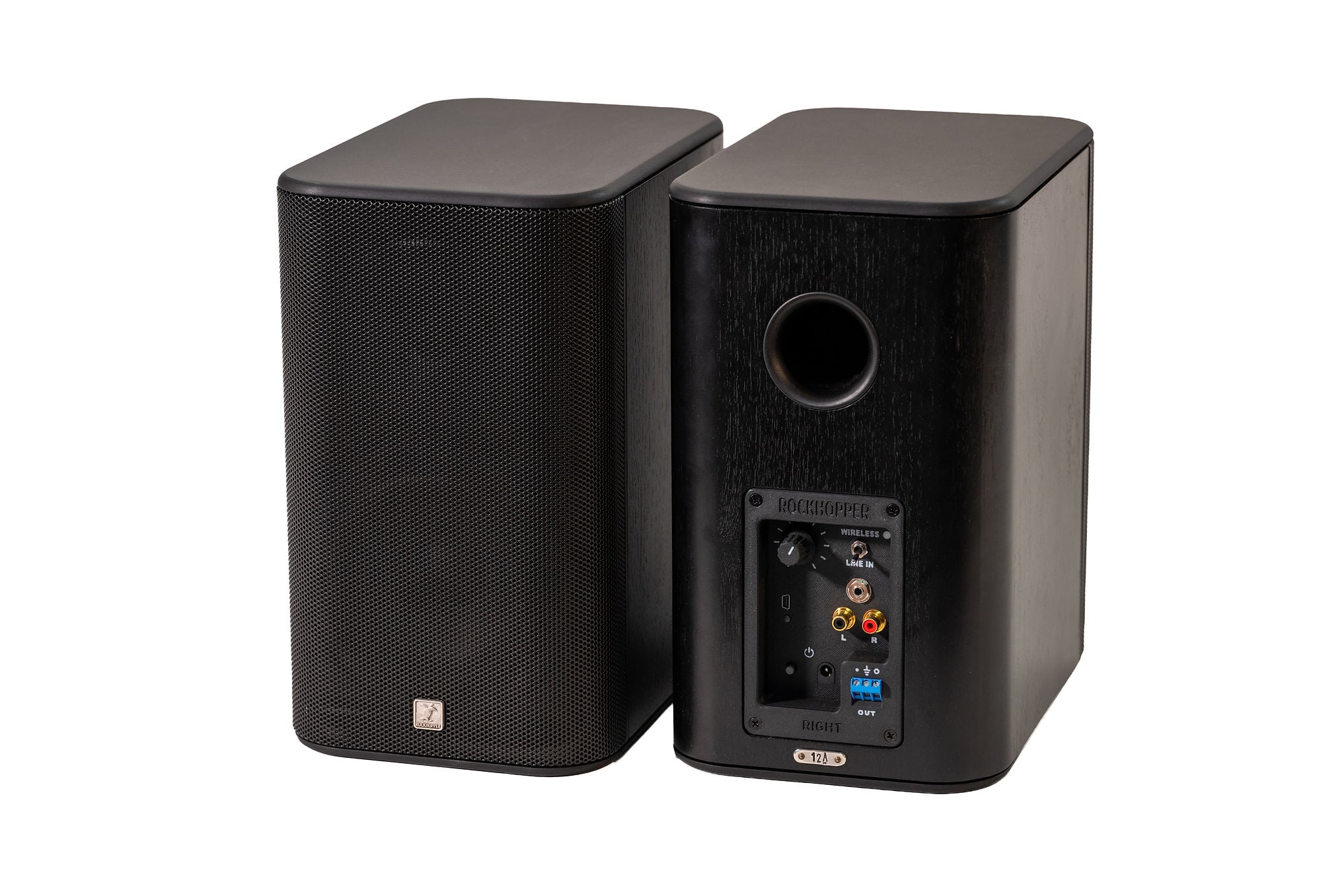
Connectivity is kept simple. A wireless input covers playback from phones and streaming sources, and a line-level input takes a turntable or any other component. Rockhopper has not disclosed which digital formats, sample rates or streaming protocols the wireless side supports, so I will not guess.
The speakers are sold direct from Rockhopper’s website, with free shipping in the contiguous United States and a 30-day home trial. The two finishes are bookmatched veneer at $3,799 a pair and black on walnut at $3,999 a pair.
Context
This is not quite a first appearance. The Speaker was shown at AXPONA in the spring and has been on sale through Rockhopper’s site since early October. Capital Audiofest is its next public showing, and the one where most people will first hear it in a proper demo room. That matters for how to read the news: this is a young product going on display, not a box that only exists as a press release.
The company itself is new to most of us. Rockhopper Acoustics is based in Boston, built around Dr. Brown’s engineering, and the Speaker is its opening statement. The early listener quotes on its site are enthusiastic, including a cello listener who says the Rockhoppers “totally nail” the sound of the instrument in a living room. Those are testimonials, not independent reviews, and I have not heard the speaker myself.
Compared
Against a passive bookshelf at this price, the Rockhopper changes the whole purchase. There is no amplifier to choose, no speaker cable to argue about, and no passive crossover between the amp and the drivers. You bring a source, the speakers do the rest.
Against other active bookshelves, the differences are in the details. Most rivals in this class bi-amp, with two amplifier channels per speaker. Rockhopper gives each driver its own amplifier, four per box, and then calibrates every single unit by hand against its own reference curve. That per-unit calibration is the unusual part. It is the kind of thing you normally find on far more expensive active monitors, and it is the claim I would most want to test in a listening room: whether two pairs actually sound identical, and whether the target curve flatters real music or just measures well.
The 30-day home trial takes some of the risk out of that question. A speaker this unusual is exactly the kind of thing to try at home rather than judge in a show room. Fleetwood’s Lux, another new speaker debuting at the same show, takes the opposite approach — a passive 10-inch coaxial in a carved solid-wood cabinet.
My Take
This is a paper analysis, not a listening report, and the honest version is that the engineering story is strong while the evidence is still thin. Four amps per speaker, full DSP, no passive crossover and hand calibration to half a decibel is a serious design brief at $3,799. The price undercuts the usual suspects in the active flagship tier, and the direct-sales model with a home trial suggests a company that knows it has to earn trust one living room at a time.
What I would want to know before recommending it: driver sizes and frequency response, which Rockhopper has not published in the coverage so far, and the exact behaviour of the wireless input. A 30-day trial answers the first question only if you listen carefully, and the second only if you try your own sources.
Who Should Watch
If you want a one-box system and your sources are a phone, a streamer and maybe a turntable, this is worth an audition at Capital Audiofest or a trial at home. If you already own a good amplifier and enjoy matching it to passive speakers, the Rockhopper is solving a problem you do not have. And if you are going to the show, Room 740 is the place to hear whether the “musicians in the room” claim holds up.