






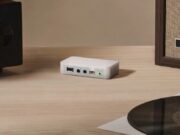


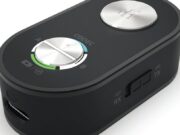


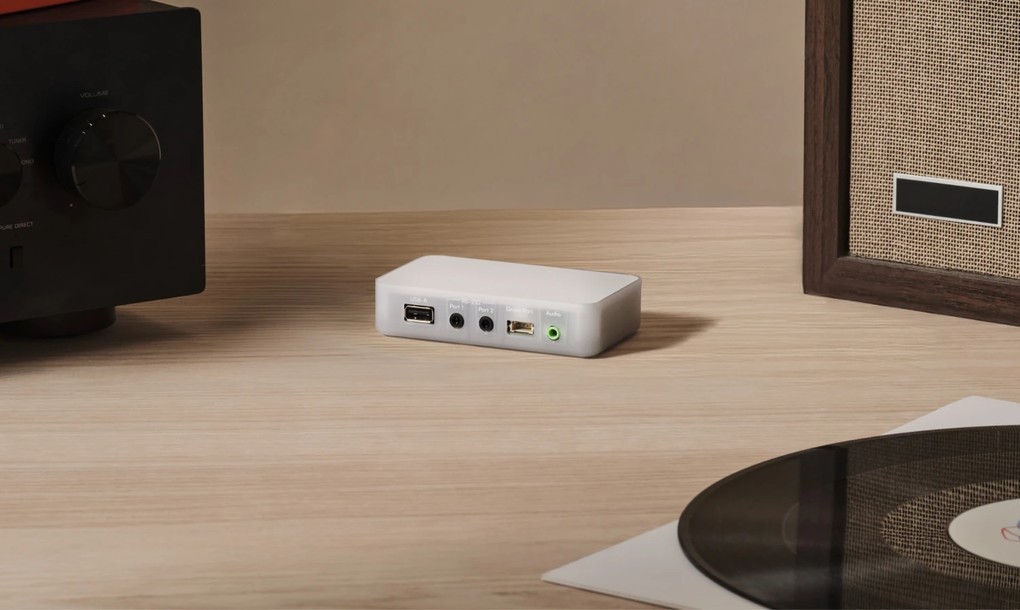
The amplifier in my rack is fifteen years old and sounds better than most of what replaced it. What it cannot do is play a stream. Nabu Casa’s Connect AUX-2 exists for exactly that gap: a $69 white box that turns any amplifier with an aux input into a synchronised streaming endpoint — and then keeps going, controlling the TV over RS-232, hosting a Z-Wave adapter, and acting as a Bluetooth proxy, with no cloud account. On sale worldwide from November 11: $69 in the US, €59 in Europe.
What’s New
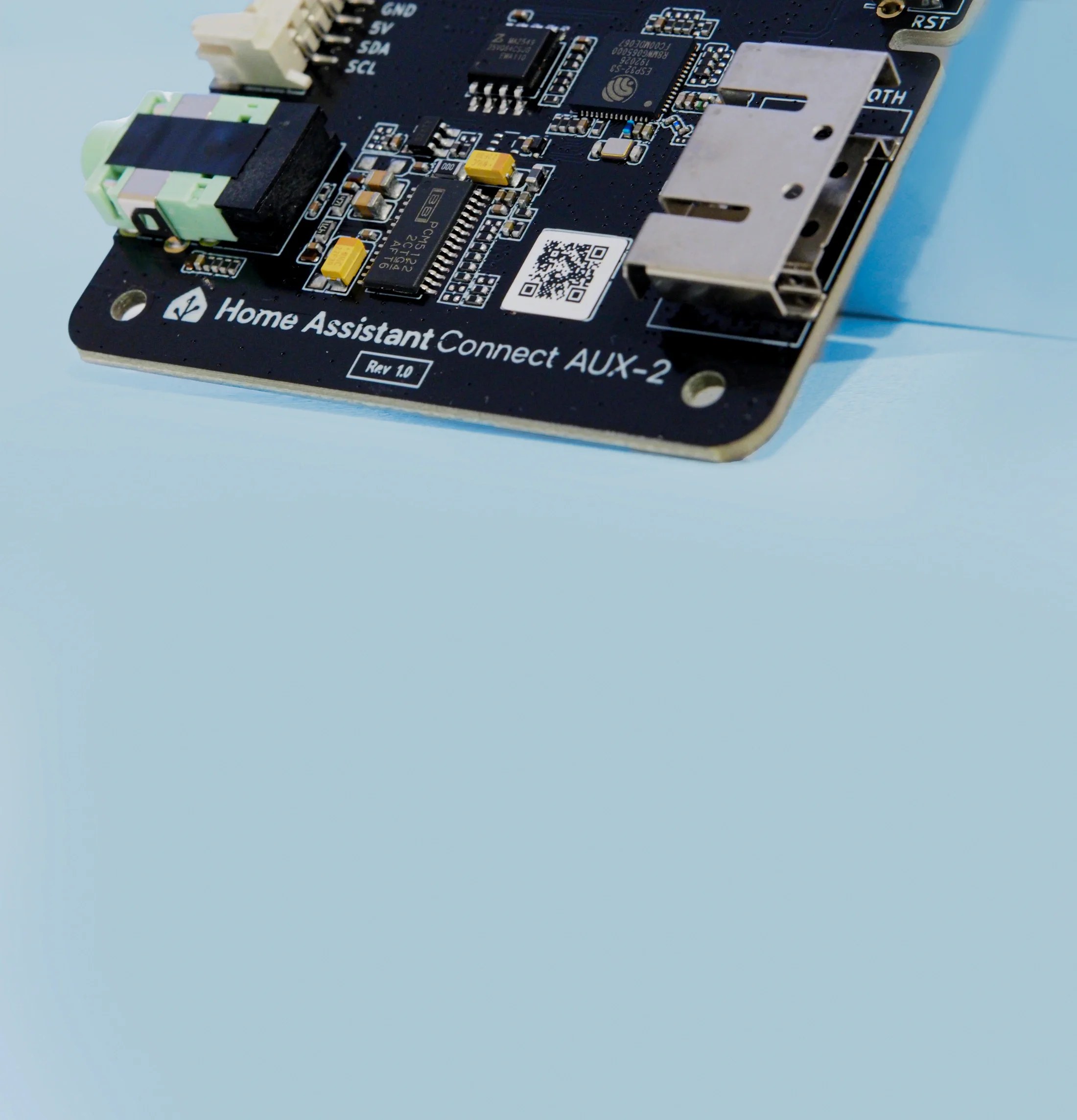
The audio job comes first. One 3.5mm jack carries analog or optical output, which auto-senses the cable. Analog runs through a TI PCM5122 DAC, 112 dB SNR; the digital side passes stereo PCM untouched. The spec lists 24-bit/48kHz on both. Music Assistant finds the box as a Sendspin player, so local FLAC, MP3 and WAV join the same library as streaming services, and several units group in sync — or with a Sonos or HomePod.
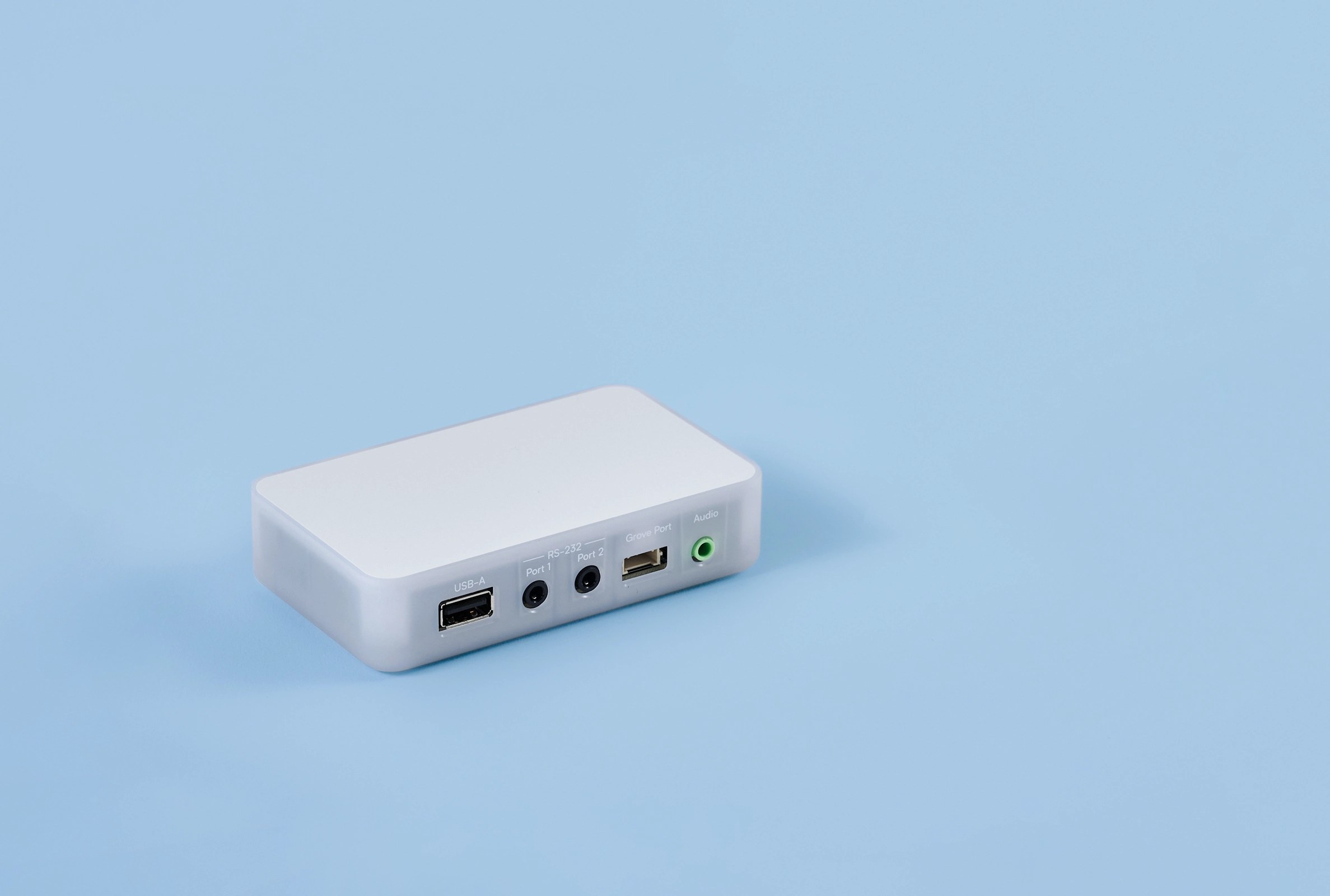
The two RS-232 ports are the surprise. Each talks to a TV, receiver or projector with a serial port and an integration — power, volume and input switching. That answers the TV whose smart features became a liability: cut it off from the internet and it cannot phone home, while Home Assistant still runs it over the cable. TX/RX switches sit underneath for wrongly wired cables, and a $15 USB adapter adds RS-485 for Modbus gear. Only integrated devices work, and some need converter cables for DB9, RJ11 or MiniDIN.
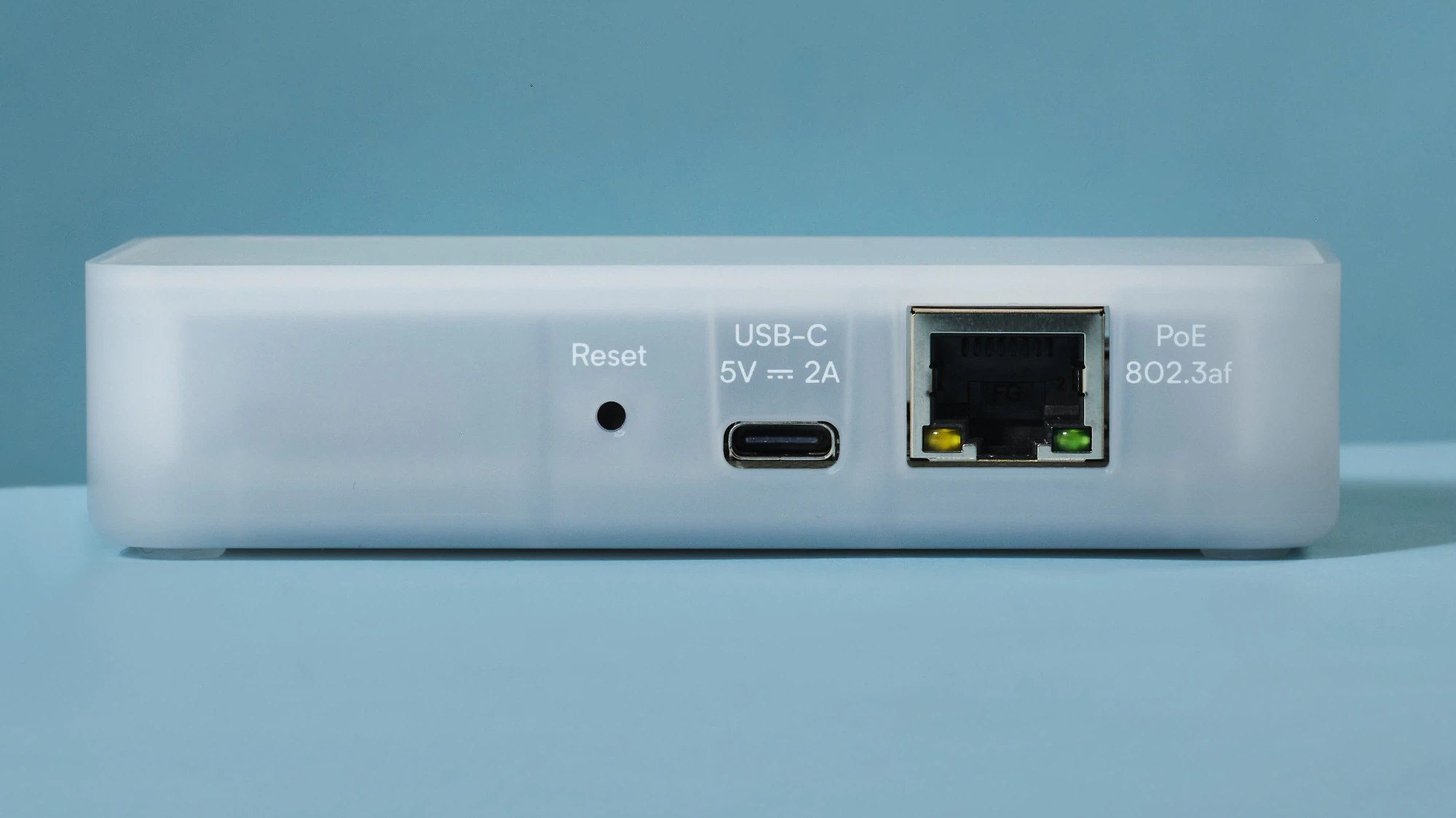
The USB-A port hosts a Connect ZWA-2, moving a Z-Wave network to the best spot. Z-Wave here is tested; Zigbee is newer, ZHA-only, needs Home Assistant 2026.11+, and is not advertised yet. Thread is not planned. Bluetooth gets a dedicated antenna, three connections — but no Bluetooth audio, and no audio input. Power is USB-C 5V/2A or PoE 802.3af, one at a time, a watt or two; Wi-Fi is 2.4 GHz only. A Grove port takes I2C and GPIO sensors; ESPHome firmware is unlocked.
| Specification | Details |
|---|---|
| Price | $69 US / €59 EU; on sale from November 11, 2026 |
| Hardware | ESP32-S3R8, 8 MB PSRAM/flash; W5500; TI PCM5122, 112 dB SNR |
| Audio | 3.5mm analog or optical S/PDIF, one at a time, output only; 24-bit/48kHz; FLAC/MP3/WAV |
| Serial | 2× 3.5mm RS-232 (±5V), TX/RX switches; RS-485 via USB adapter |
| USB / Bluetooth | USB-A hosts ZWA-2 ($79); BT 5 LE proxy, 3 connections; no BT audio |
| Power | USB-C 5V/2A+ or PoE 802.3af; 1–2 W; Ethernet, 2.4 GHz Wi-Fi |
| Size / requires | 106 × 63 × 25 mm, 104 g; needs HA 2026.9+; no cables |
Context
Nabu Casa is the commercial arm behind official Home Assistant hardware and a partner of the Open Home Foundation, which takes most of the net profit. The AUX-2 grew from a PoE box for the Connect ZWA-2 and ZBT-2 radio adapters, and kept absorbing jobs until it became a multi-tool. The name spells it out: AUX stands for Audio, USB, and X for serial. Its DAC is a step up from the Voice Preview Edition’s — a streaming endpoint first, not a voice accessory.
Compared
As a pure streamer the AUX-2 is cheap — but not the only cheap streamer.
| Model | Price | vs AUX-2 | Verdict |
|---|---|---|---|
| Home Assistant Connect AUX-2 | $69 | Streamer + serial + BT proxy + Z-Wave host + PoE; needs HA | The multi-tool — if you run Home Assistant |
| WiiM Mini | $89 | AirPlay 2, Chromecast, optical out, 24-bit/192kHz; no serial, no PoE | Better pure streamer, simpler setup |
| WiiM Pro | $149 | Adds Ethernet and coax out; still audio-only | The safe pick without Home Assistant |
| Bluesound Node Nano | $299 | BluOS, stronger DAC and app; 4× the price, audio-only | For the polished streamer and nothing else |
A WiiM Mini does the streaming job for $20 more, with a mature app, no server, and up to 24-bit/192kHz where the AUX-2 stops at 48kHz. Neither WiiM talks to a TV over RS-232, hosts a Z-Wave stick, or proxies Bluetooth sensors. A Raspberry Pi with a DAC HAT can match it for similar money, but it arrives as parts and a weekend. The iFi ZEN Air DAC 2 shows what $129 buys when audio is the only job, the Weiss DAC204 MK2 sits at the other end, and the TEAC NT-507T is the purist’s transport.
My Take
Paper analysis — I have not used the AUX-2; no independent tests or measurements exist yet.
On paper, this is the most interesting $69 in streaming right now, but for one buyer only. The value is not the DAC — a PCM5122 at 48kHz is competent, not special — it is four jobs sharing one PoE cable in a local, cloud-free box. An old amplifier that still sounds right, a TV whose apps you would rather kill, a Z-Wave network stuck in the wrong room: one purchase answers all three.
What concerns me is the fine print. The official spec lists 24-bit/48kHz, but early reports put the output at 16-bit/48kHz, with 24-bit tied to a firmware update — check what your unit ships with. The three identical 3.5mm jacks are a real trap: only one is audio, and the serial ports carry ±5V that does not belong in an amplifier input. No cables ship in the box, so the real cost is $69 plus whatever your rack needs. And the 112 dB SNR is a chip specification, not a measured result.
Who Should Watch
If you run Home Assistant and own an amplifier that sounds better than it streams, this is an easy buy — the audio alone justifies it, plus serial control and radio hosting. A bad Z-Wave spot or a TV that spies on you? Same box.
Wait if you only want a streamer: a WiiM Mini is simpler, plays higher-resolution files, and needs no server. Wait as well if you need Bluetooth audio or an audio input — the AUX-2 has neither. And if you do not run Home Assistant at all, this box does nothing for you.