



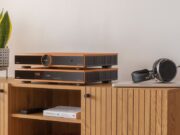





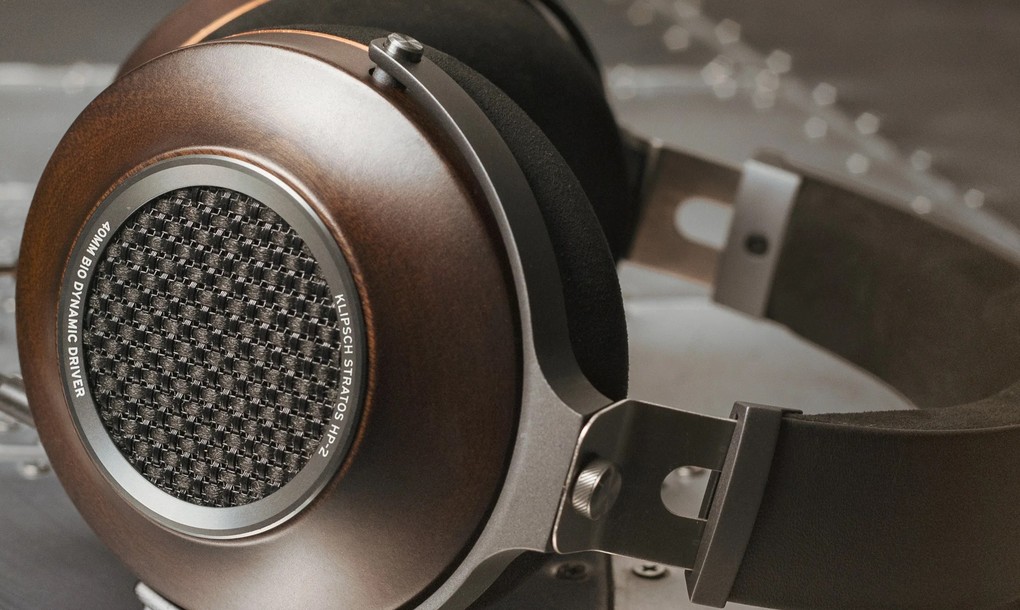
Klipsch is back in the headphone business. The company has put a price and a date on its Stratos HP-2 and HP-3: $999.99 for the closed-back HP-2 and $1,199.99 for the semi-open HP-3, both reaching US retailers in December. They are Klipsch’s first new over-ear headphones in over a decade, and they wear their loudspeaker heritage openly — real stained sapele wood earcups, copper-ring accents, machined aluminum hardware, and the woven Heritage Twitchell grille cloth. Production models make their public debut at CanJam Dallas on November 14–15, and a third model, the wireless HP-1, follows in early 2027.
What’s New
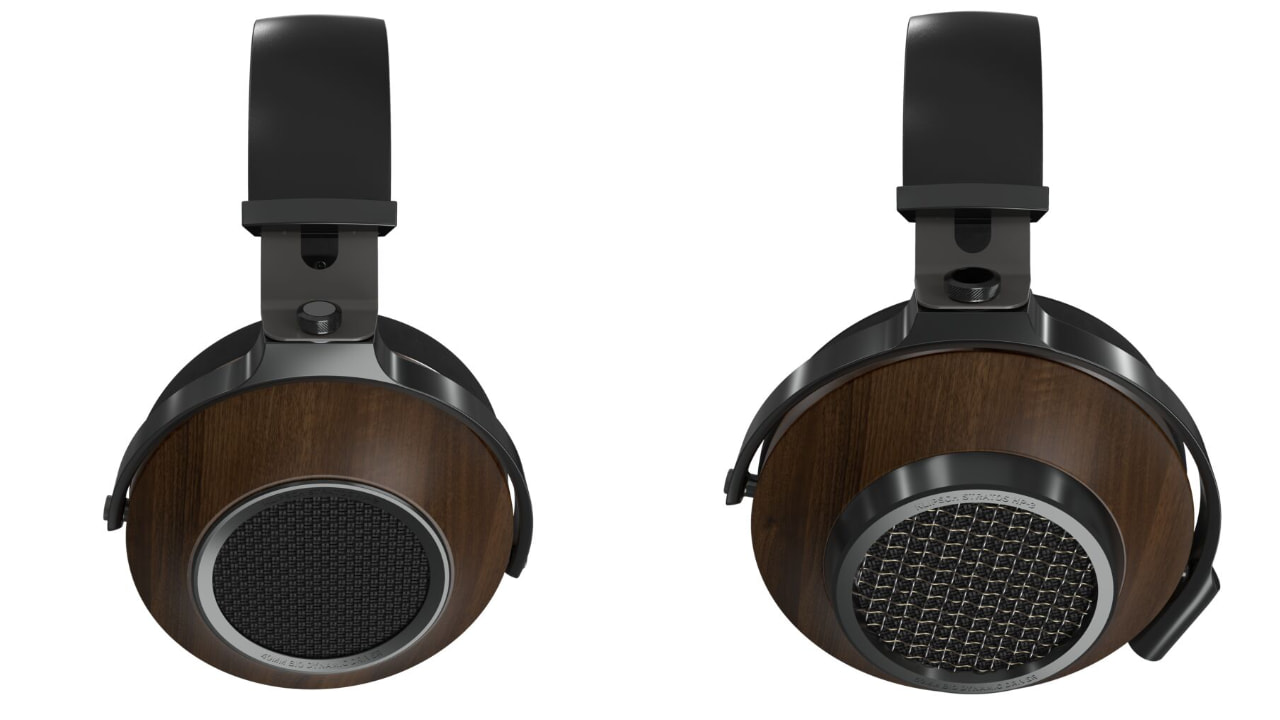
The headline is the driver. Each headphone uses a two-way coaxial array — a mid/bass driver and a tweeter sharing the same axis — instead of the single full-range driver most headphones in this price range rely on. The flagship HP-3 pairs a 50mm bio-cellulose mid/bass driver with a 10mm dynamic tweeter; Klipsch describes the result as warm, punchy bass with crisp, extended highs and low distortion. The HP-2 uses the same layout at a smaller scale, a 40mm bio-cellulose driver with the same 10mm tweeter, tuned for deep, controlled bass, with its sealed enclosure adding passive isolation that Klipsch pitches toward studio monitoring.
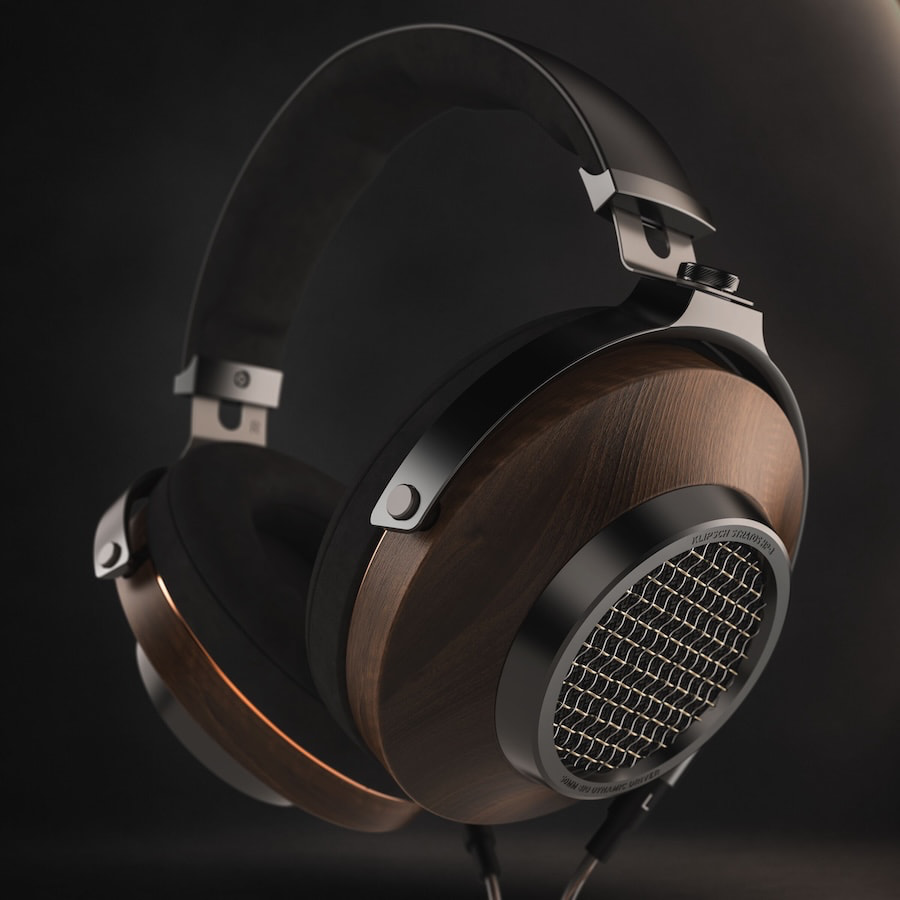
The materials do as much talking as the drivers. Both models get real stained sapele wood earcups — not a wood-look finish — with copper-ring accents, machined aluminum yokes, and protein-leather headbands. The HP-3 adds a wider cushioned headband, Alcantara trim, and perforated earcups for airflow during long sessions. Comfort gets the same attention: the headbands are lined with open-cell foam and cut away at the crown to avoid pressure points, and the microsuede earpads seal around the ear and attach magnetically, so they come off for replacement without tools.
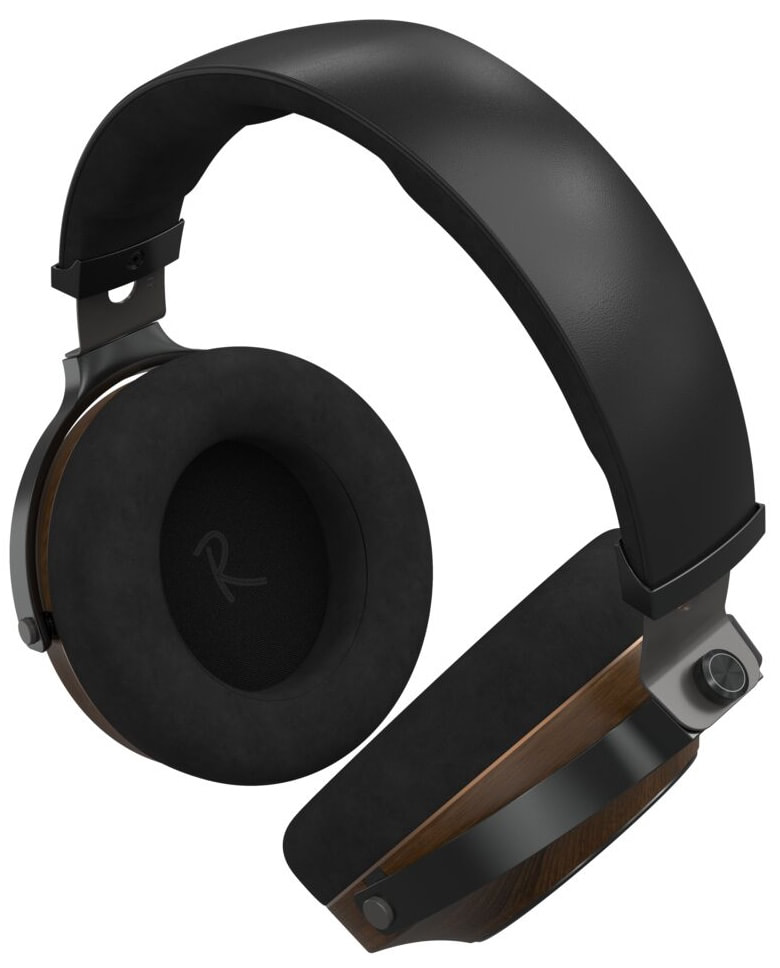
Both headphones are fully passive — no battery, no wireless, nothing to charge. Each ships with two detachable braided nylon cables, a 1.37 m balanced cable with a 4.4 mm plug and a 2.5 m unbalanced cable with a 3.5 mm plug, plus a 3.5 mm to 1/4-inch adapter. Klipsch rates the HP-2 at 380 g and 32 ohms, the HP-3 at 458 g and 24 ohms, with sensitivities of 100 dB and 102 dB — efficient enough, Klipsch says, to run from a phone up to a dedicated headphone amplifier. An optional walnut-and-copper headphone stand costs $149.99, also in December.
Context
The Stratos name is new, but the headphones are not quite. Klipsch previewed the trio at CES 2026 in January under the Atlas name, then formally announced the Atlas series on June 4, pointing at a US launch in the summer and Europe in the fall. Neither date held. The November 13 announcement finally puts prices on the two wired models, renames the line Stratos, and sets the US date as December — with CanJam Dallas this weekend as the first chance to hear production units. The third model, the wireless HP-1, stays on the sidelines until early 2027. The lineage is the 2017 Heritage HP-3, Klipsch’s last serious headphone, which also sold for $1,199 — a price the new HP-3 matches almost to the dollar.
Compared
Against its own history, the HP-3 is a careful evolution: the same $1,199 price as the 2017 Heritage HP-3, the same semi-open brief, but a two-way coaxial driver in place of the old single 52mm biodynamic unit, and a lighter 458 g build. One thing went backwards: the 2017 model shipped with a steel-rod headphone stand in the box; the Stratos stand is a $149.99 option, so the HP-3 with a stand is really $1,349.98. Outside the brand, the obvious rival is Focal’s Clear Mg, which What Hi-Fi? puts at $1,490 — an open-back magnesium-driver headphone that costs $290 more than the HP-3 and has no closed-back sibling. The HP-2, meanwhile, has less direct competition at $999.99: a closed-back, wood-and-metal headphone with a coaxial driver is an unusual combination at any price.
My Take
Paper analysis — I have not heard the Stratos HP-2 or HP-3, and no independent listening impressions or measurements of the production units exist yet. What I can say is that the engineering idea is sound: a coaxial two-way is a real attempt to fix the coherence problems single-driver headphones live with, and Klipsch has paired it with materials that justify the price on the shelf. The $1,000–$1,200 band is crowded, though, and Klipsch has been away from headphones for a decade — heritage earns attention, not a free pass. The stand going from included to $149.99 is a small but telling change. My advice is simple: hear them at CanJam if you can, and wait for independent impressions before ordering.
Who Should Watch
Heritage loudspeaker owners who want headphones that match the furniture should look first — the Auburn wood and copper will sit naturally next to a pair of Heresys. The HP-2 suits anyone who needs isolation without giving up a premium build, including studio use; the HP-3 suits two-channel listeners who want a speaker-like, spacious presentation from a headphone. If you need wireless or noise cancelling, wait for the HP-1 in early 2027. And if $1,000-plus for a headphone already feels steep, nothing here changes that — the value case rests entirely on how the coaxial driver sounds.