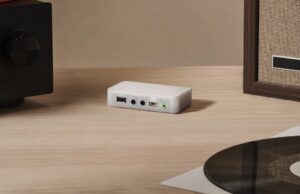



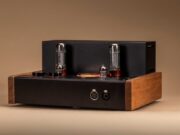


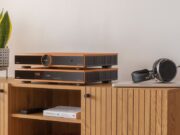
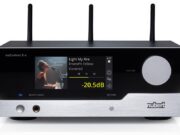


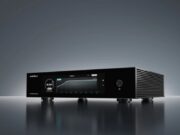









Margules has been building audio in Mexico City since before most of today’s high-end brands existed, and at Capital Audiofest 2026 the company put its first headphone system in front of an American audience. The U4Oria pairs the $5,000 Oria — a Class A OTL tube headphone amplifier with a network streamer and DAC built in — with the $3,000 U4 open-back planar headphones. Bought together, the system costs $7,000, a thousand less than the two pieces separately. US distributor B.A.D.A.S.S. ran the demonstration in Rockville, Maryland, November 13–15.
What’s New
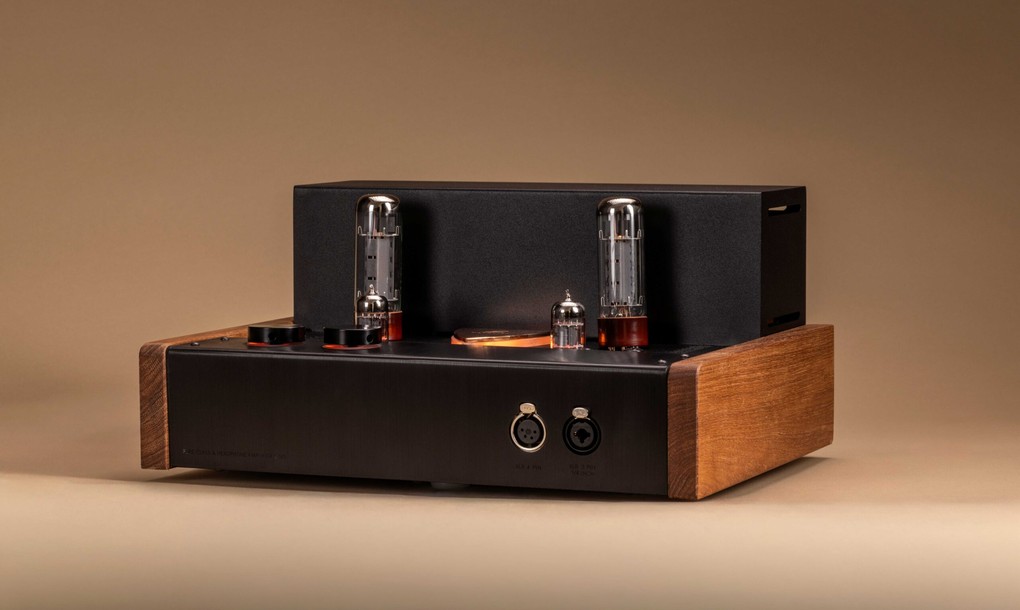
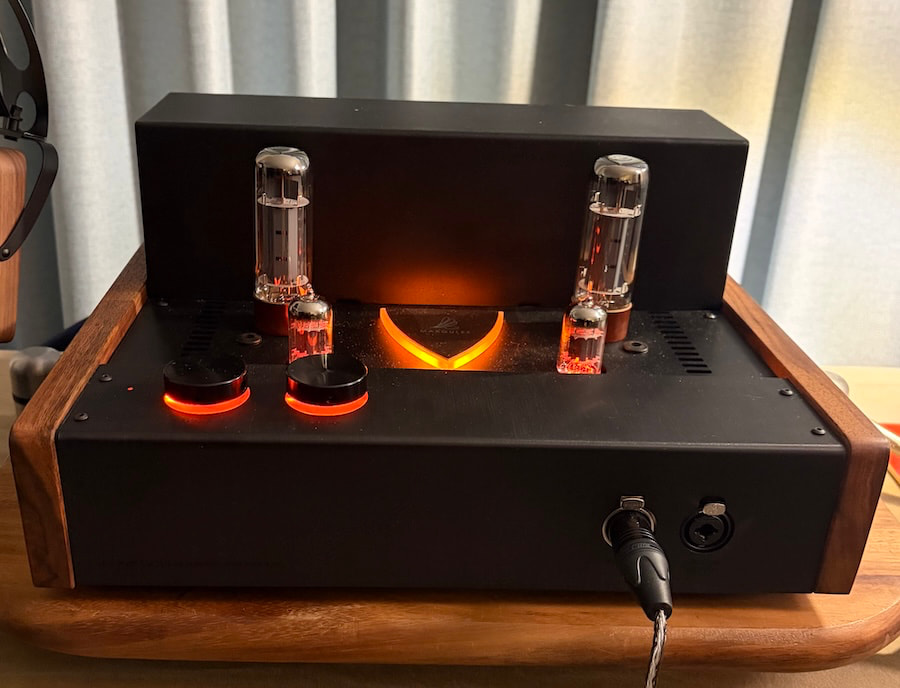
The Oria is the more unusual half. Each channel runs a dedicated EL34 output tube in pure Class A, with no output transformers and no global negative feedback, and the whole amplification stage stays in the analogue domain. That is a deliberate choice: OTL designs avoid the magnetic compromises of output transformers, but they are famously sensitive to the load they drive, and Margules publishes no output power or output impedance figure for the Oria. What the box does publish is the rest of the system: a music server derived from the company’s MS-01, running Volumio Premium with TIDAL Connect, Qobuz Connect, NAS playback, internet radio, USB playback and multi-room. The DAC is an ESS ES9038Q2M, decoding PCM to 32-bit/768 kHz and DSD512. Analogue and digital sections get independent power supplies. The front panel offers a balanced 4-pin XLR output and a 1/4-inch jack — Margules recommends the balanced output — plus an analogue aux input and a line-level output so the server can feed a separate system. Gigabit Ethernet and dual-band Wi-Fi handle the network side.
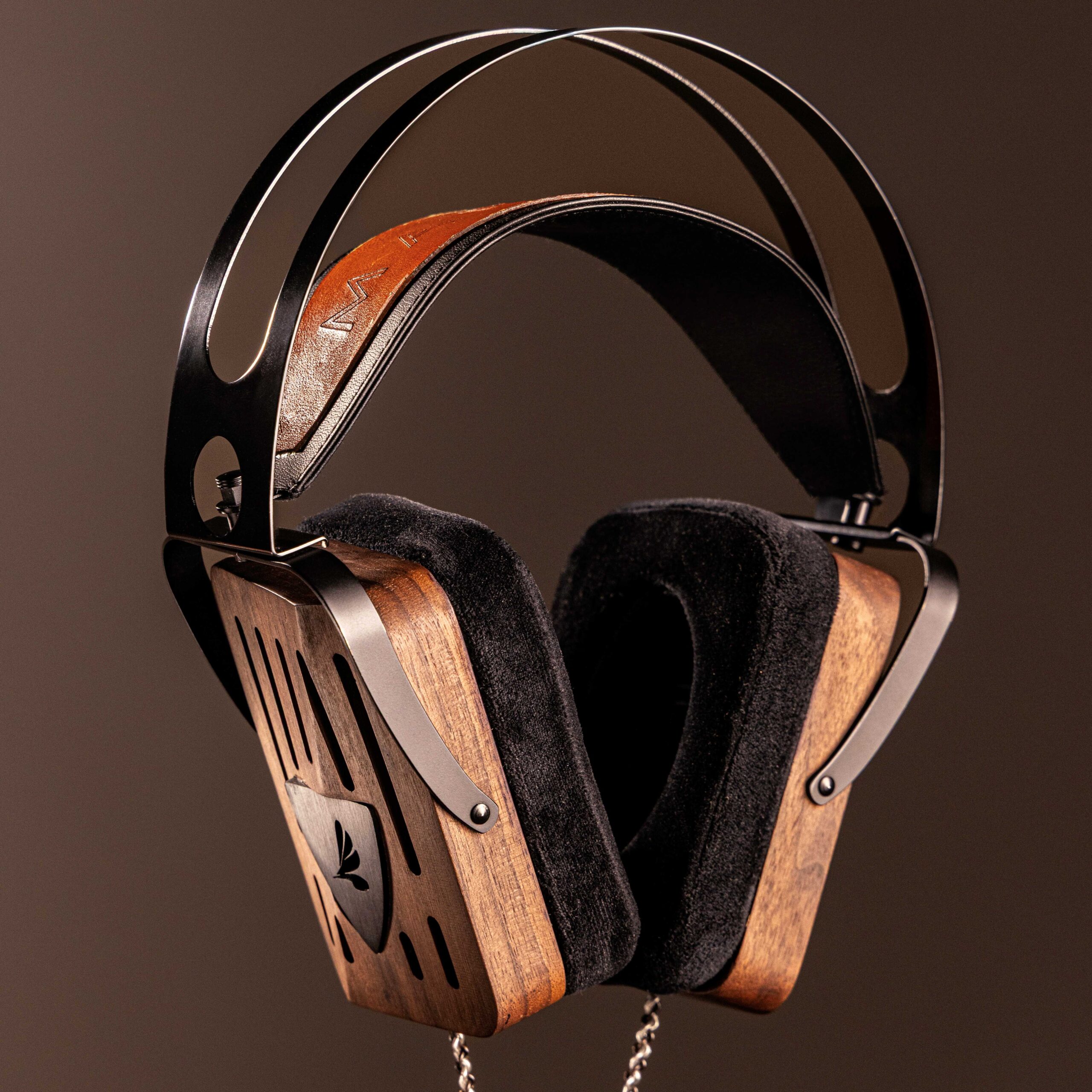
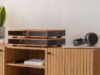
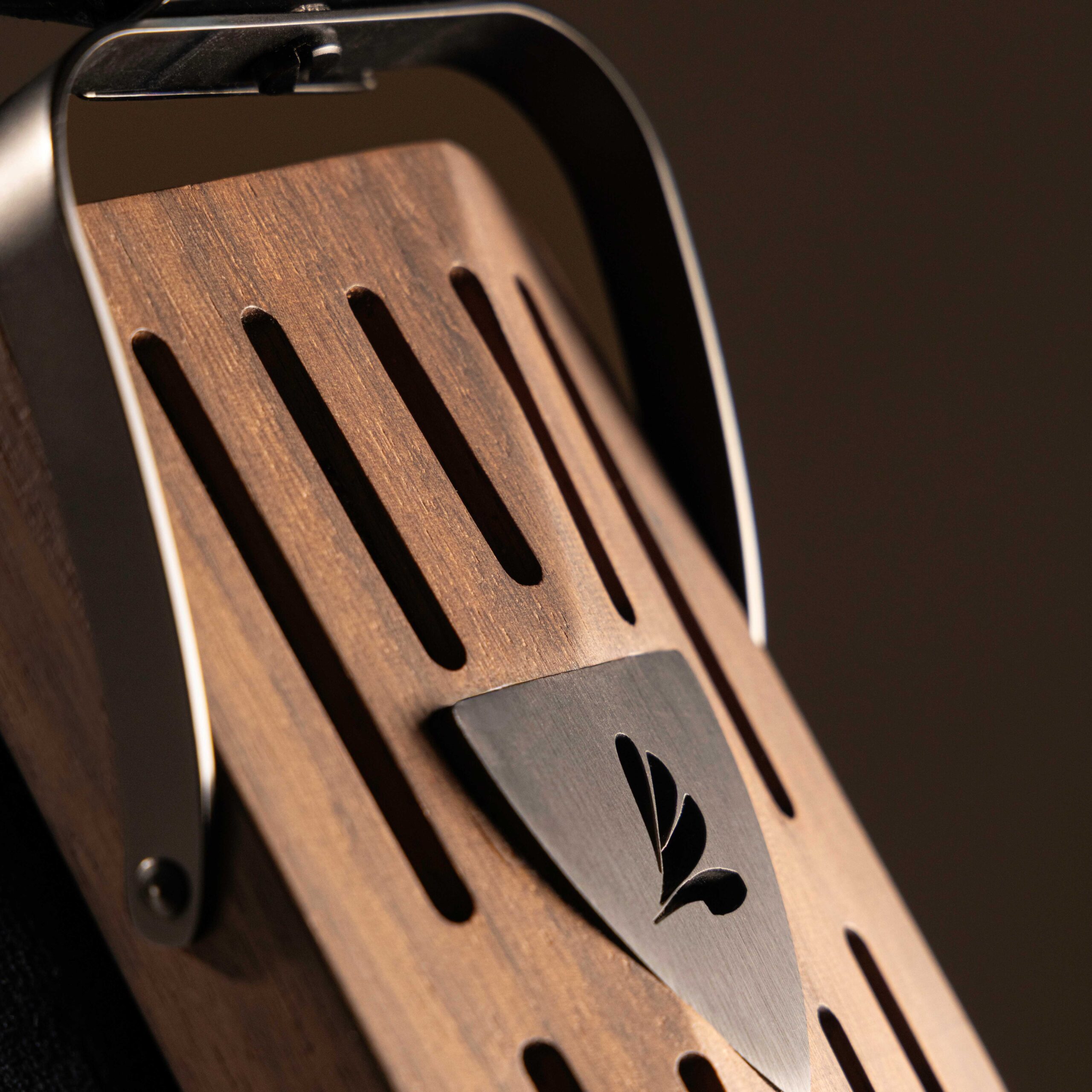
The U4 is an open-back planar built around a 70 x 95 mm driver with a 21-micron PET diaphragm and N50SH neodymium magnets. Margules quotes 32 ohms, 104 dB/1mW sensitivity, 20 Hz–30 kHz, under 0.1% THD at 100 dB, and a 5 W RMS maximum power handling, with more than 250 mW recommended. The square earcups are machined from single pieces of solid wood, hand-finished, with elongated ventilation slots and a metal shield carrying the Margules mark. The headband is a suspended leather strap, the cushions are replaceable, and the 1.5-metre OCC copper and silver balanced cable comes with a 1/4-inch adapter. Weight is 0.51 kg. Both pieces carry a five-year warranty, tubes excepted at three months.
Context
Margules is not a new name chasing a trend. The story starts in 1925, when engineer Jacob Margules arrived in Mexico and moved into the country’s electrical and radio industries; by 1927 he had founded Emporio Electrónico, which became Casa Margules. The family moved into audio manufacturing in the 1950s, building turntables, amplifiers and loudspeakers under names including Marvox. The fourth generation runs the company today in Mexico City, with Julián Margules leading development. The U4Oria is built around the company’s ANA — Aligned Neuro-Acoustics — philosophy, which puts harmonic structure, phase coherence and spatial presentation ahead of the usual scalar measurements. I take that kind of claim the same way I take any of them: as a design brief, not a result. The result is what a review has to establish, and nobody has published one yet.
Compared
For scale, the Oria’s $5,000 sits in crowded company. Onkyo’s HA-70, due in spring 2027 at $649.99, is also a balanced headphone amplifier with a modern DAC — dual ESS ES9039Q2M chips and an XMOS XU316 — at roughly an eighth of the price, which sets the bar for what the Oria’s tubes and streamer have to justify. iFi’s iCAN Phantom 1.5, at $3,749, is the do-everything flagship in this price band, driving everything up to electrostatics; the Oria costs $1,250 more and answers with streaming and a tube output stage instead. On the headphone side, Klipsch’s Stratos HP-3 sells for $1,199.99 with wooden earcups and a coaxial driver of its own — less than half the U4’s $3,000, though it is a dynamic design where the U4 is planar. None of these are the same product. The point is that $7,000 buys a lot of proven hardware, and the U4Oria has to earn its place among it.
My Take
Paper analysis — I have not heard the system. The amplifier is the more interesting half of the pair, and eCoustics, which did hear it at the show, reached the same conclusion: the U4 sounded engaging, with solid tone and a convincing sense of space, but the writer was not ready to place it beside the Meze ARTA or the HiFiMAN HE600 and HE6 Remastered on a brief demonstration. That is honest, and it is also the right note of caution for a $3,000 headphone with no published measurements. The open technical question is the OTL output stage. A 32-ohm, 104 dB headphone is an easy load on paper, and Margules clearly engineered the pair as a system, but OTL amplifiers live or die by how they behave with loads they were not tuned for, and Margules gives no output power or impedance figure to judge by. Until someone measures the Oria with several familiar headphones, the system price is a statement of intent, not a verdict.
Who Should Watch
Watch this if you want a one-box tube desktop system and the idea of a streamer, DAC and OTL amplifier in a single wooden-sided chassis appeals to you, or if the Mexican handmade story matters to you as much as the spec sheet. Wait if you need a shipping date — none has been published — or if you buy on measurements rather than first impressions. The U4Oria is a debut, not a review, and the next step is a proper audition.