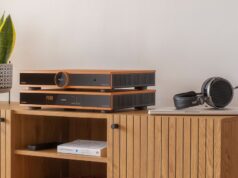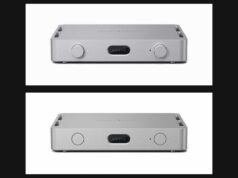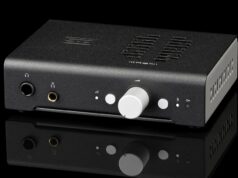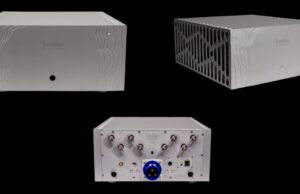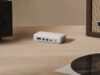




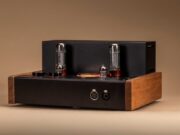


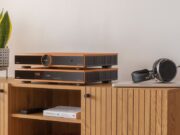
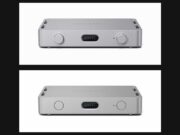
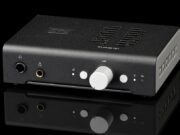





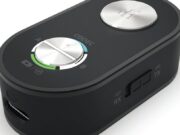


The Schiit Mani has been the default answer to “what phono preamp should I buy?” since 2014, and the Mani 2 held that job for five years. On October 21, Schiit introduced the Mani 3, the third generation of its entry-level phono stage. It costs $149, exactly the same as the Mani 2 it replaces. The headline change is not a circuit or a specification. It is where the controls live.
What’s New
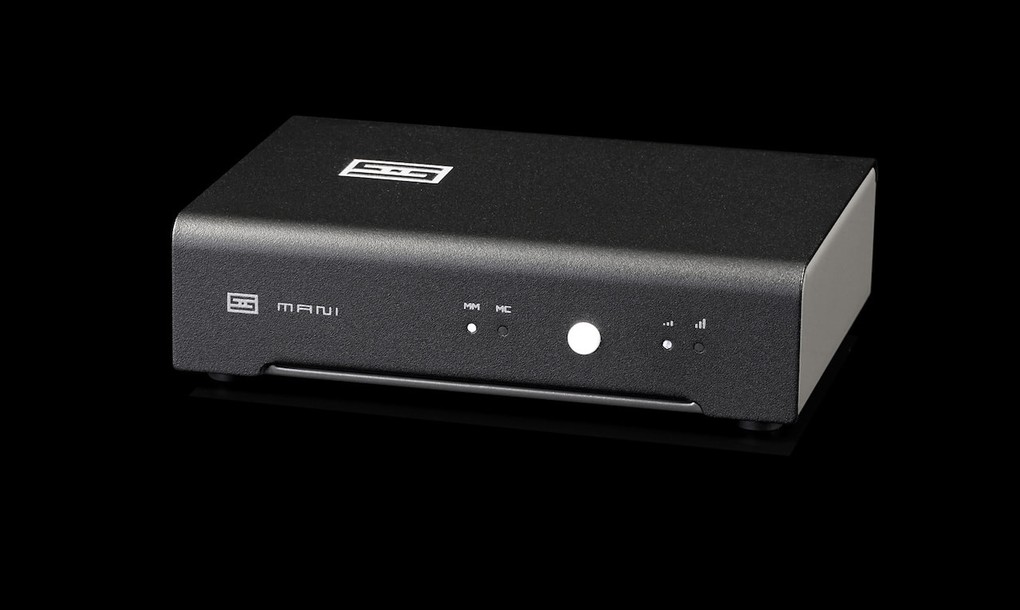
On the Mani 2, gain and MM/MC loading were set with switches on the bottom of the unit. Once the preamp was cabled into a system, changing anything meant turning it over. The Mani 3 moves the everyday controls to the front panel: a microprocessor-controlled pushbutton steps through four gain settings, 30, 40, 50 and 60 dB, and a long press flips between moving magnet and moving coil. Four LEDs show where you are. The standard MM setting is 47k ohms with 50 pF; the standard MC setting is 100 ohms with 50 pF.
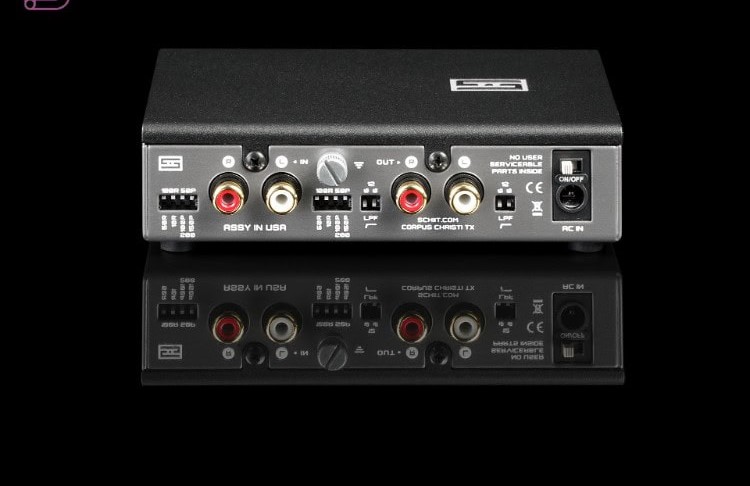
The fiddlier adjustments stay on the rear, where they belong. DIP switches set MC loading to 10, 50 or 100 ohms and capacitance to 50, 100, 150 or 200 pF, and a 15 Hz rumble filter offers 6 or 12 dB per octave and can be bypassed. The Mani 3 supports moving-magnet, moving-iron and moving-coil cartridges.
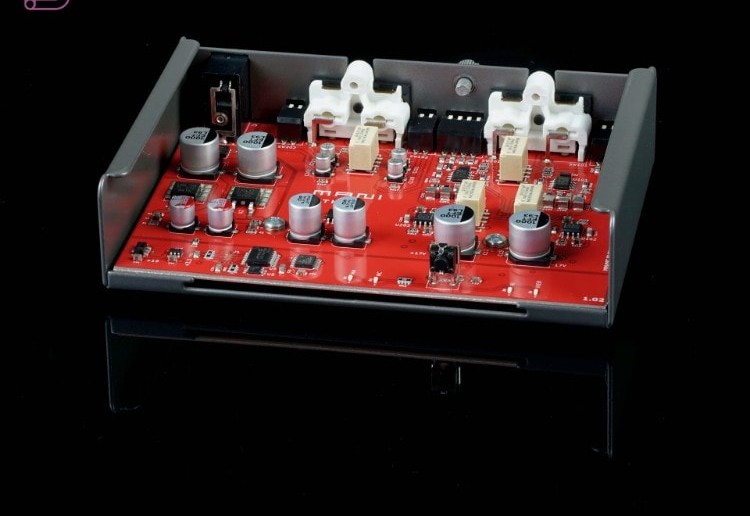
Inside, Schiit has replaced the Mani 2’s Texas Instruments OPA1612 op-amps with Analog Devices AD4898 devices, feeding a passive RIAA network in a fully DC-coupled circuit with an OP07 DC servo. Schiit claims RIAA accuracy within plus or minus 0.15 dB from 20 Hz to 20 kHz, against the Mani 2’s plus or minus 0.2 dB, and a signal-to-noise ratio above 100 dB at the 40 dB gain setting most MM cartridges will use, falling to 87 dB at 60 dB for low-output MC. Power comes from a linear supply with an external 16 VAC transformer, on dual-filtered, regulated plus or minus 17.5 V rails.
The unit is made in Corpus Christi, Texas, on Schiit’s own surface-mount production line, in a steel and aluminium enclosure measuring 5 by 3.5 by 1.25 inches. It carries a three-year warranty. Black is in stock now at schiit.com; the silver finish is listed but not yet available.
Context
The Mani’s history is a short lesson in how Schiit does entry level. The original Mani appeared in 2014 at $129. The Mani 2 arrived in 2022 with a passive RIAA network and a quieter circuit, and ran for five years. The Mani 3 is the third generation, and the pattern holds: same price as the model it replaces, better measured performance, and one clear usability fix.
That fix is the whole story here. The bottom-mounted switches were the one complaint that followed the Mani 2 everywhere. Schiit co-founder Jason Stoddard’s own guide to the new gain steps tells you how the company sees it: 40 dB for most MM cartridges, 60 dB for most MC, 30 dB if you own a Decca, 50 dB for anything in between.
Compared
Against the Mani 2, the Mani 3 is a straight upgrade at no extra cost: front-panel switching, revised electronics, tighter RIAA accuracy, and a three-year warranty where the Mani 2 carried two. If the bottom switches never bothered you, the sonic case for upgrading rests entirely on the new op-amps and the improved noise figures, which are manufacturer claims I have not been able to verify independently.
Against the wider $149 class, the Mani 3’s advantage is flexibility. Most phono stages at this price make you choose between MM and MC, or they bury cartridge loading on the back and expect you to set it once and forget it. The Mani 3 covers MM, MI and MC, switches between them from the front, and still leaves the fine loading adjustments available for cartridges that need them. That is an unusual amount of control for the money, and it is the reason the Mani has stayed the default recommendation for a decade. Onkyo’s new Muse Y-50 takes a different route to the same problem, building an MM/MC phono stage into a full integrated amplifier.
My Take
This is a paper analysis. I have not heard the Mani 3, and no independent hands-on review has appeared yet, so I will not claim it sounds better than the Mani 2. What I can say is that the change Schiit made is the right one: a front-panel button is a small thing that fixes a daily annoyance, and holding the price at $149 while improving the circuit is the opposite of the usual new-model tax.
Two things worth knowing before you order. The silver finish is not in stock yet, so if you want silver, you will wait. And Schiit takes returns within 15 days less a 15 percent restocking fee, so a home trial is not free.
Who Should Watch
If you are buying your first phono stage, or you own a turntable and a drawer of MM and MC cartridges, the Mani 3 is the obvious place to start at $149. If you already own a Mani 2 and the bottom switches never annoyed you, there is no urgency to change. If they did annoy you, Schiit just fixed your complaint and charged you nothing for it.