
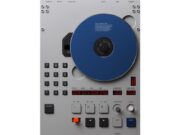

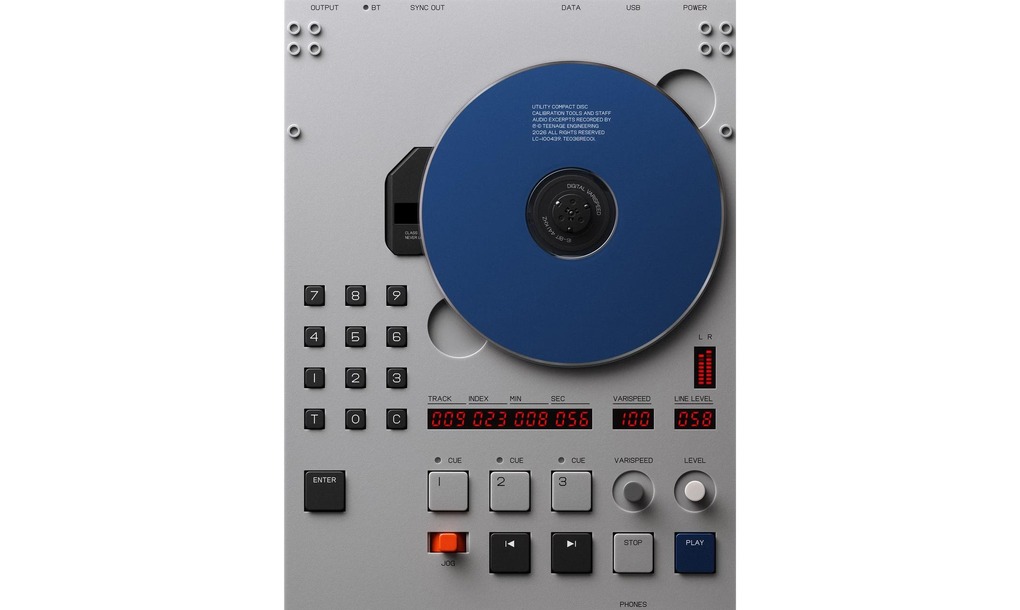
Teenage Engineering has made its first CD player, and it looks like nothing else on the shelf. The EP/BC-1, announced on November 20, puts the disc on top of the unit, out in the open, spinning like a record on a miniature turntable. It costs $329 and is available to order now. It is also the first product in a new Broadcast Series, which suggests more is coming. I have not heard it, and nobody outside TE has measured it, so this is a paper read of the announcement, not a verdict on the sound. On paper, though, the BC-1 is aimed somewhere unusual: it is a CD player built for DJs and sampler owners as much as for listeners.
What’s New
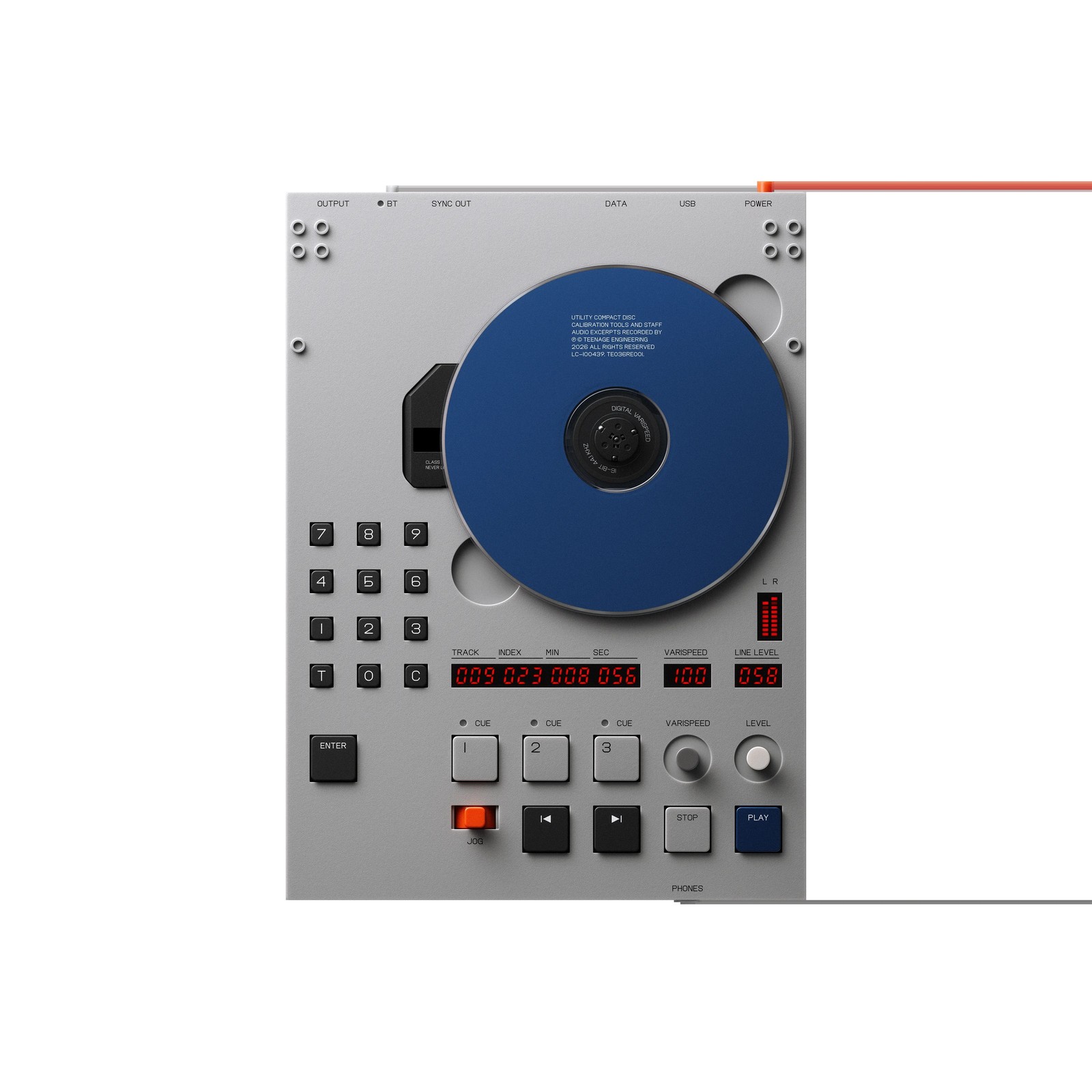
The headline feature is varispeed. A dedicated dial speeds a track up or slows it down across a 50 to 150 percent range, with time stretch, so the pitch holds while the tempo moves. Built-in beat detection reads the tempo of the disc and sends it out through a SYNC OUT port, which is the part that makes this a DJ tool rather than a novelty: two BC-1s and a mixer should, in principle, stay in time with each other. Three cue buttons, a jog wheel, and a 0 to 9 numeric keypad sit alongside red LED displays for track, index and timecode, plus L/R level meters.
The BC-1 also rips. Plug in a USB drive and it copies audio CDs as 44.1 kHz/16-bit WAV files, and it plays MP3 data discs as well as standard audio CDs. Output options cover stereo line out, a headphone jack, USB 2.0 digital audio out, and Bluetooth 5.0 with Auracast, so one player can feed several wireless speakers at once. A built-in rechargeable battery (3.7 V, 2000 mAh) charges over USB-C, which makes the whole thing portable, although TE has not published a battery-life figure. A starter CD comes in the box. The dock kit and cables are sold separately.
Context
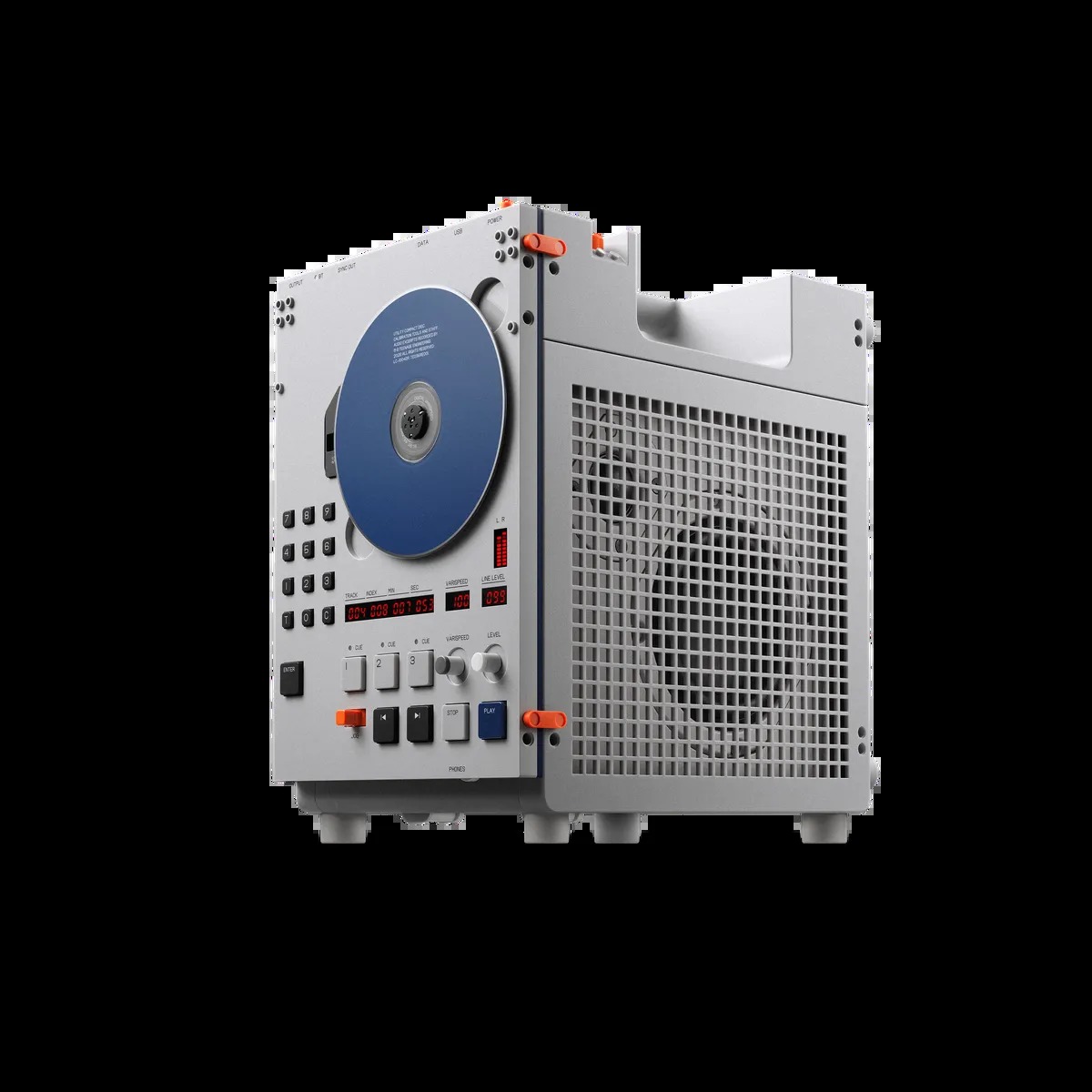
The BC-1 arrives at a moment when the CD is enjoying a small second act, and TE has timed its entry to the company’s own ecosystem rather than to the hi-fi market. The unit shares the footprint of the K.O. II groove machine from 2023, and clips on the sides let it dock with the EP-35 portable speaker and the K.O.-AMP 35, building a stack of matching gray boxes. Word of the player got out about a week early — Gearnews notes it leaked on November 12 — but the official announcement still landed as a surprise, because nobody expected TE’s first CD player to be a DJ deck in disguise.
The Broadcast Series name matters here. TE has not said what follows, but a series implies a family: more broadcast-flavored boxes that clip together, in the same way the EP series grew from the K.O. II into a whole shelf of pocket instruments. The BC-1 is the opening move, and its $329 price sits squarely in TE territory — expensive for what the spec sheet shows, cheap for the design and the badge.
Compared
Against a normal portable CD player, the BC-1 is in a different league of ambition and price. The FiiO DM11, at $119, is the closest thing I have covered: a round portable player that also rips discs to digital files. It does the archival job for a third of the money, but it has no varispeed, no beat detection, no cue buttons and no sync output. If ripping a CD collection is the whole job, the FiiO is the rational buy.
Against a traditional hi-fi CD player, the comparison runs the other way. Audiolab’s new 3000CD costs £449 and is a proper rack component with a built-in ESS Sabre DAC, analog and digital outputs, and a design brief that starts and ends with playing a disc well in a living room. The BC-1 publishes no DAC details at all, and its brief is performance, not reference playback. Anyone shopping for a CD player to sit under an amplifier should look at the Audiolab first. The BC-1 only makes sense if the varispeed dial and the sync output are features you will actually use — that is, if you DJ, or you own a K.O. II and want your CD collection inside that workflow.
My Take
Paper analysis — I have not used or heard the EP/BC-1. What TE has done here is turn the CD into a performance object. The exposed disc is the whole idea: a CD player you watch as much as listen to, with the controls of a sampler and the tempo tools of a DJ deck. The varispeed range and the beat-sync output are real, useful features, not decoration, and ripping to USB gives the format a second life as a source for samplers. The honest problems are the ones TE has not answered yet: no DAC information, no battery-life figure, and $329 for a player whose sound quality is entirely unproven. I like the concept a lot and I would not buy one to find out how it sounds. If the Broadcast Series grows into a proper family, this first box may look like a bargain in hindsight. On its own, it is a beautifully made, narrowly aimed object that knows exactly who it is for.
Who Should Watch
K.O. II owners should pay attention first: the BC-1 is built to their footprint, and ripping CDs straight to WAV is a direct feed into a sampler workflow. DJs with a CD collection, or anyone running two decks and a mixer, should look at the varispeed and sync output. TE collectors will want one regardless. Everyone else — anyone who wants a CD player for a hi-fi rack, or a cheap way to rip a shelf of discs — should spend less on a conventional player and wait for independent measurements before taking the BC-1 seriously as a listening device.