



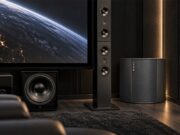

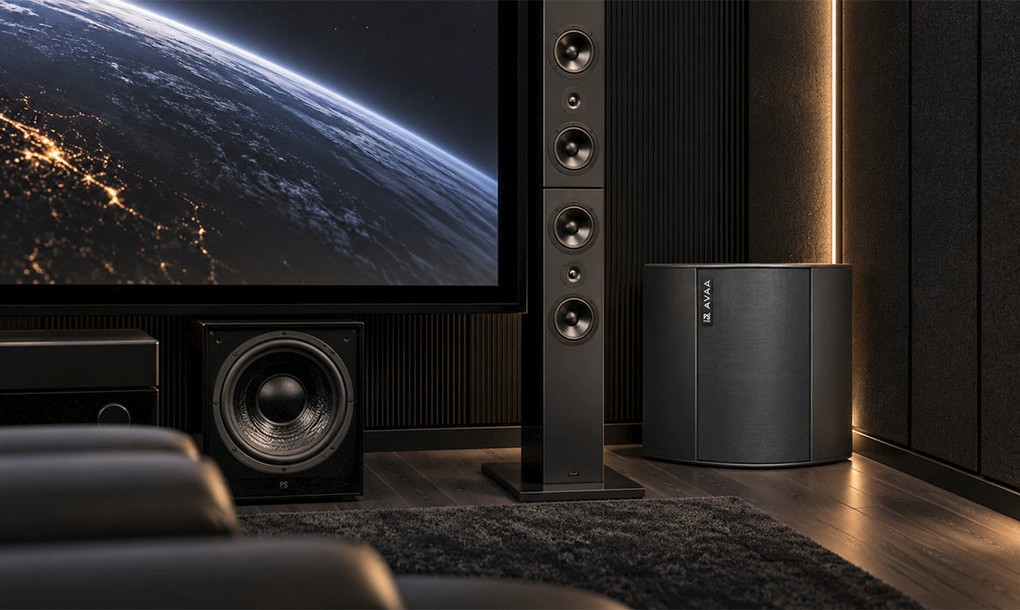
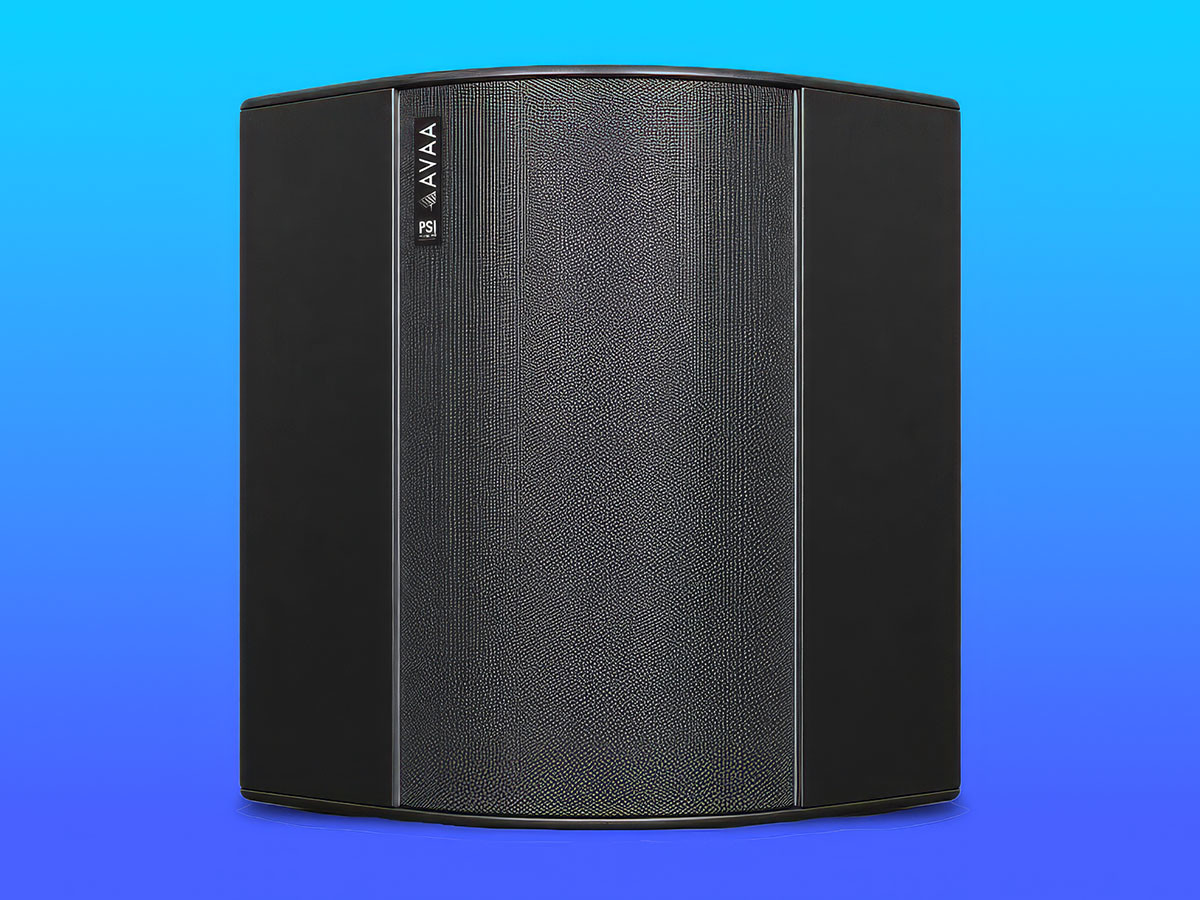
PSI Audio has announced the AVAA C225, a high-power active bass trap built for home cinemas, studios and listening rooms that run at serious volume. It costs €6,999 per unit in Europe and A$11,999 in Australia; US and UK pricing and a shipping date are still to be confirmed. The headline numbers: two 10-inch membranes driven by a 300W amplifier, absorption from 12 Hz to 130 Hz at up to 135 dB SPL — with no calibration, no tuning and no connection to your audio system.
What’s New
AVAA stands for Active Velocity Acoustic Absorber. A pressure sensor monitors low-frequency pressure around the unit, and the active control system drives the two membranes to soak up excess bass energy. The key distinction: the C225 is not a subwoofer and does not work by phase cancellation — it adds no energy to the room, it only absorbs. PSI calls it the acoustic equivalent of opening a window that lets modal energy escape.
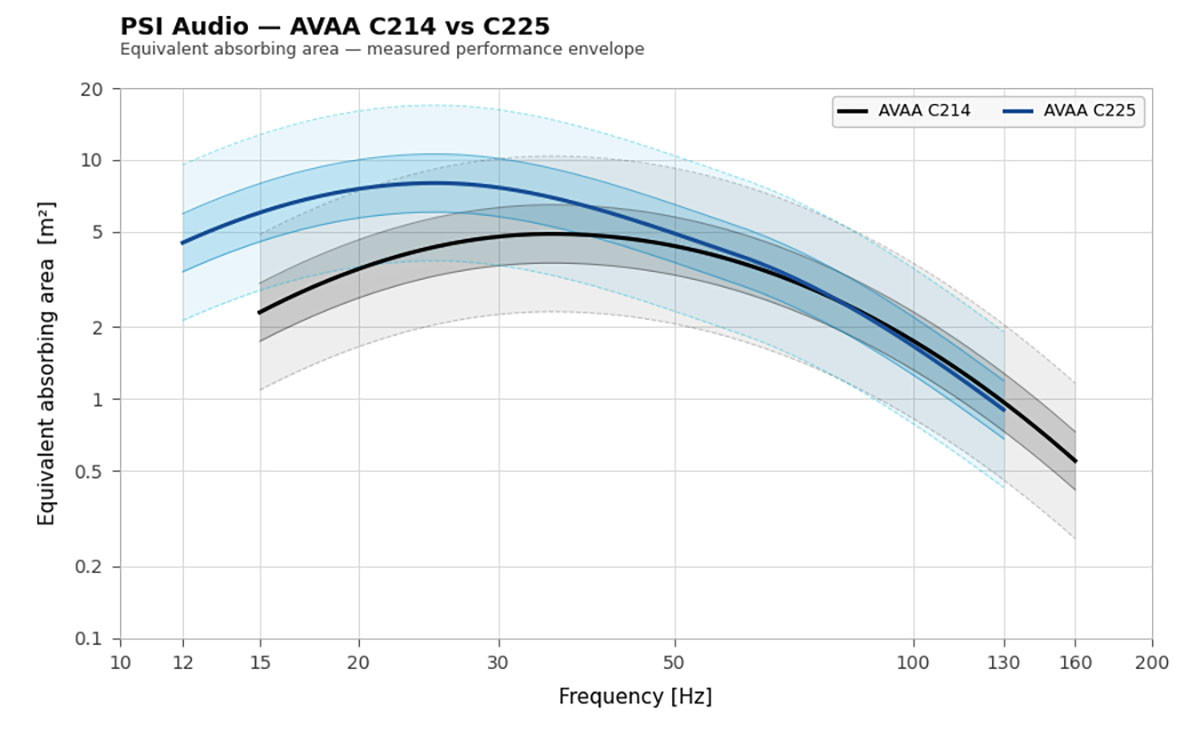
It works from 12 Hz to 130 Hz at levels up to 135 dB SPL. PSI’s own measured envelope puts the equivalent absorbing area at a peak of near 8 m² around 30 Hz, roughly twice the C214’s figure, and the company claims absorption comparable to a porous absorber 40 times its size. Those are the manufacturer’s own numbers — more on that below.
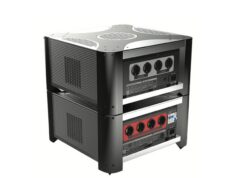
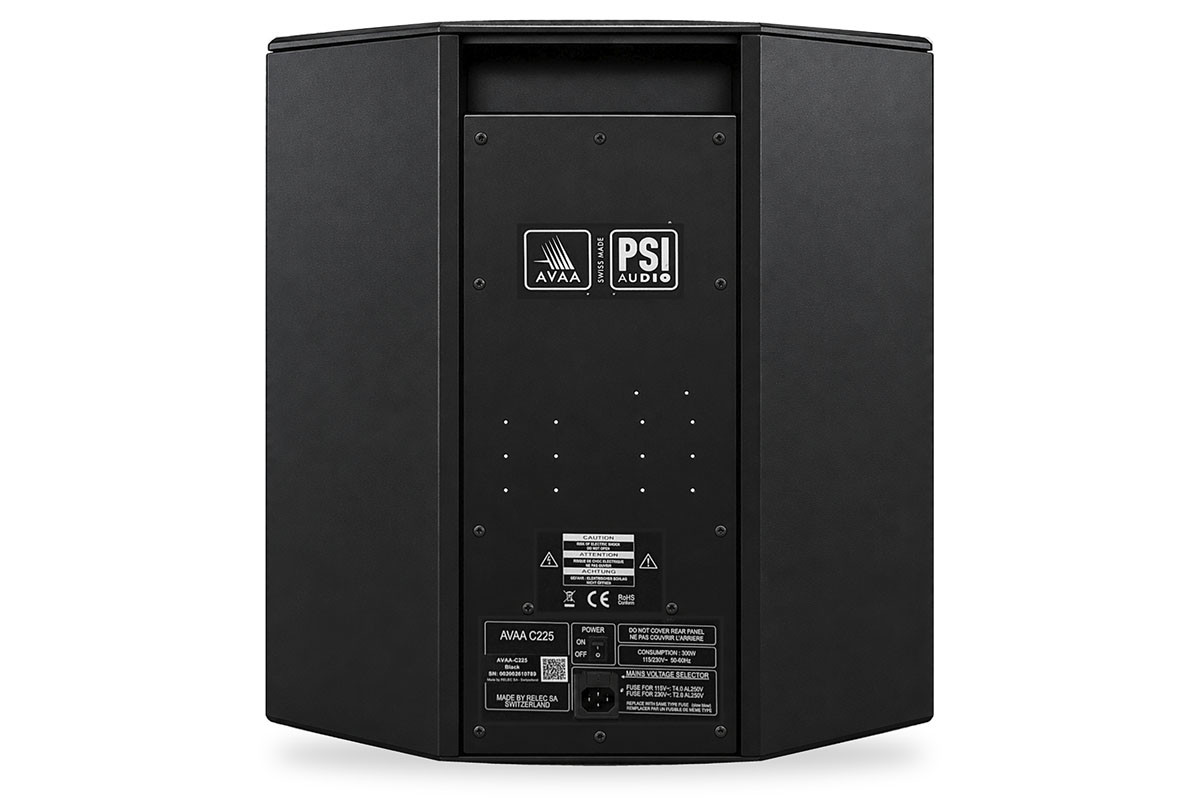
In practice it asks little: no calibration, no tuning to specific frequencies. An app for iOS and Android controls units individually or as a group, and placement is the one decision that matters — PSI recommends corners and solid walls, where bass pressure builds up. The black cabinet measures 780 × 570 × 570 mm and weighs 33 kg, and every unit is made in Switzerland and calibrated in PSI’s own anechoic chamber.
| Specification | AVAA C225 |
|---|---|
| Type | Active bass trap (Active Velocity Acoustic Absorber) |
| Drivers | 2 × 10-inch membranes |
| Amplifier | 300W |
| Operating range | 12–130 Hz |
| Max operating SPL | 135 dB |
| Equivalent absorbing area | ~8 m² peak, around 30 Hz (per PSI) |
| Dimensions | 780 × 570 × 570 mm |
| Weight | 33 kg |
| Price | €6,999 / A$11,999 per unit; US & UK TBC |
Context
The C225 is the third generation of an idea PSI introduced with the AVAA C20 in 2016. That first model was all-analog; the C214 followed in 2023 with digital control, a smaller footprint and app operation. The C225 expands the family upward, for rooms where low-frequency energy exceeds the headroom of the existing models. PSI’s parent, Relec SA, has made professional audio in Switzerland for over 45 years.
The problem is familiar to anyone who has set up a serious system in a real room: room modes reinforce certain bass frequencies and stretch them in time, so a kick drum that should hit and stop turns into an indistinct hum. The usual fixes all come with a catch — porous absorbers need an absurd volume of material to work at 12 Hz, membrane and Helmholtz resonators cover narrow bands and need tuning, and DSP room correction works on the signal rather than the room. The C225’s pitch: treat the room itself, actively, from one 78 cm box in the corner.
Compared to Predecessors / Current Rivals
Against the C214, the trade is clear. The C225 digs 3 Hz deeper and handles 20 dB more level, but gives up the top of the C214’s range:
| AVAA C214 | AVAA C225 | |
|---|---|---|
| Introduced | 2023 | 2026 |
| Operating range | 15–160 Hz | 12–130 Hz |
| Max SPL | 115 dB | 135 dB |
| Equivalent absorbing area peak | ~4 m² (roughly half the C225) | ~8 m² (around 30 Hz) |
| Control | App | App |
For a home cinema with large subwoofers, that is the right trade — the troublesome energy lives at the bottom. For a two-channel room at normal levels, the C214’s wider 15–160 Hz coverage may matter more.
Direct rivals? None to name — PSI holds the patent, and no other maker sells an active bass trap of this kind. The alternatives are passive: porous absorption, which works but needs a volume of material no living room can spare at 12 Hz; tuned membrane or Helmholtz traps, effective but narrow-band and in need of tuning; and DSP room correction, which fixes the signal, not the room.
My Take
To be clear: this is paper analysis — no independent measurements of the C225 exist yet, and I have not heard one. On paper, it looks like the right product for a real problem. The AVAA approach has a decade of use behind it, and the C225 is built around the one thing the C214 could not do: keep absorbing when the room gets genuinely loud.
What concerns me is mostly practical. The price is per unit, and a large room will want more than one — the bill climbs fast, with no US price or shipping date yet. At 33 kg and 78 cm tall, it is a piece of furniture you plan a room around. And the 130 Hz ceiling means everything above that is someone else’s problem.
The number I most want verified is the absorption envelope: PSI’s 8 m² peak is the company’s own data, and the “40 times a porous absorber” comparison is a manufacturer claim. Until an independent lab measures a C225 in a real room, I would treat those figures as intent, not fact. Before spending this kind of money, I would wait for independent measurements, real-room decay plots and US pricing.
Who Should Watch This
If you run a home cinema with serious subwoofers and the bass never quite stops when it should, this is the first product aimed squarely at your problem — put it on the list and wait for US pricing and a ship date. The same goes for studios and high-SPL listening rooms. If your room plays at normal levels, the C214 is the established option with the wider range and the track record. Remember the price is per unit: work out how many your room needs first.