






“What is the best IEM under $100?” It is the question I see more than any other in this hobby — and the one with the least useful short answer. There is no single best in-ear monitor under a hundred dollars. There is a best one for your ears, your music, and the amount you actually want to spend — and those three things point at different models.
So this is not a ranked list. It is a decision. I checked every price below against a live store listing — Linsoul and Shenzhen Audio — on November 21, 2026, because prices in this bracket move monthly and a stale price is worse than no price.
How to Choose
Start with fit, not sound. An in-ear monitor only works when it seals: a loose seal drains the bass out of any set, and no amount of money fixes a shell that does not sit right in your ear. Try every tip in the box before you judge a set — silicone, foam, small, large. The right tip is often the difference between “thin and disappointing” and “oh, there it is.”
Then decide what you want the sound to do: warmth and weight for long sessions, a flat and honest presentation, or energy and detail for games and busy mixes. That answer narrows the field more than any spec sheet — and ignore driver count while you are at it. A single dynamic driver can outplay a five-driver hybrid when the tuning is better.
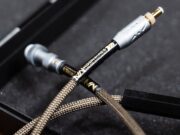
One more thing: none of these needs a dedicated amplifier. The Zero:2 is 32 ohms, the Hexa 20.5 ohms, the Pure 13.8 ohms, and all of them run loud from a phone or a cheap dongle. Put the money into the earphones. If you are still unsure, I covered it in my guide to headphone amplifiers.
The Picks by Use Case
Your first IEM: 7Hz x Crinacle Zero:2
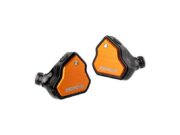
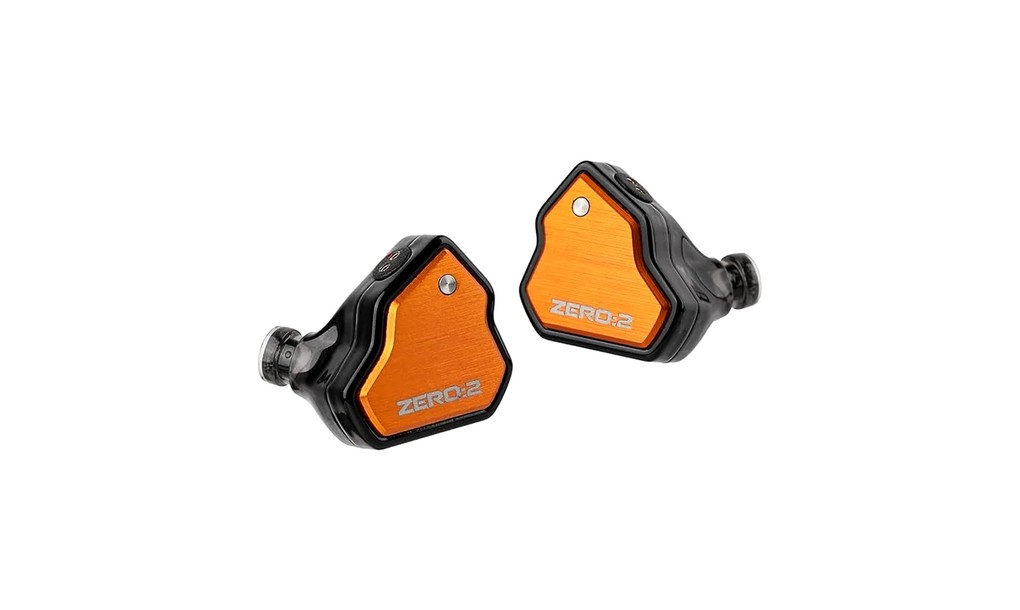
If you have never owned a proper in-ear monitor, start here. The Zero:2 costs about $21 at Linsoul — $21.24 for the plain 3.5 mm version — built around a single 10 mm dual-cavity dynamic driver, tuned to a mild V-shape with about 3 dB more bass than the original Zero. That extra bass is the point: it sounds full and fun on a phone, with no amplifier and no fuss, and the detachable cable means a broken cable is a quick fix, not a dead earphone. It comes in silver, orange, blue and pink.
The alternative is the Moondrop Chu 2, about $23: a single 10 mm dynamic driver in a zinc alloy shell with a brass nozzle, warm and full, and the default beginner recommendation since 2023. I would take the Zero:2 for its livelier tuning and better cable; take the Chu 2 for the metal shell and the warmer sound.
Vocals and neutral listening: TRUTHEAR Hexa or Pure
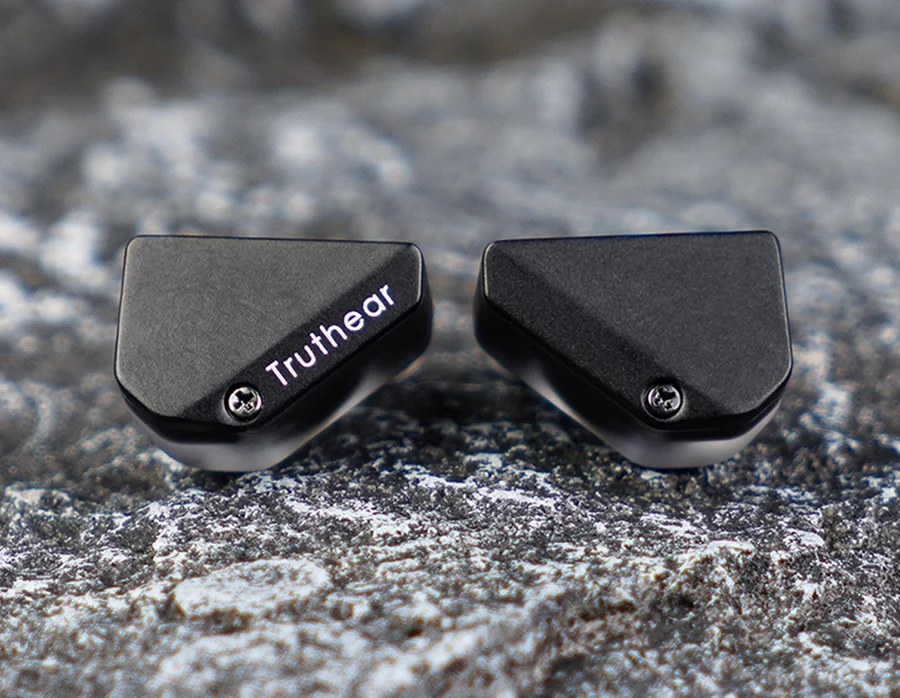
At the top of the budget sits an awkward choice: Truthear sells two sets at the same price that do the same job two ways. The Hexa launched in November 2022 at $79.99 and now lists at $89.99 — Shenzhen Audio regularly has it at $76.49. It is a 1DD + 3BA hybrid, one 10 mm dynamic driver plus three balanced armatures, in a small resin shell with an aluminum faceplate, tuned neutral with a clean, vocal-forward midrange. If you want to hear what is in the recording and nothing extra, this is the set.
The Pure is the Hexa’s successor, launched in June 2025 at the same $89.99. It keeps the same one-dynamic, three-armature recipe — 13.8 ohms, 124 dB/Vrms — retuned warmer, with a fuller midrange, a more relaxed top end, and a better coaxial cable. The Hexa is still on sale, so this is not old versus new: the Hexa for critical listening, the Pure for long sessions when you want the sound to stay out of the way.
Gaming and detail: Simgot EW300 and KZ ZS10 PRO 2
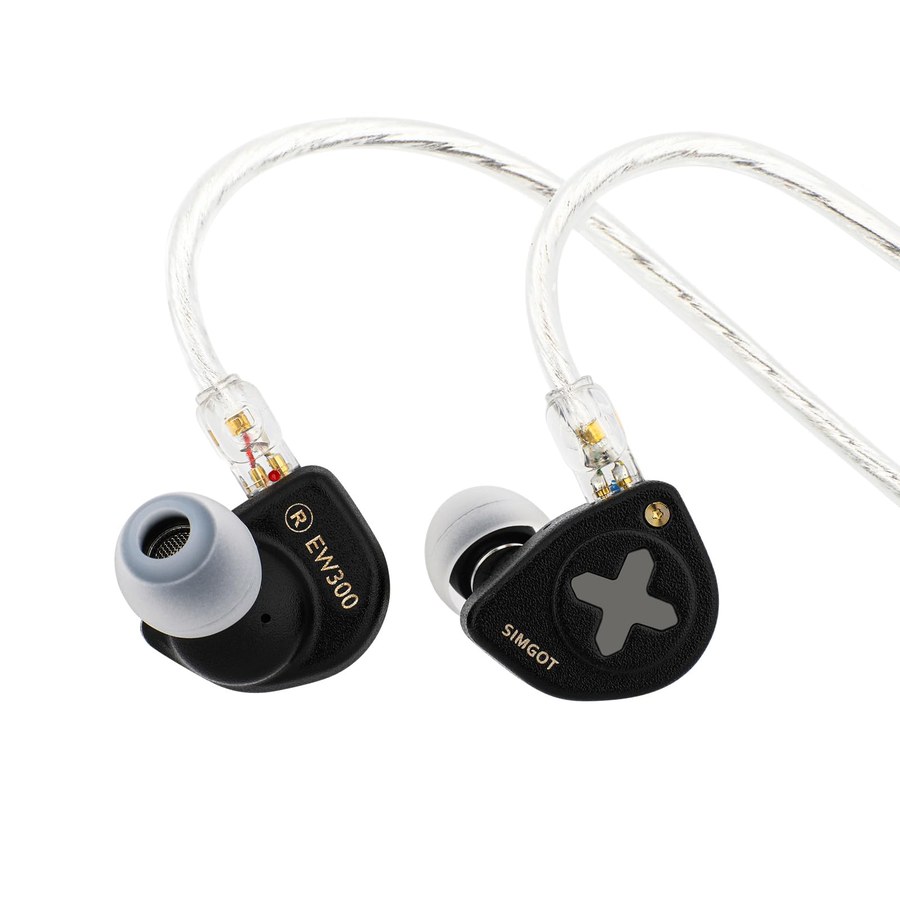
The EW300 is the most ambitious engineering in this group, about $70 for the standard edition. Each side packs three driver types — a 10 mm ceramic-composite dynamic driver, a 6 mm planar magnetic driver, and a piezoelectric ceramic driver — in a small all-metal shell with two swappable nozzles, one of them a dedicated game mode. The tuning is warm-leaning and mildly U-shaped, and that combination is why it shows up in gaming recommendations as well as music ones.
The KZ ZS10 PRO 2 is the cheaper, sharper alternative, from $54.99 at Linsoul: a 1DD + 4BA hybrid with a four-level tuning switch and a three-way crossover, tuned neutral with a lean, bright character. Against the warm EW300, it is the detail-first set — less bass weight, more edge and separation. The switches tilt it, but they will not turn it into a different earphone.
Bass and calls: TRUTHEAR x Crinacle Zero:BLUE2
The BLUE2 is the newest member of Truthear’s Zero line, launched in March 2025 at $64.99 and now about $55 on sale at Shenzhen Audio. Two dynamic drivers per side — 10 mm and 7.8 mm — tuned closer to the Harman 2019 target than the original Zero, with the most sub-bass of any set in the line. It is also the one to buy if you take calls: the mic-cable version is about $59. If you want the Harman target explained, I covered it in my Harman curve guide.
One warning: there are two different “Zero” lines, and they are not related. The 7Hz Zero and Zero:2 are one family; the Truthear Zero, Zero:RED and Zero:BLUE2 are another. Check the brand on the listing, not just the name, or you will buy the wrong earphone.
Build and refinement: Moondrop Aria 2 and Simgot EA500 LM
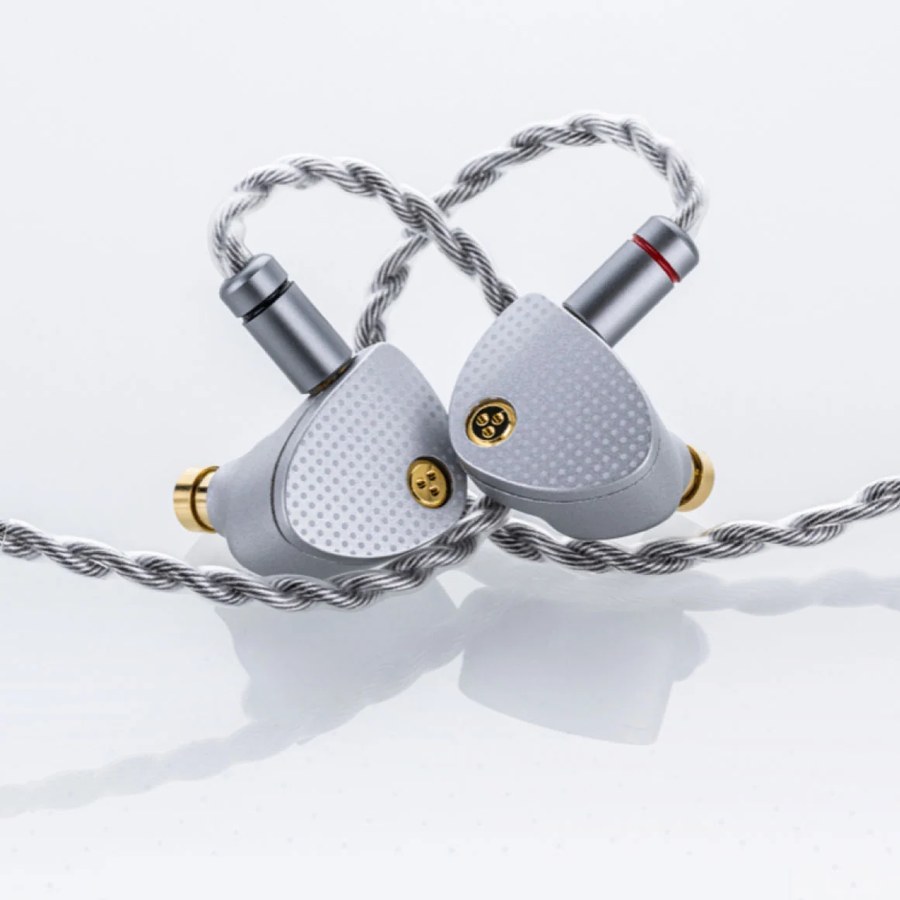
If the shell matters as much as the sound, the Aria 2 is the pick at $84.99: a single dynamic driver with a titanium-nitride ceramic-coated dome, in a cast and CNC-milled alloy shell with a brass nozzle and a replaceable acoustic filter. The detachable cable ships with interchangeable 3.5 mm and 4.4 mm plugs. The tuning is clean and smooth, with a lighter bass shelf than the others here.
The EA500 LM is the tinkerer’s alternative at $86.69: one 10 mm dual-magnet, dual-cavity dynamic driver, and three sets of tuning nozzles in the box, so you can tilt it brighter or warmer yourself. If you enjoy fiddling, it is the most fun $87 in this group.
The $20 / $50 / $100 Ladder
Here is the shape of this market. At $20, the Zero:2 or the Chu 2 gives you a proper in-ear monitor for the price of a takeaway dinner. At $50, the BLUE2 or the ZS10 PRO 2 buys you a choice: bass and a mic cable, or detail and tuning switches. At $90, the Hexa, Pure, Aria 2 and EA500 LM buy refinement — better shells, better cables, more careful tuning — but not a different league of sound.
The jump from $20 to $50 is the biggest one here, because it buys you options. The jump from $50 to $90 is smaller than the price gap suggests. If your budget is $50, spend $50 and be happy. If it is $100, spend $85 on the earphones and keep the rest for eartips.
Two Mistakes Buyers Keep Making
The first is buying on driver count. “Five drivers must beat one driver” sounds like logic, and it is wrong. A driver is a tool; the tuning is the product. The Aria 2 and the EA500 LM each have a single dynamic driver and cost more than the five-driver ZS10 PRO 2. Judge a set by its tuning, not by how many parts are inside it.
The second is ignoring fit — the single most common reason a good set gets returned. An IEM that does not seal sounds thin and bass-light, and the fix is usually a different tip, not a different earphone. Spend ten minutes with the tips in the box, and try foam if silicone will not seal. If the shell itself hurts after half an hour, the set is the wrong shape for your ear.
Verdict
If you buy one set and stop reading, buy the 7Hz Zero:2. At about $21 it is the safest first step into this hobby: fun tuning, easy to drive, detachable cable, and cheap enough that a wrong guess costs nothing. If your budget stretches to $90, buy the Truthear Pure for long, relaxed listening, or the Hexa for the flatter, more analytical presentation — same price, same drivers, two temperaments. And if you want the nicest object of the group, the Aria 2’s metal shell and modular cable justify the $85.
The best IEM under $100 is not a model. It is the one that fits your ears, plays your music the way you like it, and leaves you no reason to keep shopping. Pick the one that sounds like you.