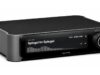


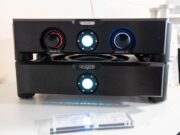
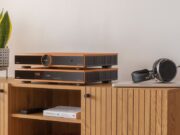
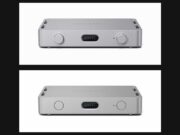
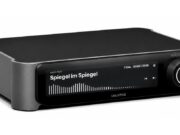
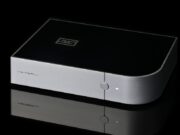
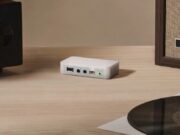
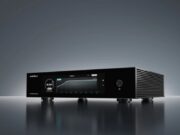




miniDSP has finally given its Flex a headphone amplifier. The Flex HPA, announced on Tuesday, takes the compact DSP box that is the default for subwoofer integration and room correction, and adds a headphone stage: up to 5W per channel, balanced 4-pin XLR and single-ended 6.35mm outputs on the front, plus the Flex line’s parametric EQ, crossovers and Dirac Live upgrade path. It costs $850, is on sale now, and ships from late November.
What’s New
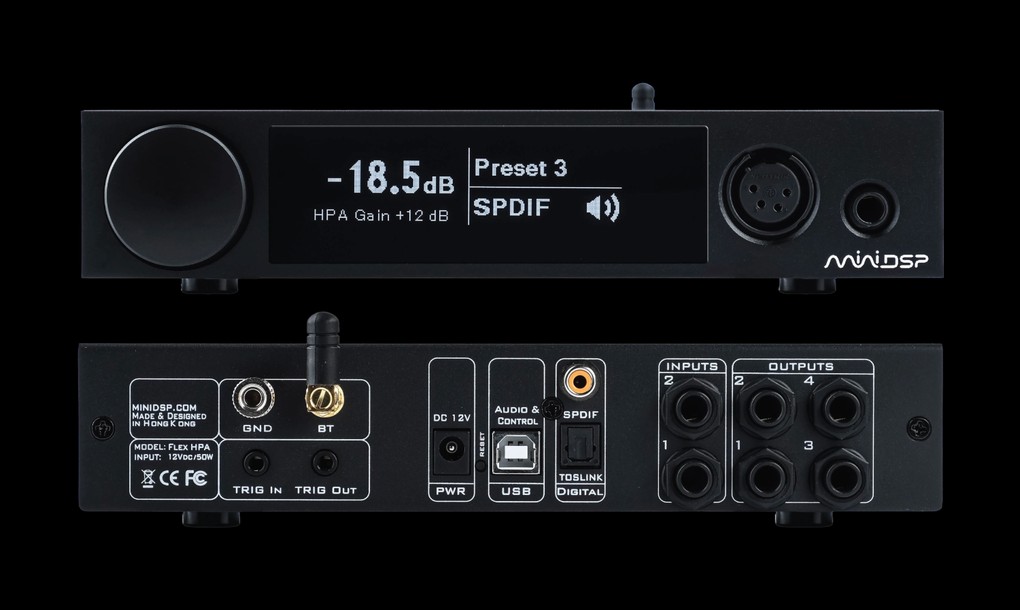
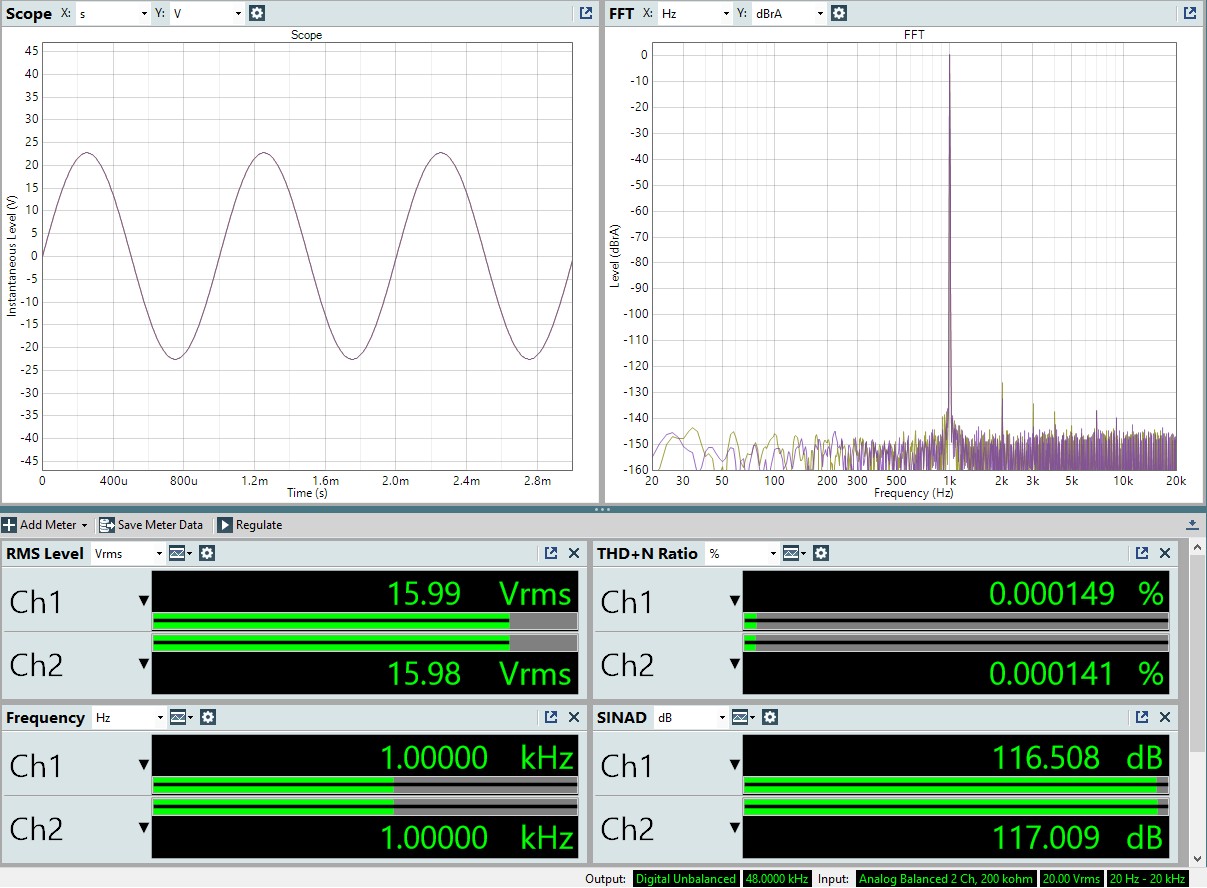
The headphone amplifier is the news, and miniDSP is not treating it as an afterthought. It delivers up to 5W per channel — 5.2W into 50 ohms on the balanced output, per miniDSP’s spec table — with switchable -3/0/+6/+9/+12 dB gain. The balanced 4-pin XLR output suits medium and high impedance headphones (32 ohms and up); the single-ended 6.35mm jack is tuned for lower impedance pairs, and if both are connected, the 6.35mm takes priority. Measured numbers are strong: THD+N of -117 dB (0.00014%) at 300 ohms with +12 dB gain, and a SINAD of about 117 dB on the balanced output in miniDSP’s own APX555 measurements.
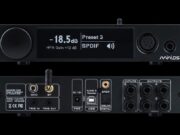
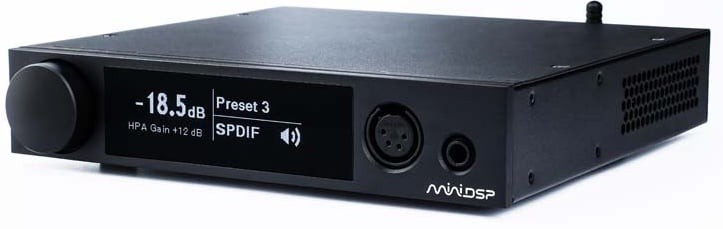
Everything else is the Flex we already know. The same 400 MHz Analog Devices SHARC DSP runs the show at 32-bit/96 kHz, with parametric EQ, IIR and FIR filters, crossovers, advanced biquad programming and delay on each output channel, and four presets. Dirac Live is a $199 option at checkout for stereo full-range correction (20 Hz to 20 kHz), plus a paid AutoEQ upgrade. Inputs cover USB audio, S/PDIF on RCA, TOSLINK optical and Bluetooth with LDAC, aptX HD, aptX, AAC and SBC, plus balanced analog inputs on TRS jacks. Control is through the miniDSP Device Console on Windows or macOS, with an OLED display, an encoder knob and an IR remote.
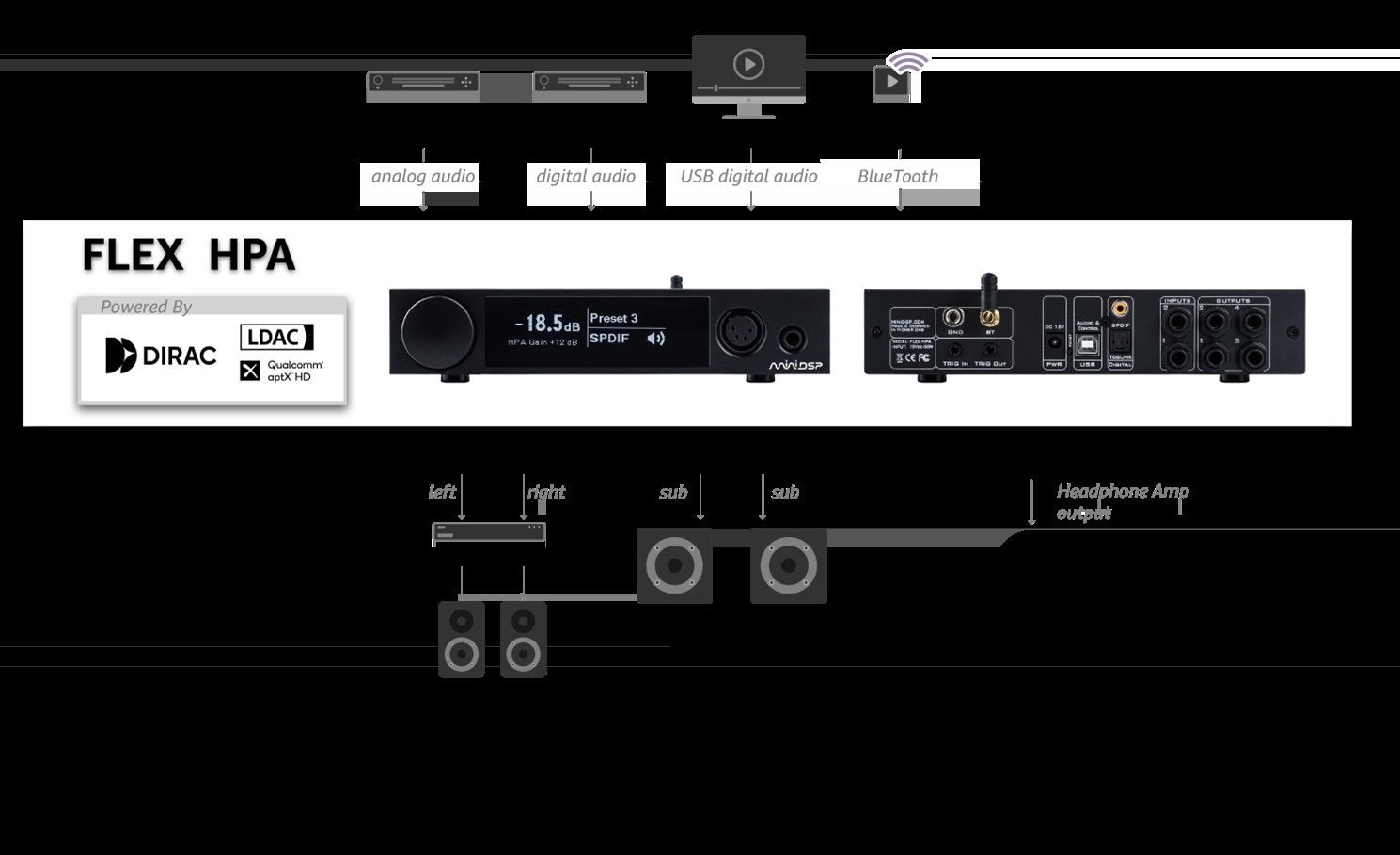
The rear panel is what makes this more than a headphone amp. Four balanced TRS outputs turn the Flex HPA into a DSP preamp for a 2.0, 2.1 or 2.2 speaker setup — speaker equalization, subwoofer integration, active speakers — with the headphone stage sharing DSP output channels 3 and 4. That sharing has one practical consequence: equipment connected to rear outputs 3 and 4 needs to be powered off while you listen on headphones. It is a small wrinkle, worth knowing before you wire it into a system that does both jobs. The box is a half-width 1U chassis (214.5 by 205 by 41.5 mm) with trigger in/out and 0.4 W standby.
Context
The Flex earned its place the slow way. The standard Flex, at $495, is the third generation of miniDSP’s compact 2-in, 4-out processor, and it has become the default recommendation for subwoofer integration, active crossovers and room correction. The Flex Eight stretched the same idea to eight outputs, and the Flex HT and HTx took it into home theater. The Flex HPA is the first Flex with a headphone amplifier built in. Two siblings, the Flex HT+ and HTx+, were announced the same day.
The price tells you what miniDSP thinks the amp is worth. At $850, the Flex HPA costs $355 more than the standard Flex, and the difference buys the headphone stage, the balanced analog inputs and a larger chassis. Dirac Live is another $199 on top if you want it, and a UMIK-1 microphone is $75 more. Units are in stock and being quality-checked, with shipments starting toward the end of November.
Compared
| Model | What it is | Price | Headphone output | DSP / Dirac |
|---|---|---|---|---|
| miniDSP Flex HPA | DSP + headphone amp | $850 | 5W, XLR + 6.35mm | Yes / $199 option |
| miniDSP Flex | DSP processor | $495 | — | Yes / $199 option |
| Onkyo HA-70 | Headphone amp | $649.99 | Balanced, dual ESS SABRE | No |
| Schiit Magni 6 | Headphone amp | $99 ($169 w/ DAC) | 4.4mm balanced | No |
The family comparison is the simple one. Against the standard Flex, the Flex HPA costs $355 more and gives back a headphone amplifier and balanced analog inputs. If you never listen on headphones, the standard Flex is the better buy; if you do, the HPA is the Flex you wanted.
Outside miniDSP, the closest rival is Onkyo’s HA-70, a balanced headphone amplifier at $649.99 with a dual ESS SABRE DAC, due in spring 2027. It is $200 cheaper and a purer headphone amp, but it has no DSP, no Dirac path and no speaker outputs — one job, while the Flex HPA does three. The Schiit Magni 6 sits at the other end at $99: far more power per dollar, no DSP at all.
My Take
Paper analysis — no independent listening or measurements exist yet, and I have not heard this unit.
The move that matters is the measurement sheet. A headphone amplifier with 117 dB SINAD and -117 dB THD+N, built into a box that also does parametric EQ, crossovers and Dirac Live, has no rival at $850. miniDSP is not asking you to choose between a good amp and a good DSP — it sells both in one chassis, and the numbers say the amp is not the compromise.
The catch is the one I noted above: channels 3 and 4 do double duty, so a system running speakers off the rear outputs and headphones off the front needs a power-off ritual when you switch. It is a small thing, but it decides whether a one-box idea stays one box. Also watch the Dirac Live price: $199 on top of $850, plus a microphone if you do not own one, takes the real cost past $1,100.
What I want before recommending it is an independent measurement of the headphone output — miniDSP’s own APX555 charts look excellent, but they are miniDSP’s own — and a listen against the HA-70 and Magni 6 to judge the DSP premium. Until then, this is a promising launch, not a verdict — but for anyone already in the Flex ecosystem, it is the most interesting thing miniDSP has announced this year.
Who Should Watch
Flex owners with headphones should look first — this is the upgrade that turns their DSP box into their headphone amp too. Anyone with a desk setup running both headphones and a small 2.1 speaker system should look next — the Flex HPA is the only box that does both jobs with EQ on everything. And if you EQ your headphones and want that correction in hardware rather than software, this is the cheapest way to get it with Dirac Live attached.