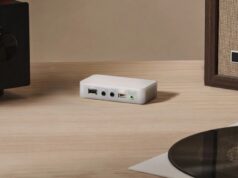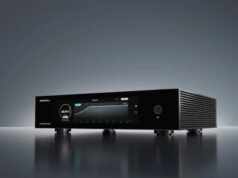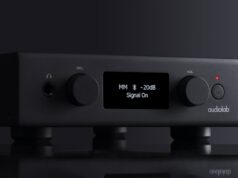





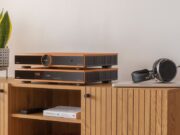
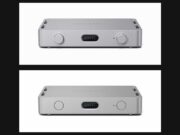
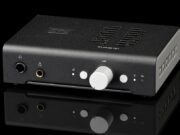
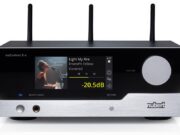

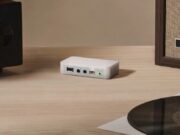
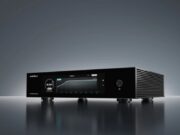
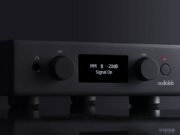
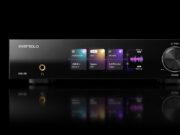


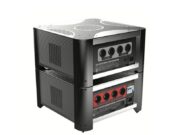



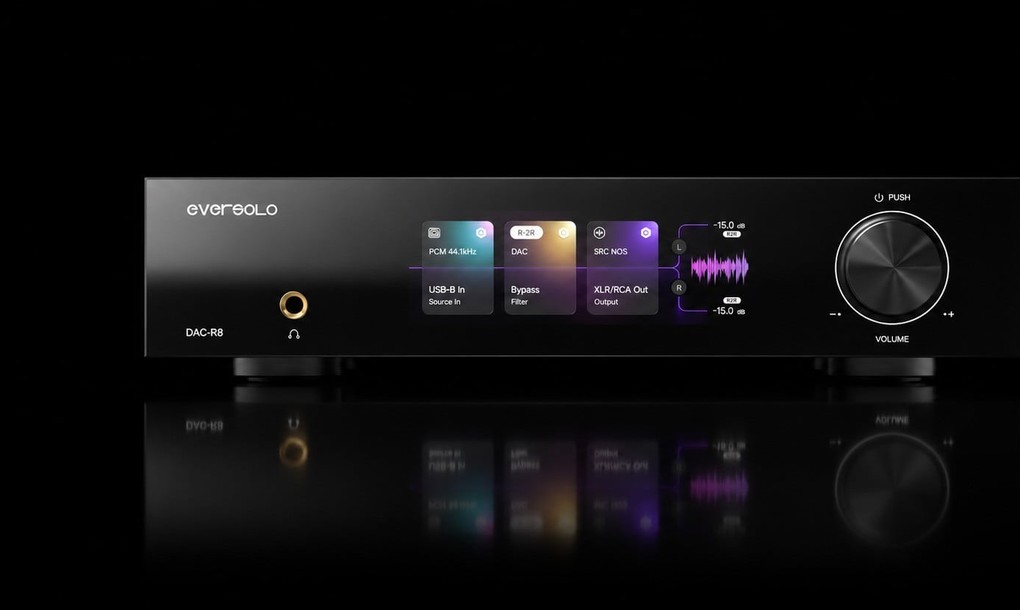
Eversolo has spent the last few years building its name on streamers. The DMP-A6 and DMP-A8 put the company on a lot of racks, and the newer T8 transport showed it was serious about splitting the digital source into separate boxes. The DAC-R8 is the other half of that split: a standalone DAC and preamplifier built around a resistor-ladder converter Eversolo designed itself, instead of buying in a chip. US distributor Forté Distribution has opened pre-orders at $1,280, with no shipping date confirmed yet.
What’s New
The centrepiece is what Eversolo calls OriginR2R: a discrete, fully balanced resistor network with a segmented 5+20-bit layout, a 5-bit section for the larger steps and a 20-bit section for the finer ones, all coordinated by an FPGA. PCM and DSD take different routes to the same resistor network — PCM through the segmented architecture, DSD by a dedicated native 1-bit path, so it is never converted to PCM first.
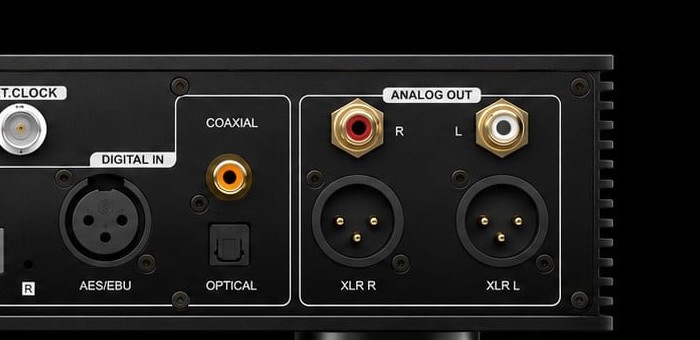
Timing gets the same treatment: an in-house 10MHz oven-controlled crystal oscillator (OCXO) with a PLL, plus an external clock input for 10MHz and 25MHz references. Eversolo quotes up to 130dB signal-to-noise (A-weighted) and 0.000316% THD+N on the XLR output at 1kHz — manufacturer figures, not independent measurements. Volume is handled in the analogue domain by a fully balanced R2R control that switches precision resistor arrays with relays, so the level drops without eating into resolution. It makes the DAC-R8 a genuine preamplifier: XLR and RCA outputs, XLR and RCA analogue inputs, able to drive a power amplifier or active speakers directly.
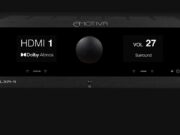
Three playback modes — non-oversampling, oversampling at 2x, 4x or 8x, and an optimised BEST mode — plus six FIR filters. The DSP section goes further than most: a browser-based interface over USB gives access to a parametric equaliser, a 20-band EQ, FIR filters, dynamics and delay, with independent left- and right-channel adjustment. Support runs to 32-bit/768kHz PCM and DSD512 over USB and I2S; S/PDIF and AES/EBU top out at 32-bit/192kHz. Inputs cover USB-B, I2S, AES/EBU, coaxial and optical, with the AES/EBU and coaxial inputs galvanically isolated, plus HDMI ARC/eARC for TV audio and Bluetooth 5.4 with aptX Adaptive.
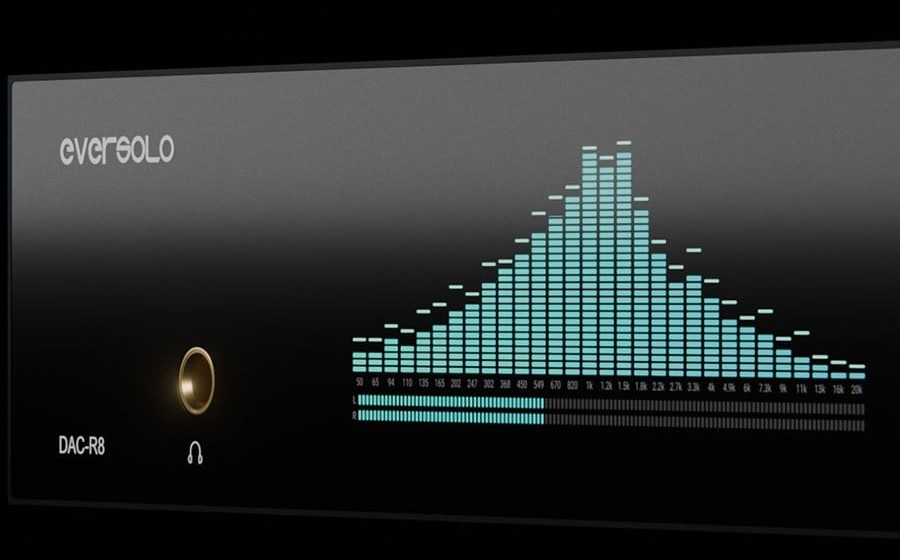
A 5.2-inch IPS touchscreen shows input, sample rate, mode and volume, and can switch to VU meters or a spectrum analyser. The headphone amplifier is built in: a 6.3mm jack, three gain settings and automatic impedance detection. Eversolo quotes up to 1W into 16 or 32 ohms and 160mW into 300 ohms — manufacturer figures.
Context
The DAC-R8 was first previewed at HIGH END Vienna in June 2026. Eversolo’s earlier standalone DACs, the DAC-Z8 and DAC-Z10, were built around bought-in ESS and AKM chips; the R8 is the company’s first standalone DAC on a converter of its own design, and it arrives as resistor-ladder conversion enjoys a sustained revival — FiiO made the same move this year with its K17 R2R, and Denafrips and Audio-GD have built whole brands on the approach. There is a product-line logic too: the T8 is a transport with no DAC, and the DAC-R8 is its matched partner, with an I2S input to take the T8’s digital output. Nothing ties the two together, though — the DAC-R8 will work with any transport, CD drive or computer.
Compared
Inside Eversolo’s own range, the reference is the DAC-Z8, listed at $749 at headphones.com. Same three-in-one formula — DAC, preamp and headphone amplifier — with an ESS ES9038Pro chip and XMOS XU316, and the same 32-bit/768kHz and DSD512 ceiling. The DAC-R8 asks $531 more, and the money buys the in-house R2R ladder, the analogue R2R volume control, OCXO clocking and a DSP section the Z8 never had.
The sharper comparison sits outside the brand. FiiO’s K17 R2R sells at $989.99 — $290 less — and is also a discrete segmented R2R desktop unit, with NOS and OS modes, a 31-band parametric EQ and a headphone amplifier, plus network streaming the DAC-R8 lacks. Where the K17 R2R pulls ahead on paper is the headphone stage: a discrete 4W-per-channel balanced amplifier against the DAC-R8’s 1W single-ended output. Where the DAC-R8 answers is the preamp side: analogue inputs, relay-switched R2R volume and HDMI eARC.
My Take
Paper analysis — I have not heard the DAC-R8, and no independent measurements are available yet.
On paper, the interesting bet is the combination. R2R DACs usually keep digital processing minimal, on the argument that the ladder’s character is the point. Eversolo has done the opposite: a purist converter married to browser-based DSP with per-channel EQ, FIR filters and delay. If the DSP stays out of the way when you want it to, that is a genuinely flexible box; if it colours the sound even when bypassed, the ladder’s appeal gets muddied. That is the question listening will have to settle.
The price is the other open question. At $1,280 it sits between the FiiO K17 R2R at $989.99 and Eversolo’s own DMP-A8 Gen 2 at $1,980. As a pure DAC-preamp it has to earn its keep against the K17 R2R, which offers streaming and a far stronger headphone stage for less.
Who Should Watch
T8 owners first — this is the DAC the transport was designed to sit beside. Then anyone building a separates digital front end who wants a DAC that can drive a power amplifier directly, without a separate preamp in the chain. Listeners curious about R2R sound at around $1,300 will find the price approachable next to the established ladder brands. And anyone outside the US should wait: no UK, European or Australian pricing has been published, and the shipping date is still unconfirmed.