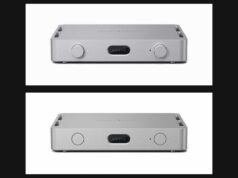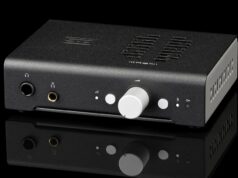







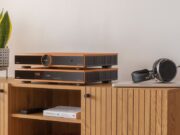
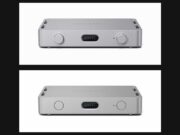
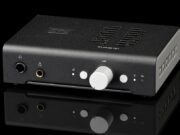














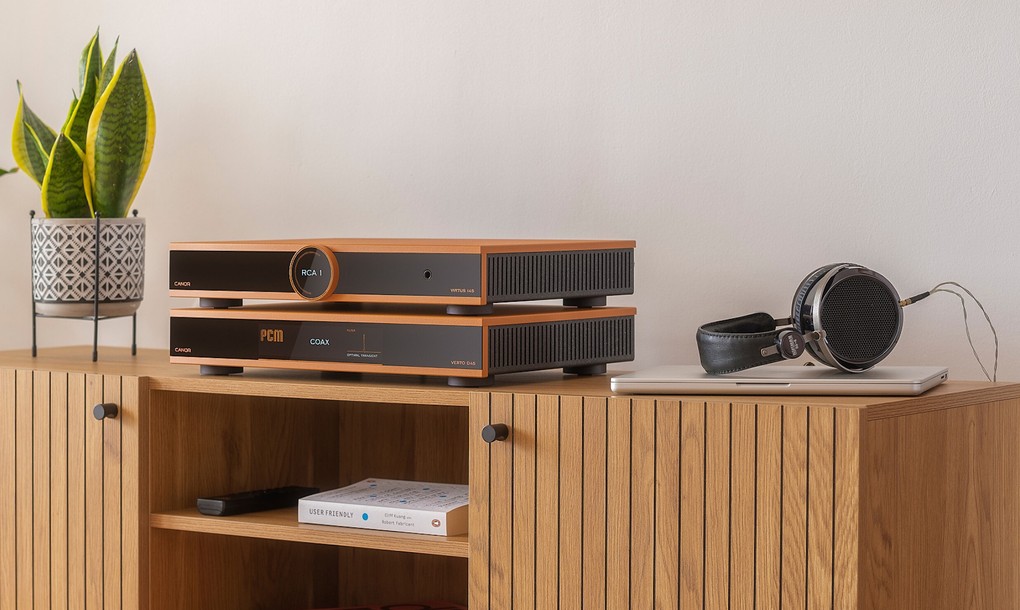
CANOR built its name on vacuum tubes, so a solid-state line from the Slovak brand is news in itself. The 4 Series — its first transistor range — reaches Japan on Friday, November 20, when distributor Takt Stock puts the VIRTUS I4S integrated amplifier (¥770,000) and the VERTO D4S DAC (¥682,000, both tax included) on sale in bronze, black and silver. Europe has had the pair since February (€2,799 and €2,500), and one European test scored the amp 79/100 and the DAC 89/100. A matched two-box system with a tube maker’s voicing, and no tubes to replace.
What’s New
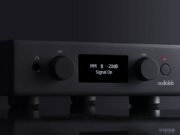
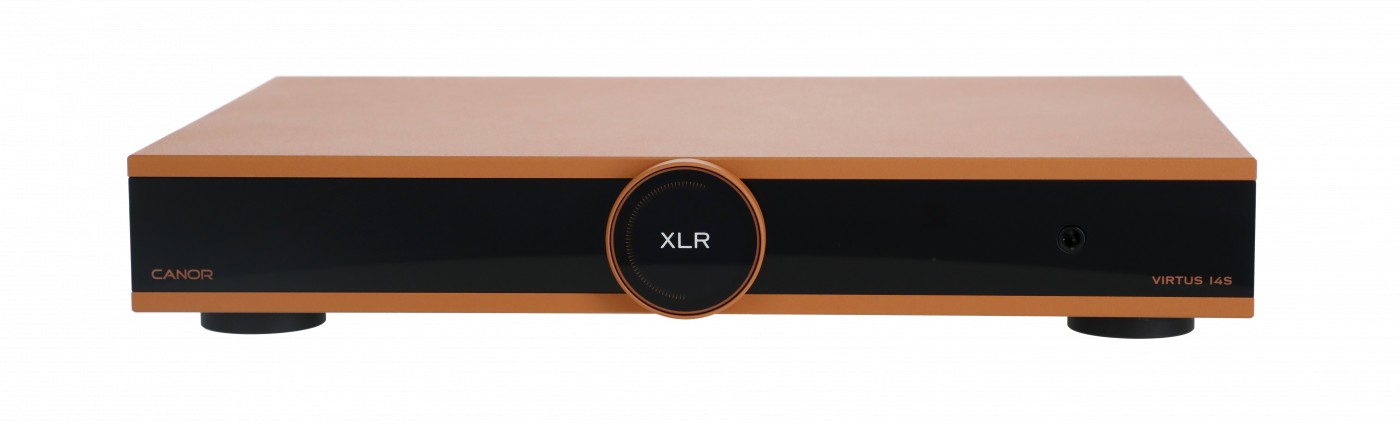
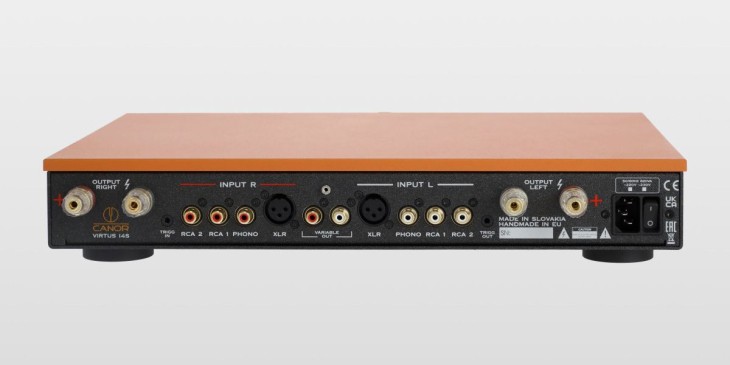
The VIRTUS I4S is a fully discrete, dual-mono Class AB integrated amplifier: 75 watts per channel into 8 ohms, 120 into 4 ohms, with 40,000µF of capacitance per channel. Inputs: one XLR, two RCA, phono, plus a variable RCA output. The phono stage handles MM and MC, and its loading adjusts from the remote — MM gain 40/46 dB with capacitance steps of 50/150/300/400 pF, MC gain 60/66 dB with resistance from 47 kΩ down to 10 Ω. Headphone output is 580 mW into 30 ohms and 190 mW into 300 ohms, enough for demanding headphones such as the Sennheiser HD 660S2. The volume knob carries a 1.8-inch LCD touchscreen, and cooling is a hybrid air system with a temperature-controlled fan. Distortion under 0.005% at 1 kHz/5 W, signal-to-noise over 90 dB, 12 kg.
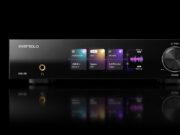
The VERTO D4S is its digital counterpart: one ESS ES9038Q2M per channel in dual-mono, feeding a fully discrete analog output stage with no op-amps. Over USB-C it plays PCM to 768 kHz/24-bit and DSD512; coaxial, optical, AES/EBU and HDMI (TV) inputs take PCM to 192 kHz/24-bit. Output is balanced XLR and single-ended RCA. Distortion under 0.0005%, signal-to-noise better than 112 dB A-weighted, crosstalk below −127 dB. Eight filters — seven ESS plus CANOR’s own “OPTIMAL TRANSIENT” NOS mode — switch from the remote. A 7-inch touchscreen runs the show, with CEC and TV volume control. 8 kg, same 430 mm-wide, 75 mm-high chassis as the amp.
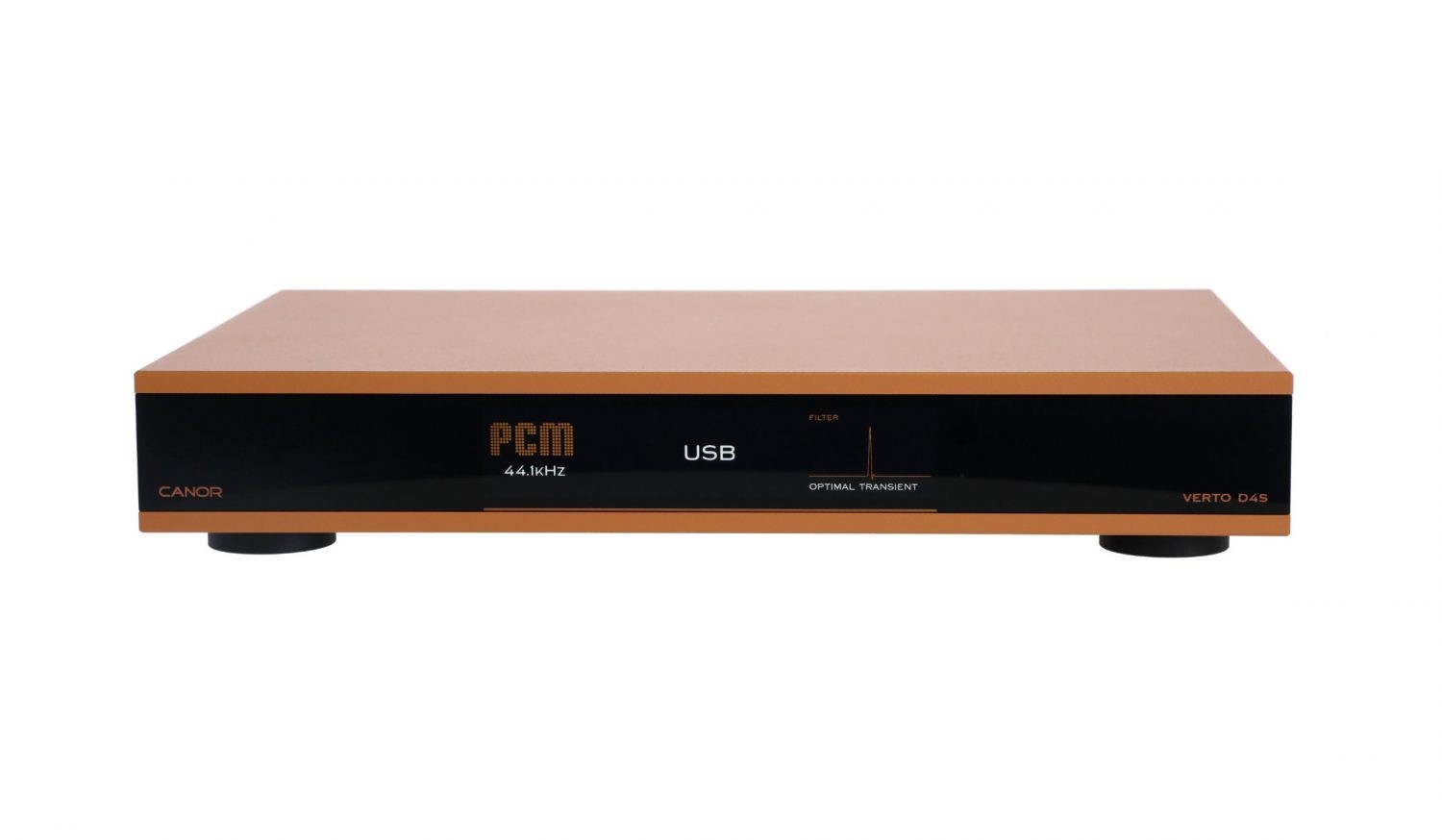
The DAC does not stream: no network input, no app, by design. A CD transport, preamplifier and power amplifier are planned for 2027 and later.
Context
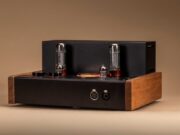
CANOR — founded in 1995 as Edgar, trading under the Canor name since 2007 — has spent three decades as a tube house. Its Virtus I2 runs KT88s in pure Class A; its Verto D3 DAC (£3,799) still puts a tube stage after the converter. The naming tells the story: triodes are the default, so “S” marks solid-state, and “4” places both boxes in the Foundation Line — the entry point of a five-tier range from Reference (1) to Essential (5). The 4 Series aims to recreate the sound CANOR has chased with tubes, using solid-state circuitry alone and leaving tube-rolling and replacement out of it.
The European test I mentioned put that claim to the bench and the listening room. The amplifier was judged “fast, tonally lean but not bright, precisely resolving,” the DAC “nimble and elegant, gentle, with high resolution” — and the DAC held its own against a well-regarded rival streamer-DAC at a similar price. Piano and voices had a spacious stage; bass lacked a little weight, though nothing sounded muddy. The fan stayed silent and the phono stage was virtually noise-free at 66 dB of gain. The niggles: a plastic remote, and no streaming in the DAC.
Compared
As a two-box system the pair costs €5,299 in Europe (¥1,452,000 in Japan) — serious company.
| System | What it is | Key points | Combined price |
|---|---|---|---|
| CANOR Virtus I4S + Verto D4S | Integrated amp + DAC | 75 W Class AB, MM/MC phono; dual ES9038Q2M, NOS | €5,299 / ¥1,452,000 |
| Luxman L-505Z + Eversolo DAC-Z10 | Integrated amp + DAC | Class AB, MM/MC phono; streamer/DAC rival | $6,995 + $1,980 = $8,975 |
| TEAC UD-701N + AP-701 | Streamer/DAC/preamp + power amp | Streaming, discrete DAC; 100 W nCore amp | $4,299.99 + $3,999.99 = $8,299.98 |
None of these rivals is a direct match. The Luxman alone lists at $6,995 — more than the CANOR pair’s €5,299 at any recent rate — and still needs a DAC. The TEAC pairing costs more and splits streaming from amplification. The CANOR case is a matched system — one remote, one chassis, one voicing — with phono and headphone stages included. The counterweight: Japan pricing runs well above the European list, the DAC has no streaming, and the tube-voicing claim rests on few independent tests. For scale, our iFi ZEN Air DAC 2 review shows what $129 buys — a different game.
My Take
Paper analysis — I have not heard this pair; the listening evidence above comes from a published independent test.
What I like most is the matched-system thinking: two boxes, one design language, one remote, and phono loading that adjusts from the sofa — genuinely rare at this price. What gives me pause is the Japan premium: Japanese buyers pay far more than Europeans for the same boxes, which dulls the value story exactly where this launch is news. A fan in a hi-fi amp and a plastic remote are small misses. The tube-sound claim has at least one thorough independent test behind it, and its verdict — musical, resolving, a touch lean — matches what CANOR says it was aiming at. For a buyer in Europe or Japan who wants a compact, vinyl- and headphone-friendly system with a tube maker’s voicing and no tube maintenance, this pair is a serious proposition — the Japan price aside.
Who Should Watch
Vinyl listeners with MM or MC cartridges who want remote-adjustable loading — pair it with a deck such as the Audio-Technica AT-LPA2 and the phono stage earns its keep. Headphone listeners who want a one-box amp with real power. Buyers who like CANOR’s tube sound but not tube upkeep. Anyone building a two-box system around a streamer already owned. Not for anyone wanting an all-in-one streamer-amp, or on a tight budget — in Japan this pair is ¥1,452,000 before streamer or speakers.