
























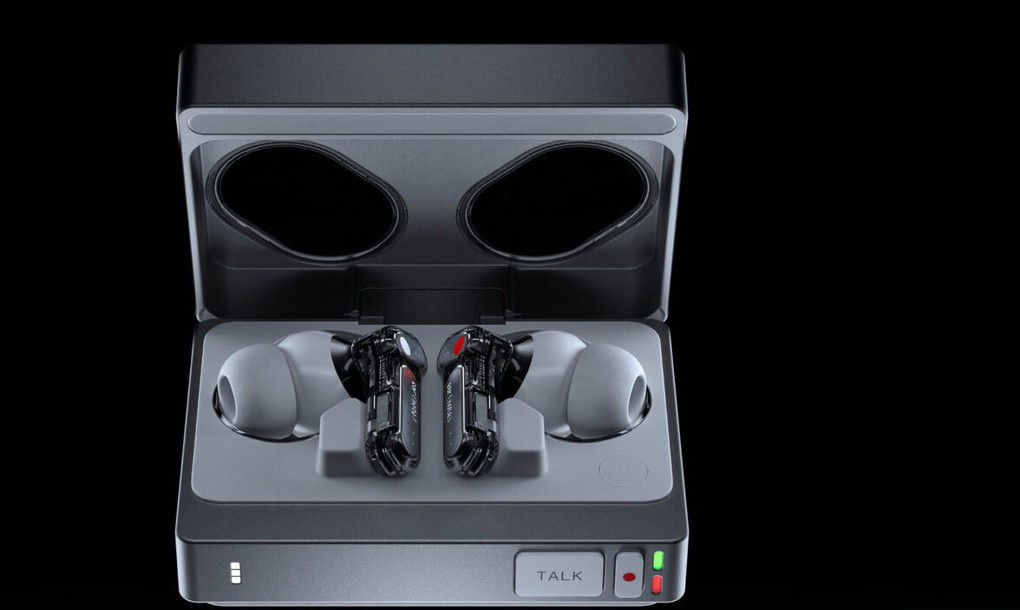
The Nothing Ear (note) is a pair of earbuds whose charging case doubles as an AI recorder: press TALK for your own voice, RECORD for the conversation in the room, and an app turns it into a transcript, summary and task list. It launches December 8, 2026, with no price, driver size or battery figure shared yet — a launch to watch, not to pre-order blind.
What’s New
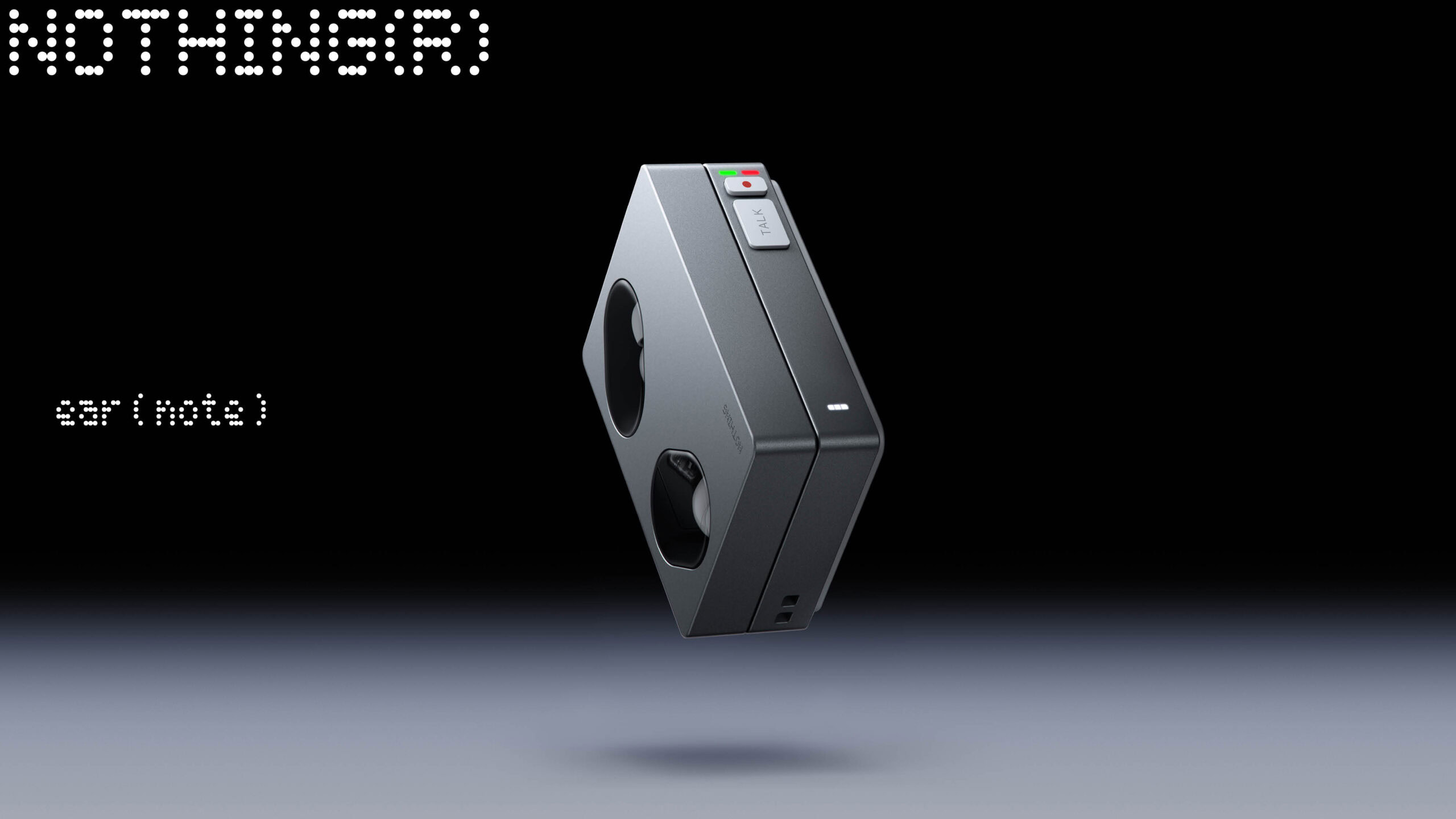
The case is the product. It is a square-edged aluminum box with built-in microphones and two physical buttons — TALK and RECORD — styled after vintage Walkman controls, with red and green status LEDs. The earbuds handle phone calls and online meetings; the case handles in-person meetings, discussions and voice memos. Nothing calls this dual-source recording: one device that captures the conversation wherever it happens.
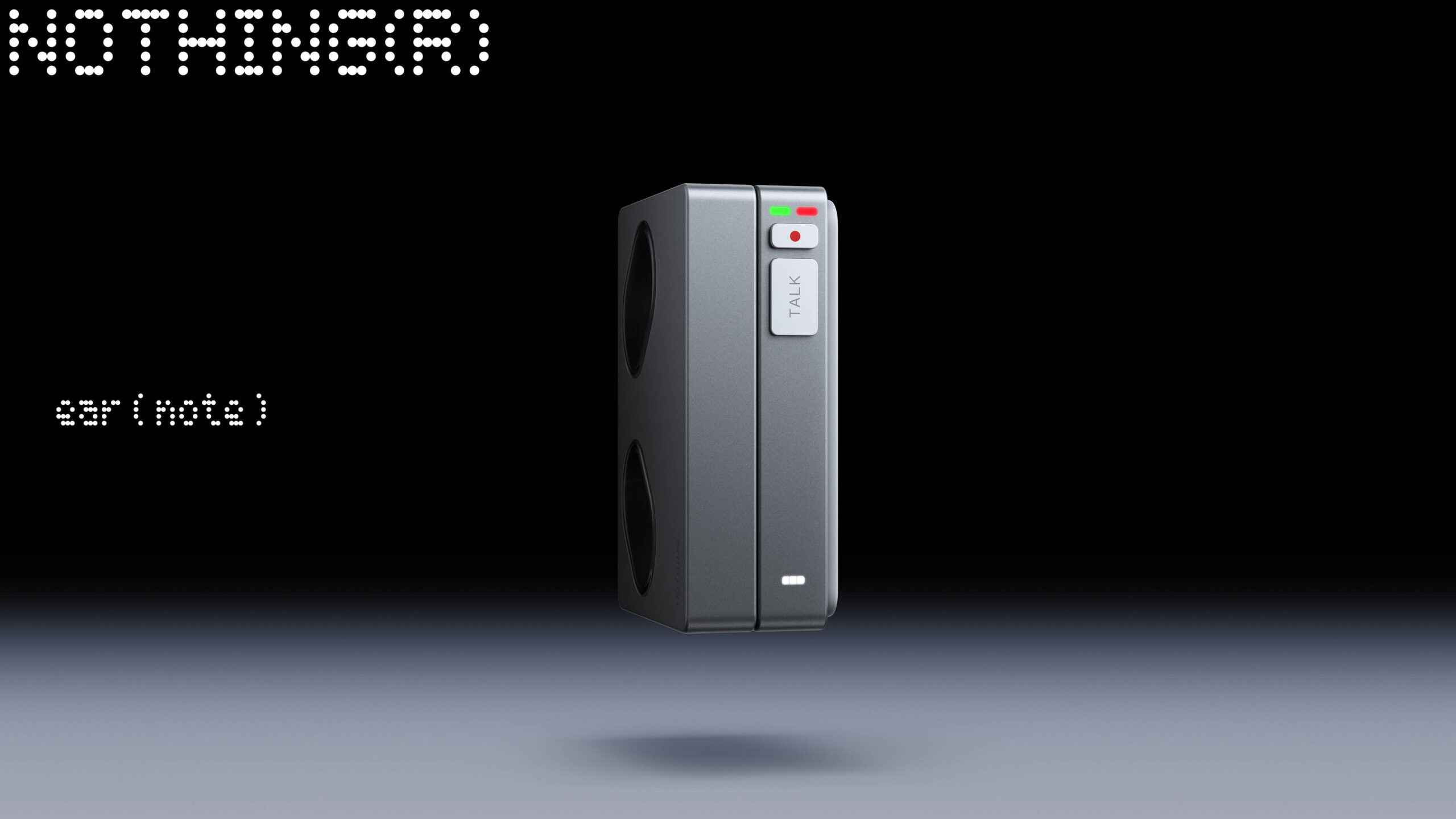
A companion app generates automatic transcriptions, context summaries and actionable task lists — the same job standalone services like Otter do, built into the hardware you already carry. Nothing says it will also work with various AI agents, including its own basic voice-control system. The case only records on a button press — visible, with lit LEDs, and recording laws vary by location.
The case has clear topographic window accents that reveal internal components, in Nothing’s transparent-design language. On the audio side, the company calls the Ear (note) its “best in-ear audio experience to date,” with Hi-Res Audio support. Those are claims, not measurements — no driver size, frequency response or battery figure has been published; full specifications arrive December 8.
Context
The Ear (note) is the second act of an idea Nothing tried last year. The Ear (3), at $179, shipped with Super Mic: press TALK on the charging case and hold it near your mouth so the case microphone picks up your voice. It worked, but holding a charging case to your face like a walkie-talkie is awkward, and automatic transcription only worked inside Essential Space on Nothing phones. Everyone else got a workaround. The Ear (note) keeps TALK and adds a dedicated RECORD button, treating recording a conversation and speaking into the case as two separate jobs.
The timing is not accidental. AI note-taking hardware is crowded in 2026: Plaud’s recorders, Amazon’s Bee, Apple adding conversation recaps to the Watch Series 12. Nothing likes to be early, but this time the category already exists — its answer is that the recorder should be the thing you already carry, not another gadget in your pocket.
Compared to Predecessors and Current Rivals
Against the Ear (3), the Ear (note) is a different device wearing a familiar shape. The buds look similar, but the case has gone from a charging accessory with a microphone trick to the center of the product: built-in microphones, a dedicated RECORD button, and an app that summarizes. The open question is whether the case can sit on a table and record a meeting on its own — the Ear (3) case could not, it needed an earbud in your ear. Nothing has not confirmed this, and it decides whether the idea works in a real meeting room.
The sharper comparison is Plaud’s One Explorer Edition, from August, at $249.99: AI earbuds with a 4G-connected case that records and summarizes conversations without a nearby phone — a recorder first, earbuds second. Viaim sells $200 earbuds that transcribe calls, with recording built into the case. The Ear (note) has to be a better recorder than products built to be recorders first, and a good pair of earbuds at the same time. Nothing has shown it can do the second part. The Ear (3) was well received despite bass-heavy tuning and five-hour battery with ANC on. The first part is unproven.
My Take
On paper, this looks promising because it picks a real problem. Super Mic felt like a solution looking for a problem, though it worked well for voice memos. The Ear (note) aims at something people already pay dedicated gadgets to do: capturing a conversation and making sense of it. A case that records, transcribes and summarizes without a second device is a genuine use case, not a demo feature.
What concerns me is the track record. Super Mic’s two flaws were the walkie-talkie awkwardness and transcription locked to Nothing phones. The Ear (note) fixes the first only if the case records from the table, and the second only if the app works fully on any phone. Neither is confirmed yet. The price is the third question, twice over: the sticker price, still unannounced, and the possible subscription Nothing’s comments have hinted at. Plaud sits at $249.99 with no phone in the loop; if the Ear (note) lands near that price and adds a monthly fee on top, the math changes fast.
Until independent tests emerge, the audio claims are theoretical — “best in-ear audio to date” is a slogan until a driver size and a battery figure back it up. But the idea is sound, and Nothing has a habit of shipping hardware that looks like nothing else on the desk. If the case records from the table, the app works on any phone and the price stays near the Ear (3)’s $179, this could be the first AI earbud that earns its place. If any of those three fails, it is a prettier version of the same walkie-talkie.
Who Should Watch This
If you sit through a lot of meetings and use a Nothing phone, put the Ear (note) on your watchlist — December 8 brings the price, specs and battery figures. If you want a recorder first, Plaud’s One is the proven option today — the Ear (note) has to earn the switch with real reviews, not renders. Tempted to pre-order on the design alone? Wait: no price, battery life, driver size or independent test exists yet. A few weeks of owner reports after December 8 will tell you more.
Disclosure: OHHIFI may earn affiliate commissions from product links. My verdicts are never influenced by such arrangements.