
















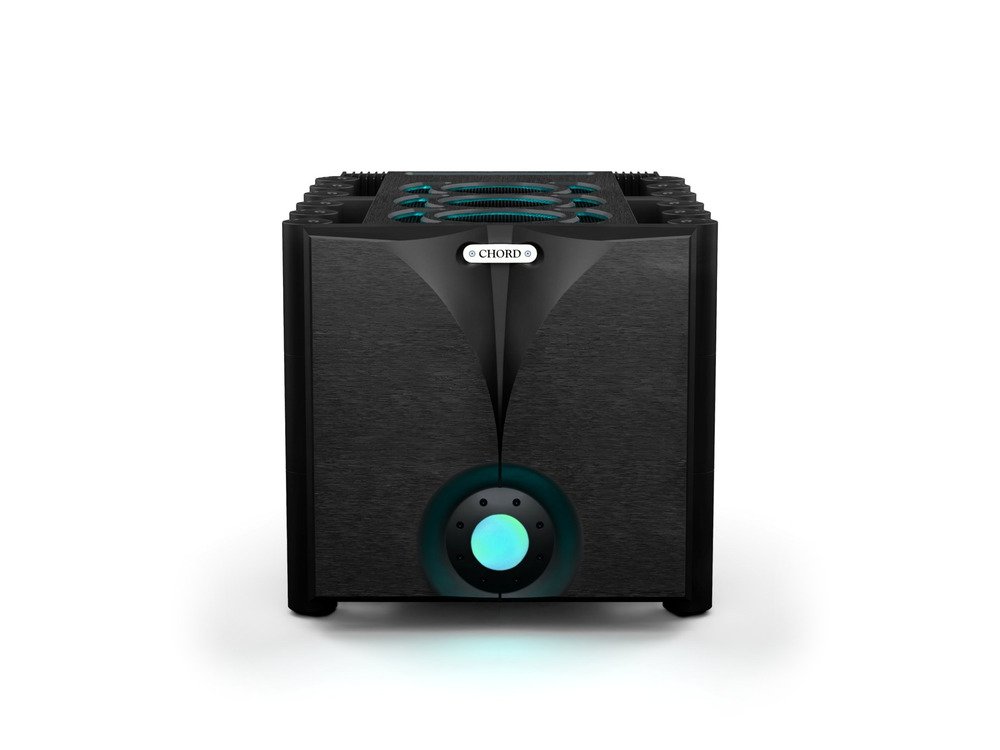
Chord Electronics has built its biggest amplifier ever, and the numbers are hard to ignore. The Chord ULTIMATUM is a flagship mono power amplifier delivering 5 kW into 8 ohms and 9 kW into 4 ohms, priced at £120,000 each, and available to order now. It made its international debut with live demonstrations at the Guangzhou High End Show in late November 2026, and it sits above everything else in Chord’s amplifier range.
What’s New
The headline is the topology. The ULTIMATUM uses a new dual-balanced bridged-mono design, a direction Chord has traditionally avoided because balanced amplifier designs can introduce crossover distortion. Chord’s answer is a new circuit topology paired with double dual feed-forward error correction, which keeps total harmonic distortion around 0.007% across the frequency range. The bridged layout also keeps supply-rail voltages within safe, stable limits, and the technique has roots in some of Chord’s early amplifiers built for Abbey Road Studios.
The output stage is built around 96 proprietary super-lateral gate-structure MOSFETs — 48 custom devices in TO-3 metal cases, each holding two silicon dies — governed by advanced thermal management and multiple error-correction loops. Power comes from five custom-specified 4 kW ultra-high-frequency supplies, 20 kW of power conversion in total, each with pulse-by-pulse protection sensing.
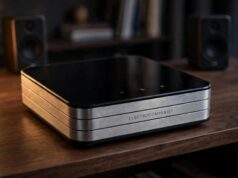
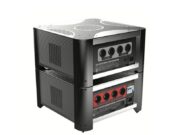
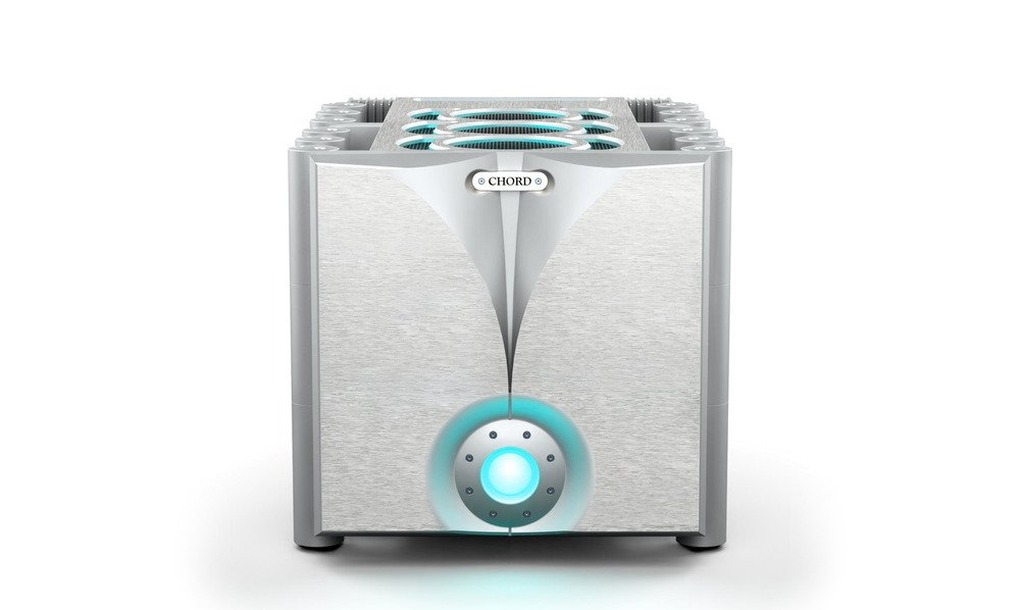
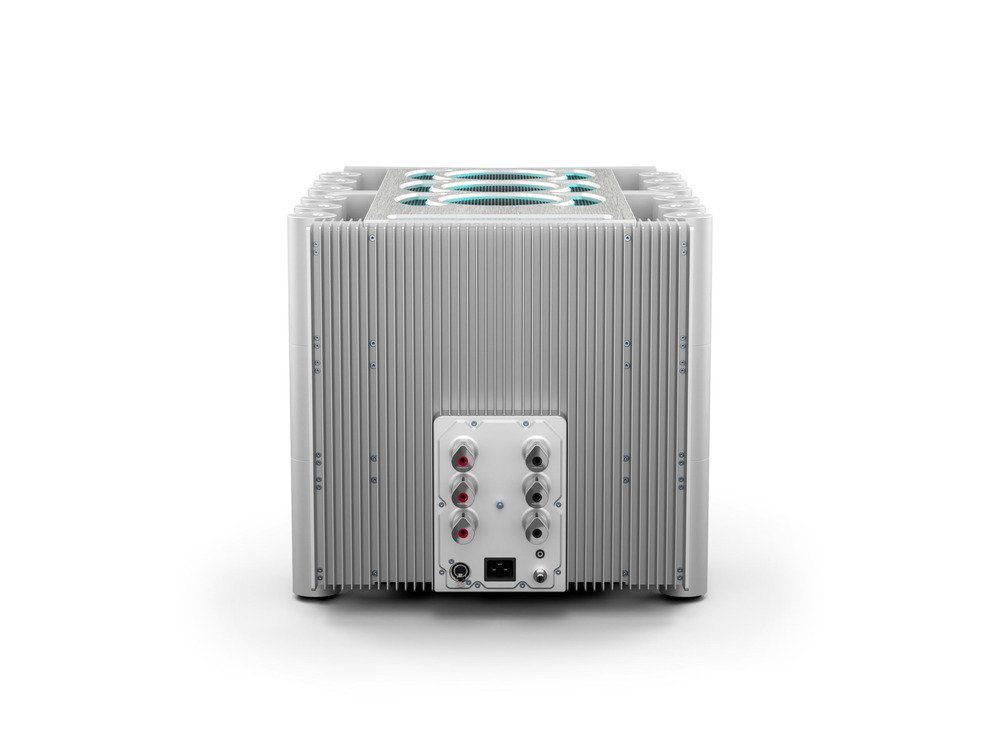
Then there is the chassis. The ULTIMATUM is a precision-machined aluminum enclosure weighing around 120 kg, with a 60 mm-thick “double open book” cleft front fascia designed by John Franks, the polychromatic power-control sphere at its center, and dimmable feature lighting. It is convection cooled and runs Class AB with sliding bias. Round the back you get triple-output Furutech speaker terminals for tri-wiring, a balanced XLR input, an unbalanced RCA input on a Furutech FT-903 socket, and a 12 V trigger. The headline specs: 5 Hz to 25 kHz frequency response, -103 dB signal-to-noise ratio, 47 kΩ input impedance, 0.012 Ω output impedance, 33 dBV gain, and 60 W standby consumption.
Context
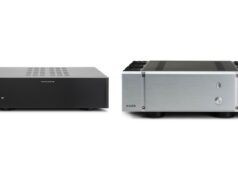
This is John Franks’ statement piece. The ULTIMATUM is designed by Chord’s founder and chief designer, handmade in England, and Chord describes it as its most accomplished amplifier design in almost 40 years. It does not replace anything — it sits on top of the ULTIMA range, above the ULTIMA mono, Chord’s previous flagship reference at 780 watts into 8 ohms, and above the ULTIMA 7, the stereo amplifier I covered in November. The message is blunt: if the ULTIMA range is Chord’s working definition of a reference amplifier, the ULTIMATUM is what happens when the cost ceiling comes off.
Compared to Predecessors and Current Rivals
There is no honest like-for-like rival for a £120,000 monoblock on this site, so the comparison that matters is the one inside Chord’s own range.
| Rival | Price | vs ULTIMATUM | Verdict |
|---|---|---|---|
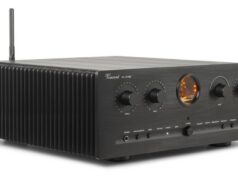
| Chord ULTIMA 7 | £6,500 | Chord’s new Class G stereo amp, 140 W into 8 ohms — the range below, at roughly one-eighteenth the price | The sane way into Chord’s current amplifier thinking |
The gap is the story. The ULTIMATUM costs more than 18 times the ULTIMA 7 and delivers roughly 36 times the power into 8 ohms. Nobody buys the ULTIMATUM because they need 5 kW — no loudspeaker in normal use asks for it. They buy it because it is the most extreme expression of the same error-correction and power-supply thinking that runs through the ULTIMA range, with the cost ceiling removed.
My Take
On paper, this looks promising — with the usual caveats, stated plainly. I have not heard the ULTIMATUM, no independent measurements exist, and nothing here settles whether 5 kW sounds any different from 500 watts in a real room. This is a paper analysis, and it stays one until someone measures it.
What I like is the engineering honesty. The money went into identifiable hardware: a named output stage with a stated device count, five named power supplies with a stated total capacity, and a chassis whose weight and construction are stated rather than implied. The double dual feed-forward error correction is a real Chord technology with a real lineage — it comes from the ULTIMA range, not from a marketing slide — and a THD figure of 0.007% is at least a checkable claim.
What concerns me is the price-to-proof ratio, and it is extreme even by high-end standards. £120,000 per monoblock — £240,000 a pair — buys a lot of verifiable audio: a reference loudspeaker system, serious room treatment, and measurement gear to prove what changed. The ULTIMATUM asks you to spend that on the least measurable link in the chain, on the strength of Chord’s reputation and a distortion figure no independent lab has yet confirmed. And the practical costs do not stop at the price tag: 120 kg per chassis, 60 watts on standby, and five 4 kW supplies mean you need to think seriously about your floor and your mains before you think about the sound.
Until independent tests emerge, all of this is theoretical. But the design choices are coherent, the technology has a genuine pedigree, and if any amplifier justifies the “statement piece” label, it is this one.
Who Should Watch This
This is for you if you run a system built around large, demanding loudspeakers and you want the most powerful amplifier Chord has ever built — or if you already own Chord’s ULTIMA range and want to know where the thinking at the top of it leads. It is also worth watching if you follow amplifier design itself: the bridged topology and the double dual feed-forward arrangement are the most interesting technical story here, whatever you think of the price.
Wait for independent measurements if you are weighing this against anything else — at £120,000, the case rests on Chord’s numbers, and numbers that big deserve a second opinion. And if you are shopping in any normal price range, the ULTIMA 7 is the amplifier in this family worth your attention.
Disclosure: OHHIFI may earn affiliate commissions from product links. My verdicts are never influenced by such arrangements.