








A big, hot Class A or AB amplifier has been the default serious choice for decades. Now the boxes replacing it are small, cool to the touch, and sometimes cost a tenth as much. People making the switch keep asking: what actually changes? The short version: heat, size, weight and power-per-dollar all move decisively in Class D’s favor, bass control improves with the best modern designs, and the old treble problem is fixed in any competently built current design. What does not change is your speakers, your room, or your source.
Heat and Power: The Change You Feel First
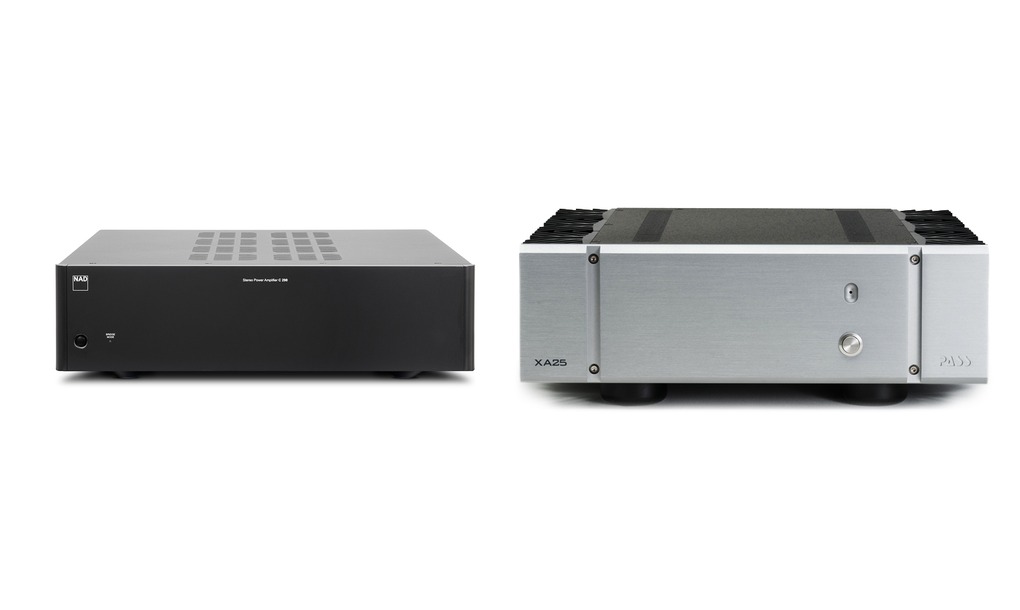
This is the change you notice on day one, before you play a note. A Class A amplifier is biased so its output devices conduct all the time — it burns power whether music is playing or not. Take the Pass Labs XA25: 25 watts per channel of pure Class A, and 240 watts drawn from the wall at idle. That is roughly ten watts of heat for every watt of output, all day if you leave it on — a space heater with a volume knob in summer.
Class AB idles cooler, but at normal listening levels most of its draw still ends up as heat. Class D sidesteps the problem: its output devices switch fully on and off instead of hovering half-open, so efficiency runs above 90% (Purifi’s Eigentakt module is rated at 94%). The result stays near room temperature, needs no radiator-sized heatsink, and can sit in a closed cabinet. If your room gets hot in July, this alone is a real reason to switch.
Size and Weight: The Change You See First
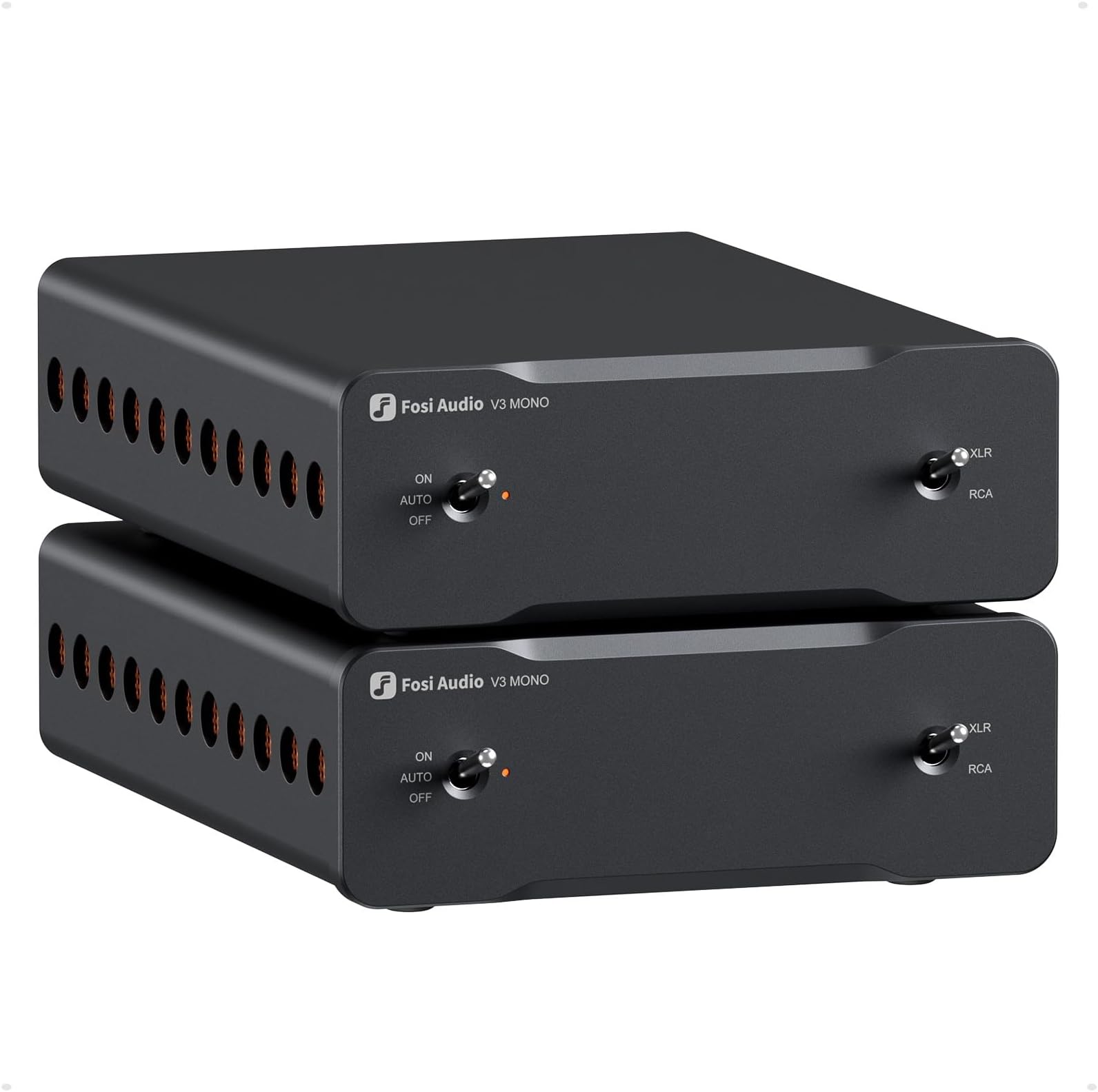
Follow the heat and the size follows. The XA25 weighs about 20.4 kg, most of it metal built to shed heat. NAD’s C 298, a 185-watt-per-channel Purifi Eigentakt power amp, weighs 11.2 kg. A pair of Fosi V3 Mono monoblocks — 240 watts each into 4 ohms — fits in a shoebox and costs about $280 with a shared supply. The WiiM Amp Ultra, a full streaming integrated with room correction, weighs 2.45 kg.
A lighter amp is easier to place and to live with in a small room, and it changes what your money buys: in a Class A or AB design most of the price is transformer, heatsink and chassis, while in Class D it goes to the module, the supply and the features. That is why serious measured performance now starts around $110, not $1,000.
Bass Control: Where Modern Class D Actually Wins
Ask switchers what surprised them and bass comes up first. The reason is damping factor — how low the amplifier’s output impedance is, and how firmly it holds the woofer still between notes. Purifi’s 1ET400A module has an output impedance below 65 micro-ohms, a damping factor above 800, and NAD’s Eigentakt amps quote the same figure; the Marantz Model 30, on Hypex NC500 modules, quotes 500.
Honestly, the difference between a damping factor of 200 and 800 is smaller than the spec sheet suggests — cable and crossover sit between amp and driver. But the jump from a weak-grip older design to a modern Class D amp is real, showing up as tighter, better-defined bass on demanding woofers — the one sonic change I would actually expect most switchers to hear.
The Treble Problem — and Why It’s Mostly Solved
Class D earned its bad reputation honestly, in the treble. A Class D output stage switches at hundreds of kilohertz and needs an LC filter to strip the switching noise. In early designs that filter interacted with the speaker’s impedance, so the top end changed with what you connected — bright with one speaker, rolled-off with another. That “gray” treble older listeners remember was measurable, not imaginary.
The fix is post-filter feedback: take the feedback signal from after the output filter, so the amplifier corrects for the filter and the load together. Purifi’s Eigentakt was built around exactly this and its response is load-invariant; Hypex NCore does the same. The trick has now reached the budget end — the Fosi V3 Mono and the WiiM Amp Ultra both use TI’s PFFB version. So the buying rule is simple: any Class D amp with post-filter feedback will not have the old treble problem, and any cheap one without it still might. Check for “PFFB” before you buy — it matters more than the chip inside.
Noise and Distortion: The Quiet Part
The second thing switchers notice is silence. A well-built modern Class D amp has a noise floor so low that efficient speakers stop hissing between tracks. The numbers are almost absurd by historical standards: the NAD C 298 is specified at under 0.005% THD with SNR above 120 dB, the Topping PA7 Plus claims THD+N under 0.0004%, and Purifi’s own module is specified at under 0.00017% THD at 100 watts into 4 ohms.
Do those numbers mean Class D sounds better than Class A? No — it is measurably cleaner than any amplifier needs to be. A good Class A amp was already below audibility on distortion; Class D just gets there cheaper, cooler, with more power in reserve. Where the low noise floor does matter is at low volumes and with sensitive speakers, where hiss used to be the price of admission. That is a genuine, everyday improvement.
What It Costs: Real Options at Three Budgets
The market splits cleanly into three tiers, and all three are good. At the bottom, a pair of Fosi V3 Mono monoblocks runs about $280 with a power supply and gives you 240 watts per channel into 4 ohms, post-filter feedback included. In the middle, the Topping PA7 Plus ($549) or the WiiM Amp Ultra ($529, streaming and room correction included) cover most systems. At the top, the NAD C 298 (about $3,099) and NAD M23 V2 ($4,999, second-generation Eigentakt, 200 watts per channel into 8 ohms) are the buy-once options, and the Marantz Model 30 ($3,500) is the traditional integrated with phono and tone controls. Above about $500, you are paying for build, features and power, not for audibly lower distortion — a $549 amp and a $4,999 amp can both measure beyond audibility.
| Amplifier | Class D tech | Power (8Ω) | Price |
|---|---|---|---|
| Fosi V3 Mono (pair) | TI TPA3255 + PFFB | 240W @ 4Ω each | ~$280 with PSU |
| Topping PA7 Plus | Balanced Class D | 135W | $549 |
| WiiM Amp Ultra | Dual TPA3255 + PFFB | 100W | $529 |
| Buckeye NC502MP (2-ch) | Hypex NCore | 350W | $749 |
| NAD C 298 | Purifi Eigentakt | 185W | ~$3,099 |
| Marantz Model 30 | Hypex NC500 | 100W | $3,500 |
| NAD M23 V2 | Purifi Eigentakt gen 2 | 200W | $4,999 |
What Doesn’t Change — and What Can Go Wrong
Three things do not change. Your speakers still sound like your speakers, your room still dominates everything below 300 Hz, and a bad implementation is still bad — a cheap Class D amp without post-filter feedback or with a noisy supply sounds exactly as bad as a cheap Class AB amp. Class is a topology, not a guarantee; execution decides the result.
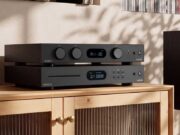
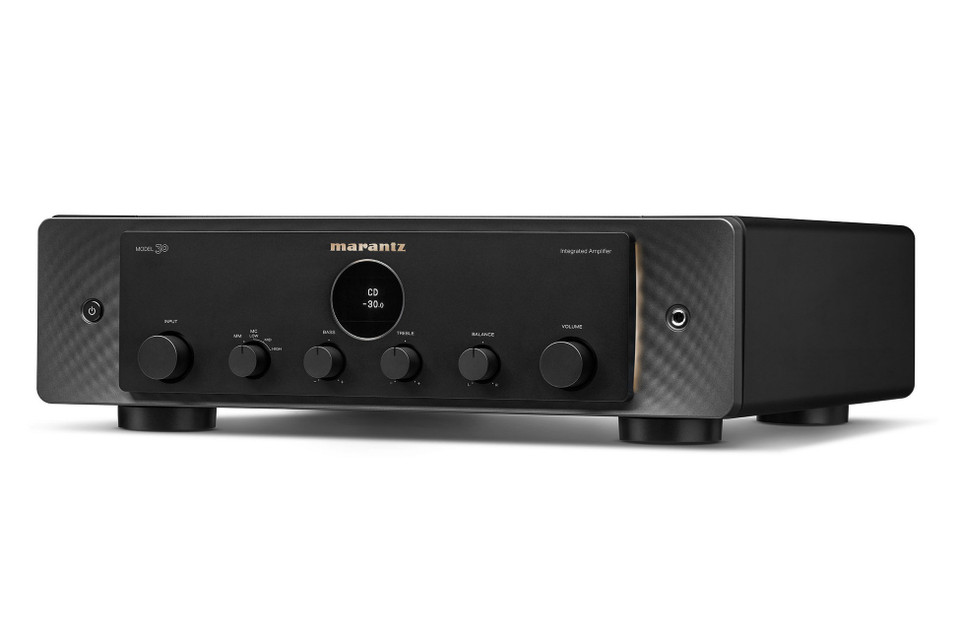
You also cannot tell from the outside. The Marantz Model 30 looks like every Marantz integrated since the 1970s — porthole display, tone controls, 14.8 kg of chassis — and inside is a Hypex NC500 Class D output stage.
Two myths worth clearing up. First, Class D is not digital: the signal path is analog, the output devices just switch on and off at high frequency. Second, “warmth” is not something an amplifier class gives you. It is voicing, and any amp can be voiced warm or cool. If you want warmth, a tone control or a little EQ does more than swapping classes ever will.
When Class A or AB Still Makes Sense
None of this means your old amp is obsolete. Keep it if you love how it sounds — liking a specific amplifier is a complete reason on its own, and no measurement overrules it. An amplifier that works, in a system you enjoy, needs no upgrade.
Switch if the heat bothers you, if the rack is full, if you want more power per dollar, or if your speakers need a firmer grip on the bass. Switch for a second system or a desktop setup, where size and heat matter most. And if you do switch, keep the old amp for a month before selling it — a week of listening tells you more than any review, including this one.
My Take
I would switch for the heat alone — a 25-watt Class A amp burning 240 watts at idle is a luxury I respect, not one I want in a small room. But I would not switch expecting a revelation. The honest version is unglamorous: modern Class D gives you the same music from a smaller, cooler, cheaper box, with tighter bass and a quieter background. The sound itself changes less than the box it comes in.