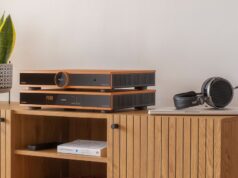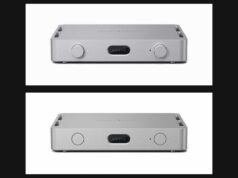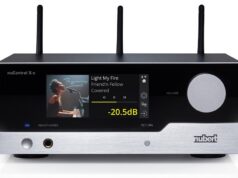



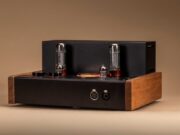


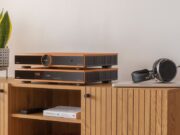
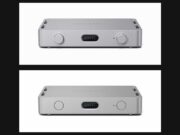
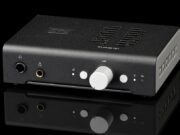
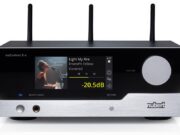
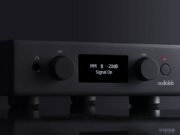




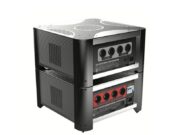




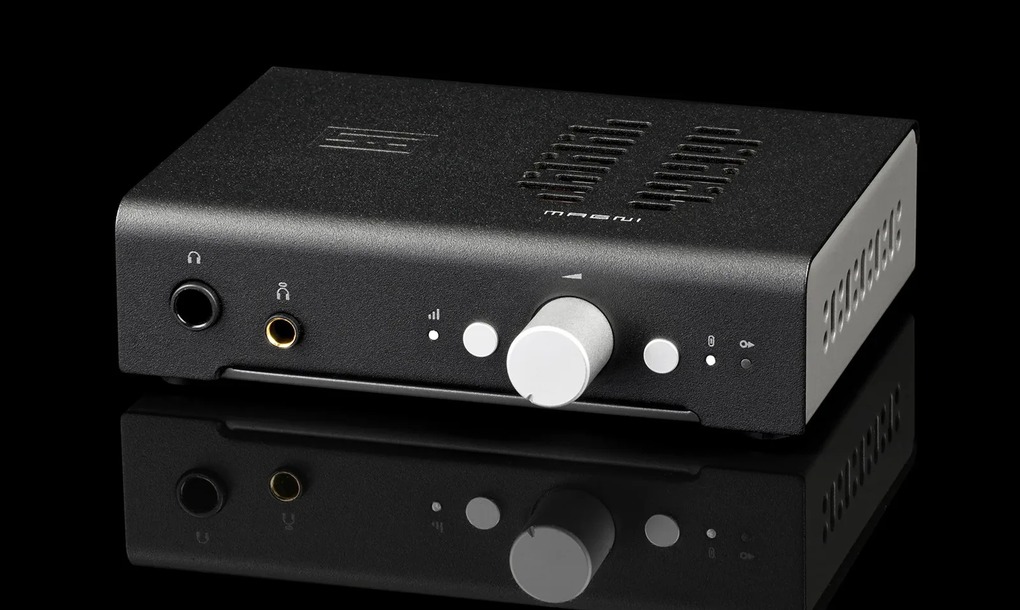
Schiit has announced the Magni 6, the sixth generation of its entry-level desktop headphone amplifier, and the headline is the price: $99 for the amplifier on its own, or $169 with an optional internal Mesh 2 DAC card. Both went on sale October 30, 2026, direct from Schiit. The amp delivers 3 watts per channel into 32 ohms, adds a 4.4mm output running Schiit’s Halo feedback topology, and puts input, gain and preamp-output controls on aluminum front-panel buttons. No independent review or measurement exists yet, so this is a paper analysis, not a listening verdict.
What’s New
The Magni 6 keeps the formula that made the line a default recommendation — fully discrete, DC-coupled, current-feedback, linear power supply — and changes the parts you touch every day. The old toggle switches are gone. Three aluminum buttons on the front panel now handle input selection, gain (0dB or +15dB) and the preamplifier output, behind sealed relay switching and microprocessor oversight.
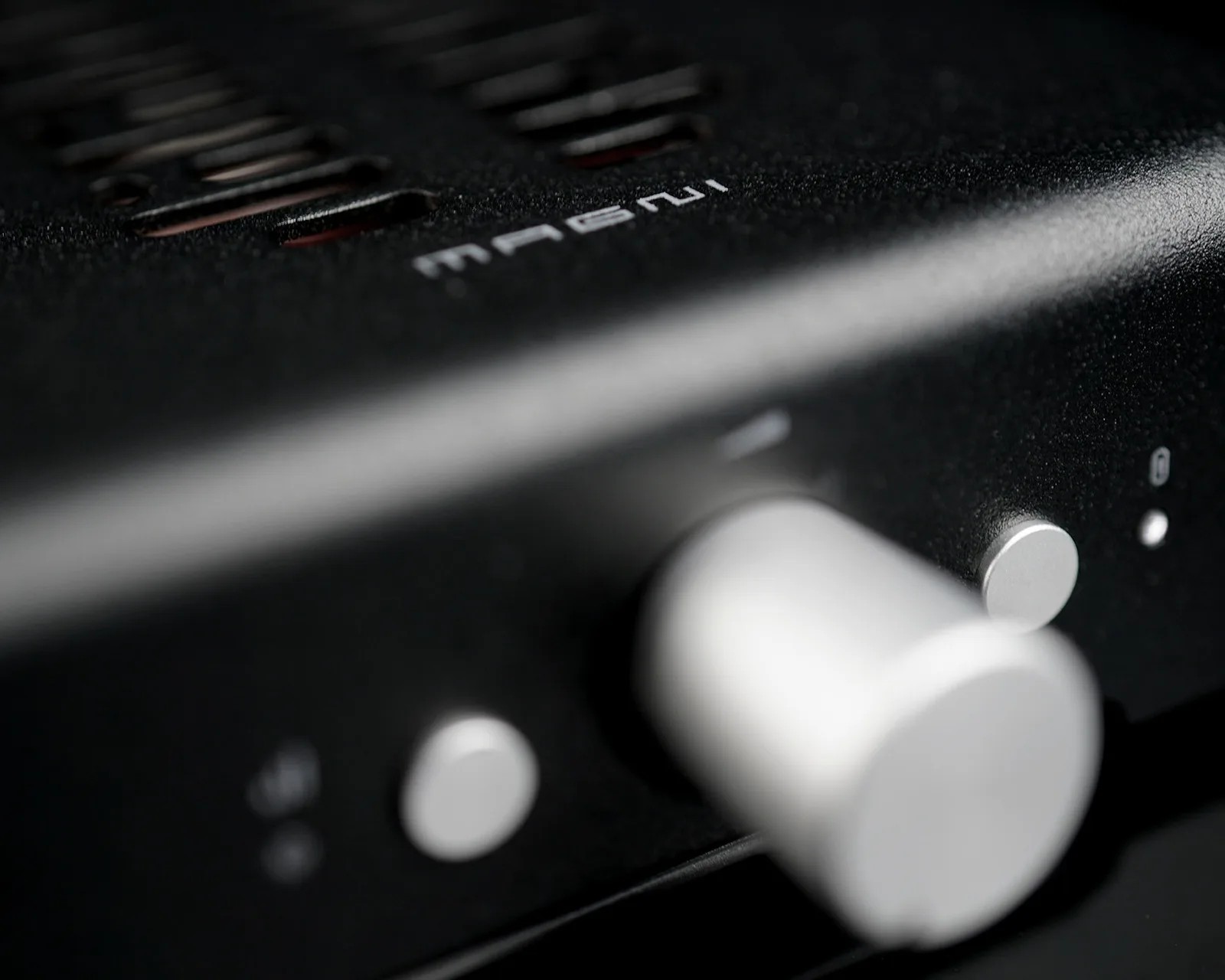
The preamp output is the most useful change for a desk that does double duty. Its left and right outputs can now be switched on and off independently, so you can move between headphones and powered desktop monitors without unplugging anything. The rear panel keeps it simple: RCA in, RCA preamp out, a USB-C port for the optional DAC card, and an AC inlet with a power switch.
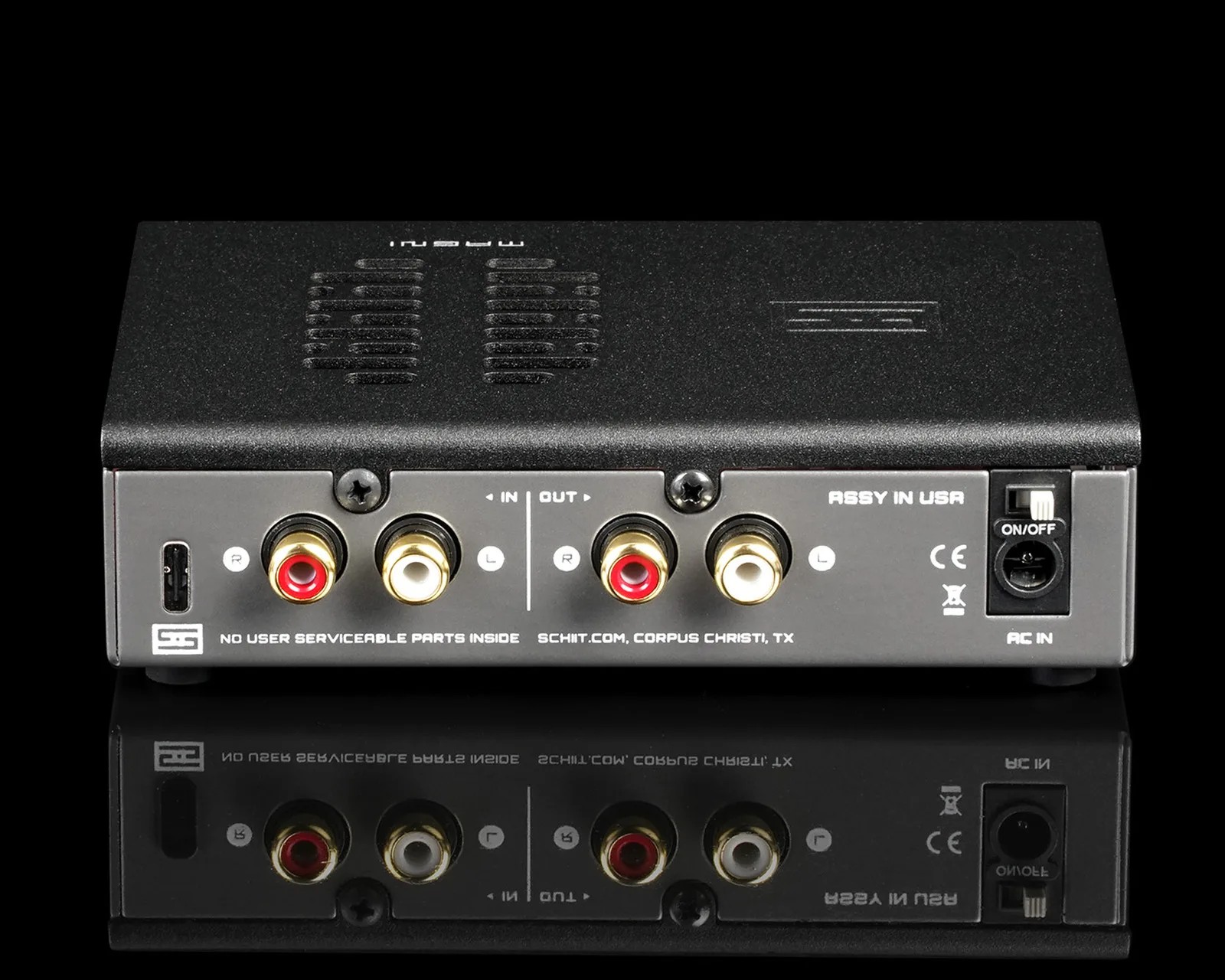
Under the lid there are no amplifier ICs in the main signal path and no volume-control chips. An external 14–16V AC transformer feeds an internally regulated linear supply on ±17.5V rails. The optional Mesh 2 DAC brings Schiit’s time- and frequency-domain optimized digital filtering into the same enclosure.
| Specification | Magni 6 |
|---|---|
| Output power | 3.5W / 16Ω, 3W / 32Ω, 2W / 50Ω, 500mW / 300Ω, 250mW / 600Ω RMS per channel |
| Frequency response | 20Hz–20kHz, ±0.01dB |
| THD+N | <0.0001% low gain, <0.0003% high gain (2V RMS, 300Ω) |
| Signal-to-noise | >122dB low gain, >112dB high gain |
| Outputs | 6.35mm (<0.1Ω), 4.4mm Halo (<2Ω); RCA preamp out (75Ω) |
| Dimensions / weight | 5 × 3.5 × 1.25 in, 2 lbs |
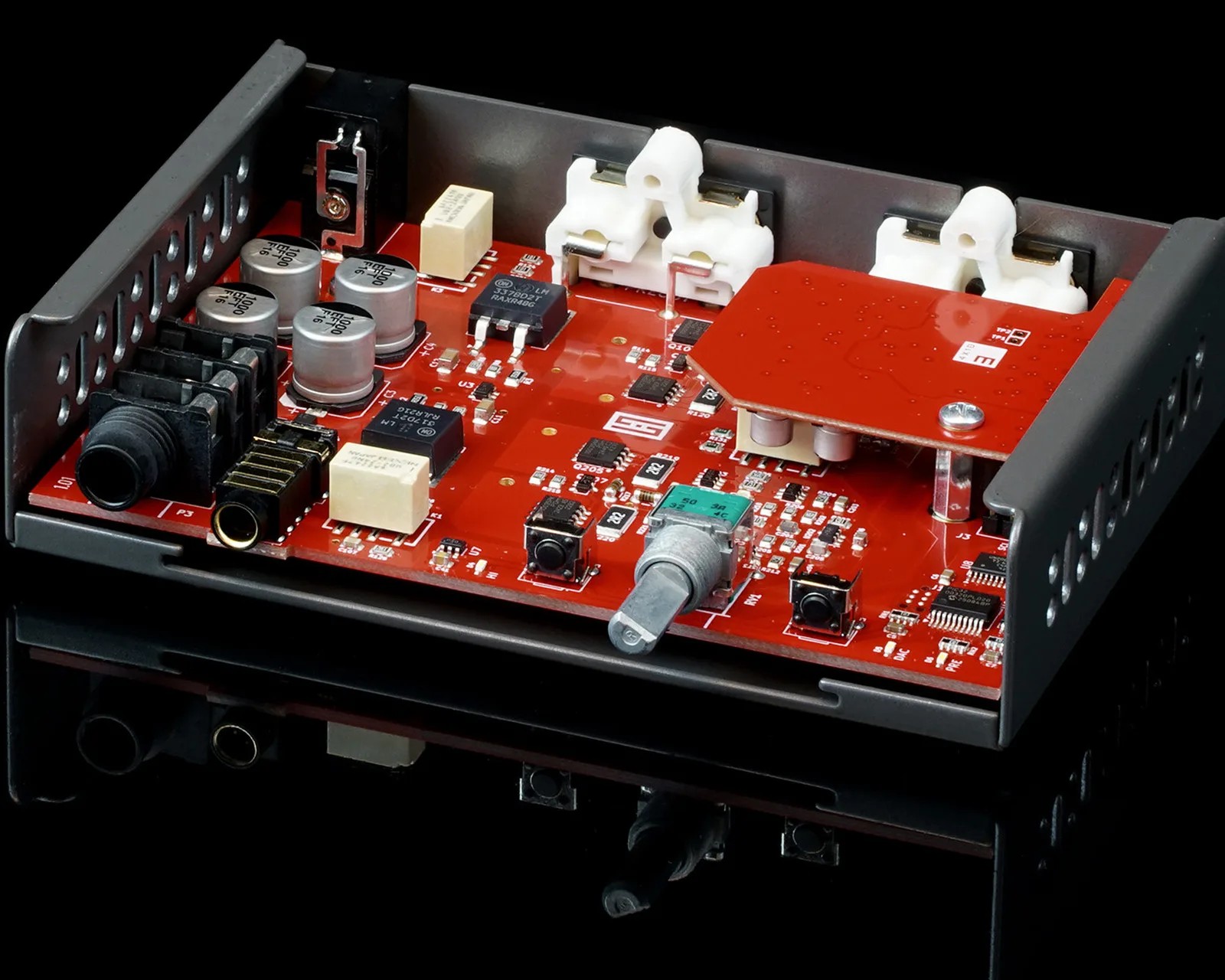
Then there is Halo. The 4.4mm output runs Schiit’s mixed-mode feedback topology, previously used in the Midgard, which folds the headphone driver into the amplifier’s feedback loop. Two caveats. First, the 4.4mm jack is not a balanced output — Halo is a feedback technique, not a balanced circuit. Second, output impedance differs: under 0.1 ohms on the 6.35mm jack, under 2 ohms on the 4.4mm Halo jack — a gap that could matter with impedance-sensitive IEMs, worth knowing before you buy a 4.4mm cable.
Context
The Magni line has been Schiit’s volume seller since the original launched at $99 in 2012, and the Magni 6 is the first generation to return to that price — the outgoing Unity started at $119, or $199 with a DAC. Schiit credits its new surface-mount line in Corpus Christi, Texas, for the cut: “Our new SMD assembly line in Corpus Christi is why,” co-founder Jason Stoddard said. Chassis made in California; three-year warranty, 15-day returns less a 15% restocking fee.
Nine days earlier, on October 21, Schiit launched the Mani 3 phono stage at $149 — the same price as the Mani 2 it replaced, with front-panel gain and cartridge controls added. Black only at launch; no UK or European pricing yet.
Compared to Predecessors and Current Rivals
| Model | Price | vs Magni 6 | Verdict |
|---|---|---|---|
| Magni Unity (outgoing) | $119 / $199 with DAC | 2.5W into 32 ohms, toggles, no Halo, no independent preamp switching | Outclassed on features and price; only if discounted well below $99 |
| iFi ZEN Air DAC 2 | $129 | DAC and balanced output included, but chip-based, less power, no preamp switching | The simpler one-box buy; the Magni 6 is the stronger amplifier |
| iFi iCAN Phantom 1.5 | $3,749 | Tube/solid-state modes, vastly more power — a different universe | Not a rival; a reminder of what $99 buys here |
My Take
On paper, this looks promising — Schiit fixed the right things. The preamp-output switching is a genuine everyday improvement, the front-panel buttons replace fiddly toggles, and the power increase is real — 20% more into 32 ohms, with headroom for demanding planars. The price cut is the story, and it is credible: Schiit owns the assembly line now, and the savings show up in the product instead of the margin.
What concerns me is Halo. Schiit deserves credit for admitting its own testing produced mixed results — headphones present less impedance variation and back-EMF than loudspeakers — but an unproven feedback topology on one of two outputs is a talking point, not a reason to buy. Until independent measurements appear, Halo is a curiosity. The 4.4mm output impedance also deserves a flag: under 2 ohms is fine for most full-size headphones, but sensitive multi-driver IEMs should stick to the 6.35mm jack until someone measures both outputs. The lower-noise claim is Schiit’s own — no third party has verified it yet.
Based on how Schiit has handled this type of product — the Magni line has never been a bad buy, and the Mani 3 followed the same “more for the same money” script nine days earlier — I expect the Magni 6 to be the safe default at $99. But this is paper analysis until someone puts it on a bench.
Who Should Watch This
If you need a desktop amp now and already own a DAC, order the $99 version — there is little reason to wait for reviews of a $99 amp with a 15-day return window. If you want a one-box setup, the $169 Mesh 2 DAC version is the more interesting buy; a USB-C cable is all it needs. Owners of hard-to-drive planars and high-impedance dynamics like the Sennheiser HD 660S2 should watch the measurements — 500mW into 300 ohms is plenty on paper, and I want to see it confirmed. Everyone else can wait: the first measurements will settle the Halo question.