





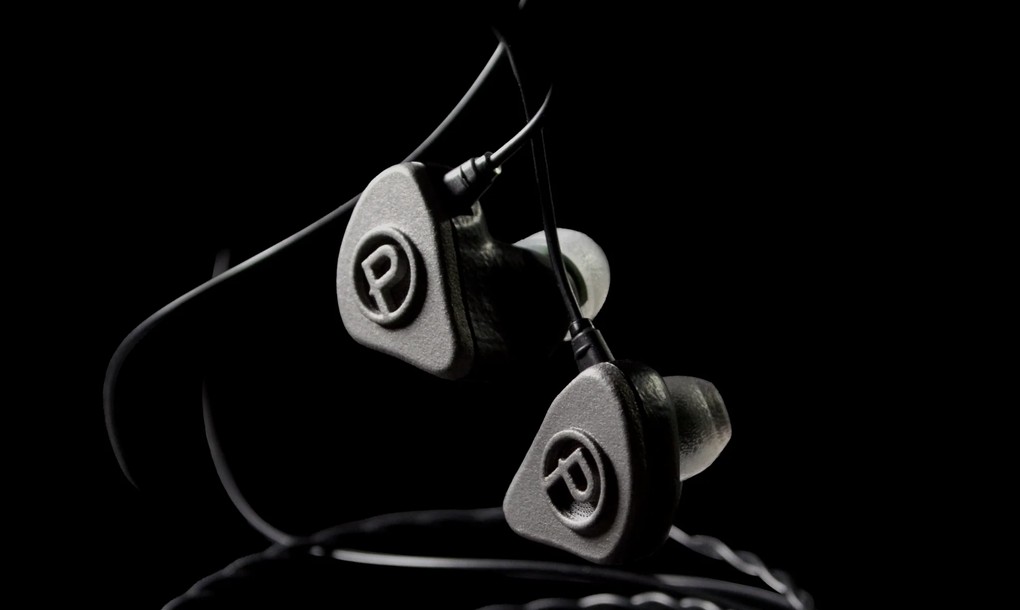
Plunge Audio has a new flagship, and it sounds exactly like the old one. The Unity Stage Premium is a $739 premium edition of the Canadian company’s quad-driver stage monitor, and Plunge is unusually honest about what it is: same drivers, same tuning, same shell — new faceplates, a new cable and a new case. The standard Unity Stage costs $664, so the question this launch asks is a simple one: is the package worth $75?
What’s New
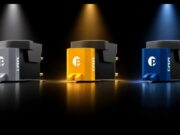
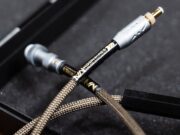
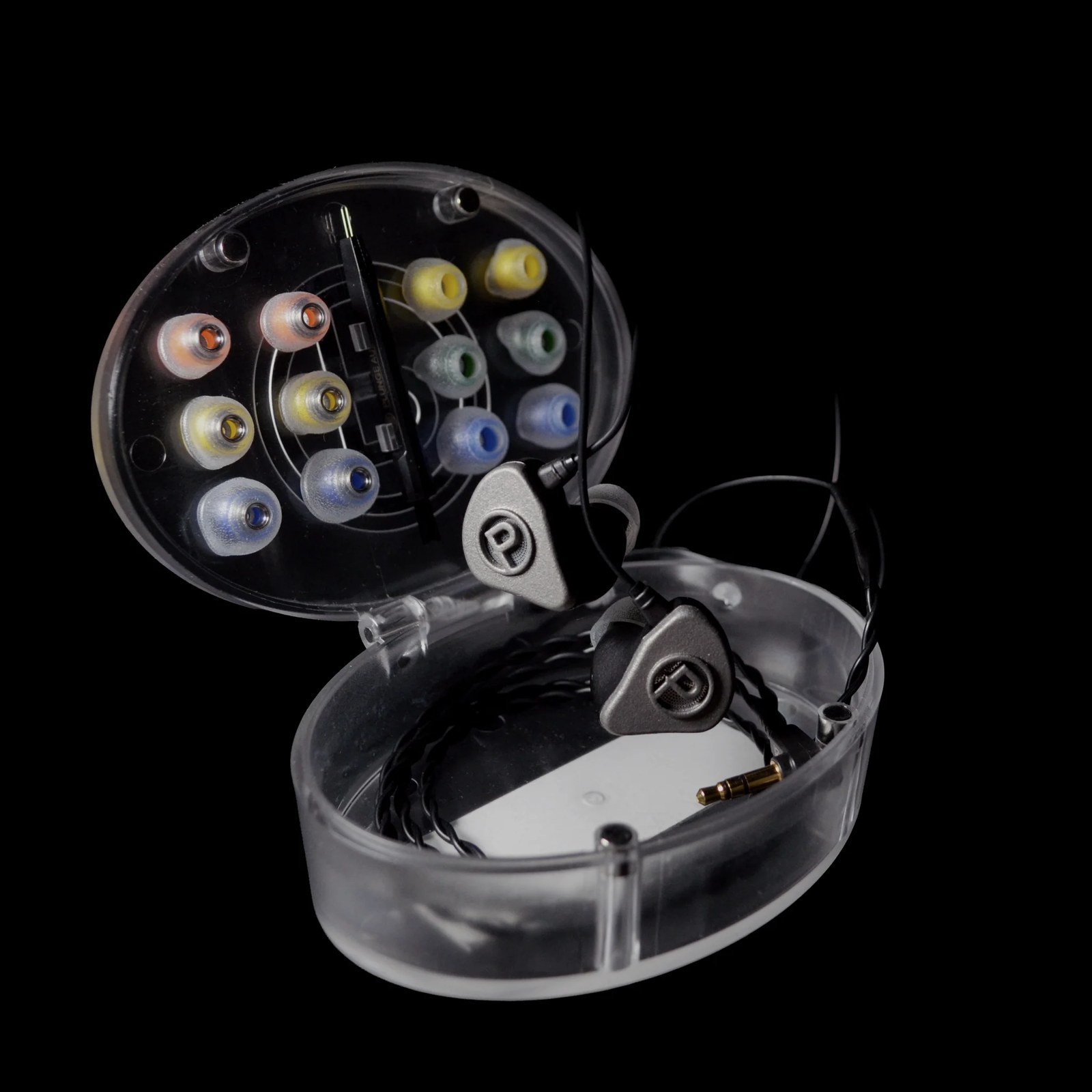
Three things are new, and all three are visible. The faceplates are now mesh-backed, the P logo sitting over a fine perforated mesh. The cable is a low-profile Linum 2-pin, thinner and lighter than the standard model’s four-core silver-plated copper cable, and it sits flatter against the ear. And the case is a transparent hardshell that shows the monitors and spare tips inside.
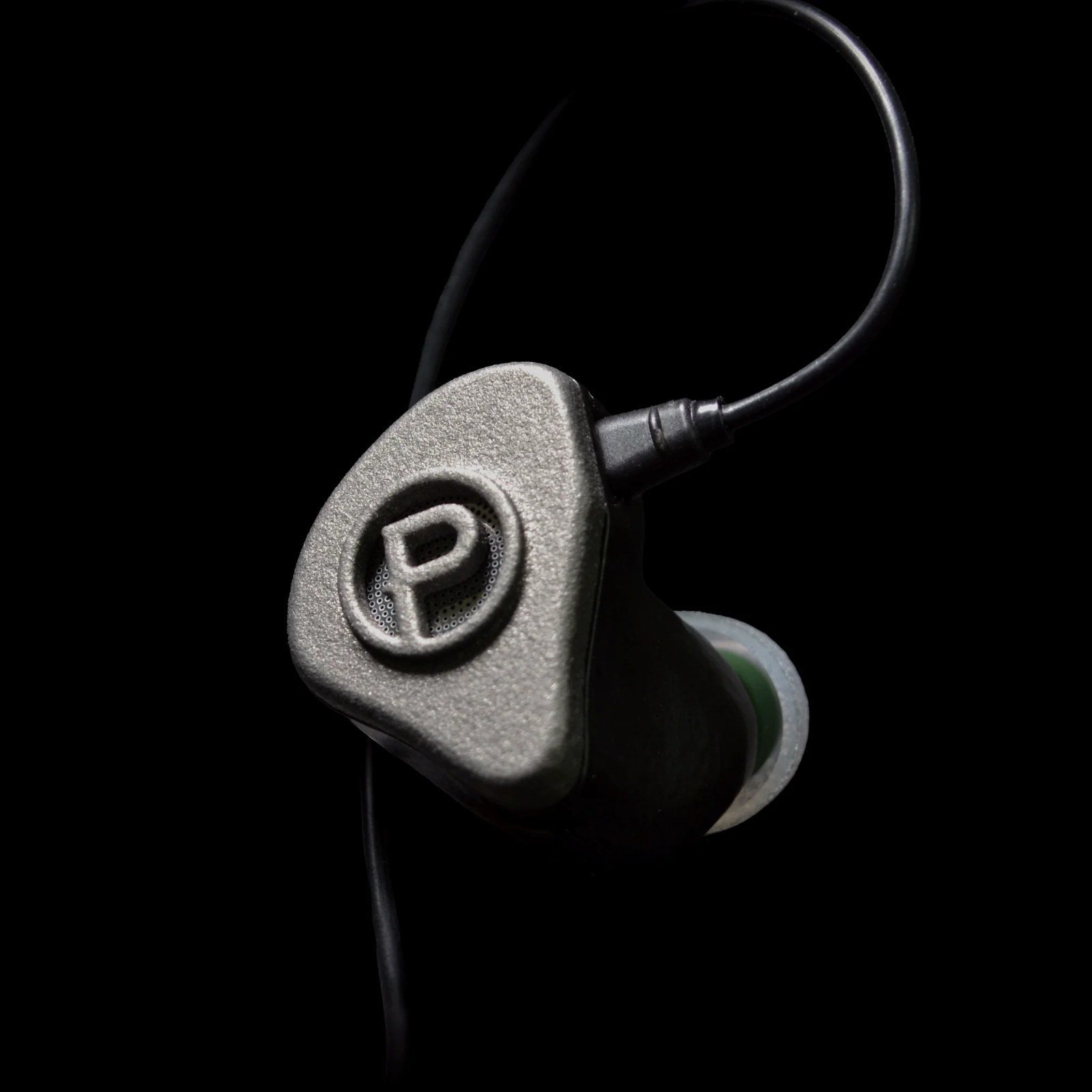
Everything acoustic is carried over untouched. Four Sonion balanced-armature drivers per side — one dual unit for the high mids and highs, one dual unit for the bass and low mids — run through a single crossover with no tubes, no dampers and no filters in the signal path. The open acoustic mass nozzle holds 0.15cc, the impedance is 36 ohms at 1 kHz, sensitivity 94 dB SPL at 1 kHz, frequency response 10 Hz to 20 kHz, and isolation is rated at -28 dB. The shell is the same patented design — Canadian Design No. 221187 — shaped to the ear for a custom-like seal, and every pair is still made in Calgary.
The practical details are unchanged too: a 0.78 mm 2-pin connector, a 3.5 mm plug, replaceable ear tips in multiple sizes and materials, a 30-day risk-free trial and a two-year manufacturer’s warranty. The Linum cable is the one part of the package that changes daily use: a thinner cable snags less on a strap or collar mid-set, and on stage that matters.
Context
The Unity Stage has been Plunge’s flagship since 2018. The company was founded by working musicians — Simon Fisk, a professional double bassist, has designed in-ear monitors since 2005 — and the Unity was built for the stage first: a flat, highly resolving monitor that replicates the mix exactly. Audiophiles adopted it anyway, drawn by a soundstage owners describe as unusually wide for an in-ear. The single-driver Unity Dynamic followed as the cheaper, warmer sibling at $279, and Plunge has done special editions before — a gold-faceplate Dynamic with the same transparent case.
The listening evidence for the Premium is the evidence for the standard model, because nothing acoustic changed. Players who have lived with the standard Unity Stage describe a huge, wide stage with precise imaging, and a monitor that opens up properly at stage volume — it is designed to be heard loud, around 82 dB and above. The same owners warn about the fit: the seal has to be deep and exact, or the sound falls apart. Opinion splits on the midrange, too — some call it the star of the show, others find it grainy next to cheaper sets. All of it carries over to the Premium, good and bad — the drivers and tuning are identical.
Compared
| Monitor | Price | Drivers | What sets it apart |
|---|---|---|---|
| Plunge Unity Stage Premium | $739 | 4× Sonion BA | Mesh faceplates, Linum cable, clear case |
| Plunge Unity Stage (standard) | $664 | 4× Sonion BA | Same sound, standard cable and case |
| Westone Mach 60 | $1,100 | 6× BA | Three-way crossover, Linum SuperBaX cable |
| Shure SE846 Gen 2 | $899 | 4× BA | Swappable nozzle filters, MMCX |
| Ultimate Ears UE 5 Pro | $599 | 2× BA | Custom-fit shells, not universal |
The standard Unity Stage is the Premium’s real rival, $75 below it with the same sound. The Westone Mach 60 costs $1,100 at list — two more drivers and a Linum SuperBaX cable, but a bigger bill. The Shure SE846 Gen 2 is $899 with four drivers and swappable filters for tuning, though it is a 2013 design refreshed in 2022. The UE 5 Pro is $599 but custom-fit — a fitting appointment and a wait, for a shell made for your ears.
My Take
This is a paper analysis. No independent review or measurement of the Premium edition exists yet, and I have not heard it. The listening evidence below comes from the standard Unity Stage, which shares the Premium’s drivers, tuning and shell.
Do the maths honestly and the Premium is a fair deal, not a cash grab. Seventy-five dollars buys a Linum cable, a clear case and the mesh faceplates — and Linum cables are not cheap, with Westone’s SuperBaX retailing around €175 on its own. If you were going to re-cable a standard Unity Stage anyway, the Premium is the cheaper route. If you like the standard model’s looks and cable, keep the $75.
The risk is the same one the standard model always carried: the fit. A monitor that needs a deep, exact seal is a monitor to demo before buying, and no faceplate changes that. The grainy-midrange complaints are worth taking seriously too — the Premium does nothing to address them, because there was nothing acoustic to fix. What it does is make an existing monitor slightly better to live with, for a modest premium.
Who Should Watch
Working musicians buying their first Unity should buy the Premium: the cable and the case are stage-practical upgrades, not decoration. The 30-day trial takes the fit risk down a notch — if the seal does not work, send them back.
Existing Unity Stage owners should skip it. The sound is identical, and $75 for faceplates and a case is a lot to pay for a monitor you already own. Home listeners should demo first; if the stage-monitor brief does not fit how you listen, an open-back like the Sennheiser HD 660S2 gives you a bigger stage for less money.