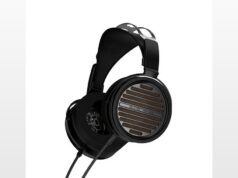


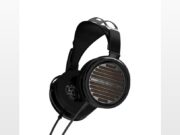














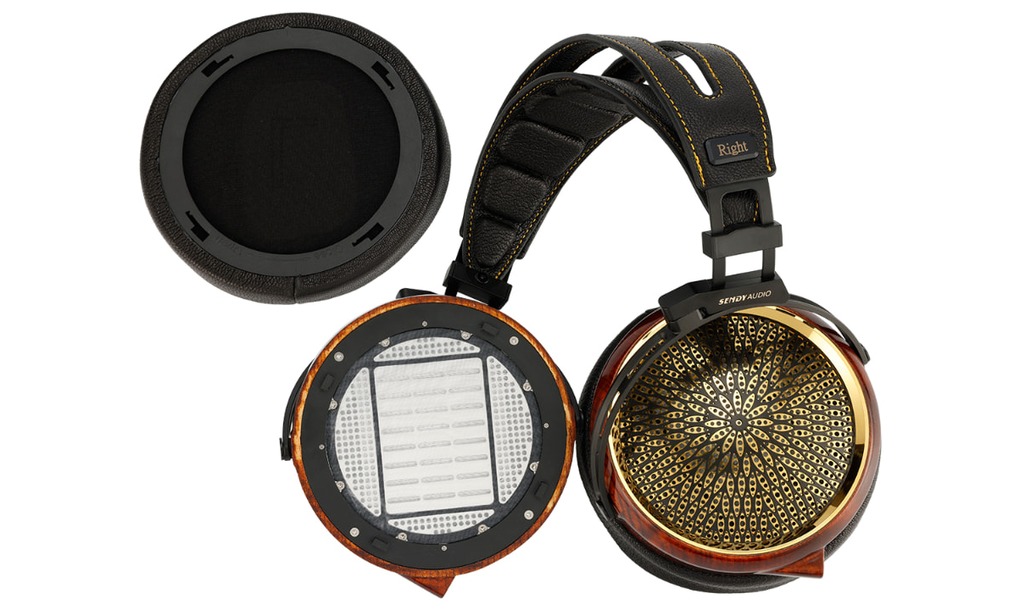
Sendy Audio has a new flagship, and the Sendy Peacock Pro is exactly the headphone you would expect from a company that treats earcups like furniture. This open-back planar magnetic headphone pairs an 88mm driver with hand-finished tiger maple earcups and a 24K gold-plated grille shaped like a peacock’s tail feathers. It costs $1,999, went on sale November 26, 2026, and it is 103 grams lighter than the original Peacock it replaces at the top of the range.
What’s New
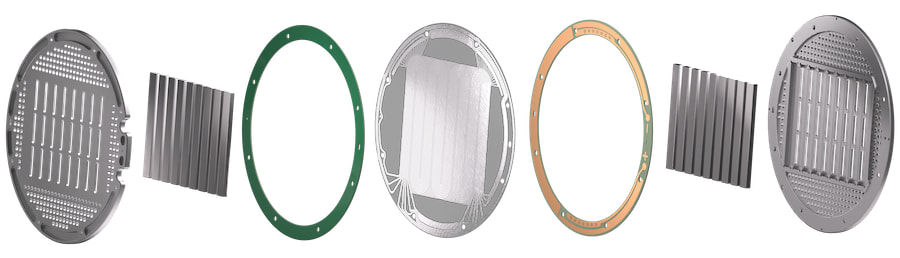
The driver is the headline: an 88mm planar magnetic unit with an ultra-thin, high-rigidity diaphragm made from a PET and carbon composite. Sendy calls the motor structure QUAD-FORMER — four voice coils, two on each side of the diaphragm, with magnets on both sides — built to improve efficiency, cut distortion, and smooth the treble. Rated response is 20 Hz to 40 kHz, impedance 32 ohms, sensitivity 102 dB.
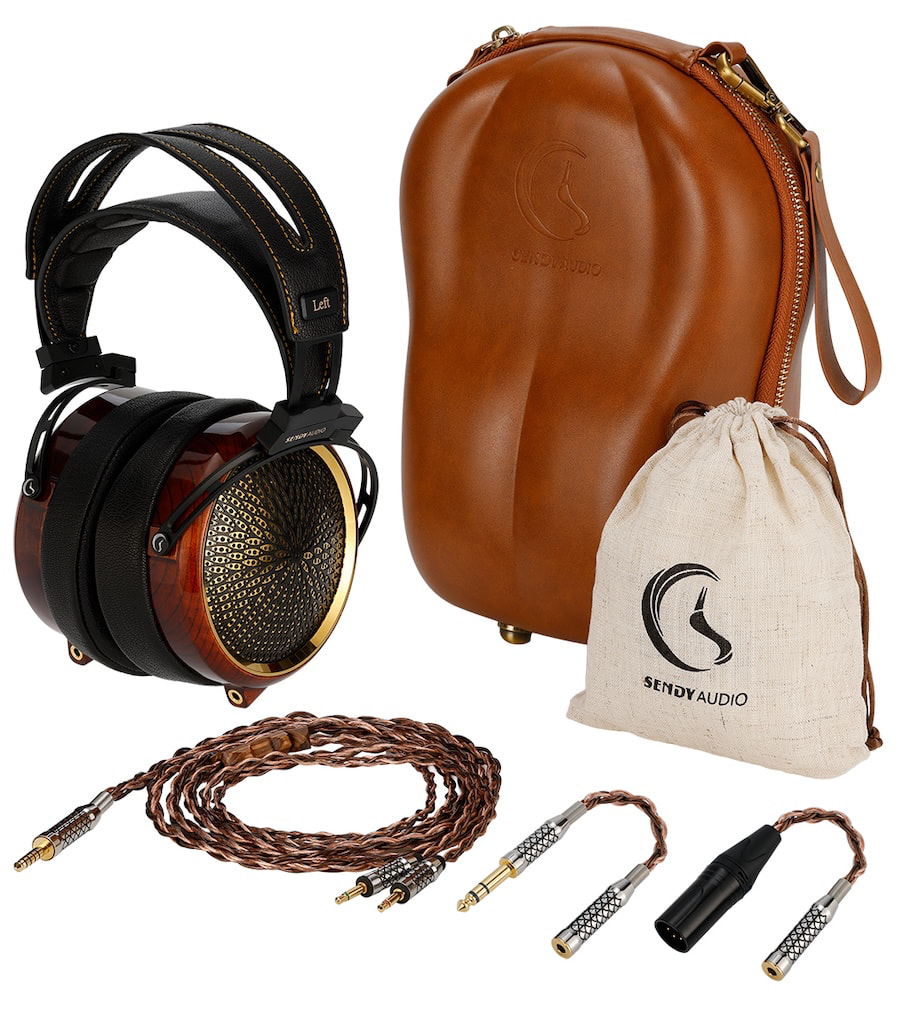
The grille is not only decoration. The feather pattern doubles as an acoustic diffuser, refined through thousands of simulations, Sendy says, to widen the soundstage and place vocals and instruments around the listener. Each earcup is cut from tiger maple and finished by hand, so no two pairs share the same grain; Sendy claims the wood’s stiffness tames unwanted vibrations and warms the sound. The grille and accents are plated in 24K gold, set against CNC-machined aluminum.
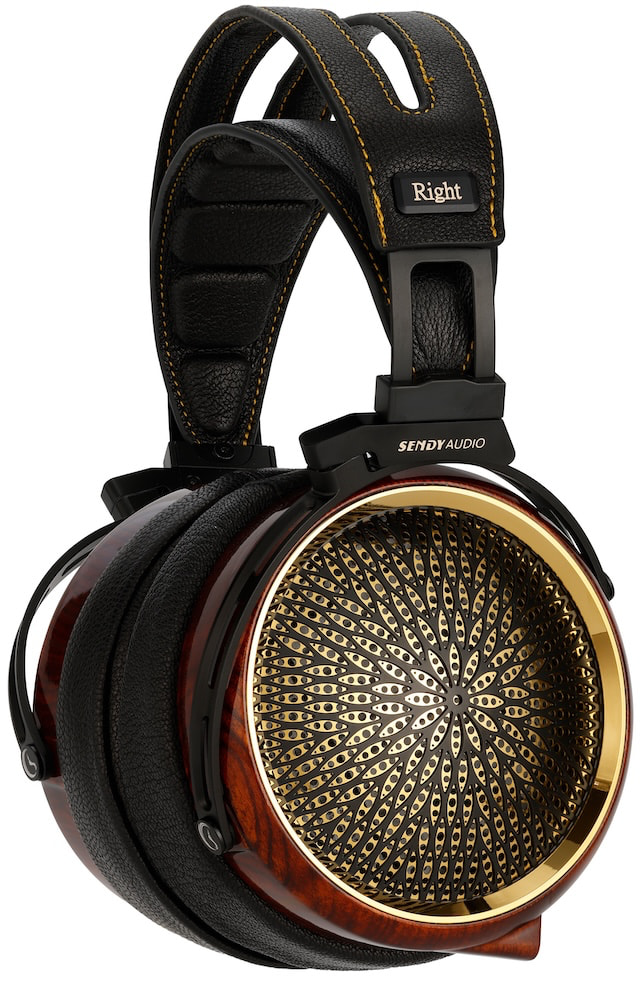
Comfort got real attention. The original Peacock weighed 578 grams — a lot of headphone for a long session. The Pro drops that to 475 grams, with a suspended headband, segmented leather padding, and lambskin earpads over memory foam. A hundred grams off a flagship planar is a meaningful change, not a rounding error.
The box is generous, as Sendy boxes usually are. The included cable is 6N OCC single-crystal copper, 1.9 meters, with dual 3.5mm connectors and a 4.4mm balanced termination. A 4.4mm to 4-pin XLR adapter and a 4.4mm to 6.35mm adapter come in the box too, along with a leather carrying case and a hemp bag — ready for most desktop amplifiers on day one.
Context
Sendy Audio is the premium sub-brand of SIVGA, and the Peacock is the product that defined it. The original arrived in 2021 at $1,499, building Sendy’s reputation on two things: woodwork nobody else in the price range was attempting, and a warm, relaxed take on planar magnetic sound. The Pro is an evolution of that formula, not a new direction.
Below it sits Sendy’s own Egret at $799; nothing sits above the Pro in the line. The $2,000 open-back planar segment it enters is crowded: HiFiMAN, Audeze, Meze, and Dan Clark Audio all fight for the same buyers, and none of them will lose a sale because Sendy has prettier wood.
Compared to Predecessors and Current Rivals
Against the original Peacock, the Pro asks $500 more. What the premium buys: a new PET and carbon diaphragm, the weight cut from 578 to 475 grams, and an impedance drop from 50 to 32 ohms with sensitivity nearly unchanged at 102 dB against 103 dB. The lower impedance should make the Pro easier to drive from a wider range of amplifiers.
The sharper comparison sits at the same price. The Meze POET costs $2,000, the same money, pairing Rinaro planar technology with distinctive craftsmanship. The Audeze MM-500 is $300 cheaper at $1,699 and takes the opposite approach: a professional tool built around tonal accuracy, detail retrieval, and durability. Both have established performance records, and neither will surrender customers because Sendy has the prettier earcup.
Closer to home, the cheapest open-back dynamic flagship I have covered is the HEDDphone DX at $1,199 — my HEDDphone DX coverage has the full story. The Peacock Pro costs $800 more; the question is whether the woodwork, the weight cut, and the new driver are worth that gap.
My Take
On paper, this looks promising, and the most convincing part is the least glamorous: the weight. A 103-gram cut on a headphone that used to weigh 578 grams is the kind of change you feel in the first hour, and it is the one improvement here that does not depend on believing a marketing claim. The 32-ohm impedance and 102 dB sensitivity should also make it an easy load for most desktop amplifiers — no exotic amp required.
What concerns me is the price-to-proof ratio. At $1,999, the Peacock Pro competes with headphones that have years of measurements and owner reports behind them. Sendy’s house sound has always leaned warm and relaxed. Until independent measurements and listening tests emerge, the diffuser grille, the thousands of simulations, and the warm wood are claims, not results — and the design is both the selling point and the risk. At this price, buyers are paying for craftsmanship as much as sound, and they should know which one they are buying.
The included cable and adapters are a genuine point in its favor: they save a buyer $100 to $200 on day one.
Who Should Watch This
If you want a statement planar with real woodcraft and you already own a good desktop amplifier, the Peacock Pro belongs on your watchlist — the first independent measurements should land in December. If you own the original Peacock, the weight cut and the new diaphragm are the reasons to look; the grille alone is not.
Wait for measurements if sound-per-dollar is your priority — the Meze POET at the same price and the Audeze MM-500 at $300 less both have track records the Peacock Pro has not earned yet. And if the budget is closer to $800, Sendy’s own Egret is the sensible place to stop.
Disclosure: OHHIFI may earn affiliate commissions from product links. My verdicts are never influenced by such arrangements.