
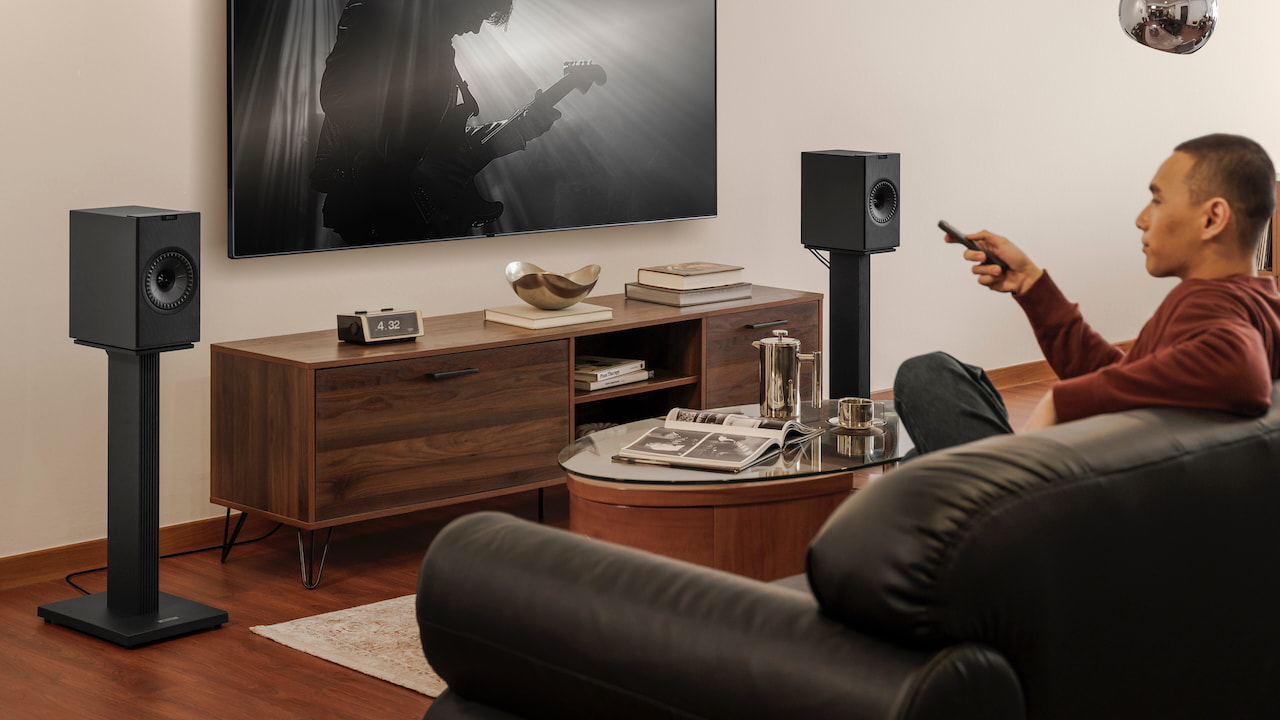
KEF Coda W Review: A Modern Classic for the Analogue Soul?

In the modern world of high-fidelity audio, listeners find themselves at a fascinating crossroads. On one path lies the deliberate, tactile ritual of analogue playback—the satisfying weight of a vinyl record, the gentle drop of a stylus, and the warm, authentic sound that follows. On the other path is the boundless universe of digital streaming, offering instant access to virtually every song ever recorded. For years, bridging this divide meant a rack of components, a tangle of cables, and a significant investment. KEF, a brand that has spent the last decade proving that great sound doesn't require complexity, has now delivered a solution crafted specifically for this modern duality: the Coda W all-in-one wireless speaker system.

This is more than just a new product; it's the revival of a legendary name. The original KEF Coda series, which spanned from the 1970s to the late 1990s, was built on a single, powerful idea: making true high-fidelity sound accessible. Models like the Coda 3, praised for its "excellent stereo imagery" and "controlled bass", and the hugely popular Coda 7, became the entry point into serious audio for a generation of enthusiasts. The new Coda W aims to honour this "pioneering spirit" by reimagining what an accessible hi-fi system can be in the 21st century.
It is a carefully considered and strategic addition to KEF's formidable lineup of active speakers. The company already has a commanding presence in the networked audio space with its award-winning LSX II, LS50 Wireless II, and LS60 Wireless systems. To introduce another Wi-Fi-based streamer could risk cannibalising its own success. Instead, the Coda W carves out a distinct and underserved niche. By forgoing network streaming in favour of a comprehensive suite of direct physical inputs—most notably a built-in phono stage—KEF is targeting the "convenience-minded traditionalist". This is the listener who has a cherished turntable, a television, a computer, and perhaps a CD player, and desires a simple, high-performance system that can serve as the central hub for all of them, without the need for a separate amplifier or a home network connection. The Coda W is not a competitor to its LS siblings; it is a different proposition entirely—a modern integrated system for the tangible media enthusiast.

Build and Design: Understated Elegance
Unboxing the Coda W reveals a product that feels both reassuringly familiar and refreshingly modern. KEF describes the aesthetic as a blend of "vintage charm with modern refinement," a description that proves remarkably apt. The speakers eschew the iconic curved baffle of the LS50 series for a more traditional form factor defined by clean, "rectilinear lines" and a minimalist silhouette. This design choice is significant; it feels less like a radical "wireless speaker" and more like a classic, well-proportioned bookshelf loudspeaker, a visual cue that will resonate with those accustomed to traditional hi-fi components. The look is reminiscent of KEF's highly regarded passive Q-Series speakers, creating a visual link to the world of separates that many potential buyers will be graduating from.
This is not to say the design is plain. The attention to detail is superb, with subtle detailing that creates a timeless, elegant profile suitable for a wide range of environments, from a dedicated study to a primary living space. The build quality is substantial, with the pair weighing a solid 11.3 kg (24.9 lbs) and measuring 285 x 168 x 268 mm (11.2 x 6.6 x 10.55 in.) each. This gives them a reassuring density that speaks to quality construction.
Further elevating the design is the curated palette of five available finishes: Dark Titanium, Nickel Grey, Vintage Burgundy, Moss Green, and Midnight Blue. These sophisticated, muted tones are a far cry from generic black or white boxes, allowing the Coda W to either blend seamlessly into a room's decor or serve as a distinctive stylistic statement. On top of the primary speaker, a set of intuitive buttons provides quick, tactile access to power, volume, and source switching, a welcome feature for moments when reaching for a phone feels like a needless interruption.
Ultimately, the physical design of the Coda W is a masterclass in product positioning. It is deliberately conventional enough to appeal to the audiophile who may be wary of the more futuristic designs common in the wireless speaker market. Yet, it is executed with a modern flair and a premium finish that feels contemporary and sophisticated. The design makes a clear statement: this is a serious pair of hi-fi loudspeakers, thoughtfully reimagined for a new era of convenience.

Features and Technology: The KEF Acoustic Engine
Beneath the Coda W's minimalist exterior lies a suite of KEF's most celebrated acoustic technologies, working in concert to deliver a performance that belies the system's accessible price point. The entire system is active, meaning amplification is built-in, eliminating the need for an external amplifier and the complexities of system matching.
The Heart of the Matter: 12th Gen Uni-Q Driver
At the core of the Coda W's sound is KEF's signature 12th Generation Uni-Q driver array. This is not a conventional two-way design with a separate tweeter and woofer. Instead, the Uni-Q is a point-source driver that places a 1-inch (25 mm) aluminium dome tweeter at the precise acoustic centre of a 5.25-inch (130 mm) magnesium/aluminium alloy mid/bass cone.
The acoustic benefit of this coaxial arrangement is profound. By radiating all frequencies from a single point in space, the Uni-Q driver eliminates the interference and timing errors (known as lobing) that can plague traditional speaker designs. The result is a "beautifully seamless" sense of cohesion across the frequency spectrum and exceptionally wide, even sound dispersion. This creates a vast listening "sweet spot," meaning you can experience a detailed, accurate, and immersive three-dimensional soundstage from almost anywhere in the room, rather than being confined to a single chair.

The Brains of the Operation: Music Integrity Engine (MIE)
If the Uni-Q driver is the heart of the Coda W, the Music Integrity Engine (MIE) is its brain. The MIE is a suite of bespoke Digital Signal Processing (DSP) algorithms that have been specifically tuned by KEF's engineers for the Coda W's unique combination of drivers, amplifiers, and cabinet. This technology is the key that unlocks the system's remarkable performance-to-price ratio.
In a traditional passive speaker, a physical crossover network made of capacitors, inductors, and resistors divides the audio signal between the tweeter and woofer. This process is inherently a compromise, especially in budget-friendly designs. The MIE replaces this physical network with a far more sophisticated digital one. This allows for perfect time alignment between the drivers, correcting for the minute physical distance between the voice coils to ensure all frequencies arrive at the listener's ear simultaneously. This results in the "pinpoint accuracy" and tighter imaging that KEF promises.
Furthermore, the MIE actively manages the relationship between the amplifiers and the drivers, optimising the frequency response and controlling the driver's excursion to produce deeper, cleaner bass from the compact cabinet than would otherwise be physically possible. It is this intelligent DSP that allows KEF to extract a level of sonic integrity and detail from a cost-effective design that would be unattainable in a passive counterpart. It is the critical link that connects the Coda heritage of value with KEF's modern standard of high-performance audio.
Power and Amplification
The Coda W system delivers a robust total power output of 200 watts. This power is not delivered from a single amplifier. Instead, each speaker is bi-amped, meaning the tweeter and the mid/bass driver in each cabinet are powered by their own dedicated Class D amplifier. Each speaker contains a 100-watt amplification module, with 30W allocated to the high-frequency (HF) driver and 70W to the low-frequency (LF) driver. This active design provides a direct, uncompromised connection between the amplifier and the driver it controls, resulting in superior grip, improved dynamics, and greater overall efficiency.
The MAT Question
One point of clarification is necessary regarding KEF's cutting-edge Metamaterial Absorption Technology (MAT), a feature found in models like the LS50 Wireless II. MAT is a complex, maze-like structure that sits behind the tweeter and absorbs 99% of the unwanted rearward sound, resulting in a purer, more natural treble performance. While some of KEF's promotional material for the Coda W mentions MAT, the official, detailed technical specifications for the driver array do not list it as a feature. This strongly suggests that MAT is not included in the Coda W's 12th Gen Uni-Q driver. This omission is almost certainly a deliberate choice to achieve the Coda W's more accessible price point and serves as a key technological differentiator between it and KEF's more premium active speaker offerings.
| Feature | Specification |
| Model | Coda W |
| Drive Units | 12th Gen Uni-Q Driver Array: HF: 25 mm (1 in.) aluminium dome; LF/MF: 130 mm (5.25 in.) magnesium/aluminium alloy cone |
| Frequency Response ($±3dB$) | 41Hz - 20kHz (Dependent on EQ Settings) |
| Frequency Range ($-6dB$) | 38Hz - 20kHz (Dependent on EQ Settings) |
| Amplifier Output Power (per speaker) | LF: 70W, HF: 30W (Total 100W per speaker, 200W per system) |
| Amplifier Class | Class D |
| Max SPL (measured at 1m) | 102 dB |
| Wireless Connectivity | Bluetooth 5.4 with aptX Adaptive™ and aptX Lossless™ |
| Wired Inputs | HDMI ARC, USB-C, Optical, RCA (LINE), RCA (PHONO MM) |
| Wired Outputs | Subwoofer Out |
| Source Resolution | USB-C up to 24-bit/192kHz; Optical up to 24-bit/96kHz; HDMI ARC up to 1.411 Mbps PCM |
| Interspeaker Connection | Wired (All sources resampled to 24-bit/96kHz PCM) |
| Dimensions (H x W x D per speaker) | 285 x 168 x 268 mm (11.2 x 6.6 x 10.55 in.) |
| Weight (per set) | 11.3kg (24.9 lbs) |

Connectivity: The Ultimate Audio Hub
The Coda W's comprehensive connectivity suite is central to its identity. It is engineered to be a versatile hub, seamlessly integrating all the audio sources in a modern living room or study.
For the Vinyl Enthusiast
KEF has placed a special emphasis on the vinyl revival, and this is the Coda W's standout feature. The system includes a dedicated moving magnet (MM) compatible phono input with an integrated phono preamplifier. This allows the vast majority of turntables to be connected directly to the speakers with no extra boxes or equipment required, creating a simple, elegant setup that delivers the warm, detailed sound of analogue records. For users whose turntables already have a phono stage built-in, a separate RCA (LINE) input provides the necessary flexibility.

For the Digital Age
The Coda W is equally adept at handling modern digital sources.
TV & Movies: An HDMI ARC port provides a simple, single-cable connection to a compatible television. This not only transmits high-fidelity audio for movies and gaming but also allows for seamless volume control using the TV's existing remote control.
Computer Audio: A high-resolution USB-C input transforms the Coda W into a superb desktop audio system. Supporting PCM audio up to 24-bit/192kHz, it delivers stunning clarity for music production, immersive gaming, or simply upgrading the sound from a PC or laptop.
Legacy Devices: An optical input and the aforementioned RCA (LINE) input ensure that legacy devices like CD players, Blu-ray players, and older games consoles can be easily accommodated.
Wireless Simplicity
For casual listening, the Coda W features the latest Bluetooth 5.4 standard. Crucially, it supports advanced codecs that elevate the wireless experience. aptX Adaptive ensures a robust, low-latency connection, which is ideal for watching videos without synchronisation issues. For music, the inclusion of aptX Lossless allows for streaming at true CD quality (16-bit/44.1kHz) from a compatible source device. While this is a significant step up from standard Bluetooth, it's worth noting that it does not match the higher resolutions offered by services like Spotify Lossless (24-bit) or other hi-res platforms, for which the wired USB-C connection would be the superior choice.

The Wired Connection
It is important to understand that the Coda W is not a "truly wireless" system in the way a portable speaker is. The primary speaker, which houses all the inputs and processing, requires a mains power connection. It is then linked to the secondary speaker via a physical interspeaker cable. A 3-meter cable is included as standard, with an optional 8-meter C-Link cable available for those needing more flexibility in placement. This wired link is a deliberate engineering choice, ensuring a perfectly stable, high-bandwidth connection that can carry a high-resolution 24-bit/96kHz PCM signal between the speakers, guaranteeing the best possible audio fidelity without any risk of dropouts or compression.
Setup and Sound Performance
Setting up the Coda W is refreshingly straightforward. Once the speakers are positioned and connected via the interspeaker cable, it's simply a matter of plugging the primary unit into the wall and connecting your sources. Control is handled either by the top-panel buttons or via the KEF Connect app, which provides access to EQ settings and source management.
Placement is a key consideration for extracting the best performance. Each speaker features a rear-mounted port to enhance low-frequency extension. As with any rear-ported speaker, it is advisable to leave some space between the back of the cabinet and the wall to avoid an overly boomy or congested bass response. KEF's general guidance for its Uni-Q speakers suggests forming an equilateral triangle between the two speakers and the listening position, but experimentation is always encouraged to find what works best in your specific room.
Listening Impressions
In the listening room, the Coda W immediately impresses with a sound that is pure KEF: coherent, detailed, and surprisingly expansive. The sonic signature is a testament to the synergy between the Uni-Q driver and the Music Integrity Engine.
The soundstage is a clear highlight. True to the promise of the point-source driver, the Coda W projects a wide, deep, and stable stereo image that extends well beyond the physical confines of the speakers. Imaging is exceptionally precise, with instruments and vocalists locked into specific, tangible locations within the sound field. This "pinpoint accuracy" and seamless cohesion creates an immersive, three-dimensional presentation that draws the listener into the performance.
The tonal balance is expertly judged, leaning towards neutrality with a clean and natural character. The midrange, a traditional KEF strength, is superb. Voices are rendered with a richness and nuance that conveys subtle emotional cues, while instruments like acoustic guitars and pianos have a wonderfully authentic timbre. The aluminium dome tweeter, managed by the MIE, delivers a clean, well-extended treble that reveals plenty of detail without ever becoming harsh or fatiguing. While it may not possess the last ounce of ethereal purity found in KEF's more expensive MAT-equipped models, it is remarkably refined and articulate for this class of product.
Bass performance is genuinely impressive for a speaker of this size. The MIE's intelligent control allows the 5.25-inch drivers to reach down to a claimed 41Hz (±3dB), and the result is a low end that is both deep and agile. Basslines are tuneful, articulate, and well-controlled, avoiding the one-note "lump" that can plague lesser designs. There is a satisfying sense of weight and impact that gives music a solid foundation. For those seeking true cinematic rumble or needing to fill a very large room, the dedicated subwoofer output is a welcome and highly effective upgrade path.
Thanks to the active bi-amplification, the Coda W has an energetic and dynamic character. The speakers have an excellent sense of pace, rhythm, and timing, sounding lively and engaging across a wide range of musical genres. They can handle the subtle dynamic shifts of a classical piece as adeptly as the driving rhythm of a rock track, always sounding composed and in control.

Comparisons: Finding Its Place
The KEF Coda W enters a competitive market, but its unique feature set gives it a distinct advantage in its chosen niche.
Coda W vs. KEF LSX II
The most obvious point of comparison is with KEF's own LSX II system. While both are compact, active speaker systems, they are designed for fundamentally different users. The LSX II is a network-first product, built around Wi-Fi streaming, multi-room audio, and integration with platforms like Roon. The Coda W, by contrast, is a direct-connection hub.
For the user whose primary sources are a turntable, TV, and computer, the Coda W is arguably the superior and more cost-effective choice. It offers a built-in phono stage that the LSX II lacks and a more robust set of physical inputs. Sonically, while we await a direct side-by-side test, the Coda W's larger 5.25-inch Uni-Q driver and bigger cabinet volume suggest it may offer greater dynamic scale and deeper bass extension, making it potentially better suited for slightly larger rooms than the LSX II. For a user who does not require network streaming, the Coda W delivers a similar power output and a comparable level of acoustic engineering at a significantly lower price, representing outstanding value.
Market Context
Viewed in the broader market, the Coda W competes not so much with other "wireless speakers" as it does with traditional entry-level hi-fi separates. For the price of the Coda W system, one could purchase a budget integrated amplifier and a pair of passive bookshelf speakers. However, that combination would lack the Coda W's seamless integration, its advanced DSP for acoustic correction, the convenience of HDMI ARC, and its elegant, all-in-one form factor. The Coda W offers a compelling proposition: the performance potential of a well-matched separates system, but with superior technology and unparalleled ease of use.

Verdict
The KEF Coda W is a triumphant return for a beloved nameplate. It masterfully captures the spirit of the original Coda series by delivering a genuinely high-fidelity experience at an accessible price, perfectly updated for the way people listen to music today. The combination of the 12th Generation Uni-Q driver and the sophisticated Music Integrity Engine results in a sound that is remarkably clear, cohesive, and immersive, with a scale and authority that defy the speakers' compact dimensions.
Its true genius, however, lies in its focused design philosophy. By creating an all-in-one system that champions direct, high-quality connections for physical media, KEF has crafted the perfect audio hub for the modern enthusiast who values both the tangible warmth of vinyl and the convenience of digital sources. It is an elegant, powerful, and brilliantly versatile solution that simplifies the pursuit of great sound without compromising on quality.
For the vinyl collector who wants to connect a turntable without fuss, the movie lover seeking an upgrade from a soundbar, the desktop user demanding high-resolution audio, and the casual streamer wanting a simple Bluetooth connection, the KEF Coda W is an unqualified success. It is a modern classic in the making.
SOUND: ★★★★★
FEATURES: ★★★★☆
BUILD: ★★★★★
FOR
Superb clarity and expansive, precise imaging from the Uni-Q driver
Exceptional connectivity hub, especially the built-in MM phono stage
Elegant, minimalist design with premium build and multiple finish options
Impressively controlled, deep, and musical bass for its size
Simple setup and intuitive operation
AGAINST
No Wi-Fi or network streaming capabilities limits its use for multi-room audio
Rear bass port makes placement near walls a critical consideration
Requires a wired connection between the two speakers



Comments