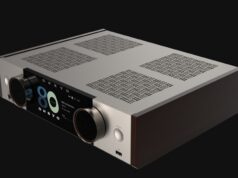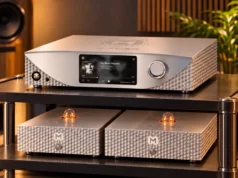







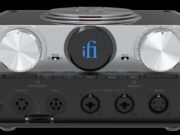
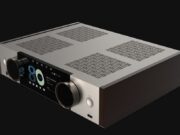









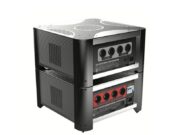




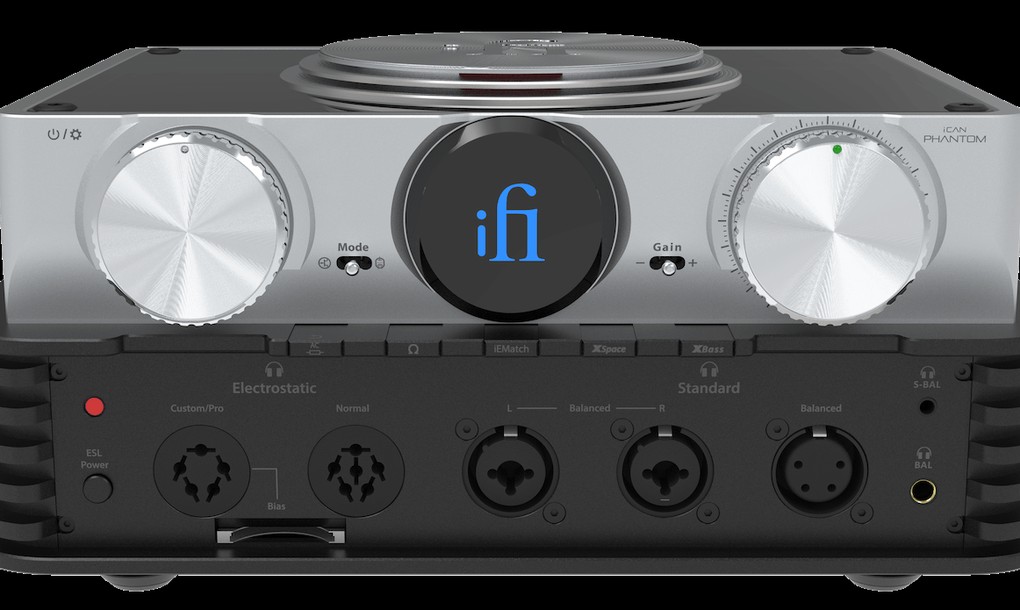
iFi has revised its flagship headphone amplifier. The iCAN Phantom 1.5, announced on September 14 and priced at $3,749 — the same as the original — keeps the 2023 Phantom’s party trick: one box that drives sensitive IEMs, hard-to-drive planar magnetics and electrostatic headphones, with no separate energizer. The revision spends its effort on the things owners actually touch every day: gain, matching, the display and the app. It is available now from iFi and select dealers, at $3,749 in the US and €3,749 in Europe.
What’s New
The biggest change is the gain range, widened from 0/9/18dB to 0/12/24dB. That sounds like a footnote until you switch between a highly sensitive IEM and a power-hungry planar in the same session — finer steps mean finer headroom control, and iFi says the new range covers everything from delicate earphones to demanding electrostatics.
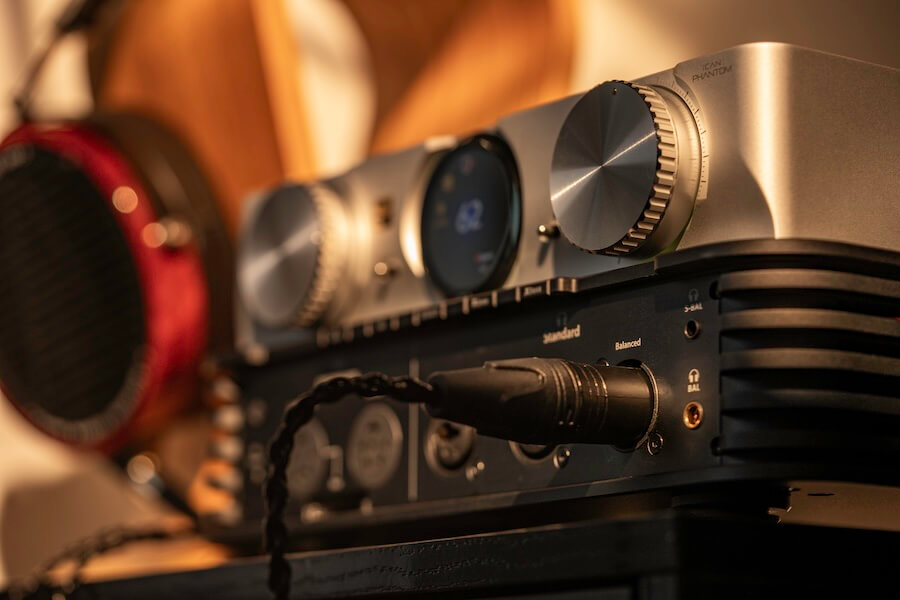
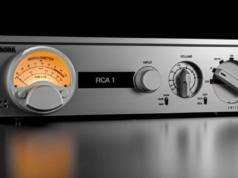
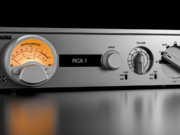
IEMatch gets stronger too, with attenuation up to 12dB single-ended and 24dB balanced, giving more usable volume range with sensitive IEMs. A new VU meter display sits on the front panel, the user interface has been redesigned to match the iDSD Phantom, the volume control is buffered for a smoother feel, and the glass gets an anti-fingerprint coating. The Nexis app expands as well, adding remote control, diagnostics, firmware updates, product renaming, resets and real-time monitoring of tube condition.
What did not change is the amplifier itself. It is still iFi’s PureWavePRO fully differential balanced circuit, delivering more than 15,000mW maximum balanced into 16 ohms, more than 9,030mW RMS balanced into 32 ohms, more than 5,760mW single-ended into 16 ohms and more than 27V into 600 ohms. The electrostatic section is untouched as well: a 230V Normal bias output and a Pro/Custom output with selectable bias from 500V to 640V, the drive stage rated at up to 640V RMS. The box measures 10.1 x 7.3 x 4.7 inches and weighs 9.3 pounds, with a claimed frequency response of 0.5Hz to 500kHz and signal-to-noise above 145dB(A) balanced. All manufacturer figures.
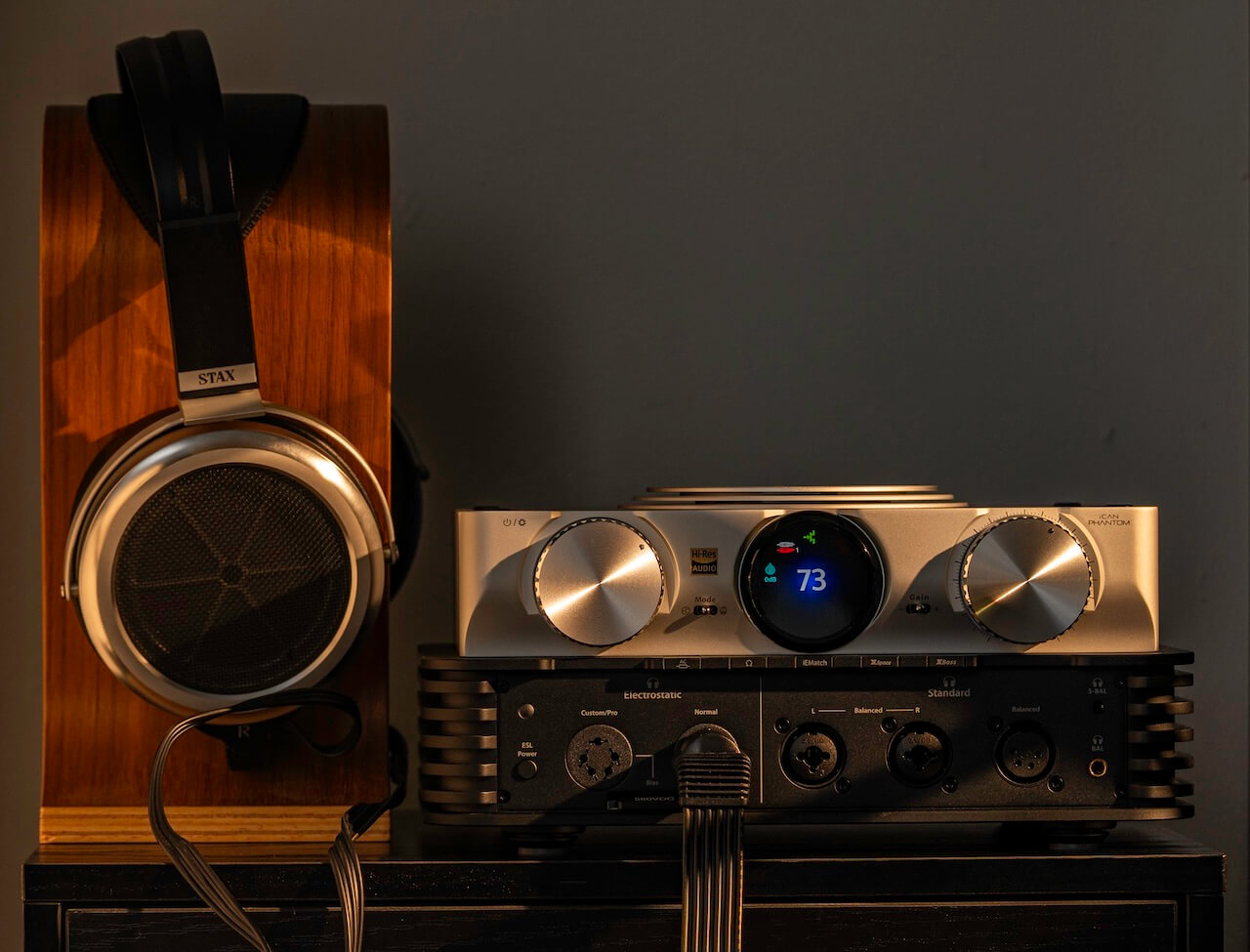
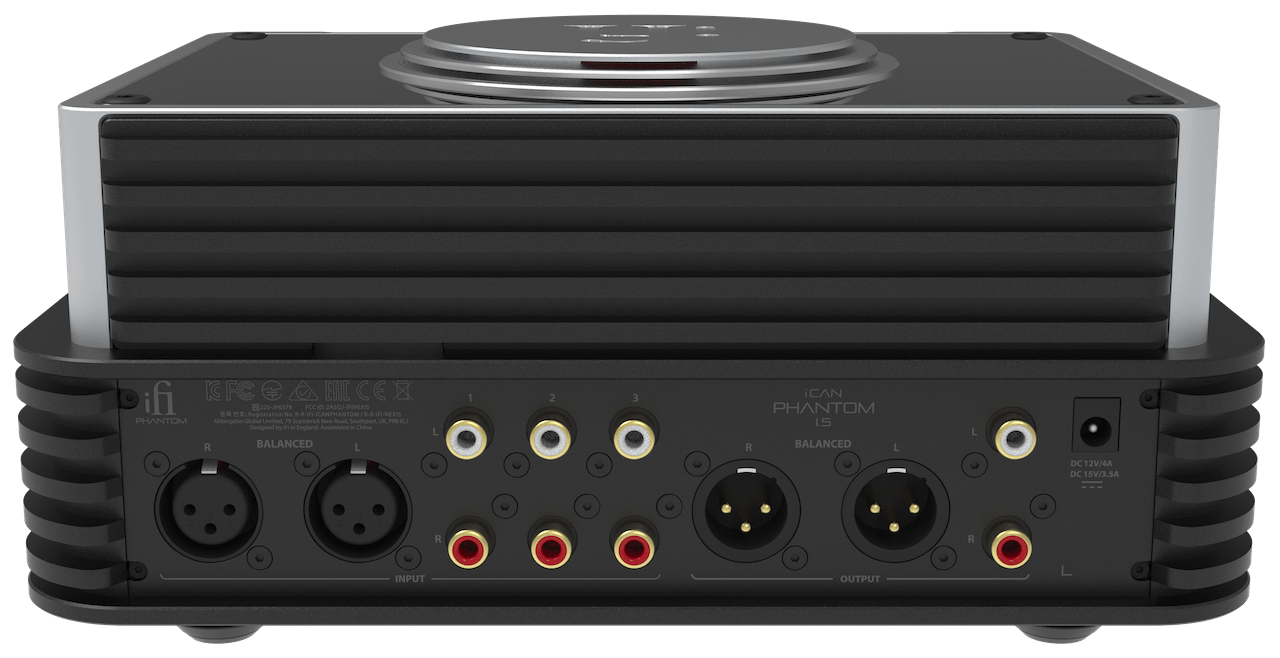
The two input stages carry over: a discrete J-FET solid-state stage and an all-valve stage built around matched General Electric 5670 tubes, with three modes — Solid-State, Tube and Tube+, the last reducing loop gain and negative feedback for a warmer, more harmonically rich presentation. XBass offers three levels of analogue low-frequency adjustment, XSpace provides separate spatial matrices for headphones and loudspeakers, and the connector set covers RCA and XLR inputs, balanced and unbalanced headphone outputs, and preamp outputs.
Context
The original Phantom, launched in 2023, was already an oddity: a headphone amp, a preamp and an electrostatic energizer in one chassis. Electrostatic owners normally buy a separate energizer; IEM owners normally buy a separate low-noise amp. The Phantom’s pitch was consolidation — one expensive box instead of several expensive boxes. The 1.5 revision is iFi admitting the original’s weak spots were usability, not power. Three years of owner feedback, distilled into gain steps, a better display and an app that watches the tubes.
Compared to Predecessors and Current Rivals
| Amplifier | Price | Electrostatic | Speaker output | The difference |
|---|---|---|---|---|
| iFi iCAN Phantom 1.5 | $3,749 | Up to 640V, adjustable bias | None | IEMatch, tube/solid-state choice, app |
| iFi iCAN Phantom (2023) | $3,749 | Up to 640V, adjustable bias | None | Same amp, older gain, display and app |
| Apos x ES Lab HYDRA | $2,200 | 580V fixed Pro bias | 20Wpc | Cheaper, drives speakers, fixed bias |
| Linear Tube Audio Z10e | $6,950 | Yes | 12Wpc | All-tube, much pricier |
The HYDRA, which won a Best in Show award at CanJam SoCal 2026, is the value alternative: it drives dynamic, planar and 580V electrostatic headphones, plus speakers, for $2,200. The Z10e goes the other way — all-tube, $6,950, and it drives loudspeakers too. What neither offers is the Phantom’s combination: adjustable electrostatic bias, IEMatch for sensitive earphones, and a choice of solid-state, tube or Tube+ voicing in one box.
My Take (Paper Analysis)
On paper, the 1.5 is the right kind of revision: iFi left the amplifier alone and fixed the ownership experience. The gain and IEMatch changes are the ones that matter — they address the exact friction of living with one amp across wildly different headphones. The VU meter and the nicer volume knob are cosmetic, but tube-health monitoring in the app is genuinely useful for an amp whose tubes you cannot see. What concerns me is how much of the proposition most buyers will ever use: if you do not own electrostatics, you are paying for an energizer that sits idle, and the 640V adjustable bias — the best reason to choose this over the HYDRA’s fixed 580V — only matters once you own the headphones to match. The price holding at $3,749 is good news for buyers, and it tells you iFi thinks the original was priced right. Until independent measurements and listening tests emerge, this is theoretical — but the theory is the same one the original Phantom already proved in the market, and every change points toward easier daily use.
Who Should Watch This
Owners of the original Phantom should not upgrade for sound — the amplifier is unchanged. Upgrade only if the gain steps, IEMatch or the VU meter solve a daily annoyance for you. Headphone collectors with IEMs, planars and electrostatics should pay attention: this is still the shortest list in audio for one-box coverage, and the 1.5 is the one to buy now. If you only own dynamic or planar headphones, the electrostatic section is dead weight — a dedicated amp does the same job for far less money. And if speakers matter as much as headphones, the HYDRA at $2,200 or the Z10e at $6,950 deserve a look before you spend $3,749 on a box that only drives headphones.