










DALI has refreshed its acclaimed Rubicon series with the new Rubikore line, inheriting technology from the Danish manufacturer’s flagship Kore. What does this mean for the Rubikore 6 floorstanding loudspeaker?
Design: A More Understated Aesthetic
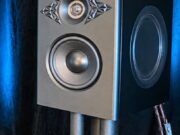
The Rubikore 6 makes a powerful statement with a more understated aesthetic compared to its predecessor, the Rubicon 6. Gone is the silver trim around the tweeter module, though it retains the sophisticated hybrid tweeter configuration that pairs a 29mm soft dome tweeter with an ultra-lightweight ribbon tweeter. The ribbon element only “kicks in” above 14kHz, complementing the main tweeter’s performance in the uppermost frequencies.
The newly designed driver frames, which protrude slightly from the baffle, feature a sophisticated dark grey finish. Two 6.3-inch (16cm) mid-woofers are mounted on this baffle, completing the driver array.
Another notable evolution from the Rubicon to Rubikore is immediately apparent: each pair now comes with a “premium spike kit” included in the package, designed to anchor the speakers firmly to their bases.

Technology: Flagship DNA from the Kore
Aesthetic updates and basic system modifications alone wouldn’t justify launching a new series. However, the exceptional success of both Kore and Epikore 11 in the speaker market has paved the way for this new line, as reflected in its nomenclature. The Rubikore family extends beyond the 6, featuring the larger floorstanding Rubikore 8, the compact Rubikore 2, and home theater-oriented models including the On-wall and Cinema center speaker.
The newly developed tweeter marks a significant departure from previous designs by eliminating ferrofluid in the voice coil gap, which was traditionally used for cooling and damping. Based on the Kore’s “EVO-K” tweeter technology, this innovation aims to achieve superior transient response and enhanced dynamics, particularly noticeable during quiet listening sessions.
The bass drivers incorporate new dual-magnet technology designed to focus magnetic force while reducing losses. DALI continues to employ their SMC (Soft Magnetic Compound) technology, first introduced with the Epicon series in 2012, as the magnetic material. SMC consists of specially coated particles featuring high magnetic permeability combined with extremely low electrical conductivity. The magnets are created through a sintering process using this material. This patented approach offers a distinct advantage: it eliminates the typical “braking effect” and non-linear phenomena – hysteresis and eddy currents – that traditionally occur in moving voice coils. This benefit is particularly pronounced in the powerful dual-drive system.

Aesthetic and system updates alone rarely justify the launch of an entirely new series. However, the stellar performance of both Kore and Epikore 11 in the high-end speaker market has set a new benchmark, inspiring the naming of this latest line. The Rubikore family extends beyond the DALI RUBIKORE 6, encompassing the larger floorstanding Rubikore 8, the compact Rubikore 2, and home theater-focused models including the On-wall and Cinema center speaker.
The newly engineered tweeter represents a significant technological advancement, notably abandoning the traditional ferrofluid in the voice coil gap previously used for cooling and damping. Building upon the Kore’s “EVO-K” tweeter architecture, this innovation delivers enhanced transient response and improved dynamics, particularly evident during low-volume listening sessions.
In the bass section, DALI has implemented an innovative dual-magnet technology designed to concentrate magnetic force while minimizing losses. The drivers continue to utilize the SMC (Soft Magnetic Compound) technology, first introduced with the Epicon series in 2012. This proprietary material consists of specially coated particles that combine high magnetic permeability with exceptionally low electrical conductivity. The magnets are produced through a sophisticated sintering process using this compound. The key advantage of this patented technology lies in its ability to eliminate the typical “braking effect” and non-linear phenomena – namely hysteresis and eddy currents – that traditionally plague moving voice coils. This breakthrough particularly enhances the performance of the powerful dual-drive system.

Listening Room: Rubikore 6 vs Rubicon 6 and Epicon 6
The five-spoke structure of the deep red cones, crafted from paper and wood fibers, is subtly executed – another inheritance from the Kore series. DALI’s “Clarity Cone” technology aims to achieve both enhanced rigidity and resonance characteristics, resulting in improved clarity and dynamic performance.
The continuous bass reflex port design, inspired by the Kore, ensures smooth and unimpeded airflow. Each of the two bass drivers (with the mid-woofer operating up to 800 Hz) connects to its own independent internal volume. This configuration is engineered to minimize resonances and distortion while achieving deeper bass response.
The transition from Rubicon to Rubikore brings significant crossover refinements. Following the Kore’s lead, the new model incorporates Mundorf inductors and hand-selected capacitors. Additionally, the Rubikore 6 and 8 feature “SMC-Kore” chokes, characterized by low DC resistance, short signal paths, and effective inductance control capabilities.
In essence, the new Rubikore 6 represents a comprehensive evolution from its Rubicon predecessor, with differences extending far beyond mere cosmetic changes. However, specifications alone tell only part of the story. The real question is: how do these numerous upgrades translate into actual performance? This is particularly intriguing given that the now-superseded Rubicon 6 had already established itself as an exemplary speaker, delivering outstanding performance both in laboratory measurements and real-world listening environments.


Placement and Setup: Straight Ahead, No Toe-In
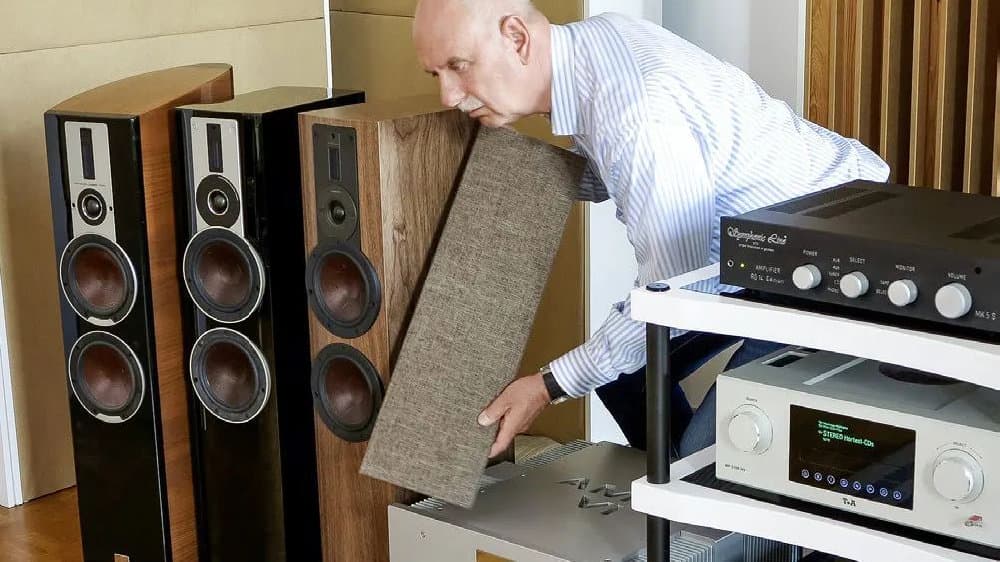
Following the initial visual comparison (shown above), each speaker was positioned according to its
optimal placement in the listening room. Following DALI’s official recommendations, the speakers were positioned straight ahead, facing the listener. DALI stands among the few manufacturers who eschew the common practice of toe-in positioning, as explicitly detailed in their comprehensive manual. This straight-ahead orientation optimizes distortion characteristics, phase relationships, and overall linearity.
Unfortunately, many users disregard this guidance, preferring to angle the speakers toward the listening position. While this may create a more immediate sound presentation, it compromises the soundstage depth. The room’s dimensional perspective becomes flattened, and elements that should extend beyond the speaker boundaries – such as the guitar and French horn in Beat Kaestli’s “Day In Day Out” – become confined within the speakers’ physical location when phase relationships are properly maintained. Therefore, the fundamental rule remains: DALI speakers should be positioned straight ahead.
For our evaluation, we employed high-quality bi-wire cables, which mitigated the sonic limitations imposed by the metal jumpers between the binding posts. These jumpers typically restrict spatial presentation and tonal uniformity when used alone.
Sound: Smoother, More Natural, More Powerful
Maria Pihl’s “Malvina” immediately highlighted the sonic distinctions between the Rubikore and Rubicon. While the latter delivered an essentially flawless performance across various sonic parameters, the Rubikore exhibited noticeably smoother and more articulate reproduction throughout the mid and high frequencies, resulting in a more natural presentation. Resolution matched, if not slightly exceeded, its predecessor. The Rubicon 6’s rendering of sibilants was more pronounced, with more prominent hiss and a somewhat coarser texture.

The Rubikore rendered the deep, full-bodied bass lines with greater weight and “density,” delivering bass notes with exceptional definition and substance. In contrast, the Rubicon’s bass presentation seemed somewhat lean. During the opening passages of Jheena Lodwick’s Orphean version of “A Groovy Kind Of Love,” the Rubikore 6 demonstrated its superior capability by filling our listening room with powerful, effortless bass that made the space resonate, showing no signs of strain even at higher volumes.

Incidentally, the Rubikore 6 proved remarkably unfussy about impedance matching, reaching its optimal performance without any special amplification requirements. This was evident whether paired with the powerful Accustic Arts Amp VI or the more price-appropriate Symphonic Line RG14 integrated amplifier – both combinations delivering excellent results.

The new Rubikore 6 builds upon the exceptional foundation of the Rubicon series, delivering a remarkable sonic performance. During a listening session featuring the Red Norvo Quintet’s live recording of “Saturday Night,” the speaker demonstrated extraordinary spatial projection, effortlessly separating instrumental performances from the speaker enclosure. The vibrant vibraphone strikes precisely delineated the central soundstage, reproducing instrumental scale with remarkable accuracy while maintaining the subtle ambiance of audience reactions in the background—exactly as a live recording should sound.
Meticulous engineering ensures optimal performance, with careful installation preventing cabinet movement on the speaker spikes, which subsequently enhances high-frequency clarity. The Rubikore 6 represents a mature loudspeaker design, meticulously crafted to satisfy the sonic demands across diverse musical genres while exemplifying Dali’s renowned “Kore capabilities.”
Rubikore 6 vs Rubicon 6 at a Glance
Design: Rubikore 6 is more understated, with no silver trim around the tweeter module. Rubicon 6 had the silver trim.
Tweeter: Rubikore 6 has a new EVO-K-based tweeter with no ferrofluid in the voice-coil gap.
Bass drivers: Rubikore 6 uses new dual-magnet bass drivers; SMC is retained.
Crossover: Rubikore 6 has refined crossover parts: Mundorf inductors, hand-selected capacitors and SMC-Kore chokes.
Spike kit: Each Rubikore 6 pair now comes with a premium spike kit.
Sound: Rubikore 6 is smoother and more natural, with more articulate mids and highs and bass with greater weight and density. Rubicon 6 sounded coarser, with more pronounced sibilants and leaner bass.
Price: Rubikore 6 is $9,000/pair in the US. No Rubicon 6 price is stated in this article.
Verdict: Pros and Cons
The Rubikore 6 builds upon the exceptional foundation of the Rubicon series, delivering a remarkable sonic performance. It represents a mature loudspeaker design, meticulously crafted to satisfy the sonic demands across diverse musical genres.
Pros
- Noticeably smoother and more articulate reproduction throughout the mid and high frequencies, resulting in a more natural presentation.
- Resolution matched, if not slightly exceeded, its predecessor.
- Deep, full-bodied bass with greater weight and density, powerful and effortless even at higher volumes, showing no signs of strain.
- Extraordinary spatial projection, effortlessly separating instrumental performances from the speaker enclosure.
- Remarkably unfussy about impedance matching, reaching its optimal performance without any special amplification requirements.
Cons
- The metal jumpers between the binding posts restrict spatial presentation and tonal uniformity when used alone; bi-wiring is recommended.
- Angling the speakers toward the listening position (toe-in) compromises soundstage depth and flattens the room’s dimensional perspective; DALI speakers should be positioned straight ahead.
Frequently Asked Questions
How much does the Rubikore 6 cost?
DALI sells through dealers and lists no price on its own site. US authorized dealers list the Rubikore 6 at $9,000 per pair.
What are the key specs?
A hybrid tweeter — a 29mm soft dome plus a ribbon above 14kHz — with two 6.3-inch mid-woofers, SMC magnet technology, Clarity Cone drivers and Mundorf inductors. It is bi-wireable and comes in four finishes.
Rubikore 6 vs Rubikore 2 — which one?
The Rubikore 6 is the floorstanding model of the range, sharing the hybrid tweeter and SMC technology with the rest of the family. The Rubikore 2 is the standmount model below it — our review is here: https://www.ohhifi.com/dali-rubikore-2-a-detailed-examination-of-sonic-excellence/
Specifications
| Specification | Details |
|---|---|
| Type | 2½ + ½-way floorstanding loudspeaker, bass reflex (tuned to 34 Hz) |
| HF module | DALI Hybrid Tweeter: 29 mm low-loss soft fabric dome + 17 × 45 mm planar magnetostatic ribbon |
| LF/MF drivers | 2 × 6½-inch Clarity Cone SMC drivers |
| Crossover frequencies | 800 Hz / 2,600 Hz / 14,000 Hz |
| Frequency range (±3 dB) | 38 Hz – 34,000 Hz |
| Sensitivity | 88.5 dB (2.83 V / 1 m) |
| Nominal impedance | 4 Ω |
| Maximum SPL | 110 dB |
| Recommended amplifier power | 40–200 W |
| Dimensions (H×W×D) | 990 × 200 × 380 mm (39.1 × 7.9 × 15.0 in) |
| Net weight | 23.0 kg per speaker (incl. grille) |
| Finishes | 4 (per the article) |
| Price | £4,999/pair (UK); $9,000/pair (US) |