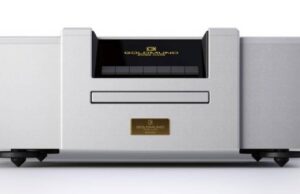







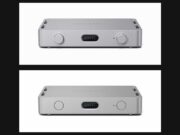
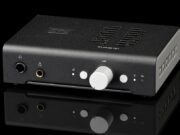
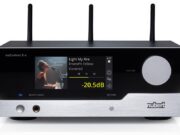


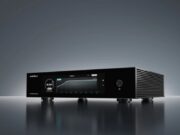






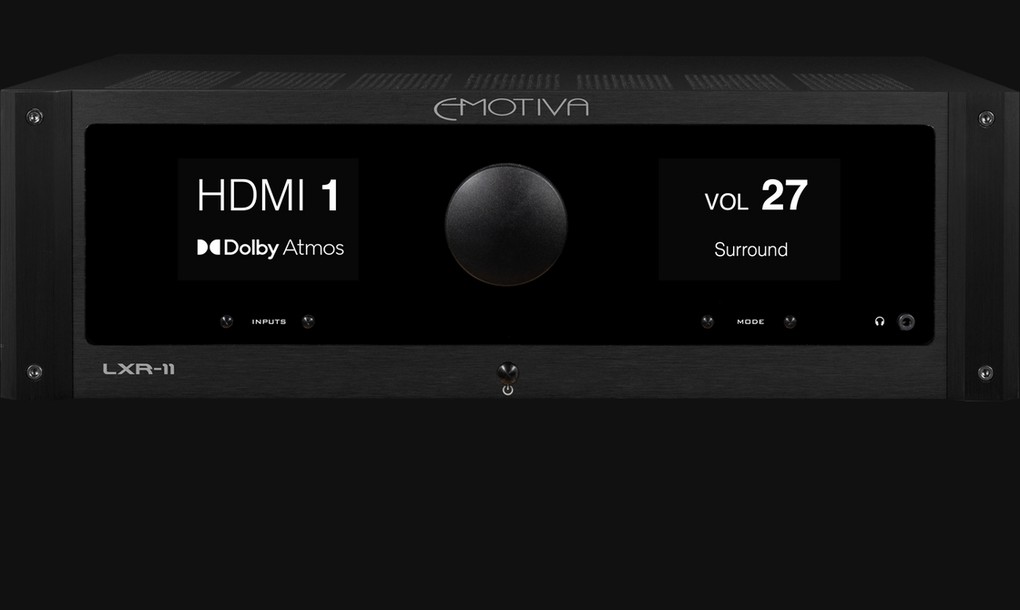
Emotiva has a habit of putting expensive features into mid-priced boxes. Its new LX Series does it again, and this time the expensive feature is the room correction itself. The LXR-11 receiver and LXP-16 processor arrive with the complete Dirac Live suite — Room Correction, Bass Control and Active Room Treatment — included in the purchase price, with a calibrated measurement microphone in the box. No licence to buy, no upgrade to unlock later.
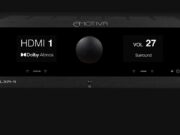
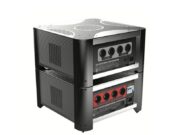
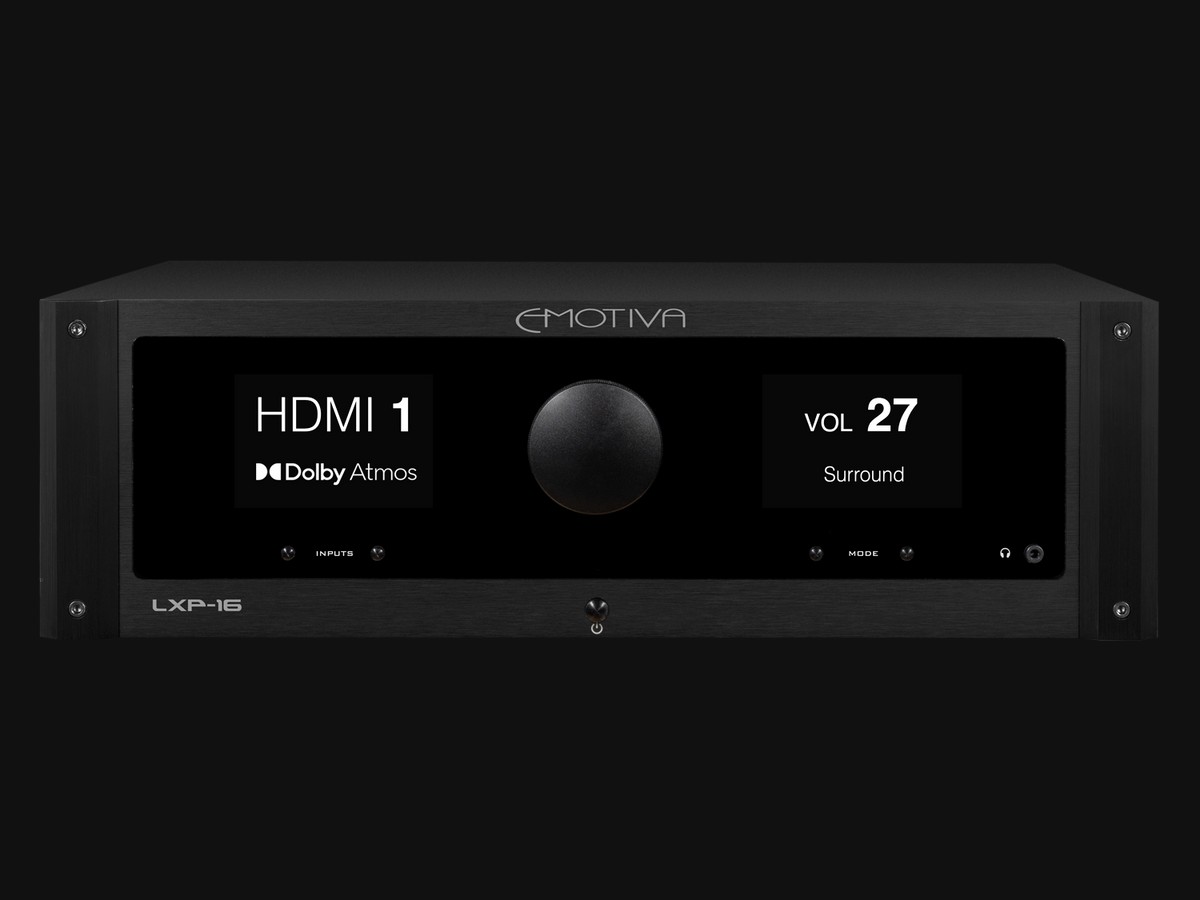
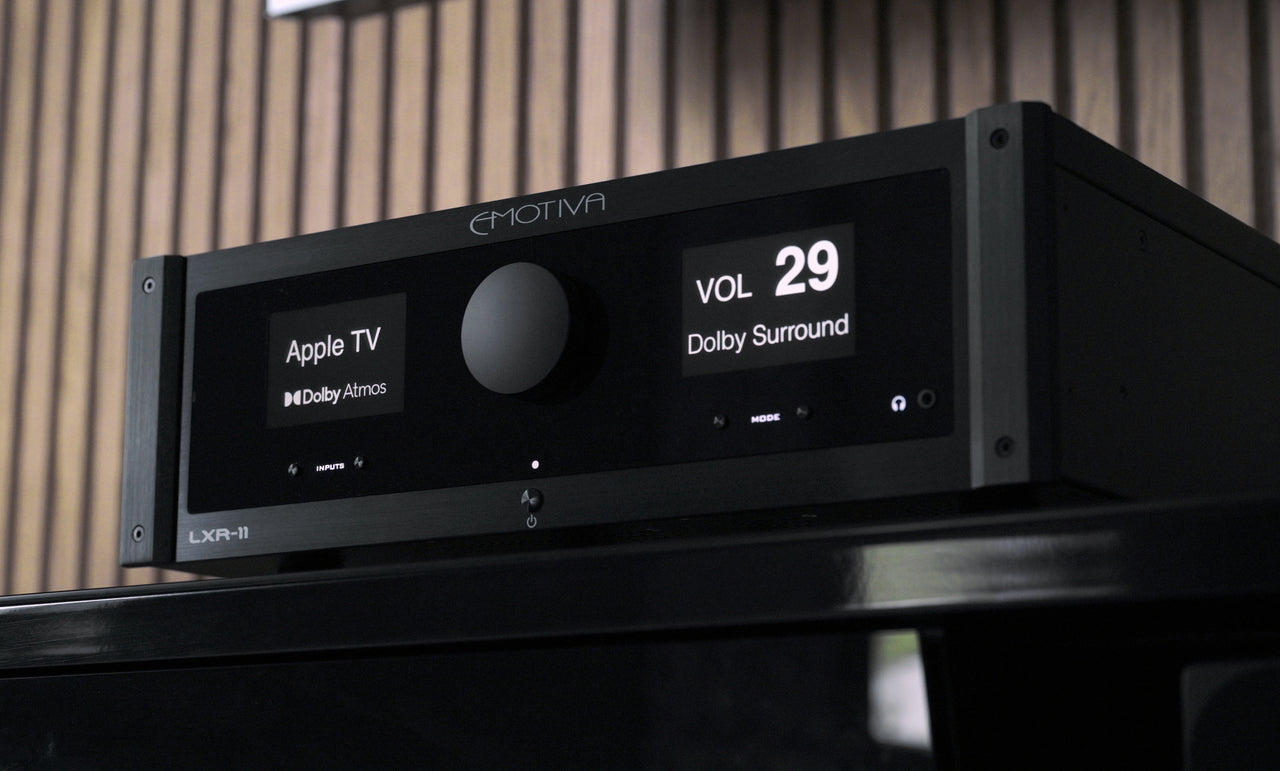
The two models cover the two ways of building a serious home theatre. The LXR-11 is the all-in-one: eleven channels of Hypex NcoreX Class D amplification in the same chassis as the processing. The LXP-16 is the separates route: the same processing platform as a standalone processor, for systems that already have power amplifiers. Both were announced in September, shown at CEDIA Expo 2026 in Denver, and shipped in October.
What’s New
Both models process up to 9.4.6 channels of Dolby Atmos and DTS:X Pro — nine conventional surround channels, six overheads and four independently managed subwoofers. That is the headline number, but the story is what comes with it. Dirac Live Room Correction handles frequency response and impulse correction; Bass Control coordinates the speakers and multiple subwoofers around their crossover regions; Active Room Treatment goes further, treating the speakers as a coordinated acoustic system and using their combined output to reduce low-frequency decay in the room.
ART is the part that usually costs extra. Arcam’s new Radia home theatre components support Bass Control and ART as paid upgrades, and compatible Marantz receivers and processors also require separate Dirac licence purchases. Emotiva including all three, plus the microphone, in a $4,799 processor and a $5,999 receiver is the most interesting thing about the LX Series — and the reason Dirac itself announced the launch.
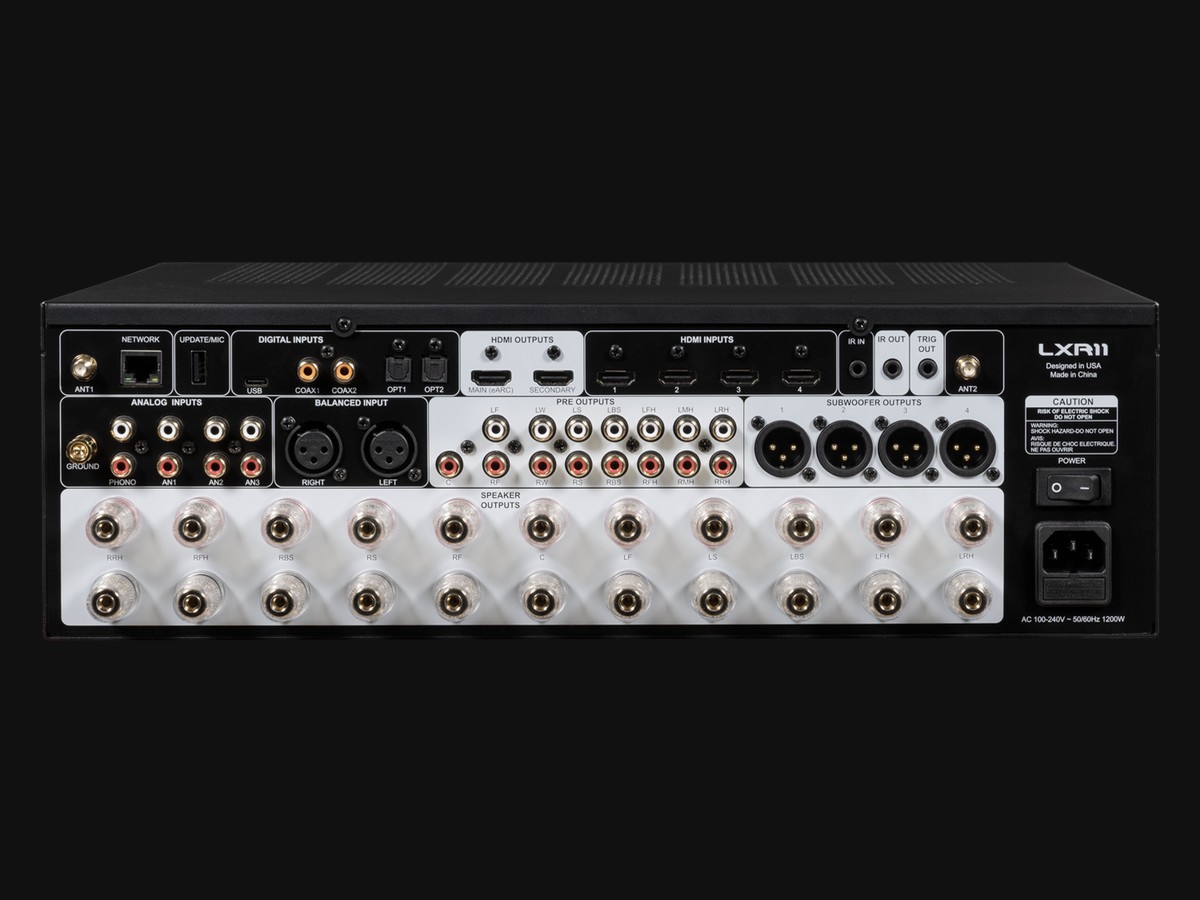
The LXR-11’s amplification is rated at a claimed 140W per channel into 8Ω or 240W into 4Ω with three channels driven, falling to 120W per channel into 8Ω with seven channels running, with a damping factor above 500. Despite the eleven channels, the receiver uses a fanless cooling design. Fifteen RCA preamplifier outputs let you add external amplification for the channels the internal amps do not cover.
The LXP-16 takes the processor-only path, pairing Analog Devices SHARC digital signal processing with ESS Hyperstream DAC technology. It offers fifteen balanced XLR and fifteen unbalanced RCA preamplifier outputs, plus four additional balanced outputs for independent subwoofer management.
Context
Connectivity is shared across both models: four HDMI 2.1 inputs and two outputs, supporting 8K/60Hz and 4K/120Hz video, Dolby Vision, HDR10+, VRR, ALLM and eARC. Music comes through Emotiva’s Emersa streaming platform — Spotify Connect, TIDAL Connect, Qobuz Connect, Roon Ready, Apple AirPlay and Google Cast — with Bluetooth transmit and receive as well.
The LX Series is a substantial step up from Emotiva’s earlier BasX MR1 receiver and MC1 processor, particularly in processing flexibility, amplification and room optimisation. The one number that may draw complaints is the HDMI count: four inputs is thin for a system with several gaming consoles, a disc player and a streaming box attached, and it is the clearest cost saving in the specification.
Compared
Against the usual competition, the LX Series competes on the total cost of the finished system rather than on any single specification. A rival receiver at a similar price typically ships with basic room correction and charges separately for Dirac’s advanced tiers — the licence alone can run to several hundred dollars, before the microphone. Here that cost is zero, which narrows the real-world price gap with cheaper receivers that look better on a spec sheet and widens it against the premium processors that charge for the same Dirac features.
Between the two models, the choice is straightforward: the LXR-11 if you want one box and eleven channels of amplification, the LXP-16 if you already own power amps and want the cleaner separates path with balanced XLR outputs. The processing, the Dirac suite and the streaming platform are the same in both.
My Take
This is paper analysis — I have not heard either model, and the first independent reviews are only just appearing. On paper, the value argument is strong: 9.4.6 processing, Hypex amplification, the full Dirac suite and a calibrated microphone for $5,999 is a combination that did not exist at this price a year ago. The risk is the usual one with an all-in-one receiver — eleven channels of Class D in a fanless box, and a first-generation platform whose firmware will matter as much as its hardware. Emotiva has already issued a firmware update for both models, which is encouraging rather than worrying: it suggests the platform is being actively supported.
The honest caveat is the HDMI count. Four inputs is enough for most people and not enough for the enthusiasts these products are aimed at. If your system needs five or six HDMI sources, budget for a switch or look elsewhere. For everyone else, the Dirac suite in the box is the reason to pay attention.
Who Should Watch
The LXR-11 is $5,999 and the LXP-16 is $4,799 in the US, both shipping now with the full Dirac Live suite active out of the box. Australian, UK and European pricing has yet to be confirmed. If you are building a 9.4.6 system and were budgeting separately for Dirac licences and a microphone, the LX Series deserves a place on the shortlist. If you need more than four HDMI inputs, check that first — it is the one specification that could rule the pair out before anything else matters.