














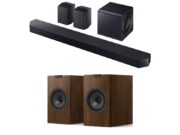










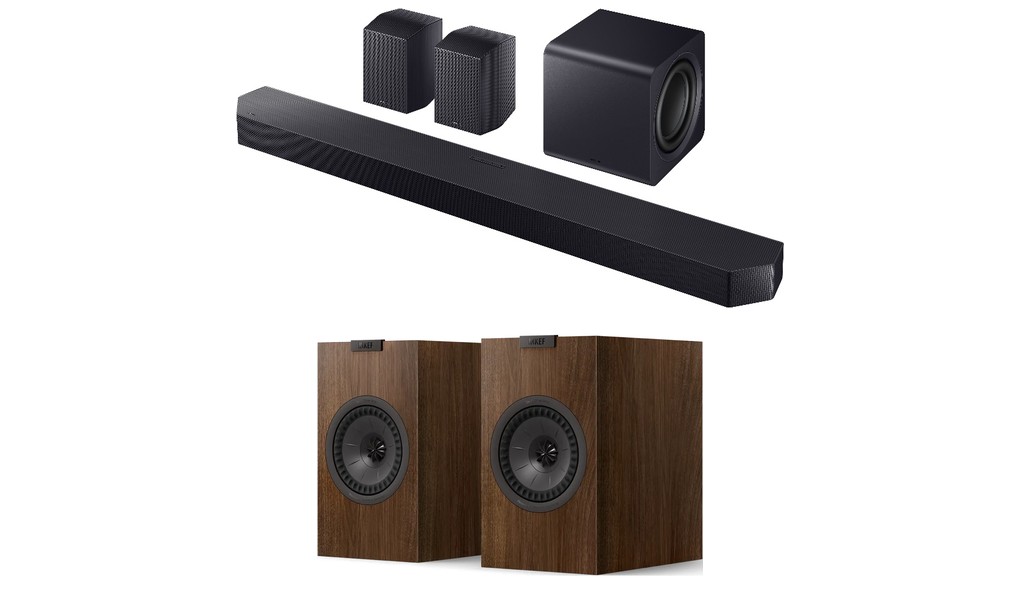
Short answer: it depends on your room and your habits. A soundbar is the right call for most living rooms. Separate speakers are the right call when music matters as much as TV, or when the room is yours to arrange properly. Both can sound good; the room decides which weakness you will notice.
The two options have converged on price: a flagship soundbar system now costs about the same as a decent pair of bookshelf speakers with an amp. So the choice is no longer about money first — it is about what the room allows and what you actually listen to.
How Each One Works
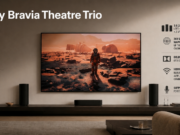
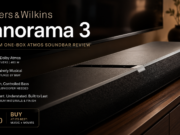
A soundbar packs several drivers into one cabinet with its own amplification, and most connect to the TV through a single HDMI eARC cable — which also lets the TV remote control the volume. Basic bars are 2.0 designs. Step up and you get a dedicated center channel, a wireless subwoofer, and sometimes side- or up-firing drivers that bounce sound off walls and ceilings to imitate surround and height effects.
A separate-speaker setup splits the job into parts. An amplifier or AV receiver powers passive speakers, or you use powered speakers. A stereo pair is the simplest version; a home theater version adds a center, surrounds and a subwoofer, wired to a receiver. Each speaker is its own cabinet, placed where it sounds best. The trade is simple: the bar gives you one box, one cable and one remote; the speakers give you placement, separation and a system you can change piece by piece.
Sound Quality: What Actually Differs
Start with stereo imaging, where physics picks a side. Two cabinets several feet apart create a soundstage a three-foot bar cannot match without processing. Bars use signal tricks to widen the image, and the better ones do it convincingly, but the effect depends on your seat. Sit off to one side and the trick thins out. A pair of speakers keeps its image from any seat.
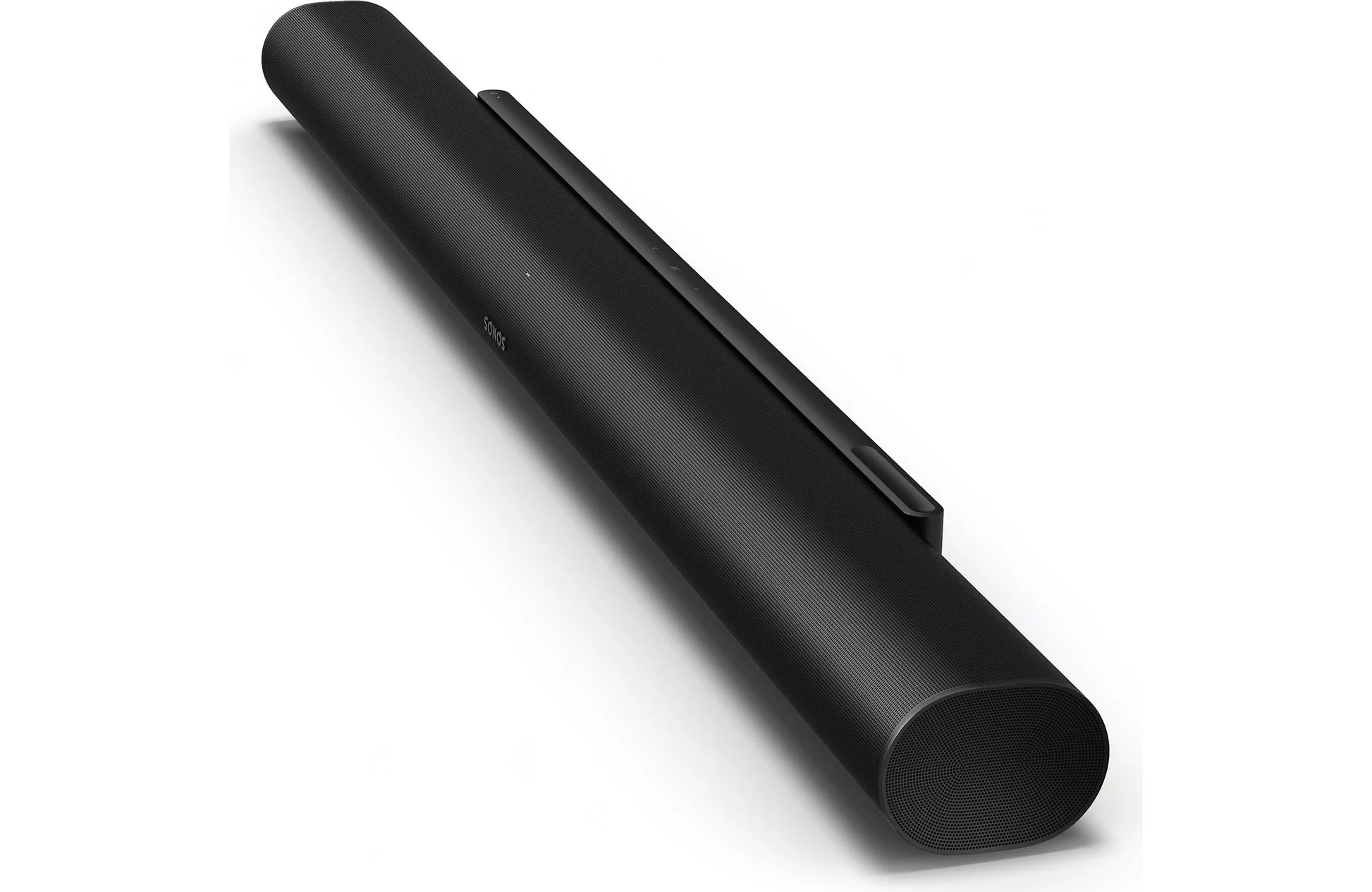
Surround and Atmos split the same way. Real rear and height speakers deliver true directional effects, while a single bar relies on reflections, so results vary with ceiling height, wall distance and furniture. A flat ceiling at normal height gives up-firing drivers something to work with; a vaulted ceiling, nothing. The Samsung HW-Q990F closes much of this gap with real wireless rears behind you. The Sonos Arc Ultra takes the other route: fourteen drivers in one bar, including a Sound Motion woofer Sonos says doubles the original Arc’s bass, for a 9.1.4 soundfield from the front alone. Neither is the same as speakers placed around you.
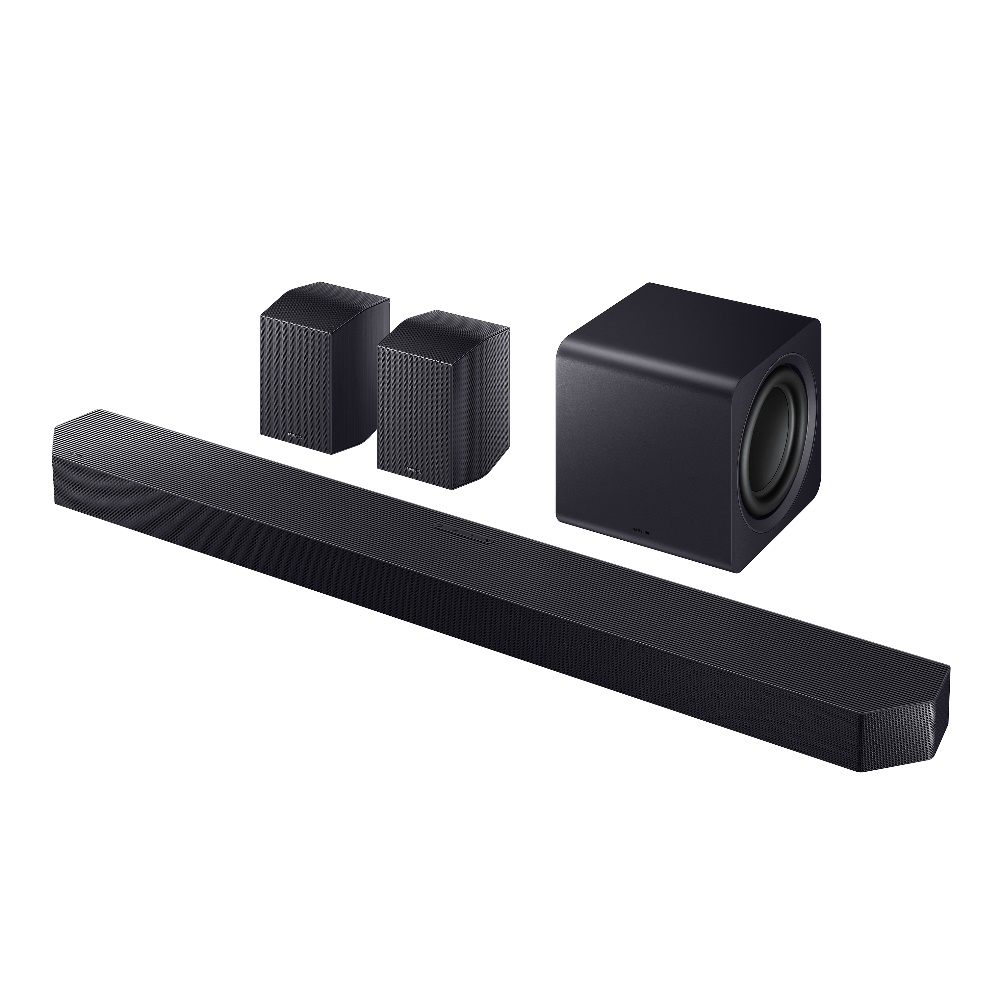
Bass is the next real difference: slim bars are limited by cabinet size, and a wireless subwoofer makes a noticeable difference for movies. A dedicated sub offers the most control, since you can place and tune it independently. Dialogue is where soundbars punch above their weight: a center channel, dialogue modes and speech enhancement target the mumbled speech that bothers many TV viewers. A separate system can do this well too, but it takes a center speaker and a receiver set up properly.
Music is where the gap opens widest. For critical listening, a stereo pair with a decent amplifier generally wins on clarity, imaging and dynamics. Premium bars double as streaming music systems with Wi-Fi and AirPlay — good for background listening, but a different goal than a dedicated stereo pair. If you sit down to listen to a full album, the speakers win. If music plays while you cook, the bar is already good enough.
Room by Room
A small room or bedroom is the soundbar’s home turf. A compact bar like the Sonos Beam Gen 2 fits under a smaller TV, needs one cable, and fills the space. Separate speakers in a small room fight for space with everything else, and their imaging advantage shrinks when they end up two feet apart on a crowded console.
A mid-size living room is where the choice gets interesting — either option works. Decide by habit: TV every evening and music as background, buy the bar. If you turn the TV off to listen to an album, the speakers repay the extra effort. A dedicated media room belongs to separate speakers — you control the layout. Renters should weigh the bar heavily: no wire runs, no holes, nothing to undo.
Cost: What the Same Money Buys
Prices are late November 2026: list prices first, street prices where stable. Sale prices move weekly, so treat street figures as a snapshot.
| Budget | Soundbar route | Speakers route |
|---|---|---|
| Around $350 | Sonos Beam Gen 2 — $499 list, $339 on Sonos’s store now. Atmos, clear dialogue. | Nothing complete — a $400 pair still needs an amp. |
| Around $1,000 | Sonos Arc Ultra — $999, 9.1.4, 14 drivers, Sound Motion woofer. Sub 4 later: $799. | KEF Q1 Meta pair ($399.99, was $699.99) plus a basic amp or receiver, $300–$500. No sub yet. |
| Around $2,000 | Samsung HW-Q990F — $1,999.99 list, $1,599.99 at Samsung, street around $1,168. Complete 11.1.4 system. | Q1 Meta pair plus receiver, center and sub — easily past $2,000, still unfinished. |
Two things hide inside that table. First, the soundbar route is complete at each budget: what you buy is what you hear. The speakers route at $1,000 is a start, not a finish — a sub and a center come later. Second, the speakers route holds its value differently: a $400 pair is still worth something in five years and works with any amp, while a $1,000 bar is worth whatever its software still supports.
Setup and Living With It
Setup is the soundbar’s strongest argument: a bar takes an evening — one HDMI cable, an app walkthrough, calibration that runs itself. A separates system takes a weekend: wire runs, receiver menus, level settings, a subwoofer crawl. Daily use favors the bar too: one remote, voice control, an app the household understands. The upgrade path flips the advantage: a soundbar grows only inside its own ecosystem — matching sub, matching rears, and stop. A separates system grows one piece at a time, and every piece works with the rest.
The Speakers Route
If the speakers route is your answer, start with a pair of bookshelf speakers and a basic amp, not a full 5.1 set. Two good speakers beat five mediocre ones; a center and a sub can come later. The KEF Q1 Meta is a fair example: $399.99 a pair on sale from $699.99, a compact bass-reflex two-way with KEF’s Uni-Q coaxial driver, 4 ohms, 86 dB, wanting a real amp behind it — 10 to 150 watts per KEF’s own spec. For a broader look at small-room options, I put together a guide to the best bookshelf speakers under $1000 for small rooms.
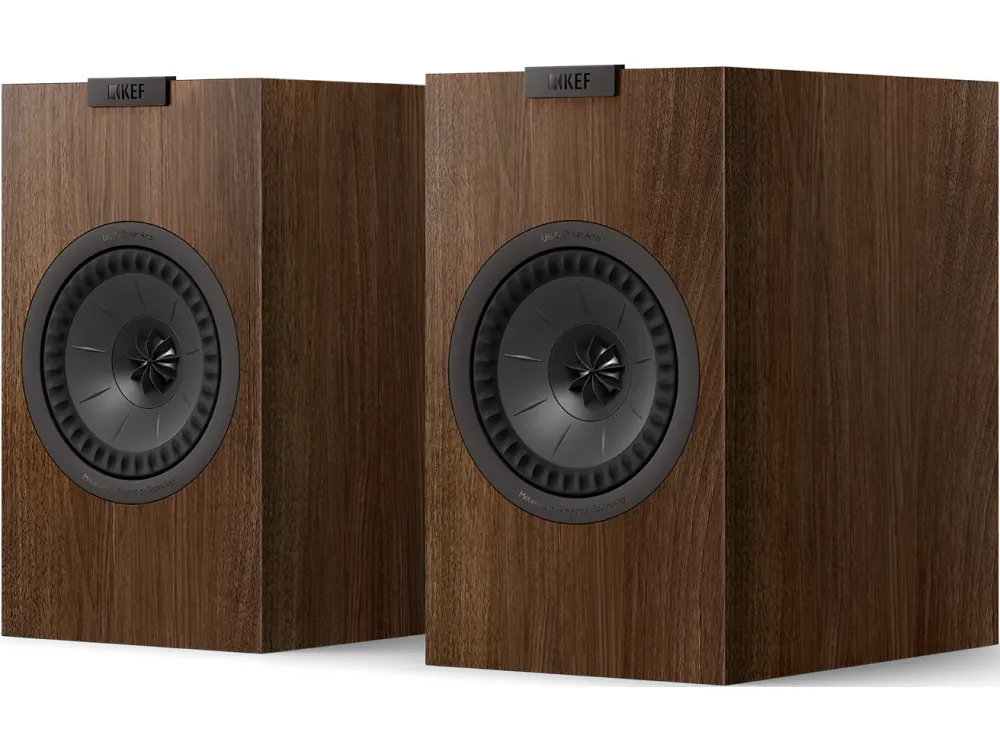
One warning: the amp is not optional, and it is the part people forget. A $400 pair with a $100 amp that clips is worse than a $300 soundbar. Spend as much thought on the amp as on the speakers — or buy powered speakers and skip the question.
Verdict: The Matrix
| Your situation | Buy | Why |
|---|---|---|
| Small room or bedroom, TV first | Soundbar | One cable, fits the space, dialogue fixed |
| Living room movies, no wires allowed | Full soundbar system | HW-Q990F: real rears and a sub, nothing to run |
| Music matters as much as TV | Stereo speakers + amp | Imaging and dynamics no single bar matches |
| Dedicated media room | Separate 5.1 system | You control the layout — use real speakers everywhere |
| Renter, or a clean look matters | Soundbar | Nothing permanent, nothing to undo |
| You upgrade a piece at a time | Separate speakers | Every component swaps independently |
What I Would Buy
At $350, the Beam Gen 2 at $339 is the easiest recommendation here. It fixes the one thing most people complain about — dialogue — and asks nothing in return. At $1,000, the choice is genuinely close: TV as the center of the room, the Arc Ultra at $999 is the most capable bar I can point to, with a clean path to a Sub 4 later; music sharing the room equally, the Q1 Meta pair plus a basic amp costs about the same and gives you a stereo image the bar cannot fake.
At $2,000, the Q990F is the value pick for movies: a complete 11.1.4 system for around $1,168 street, with real rears doing the work processing can only imitate. The separates route at this budget is still unfinished — and an unfinished system loses to a finished one.
Bottom Line
Buy the soundbar when the room, the household or the lease decides for you — the current generation of bars is genuinely good. Buy separate speakers when music earns equal time with the TV, when the room is yours to arrange, or when you want a system that grows piece by piece. The wrong choice is not either of these — it is the TV’s own speakers, and anything on this page fixes that.