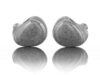


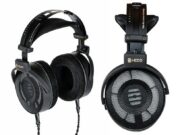
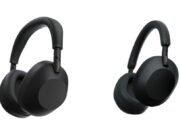



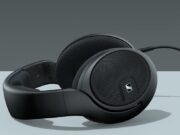

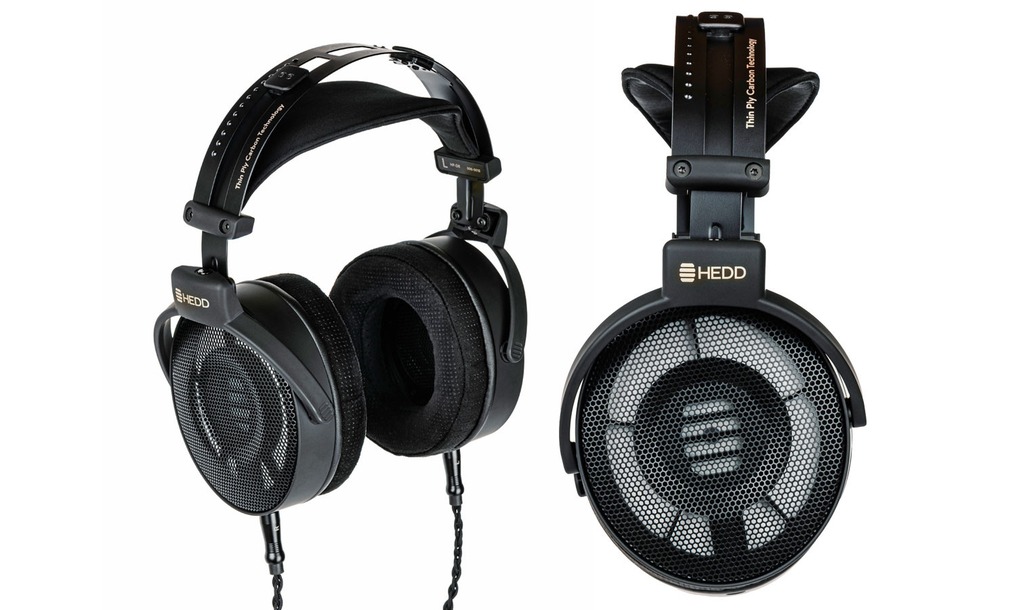
HEDD Audio has announced the HEDDphone DX, a $1,199 open-back dynamic headphone built around a new 50mm high-excursion Thin-Ply Carbon Diaphragm driver. Pre-orders opened on November 24, 2026, with European shipping due before the end of the month and US and Canadian sales starting December 1. The headline claim is the one open-back dynamics usually fail: full bass output all the way down to 20 Hz.
What’s New
The driver is the story. The DX uses a newly engineered 50mm high-excursion dynamic driver with a Thin-Ply Carbon Diaphragm, a material HEDD developed with Swedish diaphragm specialist Composite Sound. The construction borrows from racing sail design, shaping and aligning ultra-thin carbon layers so the diaphragm’s movement stays controlled across the frequency range, which HEDD says cuts unwanted resonance and reduces the need for heavy damping. HEDD claims the diaphragm stays free of breakup until 24 kHz, and the extra excursion holds full output down to 20 Hz — the bottom edge of human hearing, where most open-back dynamics quietly give up.
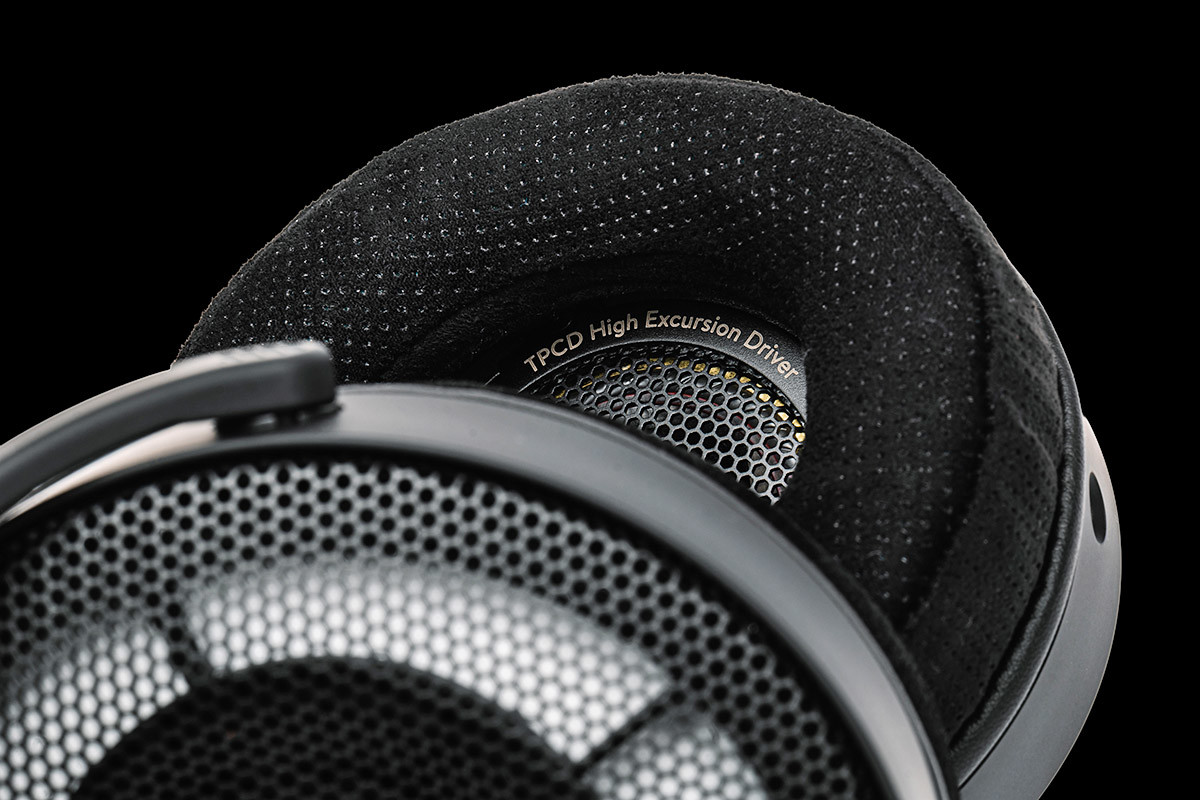
Comfort gets as much attention as the driver. The DX introduces a suspension headband developed with Capra Audio, using an elastic neoprene strap to spread its 310g across the head. That weight matters: the DX is 40g lighter than the current D1, and a long way from the 718g original HEDDphone, famous for its sound and notorious for the workout it gave necks. It also gets a redesigned open-back grille and laser-engraved detailing on the headband, with perforated velour earpads over memory foam.
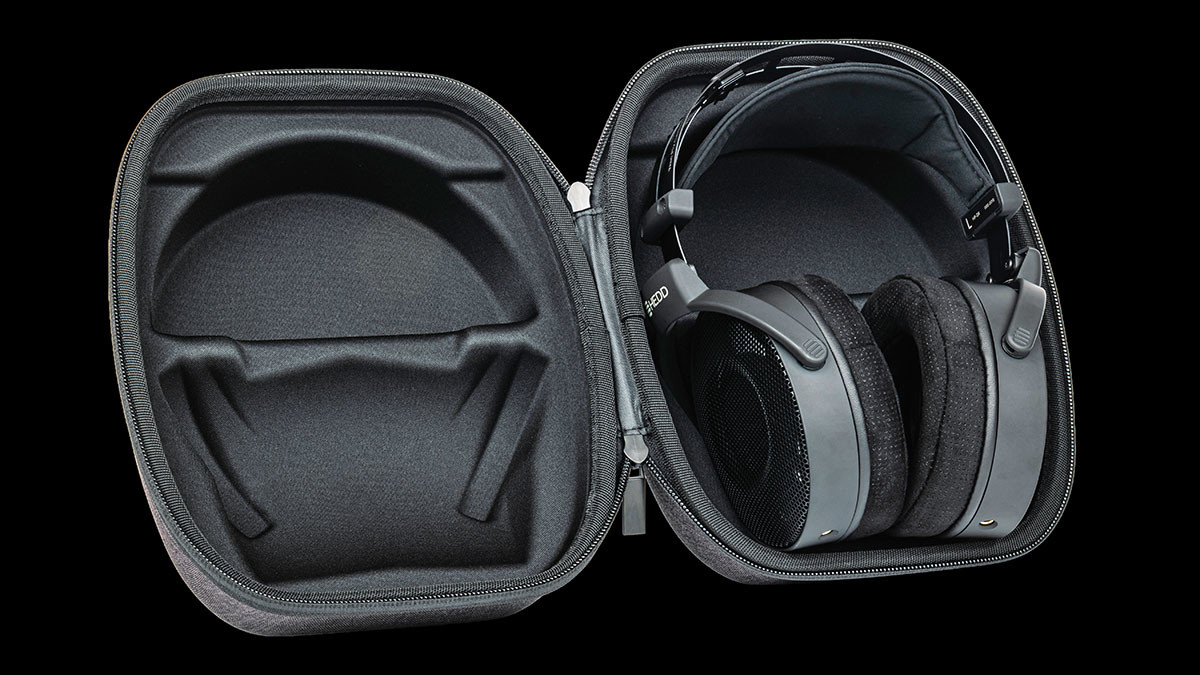
The package is equally considered: a 2.2m eight-strand braided OCC balanced cable terminating in a 4.4mm plug, a 6.3mm adapter, and a double-layer travel case. The earcups take dual 3.5mm jacks, so aftermarket cables will fit. Each unit is assembled and tested in Berlin, every part is replaceable, and the warranty runs two years — five with registration.
| Specification | HEDDphone DX |
| Design | Open-back, over-ear, dynamic |
| Driver | 50mm high-excursion, Thin-Ply Carbon Diaphragm (TPCD) |
| Frequency range | 5 Hz – 40 kHz (full bass output to 20 Hz) |
| Impedance | 32 Ω |
| Sensitivity | 100 dB/mW |
| Weight | 310 g |
| Earpads | Perforated velour, memory foam |
| Connectors | Dual 3.5 mm TS jacks |
| Cable | 2.2 m eight-strand braided OCC balanced, 4.4 mm TRRRS plug; 6.3 mm adapter included |
| Case | Double-layer travel case |
| Warranty | 2 years, 5 years with registration |
| Price | $1,199 / €1,199 / £999 |
Context
HEDD built its name on Air Motion Transformer drivers — the original HEDDphone of 2020 put a full-range AMT in a headphone, followed by the studio-tuned HEDDphone TWO and the warmer TWO GT. The D1, launched in November 2025, opened a second path: a conventional moving-coil driver in the same thin-ply carbon material. The DX takes that dynamic path to flagship status; the AMT models stay above it.
At $1,199, the DX lands in one of the most crowded brackets in personal audio. Audio-Technica’s ADX3000 is an open-back dynamic at $1,100, the HiFiMan Arya Organic sits around $1,299, and Audeze’s LCD-X matches the DX at $1,199 — though it is a planar magnetic, not a dynamic. Klipsch’s semi-open Stratos HP-3 is also $1,199.99. The DX has to earn its place against all four, and the 20 Hz claim is its opening argument.
HEDDphone DX Compared to the D1
The DX is best understood as a D1 with the two things its predecessor lacked most — deeper bass and a better headband. HEDD says the DX keeps the D1’s midrange balance, adds a more refined treble and a wider soundstage, and uses the new driver’s longer excursion for the low end. The electrical specs are unchanged — 32 ohms and 100 dB/mW — so the DX should run from a dongle as easily as the D1, while still responding to a proper amplifier.
| HEDDphone D1 (Nov 2025) | HEDDphone DX (Nov 2026) | |
| Driver | 50 mm TPCD | 50 mm high-excursion TPCD |
| Frequency range | 5 Hz – 40 kHz | 5 Hz – 40 kHz |
| Impedance / sensitivity | 32 Ω / 100 dB/mW | 32 Ω / 100 dB/mW |
| Weight | 350 g | 310 g |
| Headband | Standard | Capra Audio suspension, elastic neoprene |
| Price | — | $1,199 / €1,199 / £999 |
HEDD is not leaving D1 owners behind: the new suspension headband is available as a $99 retrofit kit from December 7, 2026, and a refreshed D1 with the headband fitted as standard arrives at the end of January 2027 at $899, 40g lighter than the current model.
My Take
I have not heard the DX, and no independent measurements exist yet. What follows is a paper analysis, not a listening verdict.
On paper, this looks promising because it attacks the two real weaknesses of HEDD’s earlier headphones. The original HEDDphone sounded superb and weighed 718g; the D1 fixed the weight problem halfway and left the bass where open-back dynamics usually leave it. A 310g HEDDphone DX with a suspension strap and full output to 20 Hz would be a genuine step forward — if the claim holds. HEDD’s own B&K 5128 measurement, published with the announcement, is a decent start — but a manufacturer’s graph is not independent proof.
What concerns me is the price gap inside HEDD’s own line. The refreshed D1 will cost $899 with the same suspension headband and the same electrical specs, so the DX has to justify $300 with driver excursion and bass extension alone. The $1,199 bracket is unforgiving: the ADX3000, the Arya Organic, and the LCD-X are all established, measured, and reviewed. The DX arrives with none of that behind it yet.
Who Should Watch This
Pre-order if you want the first batch and already trust HEDD’s house sound — the DX is the most complete expression of the dynamic path HEDD started with the D1. Wait if you want independent measurements first, which is my position: the 20 Hz claim needs a third-party graph before it becomes a buying reason. D1 owners should look at the $99 headband kit first — most of the comfort upgrade for a tenth of a new headphone’s price.