






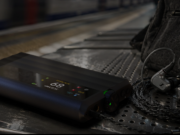

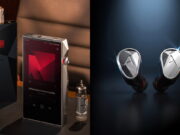





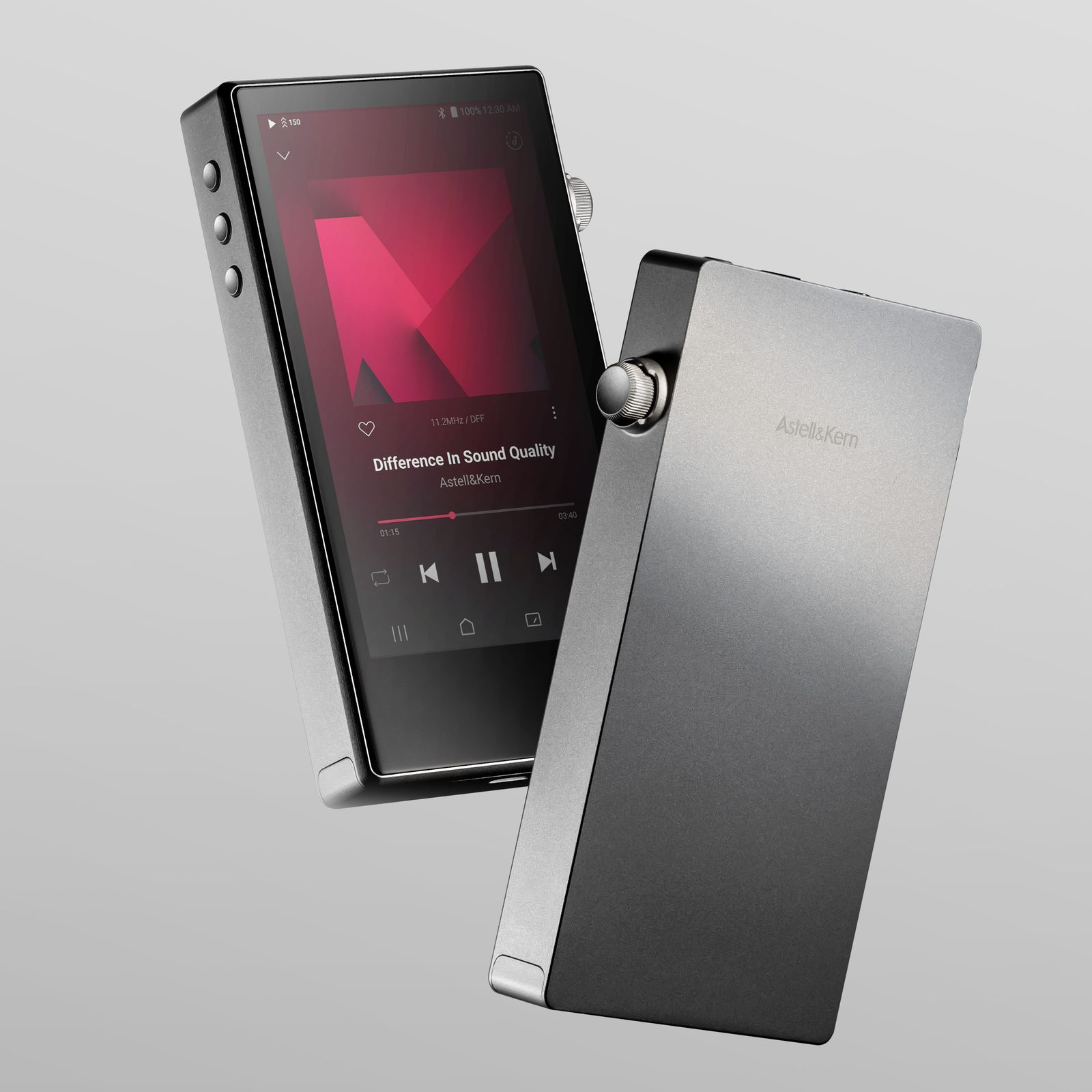
The PD5 takes over the entry-level slot in Astell&Kern’s lineup, succeeding the award-winning A&norma SR35. It costs $1,049. That contradiction is the whole story of this device, and it is worth sitting with before anything else, because the PD5 is otherwise very easy to like.
Announced in August 2026, on sale in the US from September and in Japan from October 17 at ¥176,000, it packs eight Cirrus Logic CS43198 DACs into a 198-gram aluminum slab, lets you switch between running four of them or all eight, and claims 28 hours of playback in its efficient mode. The question hanging over it is not whether it sounds good. Early listening reports agree that it does. The question is whether the entry-level label survives contact with a four-figure price, and whether eight DACs are engineering or marketing.
Disclosure: OHHIFI may earn affiliate commissions from product links. Our verdicts are never influenced by such arrangements.
The short answer, after weighing every early review against the spec sheet, is that the DAC count is real engineering with a real trade-off attached, and the entry-level label is the hardest part of this player to defend at $1,049 — about 31% above the SR35’s launch price. Everything else about it is unusually honest: a neutral, detailed, dynamic sound, a battery that genuinely lasts all day in one mode and frankly does not in the other, and a design that is more practical than luxurious.
PD5 Specifications
| Specification | Details |
|---|---|
| DAC | 8 x Cirrus Logic CS43198, switchable Quad-DAC / Octa-DAC |
| Outputs | 3.5 mm unbalanced, 4.4 mm balanced |
| Output level | Quad: 3 Vrms unbalanced / 6 Vrms balanced; Octa: 4 Vrms unbalanced / 8 Vrms balanced (no load) |
| Frequency response | ±0.011 dB, 20 Hz–20 kHz |
| Output impedance | 0.6 ohm unbalanced, 1.2 ohm balanced |
| Formats | PCM up to 32-bit/384 kHz, native DSD256 |
| Storage | 64 GB internal, microSD up to 1.5 TB |
| Display | 4.1-inch curved touchscreen, 720 x 1280 |
| Battery | 4,000 mAh; about 28 hours Quad-DAC, about 15 hours Octa-DAC; PD 3.0 charging, about 2.5 hours |
| Wireless | Bluetooth 5.3 (SBC, AAC, aptX HD, LDAC, LHDC), dual-band Wi-Fi |
| Streaming | Full Android OS, Roon Ready, Qobuz Connect |
| Extras | USB DAC mode, EnviroTune ambient-noise compensation, 4 DAC filters, 20-band EQ |
| Dimensions | 119.7 x 69.7 x 16.1 mm |
| Weight | 198 g |
| Price | $1,049 US / £899 UK / ¥176,000 Japan |
Design, Build & Industrial Design
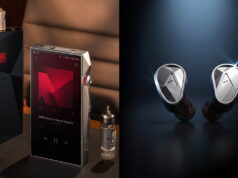
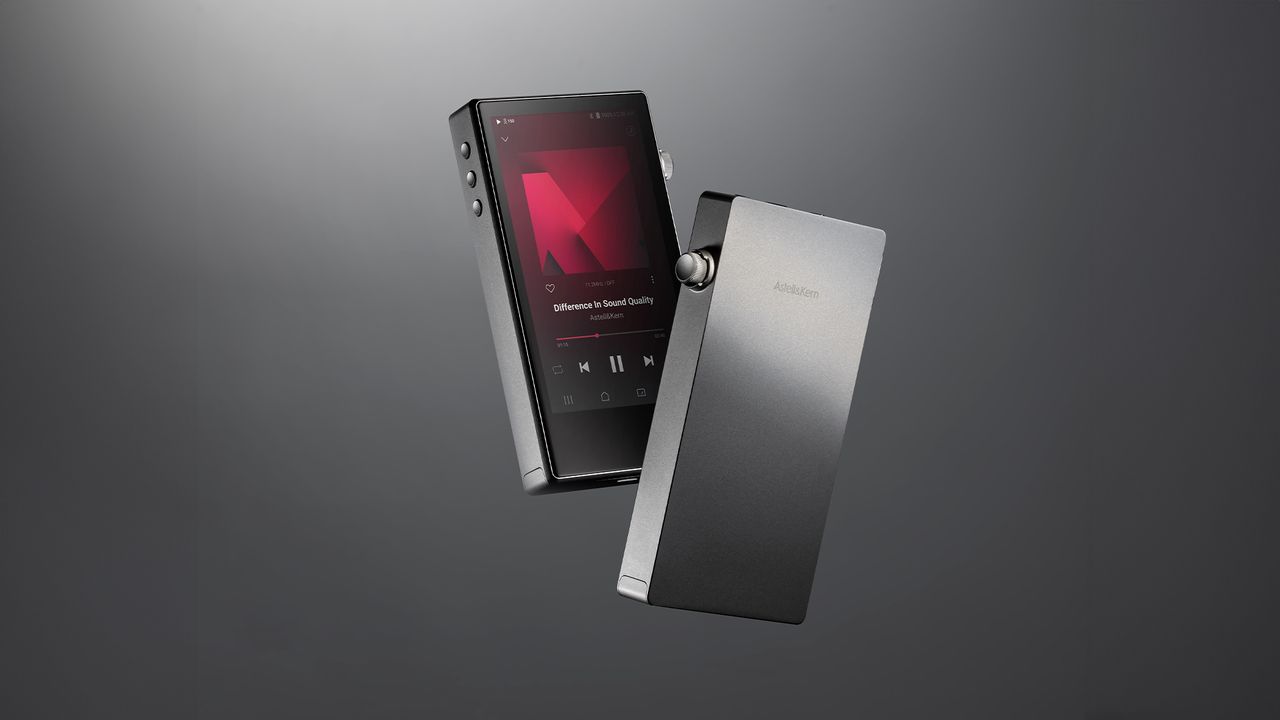
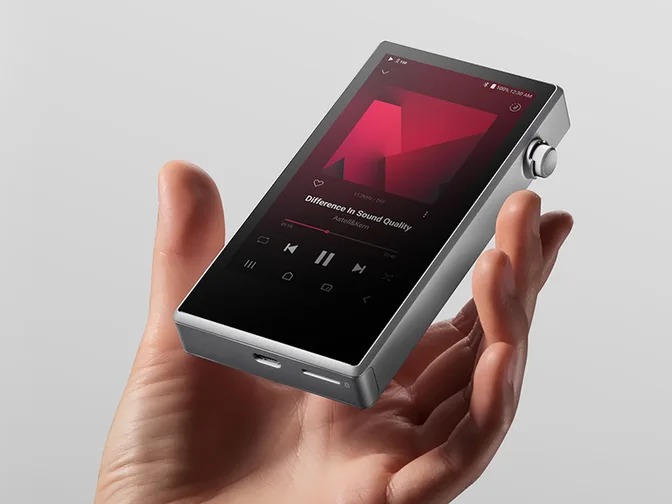
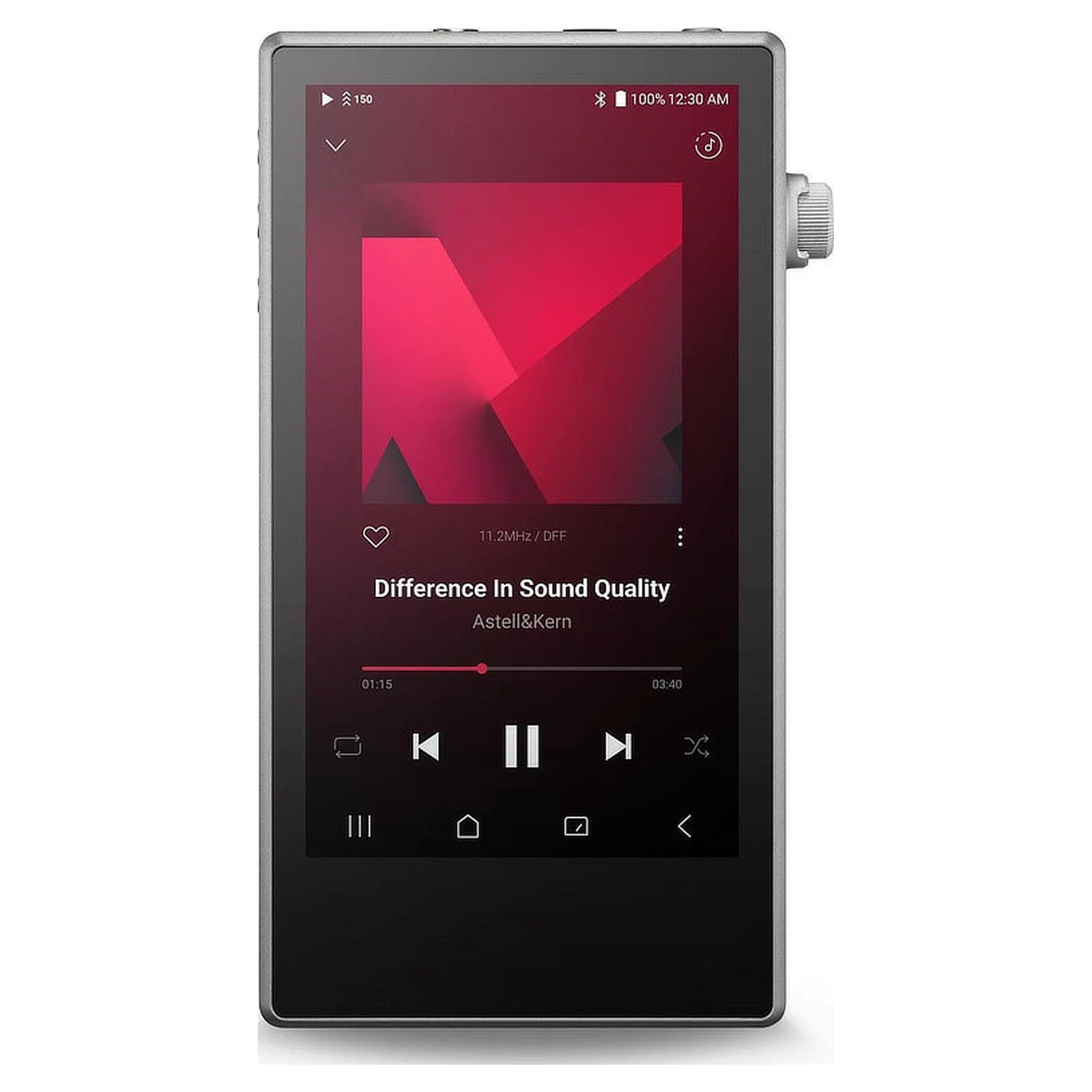
The PD5 is a deliberate break from Astell&Kern’s recent design language. Where the company’s flagship players are all hard edges and off-kilter angles, the PD5 is a plain, rounded silver slab with a curved 4.1-inch screen that sits naturally in one hand. Pick it up and it feels properly engineered: dense for its size at 198 grams, aluminum throughout, a knurled volume knob on the side that turns with a satisfying resistance. But it is worth saying plainly that it does not look or feel like a $1,049 object. The finish is clean and anonymous rather than luxurious, and more than one early reviewer noticed the gap between the price tag and the thing in the hand. That is a cosmetic complaint, not a functional one, but at this price cosmetics are part of the deal.
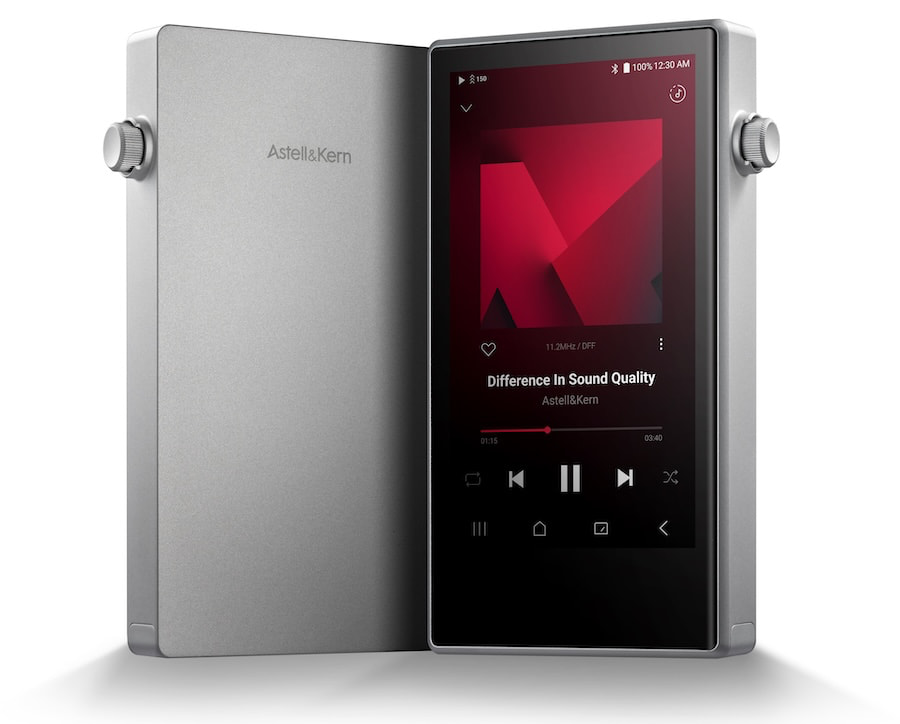
The physical layout is sensible. The top edge carries the two headphone outputs, 3.5 mm unbalanced and 4.4 mm balanced, alongside the volume knob, and the bottom has USB-C for charging, data, and USB DAC duty, where the PD5 works as a desktop DAC for a computer. A standard clear TPU case is included in the box, which is the right call for a pocket device with a screen this exposed. The compromise is the screen itself: 4.1 inches is small by modern standards, and the on-screen menus are approaching minuscule, with occasional software glitches reported in early use. Nothing fatal, but the interface asks for more patience than the hardware does.
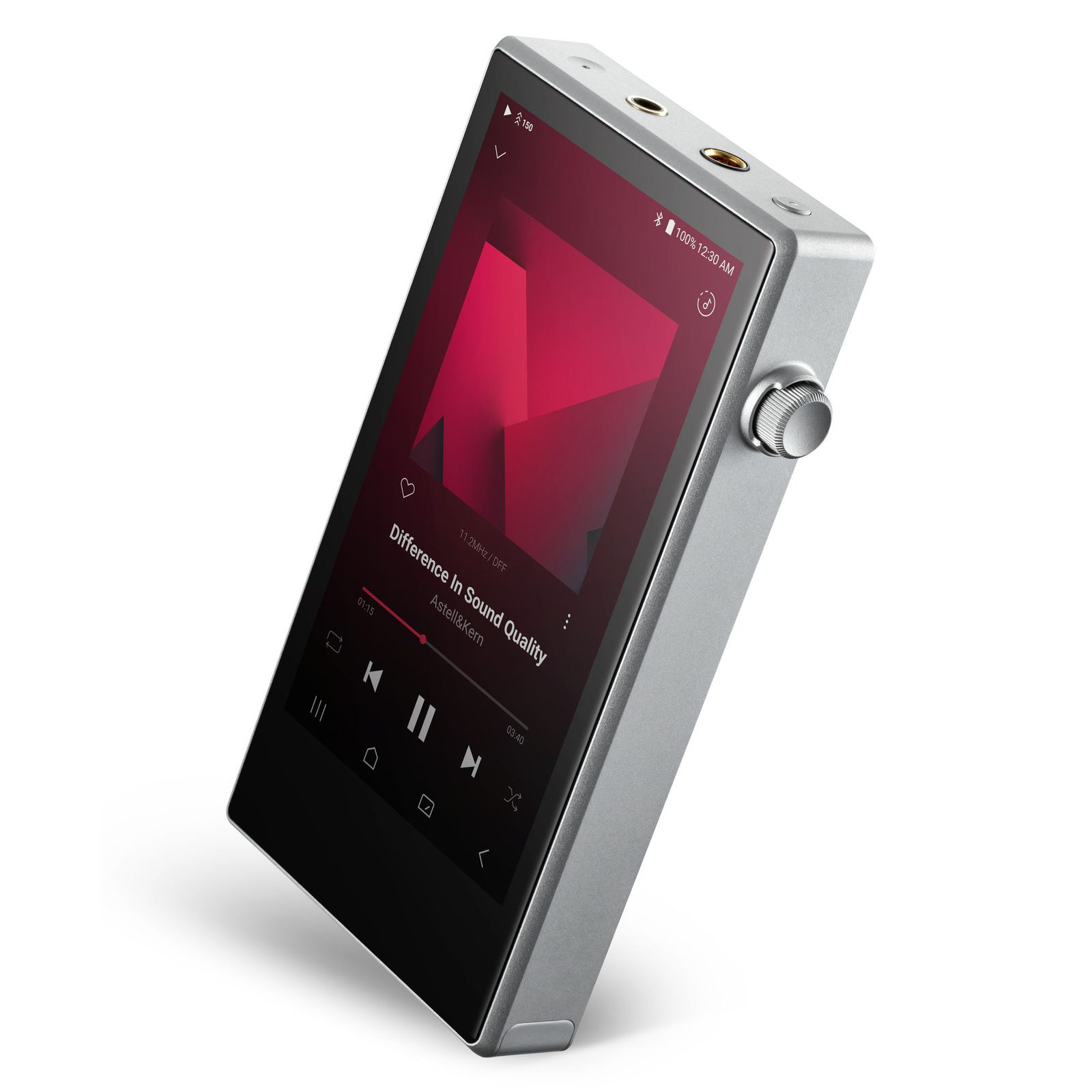
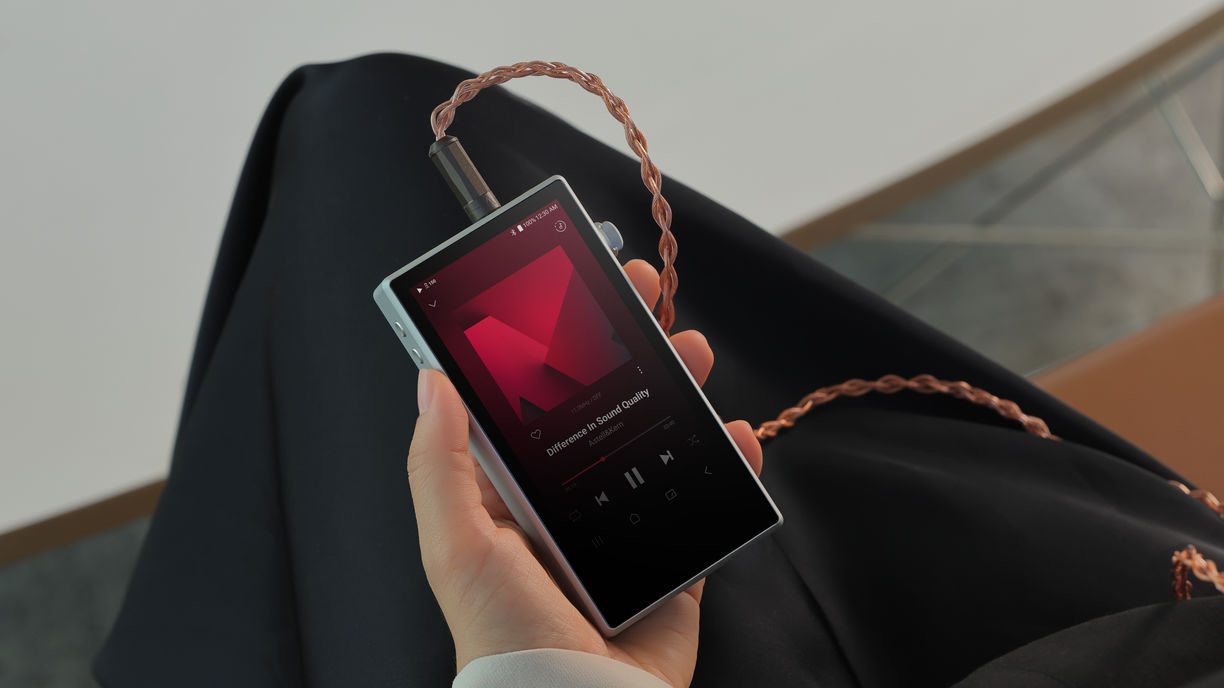
At 119.7 x 69.7 mm it is genuinely pocketable in a way most flagship DAPs are not, and that is the point of the whole product. This is a player built to leave the house every day, not to sit on a desk. The 28-hour battery claim belongs to that same idea: an all-day player, in the company’s own billing, that you charge overnight and forget about. Whether it delivers on that depends entirely on which DAC mode you choose, which brings us to the sound.
The Sound: Neutral, Detailed, and Two Players in One
The consensus on the PD5’s tonality is unusually clean: neutral, offering neither warmth nor chill to the recording, with a crisp, detailed presentation that leans analytical without turning cold. Through a resolving pair of headphones it is hard to criticize on clarity, detail retrieval, or outright fidelity, and its dynamic control is the first thing that stands out on louder, denser material. This is not a player that flatters bad recordings, and it is not one that needs to.
Bass
In Quad-DAC mode the low end is reserved and tight, with proper weight but no emphasis. Switch to Octa-DAC and the bass lifts audibly, gaining body and solidity without turning bloated. Put on Marvin Gaye’s “What’s Going On” and the upright bass has proper physical weight in either mode; in Octa it simply steps a little further forward in the mix. The difference is not subtle, and it is the single best argument for the dual-mode design: the same player can be the restrained commuter in the morning and the fuller-sounding evening listener at the touch of a setting.
Midrange
Voices are where the PD5 earns its price. Norah Jones on “Come Away With Me” keeps her intimacy and breath detail fully intact, and the midrange gains a welcome solidity in Octa mode, where instruments and voices separate a little more cleanly from each other. In Quad mode the presentation is slightly more reserved and spacious, which suits long sessions and acoustic material. Neither mode adds sweetness that is not in the recording, and that neutrality is exactly what makes the midrange trustworthy.
Treble
The top end is extended and clean, with plenty of air and no harsh edge on well-recorded material. Detail retrieval is the PD5’s strongest suit: small cues, room ambience, and the decay of cymbals all come through without being pushed forward. Four DAC filters and a 20-band EQ let you tailor the response if the default presentation feels too honest for a given headphone, and both are worth exploring before judging the treble on any single pairing.
Soundstage & Imaging
The soundstage opens up well beyond what the player’s size suggests, with individual elements given their own space rather than smeared across the middle. Tool’s “Fear Inoculum” lets you pinpoint the depth and height of every percussion hit, and the image holds together when the mix gets busy instead of collapsing inward. This is the area where the Octa mode’s extra DACs make their most audible case: the stage gets broader and more stable, not just louder.
The dual-mode system deserves a paragraph of its own, because it is easy to dismiss as a gimmick and it is not one. Quad-DAC mode prioritizes battery life and a natural presentation; Octa-DAC mode prioritizes sound, at the cost of nearly halving battery life to about 15 hours and raising balanced output from 6 Vrms to 8 Vrms. One honest note: those output figures are specified under no-load conditions, so they describe the output stage’s capability, not power delivered into a specific headphone. And the mode switch itself is not a new invention: the SR35 already offered dual/quad switching, and the PD5 extends that idea to four/eight DACs rather than inventing it. What is new is EnviroTune, a built-in microphone that measures ambient noise in real time and compensates for the frequency bands that get masked, so you do not have to keep reaching for the volume on a train. It works on PCM up to 24-bit/192 kHz, and for commuters it is genuinely useful; purists will switch it off at home, and the player is happy either way.
Measured Performance
No independent bench measurements of the PD5 have been published yet, so there is no third-party THD, noise, or frequency-response data to quote, and I am not going to invent any. What the spec sheet claims is a frequency response of ±0.011 dB across 20 Hz–20 kHz, output impedance of 0.6 ohms unbalanced and 1.2 ohms balanced, a signal-to-noise ratio above 125 dB, and THD of 0.0006% at 1 kHz. The low output impedance is the figure that matters most in practice: it means the PD5 will not audibly change the frequency response of low-impedance IEMs, which is exactly the pairing this player is built for. Until measured data appears, the listening consensus above is the evidence, and it points in the same direction as the spec sheet.
Test Setup — Associated Equipment
Evaluated through my desktop chain and direct headphone listening, with the PD5 used both as a standalone player and in USB DAC mode into the same amp chain for contrast, plus Bluetooth to a wireless pair for the commuting case the player is designed around. Test tracks ranged from vocal jazz and acoustic recordings to dense rock and large-scale classical, with both IEMs and full-size headphones across the sessions. That spread matters for a player like this: the PD5’s character changes measurably between Quad and Octa modes, and judging it on one pairing in one mode would miss half the product.
The Competition
| Rival | Price | vs PD5 | Verdict |
|---|---|---|---|
| Astell&Kern A&norma SR35 | $799 (launch price) | The predecessor: fewer DACs, 20-hour battery, and the sluggish interface the PD5 fixes | Buy the SR35 only if budget is tight and you find remaining stock; the PD5 beats it on sound, battery, and interface, but it is bigger, heavier, and pricier |
| Sony NW-ZX707 Walkman | $899 | Bigger 5-inch screen, Walkman polish, 25-hour FLAC playback, but less output drive, older Android 12, and heavier at 227 g | Pick the Sony for ecosystem polish; pick the PD5 for drive, DAC flexibility, and pocketability |
| FiiO M15S | $999 | Flagship ESS DAC, far more raw power at 1,200 mW, bigger 5.5-inch screen, but much bulkier | Pick the FiiO for maximum drive; pick the PD5 for all-day battery and a player that actually fits a pocket |
The honest shape of this market is that the PD5 does not win on any single number. The Sony is more polished, the FiiO is more powerful, and the SR35 is cheaper. The PD5 wins on the combination: the longest battery life here in its efficient mode, a genuinely pocketable design, and a genuinely useful two-character sound. That combination is the product.
Verdict
Score: 8.5/10 — Buy.
Of the players in the comparison above, the PD5 makes the most convincing case at this price, and the deductions are specific rather than general: menus that are too small, occasional software glitches, no physical volume lock, a battery that halves in Octa mode, and a look that does not match the price tag. None of those overturn a sound that is neutral, detailed, and dynamic, a battery that really does last all day in Quad mode, and a pocketable design that makes the whole thing usable daily. The entry-level label sits awkwardly at $1,049, but the player underneath it is not. If you want one device for commuting, traveling, and serious listening at home, this is the one to buy in this class.
Pros / Cons
Pros:
- Neutral, detailed, and dynamically controlled sound across genres
- Quad/Octa DAC modes genuinely change the presentation, not just the spec sheet
- 28-hour battery in Quad mode; the all-day claim holds up
- 198 g and genuinely pocketable, with a case in the box
- Full Android with Roon Ready and Qobuz Connect, plus USB DAC mode
Cons:
- $1,049 stretches the word “entry-level” past breaking point
- Octa mode cuts battery to about 15 hours
- Small on-screen menus and occasional software glitches
- No physical volume lock, software only
- Looks and feels less expensive than it is
Who Should Buy / Who Should Skip
This is for you if: you are upgrading from a phone and dongle or from an SR35 and want a real step up; you commute daily and will actually use EnviroTune and the all-day battery; you want Astell&Kern’s house sound without flagship money; or you split time between IEMs and full-size headphones and need the output flexibility.
Look elsewhere if: your budget stops under $800, where remaining SR35 stock or cheaper players make more sense; you want a big-screen flagship experience, which is the PD10 and SP4000’s territory; you stream exclusively and never play local hi-res files, in which case a phone and a good dongle cover you; or a physical volume lock is non-negotiable for pocket use.