



















Lead
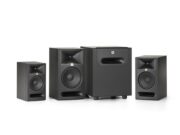
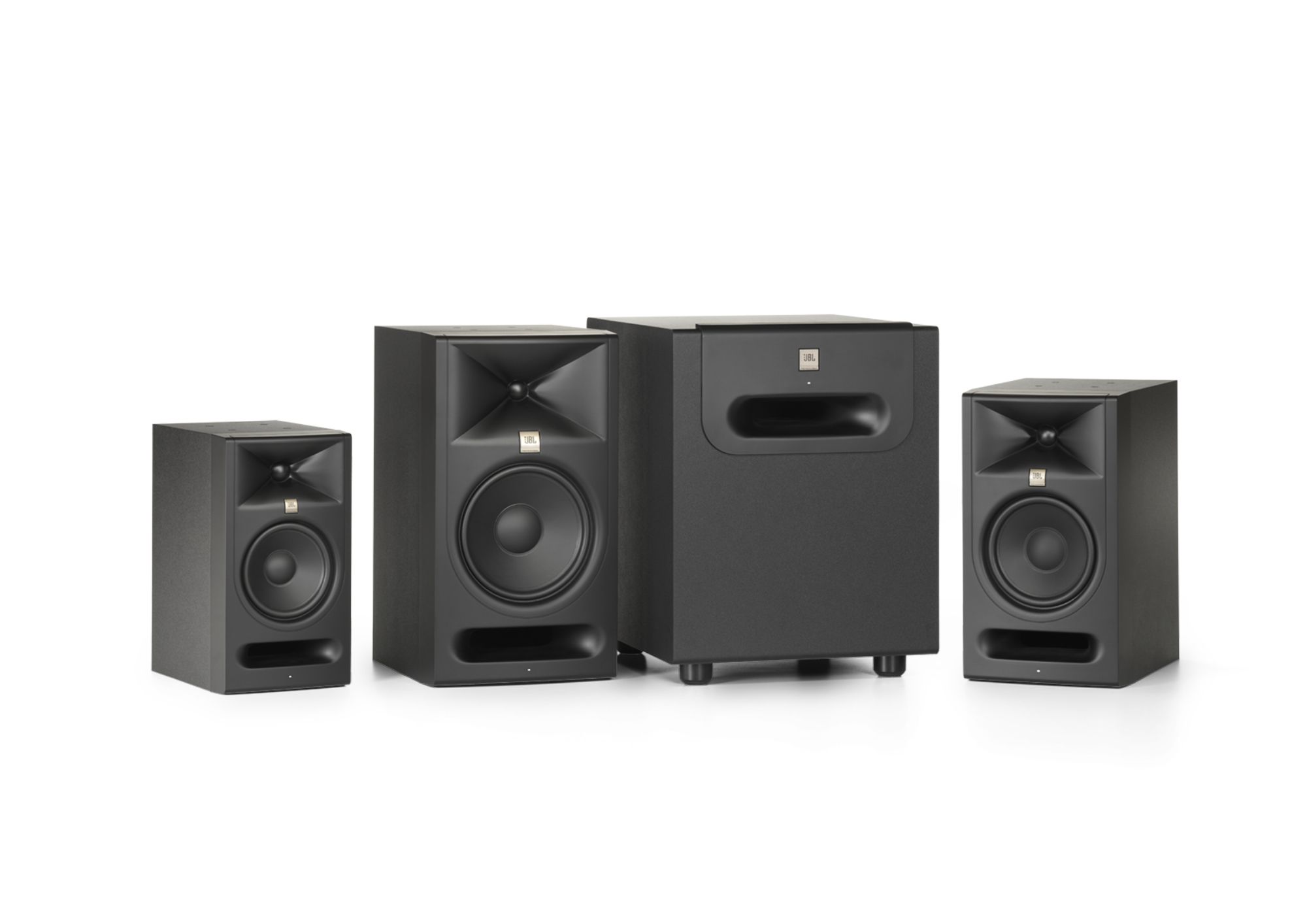
JBL Professional has announced the 3 Series MkIII, which HARMAN calls the most extensive redesign of the 3 Series platform to date. The range covers three powered two-way monitors — the 5-inch 305P MkIII, the 6.5-inch 306P MkIII and the 8-inch 308P MkIII — plus the 10-inch 310S MkIII powered subwoofer. US street prices start at $199 per monitor for the 305P MkIII, and all three monitors were listed as on order at Full Compass on November 3. Previewed at HARMAN’s ExPLORE Tokyo in October, it was formally announced on November 3, 2026.
What’s New
A new 25 mm silk-dome tweeter works with an updated Image Control Waveguide, holding a 120° × 90° coverage pattern for a stable stereo image. Below it, new woofers use stiffer cones, an upgraded 20 oz magnet assembly and an aluminium shorting ring. The headline high-frequency extension is 38 kHz at -10 dB, up from 24 kHz on the outgoing generation.
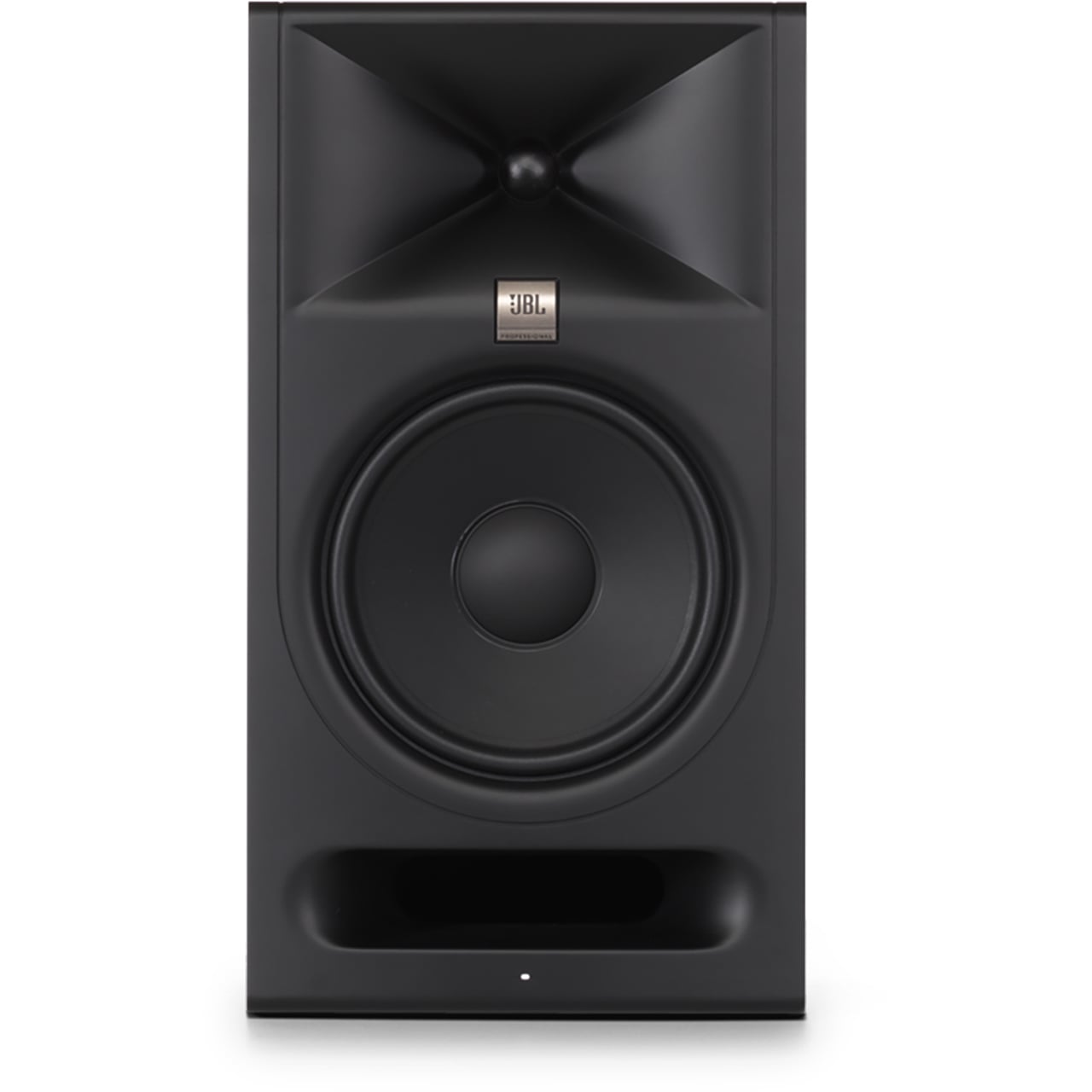
The cabinet changes matter as much as the drivers. The Slipstream bass port now fires from the front rather than the rear, which should make the low end more predictable on a desk or near a wall. Amplification stays Class D bi-amplified, as on the MkII, but redesigned: 86 watts on the 305P (up from 82), 110 watts on the 306P and 308P (against 112). JBL also claims a lower noise floor. The balanced Neutrik combo input (switchable +4 dBu, -10 dBV) feeds a 192 kHz ADC for onboard DSP tuning. Quoted low-frequency extension, all at -10 dB, is 45, 43 and 41 Hz, with peak output of 109, 112 and 113 dB.
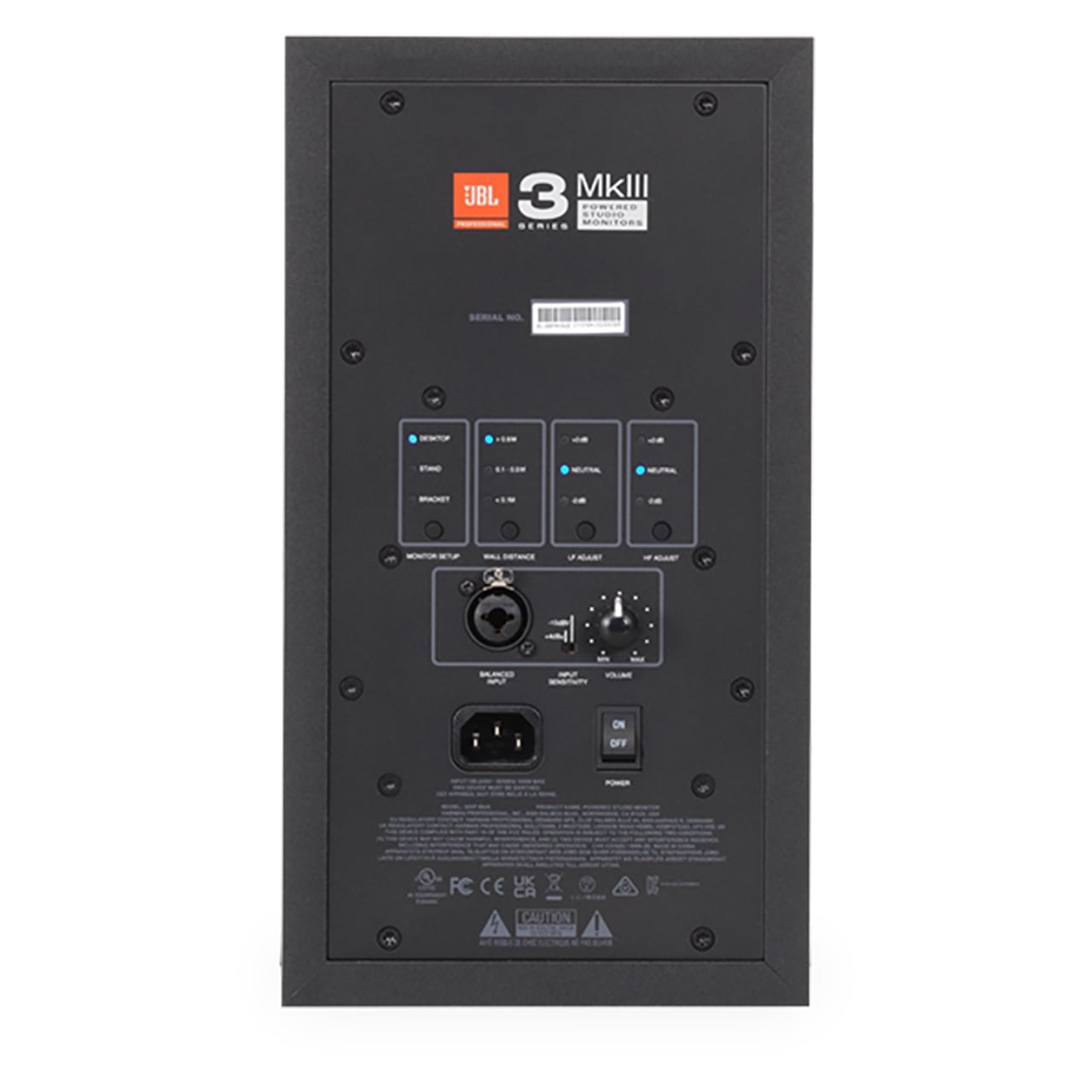
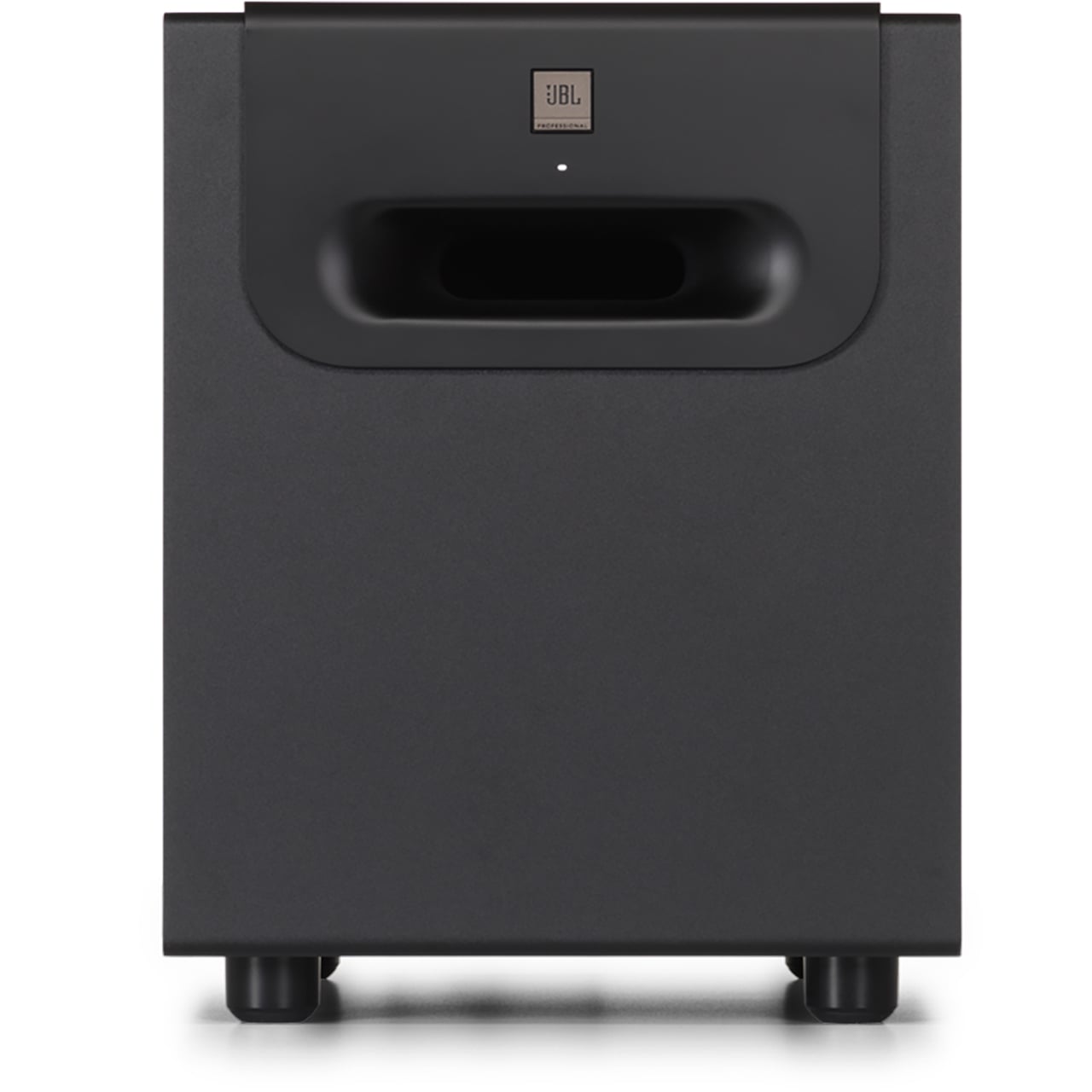
The most practical change is on the back panel. Four one-touch controls with three positions each combine into 81 presets (3⁴) — combinations of a few adjustments, not 81 separate tunings — covering placement, wall distance and high- and low-frequency balance, with no dip switches, microphone or calibration software. Every full-range model also carries eight M4 points, four on top and four on the bottom, in a 75 × 75 mm VESA pattern, a first for the range, so a pair can grow into 2.1, surround or immersive use. The 310S MkIII adds 300 watts, 26 Hz extension and 116 dB peak output, with 80, 100 and 120 Hz crossovers and an external bass-management bypass.
Context
The 3 Series has been the default first serious monitor since 2013, when the LSR305 and LSR308 brought the Image Control Waveguide down from JBL’s M2. The MkIII arrives as home studios and immersive work push beyond stereo: JBL says the same engineering runs through all four models, so rooms can mix sizes without a tonal mismatch.
How It Compares
Against the outgoing MkII, the changes are structural:
| MkII, 305P, 306P, 308P | MkIII, 305P, 306P, 308P | |
|---|---|---|
| LF extension, -10 dB | 43, 39, 37 Hz | 45, 43, 41 Hz |
| HF top, -10 dB | 24 kHz | 38 kHz |
| Amplification, Class D | 82, 112, 112 W | 86, 110, 110 W |
| Peak SPL | 108, 110, 112 dB | 109, 112, 113 dB |
| Port | Rear Slipstream | Front Slipstream |
| Room controls | HF trim, Boundary EQ | 4 controls, 81 combinations |
| Mounting | None | 8 M4, top and bottom, 75 by 75 mm VESA |
On quoted -10 dB low-frequency extension, the MkIII gives up a little at every size — 45 vs 43 Hz (305P), 43 vs 39 Hz (306P), 41 vs 37 Hz (308P) — so the front port and room controls, not deeper bass, are the upgrade here. The high-frequency comparison is like-for-like: both 24 kHz (MkII) and 38 kHz (MkIII) are -10 dB range tops.
At Full Compass on November 3, 2026, list prices were $249 (305P MkIII), $311 (306P MkIII) and $374 (308P MkIII) each, against list prices of $245 and $370 for the outgoing 305P and 308P MkII in stock; 306P MkII pricing was not verified at Full Compass. Street prices were $199, $249 and $299 for the 305P, 306P and 308P; the 310S price was not yet posted. All three monitors were shown as on order rather than in stock. List is the manufacturer’s suggested retail price; street is Full Compass’s selling price on the day.
Within the range, the choice is room size: 305P for desks and small rooms, 306P for larger rooms and edit suites, 308P where output and low end matter.
My Take (Forward Analysis)
This is paper analysis, not a hands-on review: no independent measurements or listening tests exist yet, and nothing here pretends otherwise.
On paper, the two changes that matter most are the least glamorous: a front port and a more flexible room EQ attack the exact reason budget monitors disappoint — wall and desk placement. The shared voicing JBL claims is the other substantive point: it makes a cheap stereo pair a credible start for an immersive room later.
What gives me pause is how much rests on quoted figures. The 81 combinations are presets, not calibration, and cannot fix a bad room alone. Quoted low-frequency extension is a step back from the MkII on paper, and the 310S price is still unconfirmed. Until independent measurements appear, the MkIII reads as a sensible update on paper — but one to audition, not to buy blind.
Who Should Audition
Worth a demo now: anyone setting up a first serious chain, anyone with monitors on a desk or near a wall, and anyone building toward surround or immersive. Worth waiting for measurements: buyers weighing the 308P against rivals. MkII owners should audition before upgrading — the MkII remains in stock, and the MkIII’s case rests on room controls and front port, not output. Subwoofer shoppers should wait for 310S pricing.