

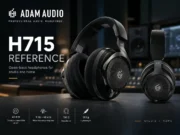
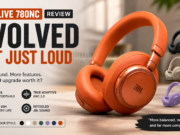









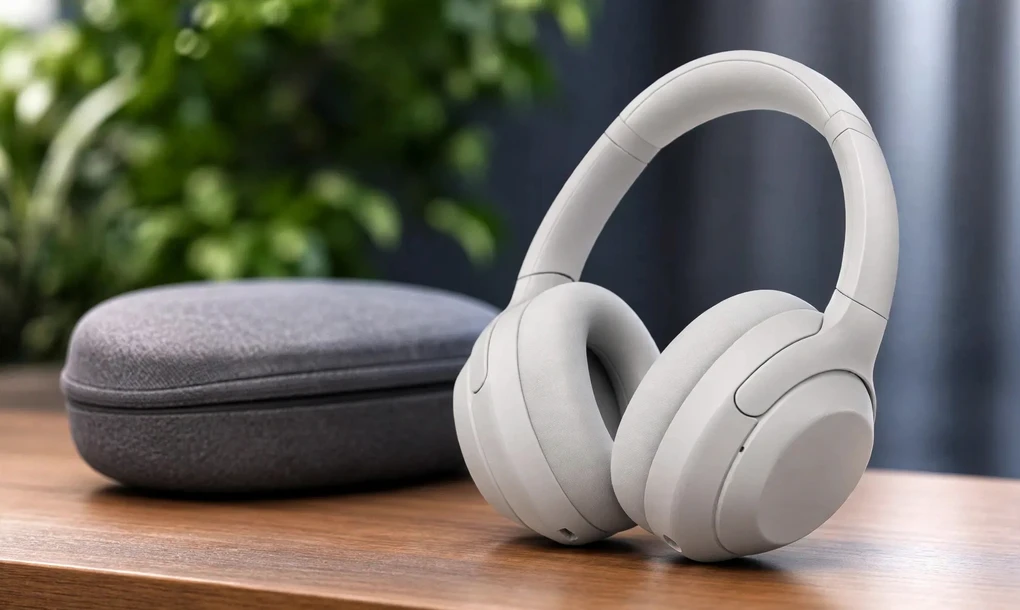
Sony did something it rarely does: it brought a headphone back from the dead. The WH-1000XM4C — “M4 2nd Gen” in Sony’s own wording — is the 2020 WH-1000XM4, reissued in September 2026 with a new letter, a new tune, Bluetooth 6.0 and a user-replaceable battery. Same 40mm drivers. Same QN1 chip. Same four microphones. Same fold.
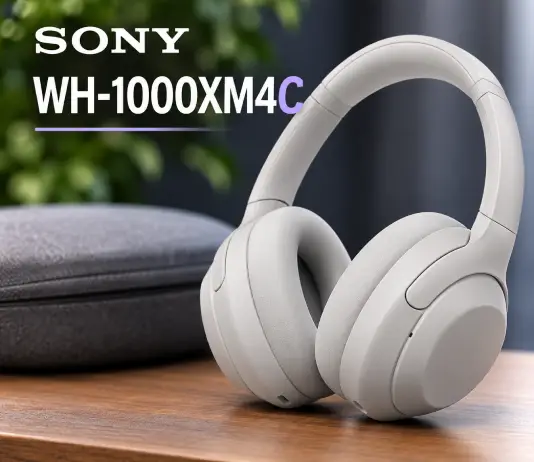
That last item is the whole story, really. Sony dropped the fold with the XM5, caught grief for it, and restored it on the XM6. The XM4C is the fold, sold as a product in its own right, at $299.99 — $50 less than the original XM4 cost in 2020 and $160 less than the XM6. The catch is sitting right next to it on the shelf: the XM5, a generation newer, has been selling for around $198 on Amazon. So the question isn’t whether a six-year-old flagship still sounds good. It does. The question is whether the fold is worth a hundred dollars.
Quick Specs
| Specification | Details |
|---|---|
| Driver | 40mm dynamic, Liquid Crystal Polymer diaphragm |
| ANC processor | Sony HD Noise Cancelling Processor QN1, 4 microphones |
| Bluetooth | 6.0; SBC, AAC, LDAC; multipoint (2 devices); Google Fast Pair |
| Battery | Up to 27 hours (ANC on), 34 hours (ANC off); 3-min charge ≈ 1 hour; full charge ≈ 3.5 hours |
| Frequency response | 20Hz–20kHz (Bluetooth; 40kHz with LDAC); 4Hz–40kHz wired |
| Impedance / sensitivity | 40Ω powered, 16Ω unpowered; 106 dB/mW powered |
| Weight | ~253g |
| App | Sony Sound Connect: 10-band EQ + gaming preset, DSEE Extreme, 360 Reality Audio, Adaptive Sound Control, Personal NC Optimizer, Speak-to-Chat, Quick Attention |
| Controls | Touch panel (right cup); power + NC/Ambient buttons (left cup) |
| Wired | 3.5mm jack; passive listening works with the battery dead |
| Water resistance | No IP rating |
| LE Audio / Auracast | Not supported |
| NFC | No |
| Colours | Black, Platinum Silver, Lavender (Lavender via Sony and Amazon only) |
| MSRP | $299.99 US / £219.99 UK / €249.99 EU |
Design & Build
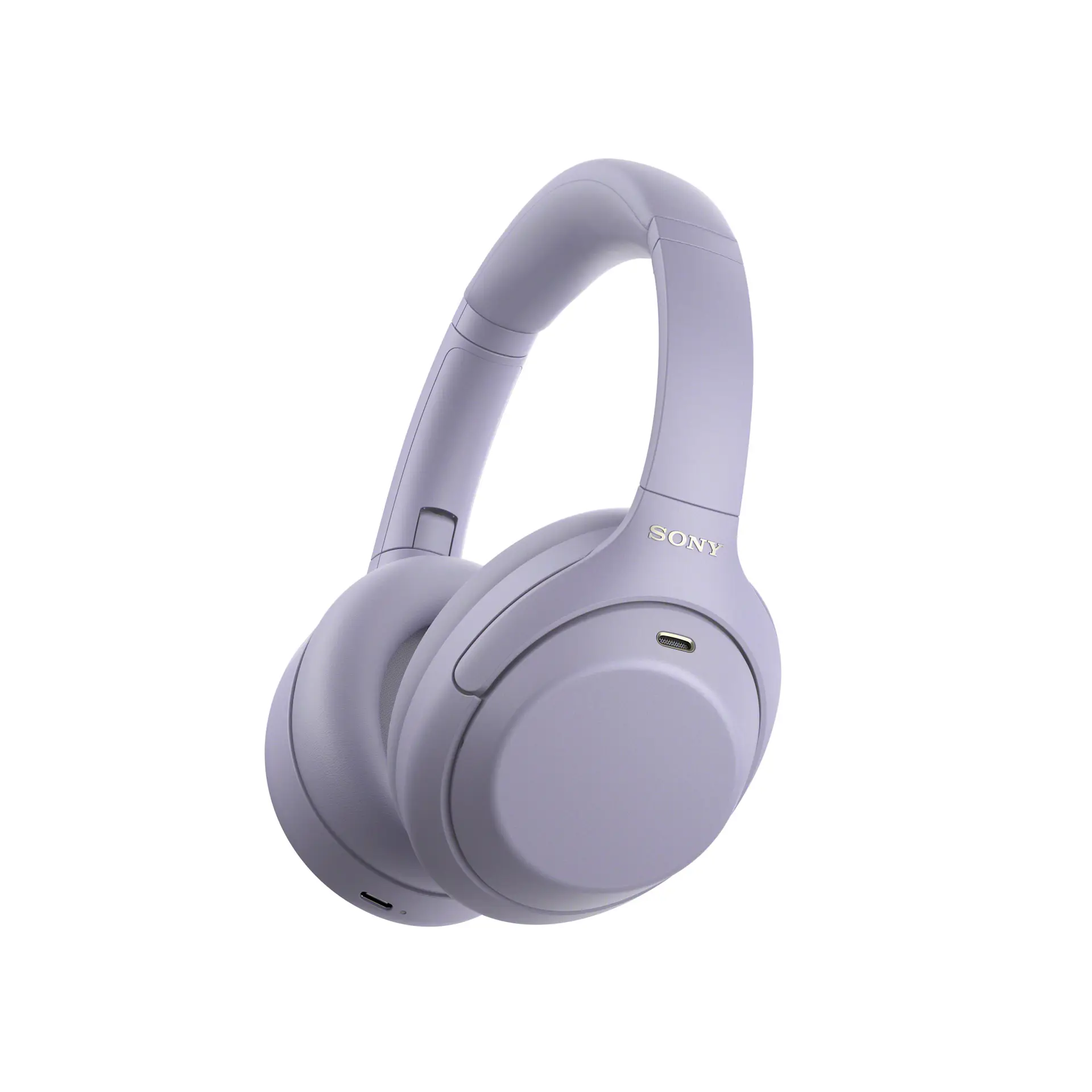
Pick it up and it is 2020 again. The XM4C looks like the XM4 in literally every way — same dimensions, same fold, same ports and buttons in the same places. The soft-touch recycled plastic feels properly engineered rather than cheap, the earcups are plush, and at around 253g the whole thing is light enough to wear for hours. The folding mechanism is the star here: the cups swivel and collapse into a hard case that is genuinely small, and next to it the XM5’s flat-pack case looks bulky.
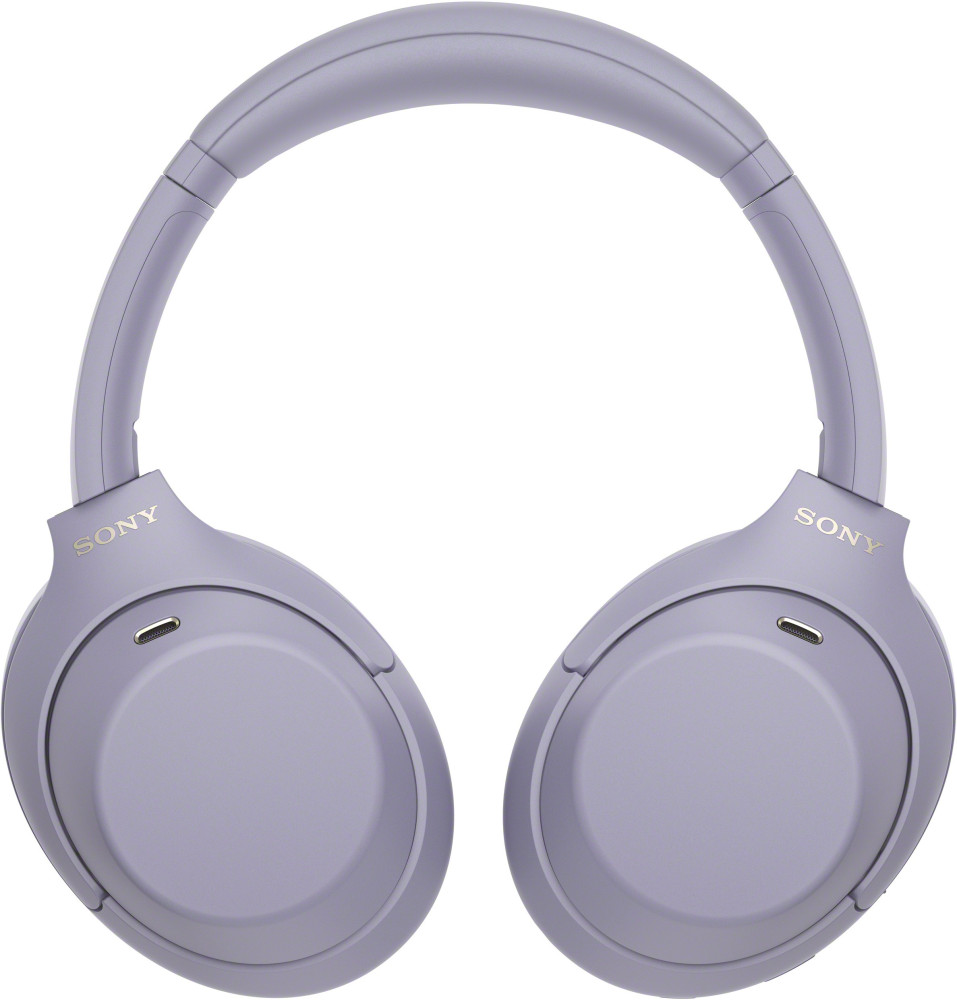
Comfort has a couple of wrinkles. The headband only has cushioning in the centre, and the design puts some of the weight right on that spot, so a pressure point can build over a long session. Heat builds up under the cups too. Neither is a dealbreaker — this is still one of the more comfortable travel headphones around — but the XM6 is a little easier to wear all day.
Controls are the familiar Sony layout: a touch panel on the right cup for taps and swipes, two buttons on the left for power and noise modes. The touch panel is one of the better implementations out there, and covering the cup with your hand for Quick Attention is a gesture worth learning. The box holds the headphones, the hard case and a 3.5mm cable; there is no USB-C charging cable in it.
Two omissions matter. There is no IP rating at all, so these are not gym or rain headphones. And NFC tap-to-pair, which the original XM4 had, is gone.
The battery is the most interesting change and the most awkward one. To comply with EU rules on replaceable batteries, Sony rebuilt the earcups with screws instead of permanent welds, and the battery itself is user-replaceable — a genuine longevity win. The trade is capacity: 27 hours with ANC on, down from 30, and 34 hours with it off, down from 38. A three-minute charge buys about an hour of playback, where the XM6 gets three hours from the same three minutes. At the time of the launch reviews, Sony was not yet selling the replacement battery in North America and had published no official swap instructions, so the repairability story is real but unfinished.
Bluetooth 6.0 is a quiet upgrade. Reviewers report stable connections with no dropouts. Multipoint works across two devices, but it forces SBC or AAC — LDAC and multipoint are mutually exclusive. And a warning for spec-sheet readers: Bluetooth 6.0 does not mean LE Audio or Auracast. Sony’s listed specifications mention neither, and both are absent. The 10-band EQ in the Sound Connect app, up from five bands on the original, is the best software change here, plus a new gaming preset.
Call quality is the weakest link in the feature set. Reviewers describe voices as coming through fine on your end, but thin, and background noise leaks through to the other side far more than on newer headphones. Fine for a quick call; not a headset for all-day meetings.
The Sound: A More Open XM4, Still Warm at Heart
Sony says it retuned the XM4C for today’s listening preferences — clearer, richer vocals and tighter bass. Two reference points matter when reading the descriptions below. Against the original XM4, reviewers find the default sound more open, with a lifted top end, closer to the XM5 and XM6 profile. Measured against SoundGuys’ preference curve, though, the XM4C is still warm: a sub-bass shelf of about +4dB below 100Hz, mids close to flat, and a recessed presence region around 3kHz. In plain terms, it is brighter than the old XM4 but not a bright headphone, and the 10-band EQ is what lets you live with, or fix, that tuning.
Bass
The low end is deep and controlled rather than boomy. SoundGuys’ curve shows the shelf peaking around 20–32Hz at roughly +4dB, so what you feel is rumble rather than mid-bass thump. Reviewers found that useful on the subway, where the sub-bass keeps music present under the train’s rumble instead of being swallowed by it. On bass-heavy electronic and hip-hop tracks the low end has proper weight without swallowing the vocals, but kick-drum punch is polite, and no amount of volume brings out the slam of a bass-first headphone. A small cut to the lowest EQ band tightens things up if the rumble gets too much.
Midrange
With mids close to flat against SoundGuys’ curve — no real dip at 1–1.5kHz and only a slight softness around 400–800Hz — vocals, guitars and male voices keep their body, and piano-and-voice recordings sound intimate. The caveat is the presence region just above, covered under Treble: voices are clear, but they sit in place rather than jumping forward. If anything sounds thin, a small EQ lift in the lower mids fills it in.
Treble
Against SoundGuys’ preference curve the presence region is recessed, not lifted: the curve dips around 2.8–3kHz to roughly −5dB, and SoundGuys’ own text calls it an underemphasis between 1600 and 3400Hz. That is why vocals and lead guitars stay in their place. The “more open” impression comes from the comparison with the original XM4, which was darker still. The very top end is restrained too: reviewers note limited air and sparkle above 10kHz, so cymbals have detail but not the sizzle of the XM6, and percussion snap sounds mildly muted as a result.
Soundstage & Imaging
For a sealed headphone the imaging is better than expected. Left-right imaging is described as excellent, and orchestral recordings get room to breathe, with solo vocals standing clear of the ensemble. Instrument separation inside dense passages is a different story: only acceptable, not outstanding. The drivers are not the fastest in Sony’s lineup, and thick, complex mixes can feel a little cramped. Still, for a travel headphone, the presentation is more spacious than the price suggests.
Noise Cancelling & Isolation
The old QN1 hardware holds up better than its age suggests. Engine drone on a plane or a bus is cut down to a faint background hiss that music covers easily, and steady office noise largely disappears. Where the six years show is inconsistent sound: nearby voices and sudden noises get through more than they do on the XM6 or the Bose QuietComfort Headphones (2nd Gen). The XM4C remains very good for the price and clearly ahead of the Nothing Headphone (1), but the XM5 and XM6 both cancel better, and the Personal NC Optimizer and Adaptive Sound Control do their jobs quietly in the background. Transparency mode is fine for a quick conversation and sounds natural enough, but it is a step behind the best implementations.
Measured Performance
SoundGuys put the XM4C on its B&K 5128 head simulator, and its frequency response — plotted as deviation from SoundGuys’ own preference curve — shows the tuning more precisely than adjectives can. SoundGuys measured the low end as a shelf below 100Hz, peaking around 20–32Hz at roughly +4dB (27.2Hz reads +4.1dB) and easing to about +3dB by 100Hz (92.5Hz reads +3.1dB): the emphasis is in the sub-bass, not the mid-bass. The mids run close to flat, with only a slight softness around 400–800Hz. And the presence region is the surprise: it dips, not lifts — around 2.8–3kHz the curve falls to roughly −5dB, and SoundGuys’ text calls it an underemphasis between 1600 and 3400Hz.
The Competition
| Rival | Price | vs WH-1000XM4C | Verdict |
|---|---|---|---|
| Sony WH-1000XM6 | $459.99 (sale $378) | QN3 chip, 12 mics, better ANC, sound and comfort; folds | The real flagship. Worth it if your budget stretches — but $160 more at list. |
| Sony WH-1000XM5 | $399.99 list, street ~$198 | 8 mics, newer design, better ANC; does not fold | The awkward one. Cheaper on sale and a generation newer, but you give up the fold. |
| Bose QuietComfort Headphones (2nd Gen) | $359 (sale under $290) | 6 mics, slightly better ANC, USB-C audio, 24h battery | Pick Bose for comfort and ANC; pick Sony for sound, EQ and battery. |
| Nothing Headphone (1) | $299 (street ~$199) | KEF-tuned, 80h battery (ANC off), IP52, physical controls | The design-led alternative. Weaker ANC and default tuning than the Sony. |
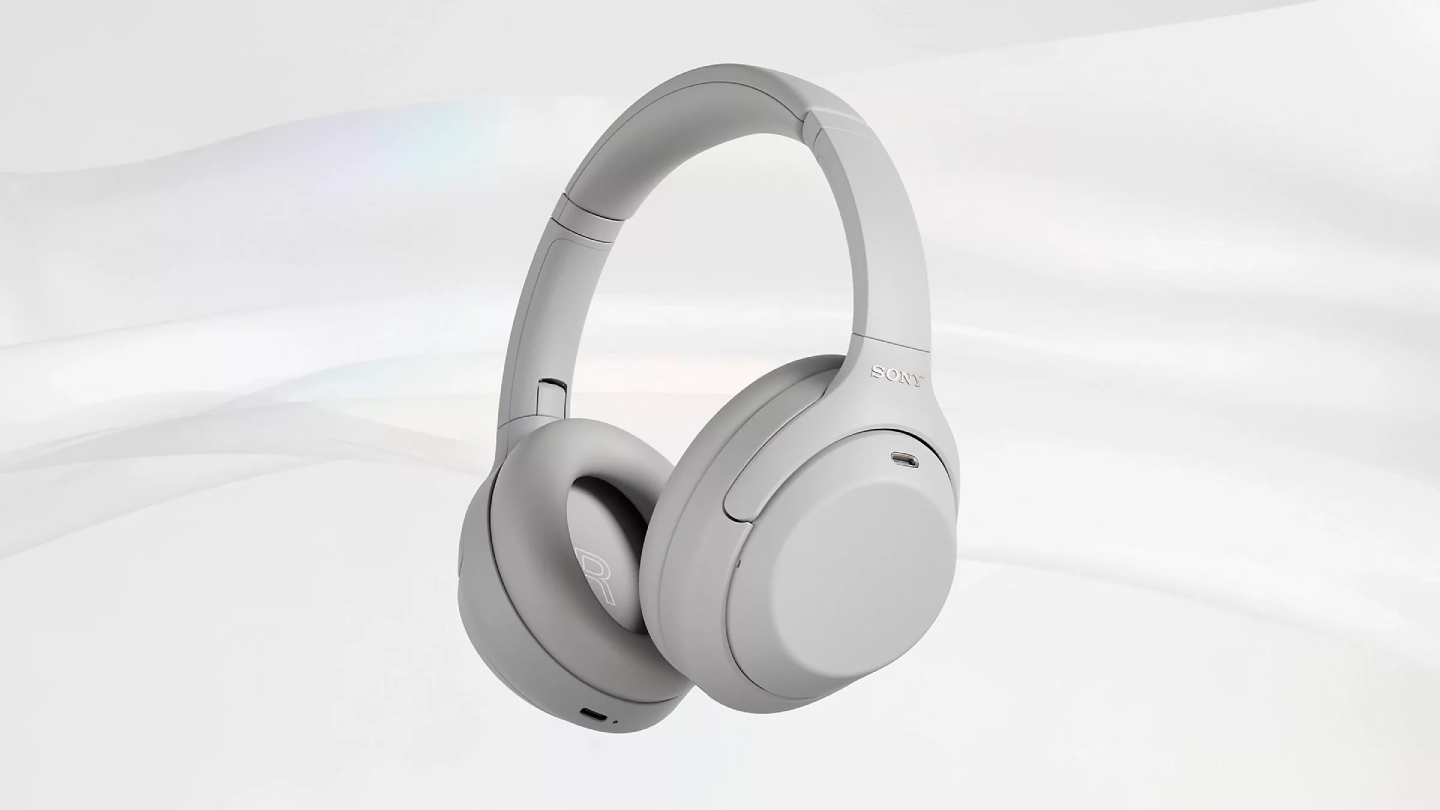
Verdict — 7.8/10, Wait
The XM4C is the rare reissue that makes sense as a product — and a hard sell at its launch price. Sony took a design that was hugely popular, fixed the two things that dated it — the old Bluetooth and the five-band EQ — added a replaceable battery, and charged less than the original cost in 2020. The sound is genuinely good, the ANC is still very good for the money, and nothing else at this price folds this small.
Here is how the score breaks down:
| Category | Score | Weight |
|---|---|---|
| Sound | 8.0 | 30% |
| ANC | 8.5 | 20% |
| Comfort | 8.0 | 15% |
| Battery | 7.0 | 10% |
| Features | 7.5 | 10% |
| Value | 7.0 | 15% |
| Total | 7.8 | 100% |
Weighted total 7.80.
The score is the product; the verdict is the price. At $299.99, with the XM5 at around $198 on sale, the honest advice is to wait — the XM4C has reportedly been discounted to about $248 already, and Sony’s older models are often marked down over time. The exception is the fold: if you travel and the fold matters to you today, buy it now, because nothing else with ANC this good packs this small. Everyone else should wait for the sale.
Pros
- Folds flat into a genuinely small hard case — still the best travel design in the category
- ANC is very good for the price
- More open than the original XM4, plus a proper 10-band EQ
- Comfortable for hours; light at ~253g
- User-replaceable battery; LDAC, multipoint and a 3.5mm jack
Cons
- Battery down to 27 hours with ANC on, from 30
- No IP rating — not a gym or rain headphone
- No LE Audio or Auracast despite Bluetooth 6.0
- NFC tap-to-pair dropped; no USB-C cable in the box
- Mediocre call quality; background noise leaks through
- The XM5’s ~$198 street price undercuts it hard
Who Should Buy
This is for you if you travel and the fold matters — the XM4C packs smaller than anything else with ANC this good. It is for you if you want the fold plus Sony’s sound and app at $300 instead of $460, or if you loved the original XM4 and need a new pair with a warranty. And it is for you if you keep headphones for years: a user-replaceable battery is a rare thing on a 1000X model, and it points toward a longer working life, once Sony actually sells the part.
Who Should Skip
Look elsewhere if you never fold your headphones — the XM5 at ~$198 is the better buy. Look elsewhere if you need the best ANC available; the XM6 and the Bose QuietComfort Headphones (2nd Gen) both beat it. Look elsewhere if you take calls all day, or if you need something for the gym or the rain. And if $299.99 feels steep, wait for a discount.
Disclosure: OHHIFI may earn affiliate commissions from product links. Our verdicts are never influenced by such arrangements.